Technical Specifications
| Brand | Renault |
| Model | Master |
| Generation | Master III (Phase II, 2014) Panel Van |
| Type (Engine) | 2.3 dCi (170 Hp) L2H2 MM35 Automatic |
| Start of production | 2017 |
| End of production | 2018 |
| Powertrain Architecture | Internal Combustion engine |
| Body type | Minivan, MPV |
| Seats | 3 |
| Doors | 4 |
| Fuel consumption (urban) | 7.8-7.9 l/100 km (30.2 – 29.8 US mpg, 36.2 – 35.8 UK mpg, 12.8 – 12.7 km/l) |
| Fuel consumption (extra urban) | 6.9-7.0 l/100 km (34.1 – 33.6 US mpg, 40.9 – 40.4 UK mpg, 14.5 – 14.3 km/l) |
| Fuel consumption (combined) | 7.2-7.3 l/100 km (32.7 – 32.2 US mpg, 39.2 – 38.7 UK mpg, 13.9 – 13.7 km/l) |
| CO2 emissions | 187 – 189 g/km |
| Fuel Type | Diesel |
| Emission standard | Euro 6 |
| Weight-to-power ratio | 11.4 kg/Hp, 87.5 Hp/tonne |
| Weight-to-torque ratio | 5.1 kg/Nm, 195.6 Nm/tonne |
| Power | 170 Hp @ 3500 rpm |
| Power per litre | 74 Hp/l |
| Torque | 380 Nm @ 1500 rpm (280.27 lb.-ft. @ 1500 rpm) |
| Engine Model/Code | M9T |
| Engine displacement | 2298 cm3 (140.23 cu. in.) |
| Number of cylinders | 4 |
| Engine configuration | Inline |
| Cylinder Bore | 85 mm (3.35 in.) |
| Piston Stroke | 101.5 mm (4 in.) |
| Number of valves per cylinder | 4 |
| Fuel injection system | Diesel Commonrail |
| Engine aspiration | Twin-Turbo, Intercooler |
| Engine oil capacity | 8 l (8.45 US qt | 7.04 UK qt) |
| Coolant | 11 l (11.62 US qt | 9.68 UK qt) |
| Kerb Weight | 1943 kg (4283.58 lbs.) |
| Max. weight | 3500 kg (7716.18 lbs.) |
| Max load | 1557 kg (3432.6 lbs.) |
| Trunk (boot) space – maximum | 10800 l (381.4 cu. ft.) |
| Fuel tank capacity | 105 l (27.74 US gal | 23.1 UK gal) |
| Permitted trailer load with brakes (12%) | 2500 kg (5511.56 lbs.) |
| Permitted trailer load without brakes | 750 kg (1653.47 lbs.) |
| Length | 5548 mm (218.43 in.) |
| Width | 2070 mm (81.5 in.) |
| Width including mirrors | 2470 mm (97.24 in.) |
| Height | 2499 mm (98.39 in.) |
| Wheelbase | 3682 mm (144.96 in.) |
| Front track | 1750 mm (68.9 in.) |
| Rear (Back) track | 1730 mm (68.11 in.) |
| Front overhang | 842 mm (33.15 in.) |
| Rear overhang | 1024 mm (40.31 in.) |
| Ride height (ground clearance) | 174 mm (6.85 in.) |
| Minimum turning circle (turning diameter) | 14.1 m (46.26 ft.) |
| Drivetrain Architecture | Front wheel drive |
| Number of gears and type of gearbox | 6 gears, automatic transmission |
| Front suspension | Independent, type McPherson with coil spring and anti-roll bar |
| Rear suspension | Leaf spring |
| Front brakes | Ventilated discs, 302×28 mm |
| Rear brakes | Disc, 305×12 mm |
| Tires size | 225/65 R16 |
| Wheel rims size | 16 |
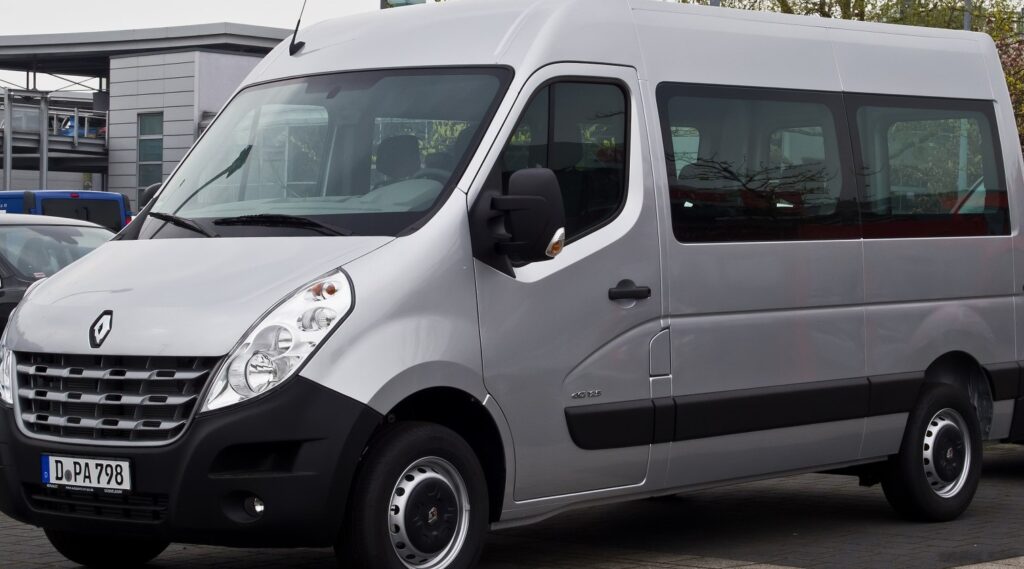
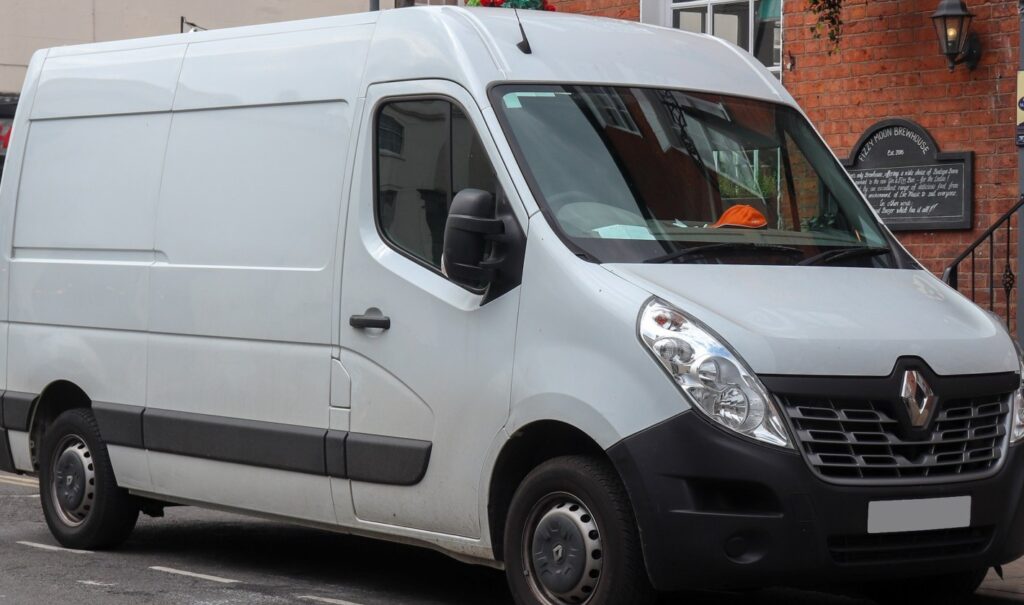
The Renault Master III Phase II 2.3 dCi 170 Automatic, produced from 2017-2018, is a large panel van designed for commercial applications. Built on the X62 platform (also known as the 1HX0 for the A3 variant), it offered a substantial cargo capacity and a focus on practicality. The “L2H2” designation indicates a medium wheelbase and roof height, making it a versatile option for a wide range of businesses. This variant aimed to provide a balance between performance, fuel economy, and driver comfort, appealing to those who frequently cover long distances or require a more refined driving experience than the base models offered.
Powertrain & Engine Architecture
At the heart of this Master variant lies the M9T 2.3-liter four-cylinder diesel engine. This engine is a turbocharged diesel, but this version utilizes a twin-turbo setup with an intercooler to boost power output to 170 horsepower at 3500 rpm and 380 Nm (280.27 lb-ft) of torque at 1500 rpm. The engine employs a diesel common rail direct injection system, ensuring precise fuel delivery and contributing to both performance and efficiency. The engine features four valves per cylinder and a robust internal architecture designed for durability. The automatic transmission is a six-speed unit, providing smooth gear changes and reducing driver fatigue, particularly in urban environments. This transmission was chosen to provide a more comfortable driving experience compared to the standard manual options.
Driving Characteristics
The 170 horsepower output, coupled with the automatic transmission, delivers a noticeable improvement in driving experience compared to lower-powered Master variants. While not a performance van, the 2.3 dCi offers sufficient power for fully loaded operation, even on inclines. The automatic transmission’s gear ratios are tuned for a balance of acceleration and fuel economy. Compared to the manual transmission, the automatic provides smoother acceleration and eliminates the need for constant gear changes, making it ideal for city driving and stop-and-go traffic. However, some drivers may find the automatic slightly less responsive than the manual, particularly when needing quick bursts of acceleration. The twin-turbo setup helps to minimize turbo lag, providing a more linear power delivery.
Equipment & Trim Levels
The Master III Phase II 2.3 dCi 170 Automatic typically came equipped with a reasonable level of standard features. These included air conditioning, a driver’s airbag, electric windows, and a basic audio system with USB connectivity. Higher trim levels, often denoted by additional package options, could add features such as a passenger airbag, cruise control, rear parking sensors, and a more advanced infotainment system with navigation. Interior upholstery was typically durable cloth, designed to withstand the rigors of commercial use. The dashboard layout was functional and straightforward, prioritizing ease of use over aesthetic flair. Options like heated seats and upgraded sound systems were available, but less common in work-focused vans.
Chassis & Braking
The Master III utilizes a front-wheel-drive layout, contributing to a lower load floor and improved space utilization. The front suspension consists of an independent McPherson strut setup with coil springs and an anti-roll bar, providing a comfortable ride and decent handling. The rear suspension employs a leaf spring design, chosen for its robustness and ability to handle heavy loads. Braking is handled by ventilated discs on the front axle (302x28mm) and solid discs on the rear axle (305x12mm). The braking system is adequate for the vehicle’s weight, but drivers should be aware that stopping distances will be longer when the van is fully loaded. Stabilizer bars are fitted to both axles to reduce body roll during cornering.
Market Reception & Comparison
The Renault Master III 2.3 dCi 170 Automatic was generally well-received by critics as a capable and practical work van. Its fuel economy, averaging around 32.7 US mpg in combined driving, was considered competitive within its segment. Compared to the lower-powered 1.3 dCi and 2.3 dCi (single turbo) variants, the 170 hp model offered a significant performance boost, making it more suitable for long-distance travel and heavier loads. However, it was more expensive to purchase and potentially maintain than the base models. Compared to rivals like the Fiat Ducato and Mercedes-Benz Sprinter, the Master offered a good balance of price, features, and reliability, though some competitors were perceived to have a more refined interior or a more extensive options list.
Legacy
The M9T engine, while generally reliable, can be prone to issues with the turbocharger and fuel injectors if not properly maintained. The automatic transmission, if serviced regularly, is typically durable. In the used car market, the Master III 2.3 dCi 170 Automatic holds its value reasonably well, particularly examples with a full service history and low mileage. Its combination of power, practicality, and relative comfort makes it a popular choice for businesses and tradespeople seeking a dependable large van. However, potential buyers should carefully inspect the vehicle for signs of wear and tear, paying particular attention to the engine and transmission.