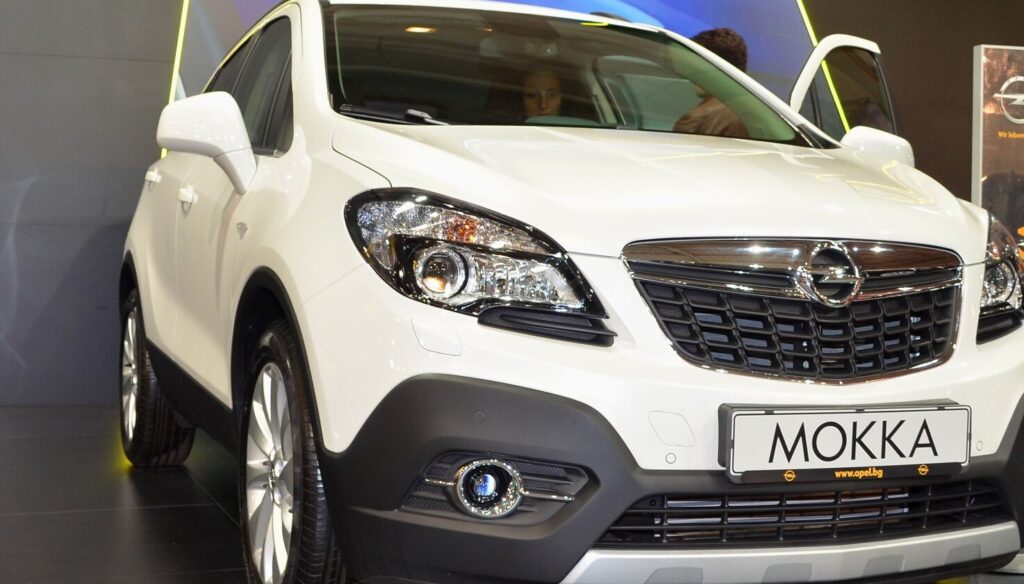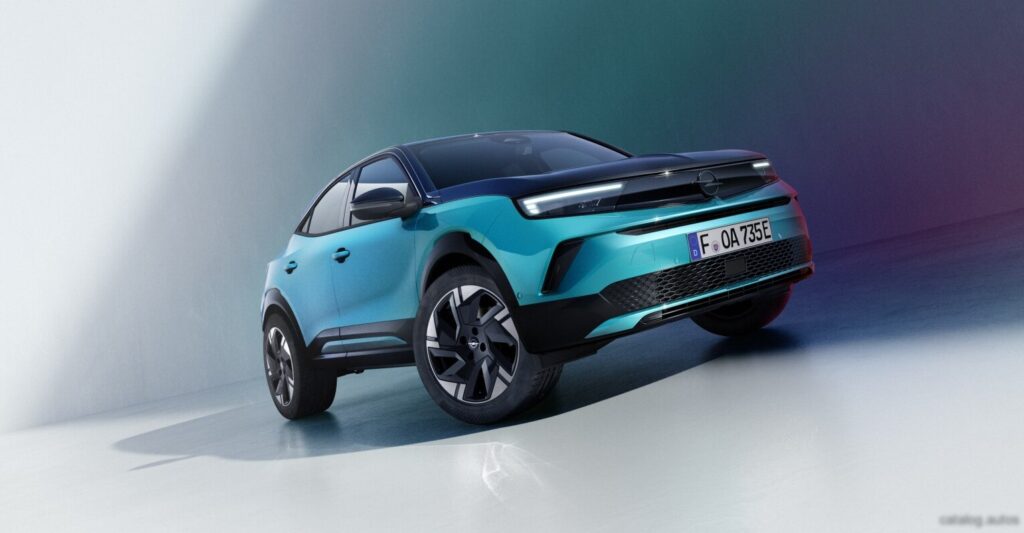
The Opel Mokka B (facelift 2024) 1.2 Turbo (130 Hp) Automatic represents a significant update to Opel’s popular subcompact SUV. Introduced in October 2024, this variant builds upon the Mokka B platform (internally designated as the M24) and aims to offer a balance of fuel efficiency, practicality, and modern technology. Positioned as a mid-range offering within the Mokka B lineup, it slots between the base-level engine options and the more performance-oriented trims. The facelift brought a revised front fascia, updated interior technology, and refinements to the powertrain, solidifying the Mokka’s position in the competitive European B-SUV segment. This model is primarily targeted towards European markets, where fuel economy and compact dimensions are highly valued.
Technical Specifications
| Brand | Opel |
| Model | Mokka |
| Generation | Mokka B (facelift 2024) |
| Type (Engine) | 1.2 Turbo (130 Hp) Automatic |
| Start of production | October, 2024 |
| Powertrain Architecture | Internal Combustion engine |
| Body type | SUV |
| Seats | 5 |
| Doors | 5 |
| Fuel consumption at Low speed (WLTP) | 7.7 l/100 km (30.5 US mpg, 36.7 UK mpg, 13 km/l) |
| Fuel consumption at Medium speed (WLTP) | 6 l/100 km (39.2 US mpg, 47.1 UK mpg, 16.7 km/l) |
| Fuel consumption at high speed (WLTP) | 5.2 l/100 km (45.2 US mpg, 54.3 UK mpg, 19.2 km/l) |
| Fuel consumption at very high speed (WLTP) | 6.3-6.4 l/100 km (37.3 – 36.8 US mpg, 44.8 – 44.1 UK mpg, 15.9 – 15.6 km/l) |
| Combined fuel consumption (WLTP) | 6.1-6.2 l/100 km (38.6 – 37.9 US mpg, 46.3 – 45.6 UK mpg, 16.4 – 16.1 km/l) |
| CO2 emissions (WLTP) | 138-139 g/km |
| Fuel Type | Petrol (Gasoline) |
| Acceleration 0 – 100 km/h | 8.9 sec |
| Acceleration 0 – 62 mph | 8.9 sec |
| Acceleration 0 – 60 mph | 8.5 sec |
| Maximum speed | 203 km/h (126.14 mph) |
| Emission standard | Euro 6e |
| Weight-to-power ratio | 9.6 kg/Hp, 104.7 Hp/tonne |
| Weight-to-torque ratio | 5.4 kg/Nm, 185.2 Nm/tonne |
| Power | 130 Hp @ 5500 rpm |
| Torque | 230 Nm @ 1750 rpm (169.64 lb.-ft. @ 1750 rpm) |
| Engine layout | Front, Transverse |
| Engine displacement | 1199 cm3 (73.17 cu. in.) |
| Number of cylinders | 3 |
| Engine configuration | Inline |
| Cylinder Bore | 75 mm (2.95 in.) |
| Piston Stroke | 90.5 mm (3.56 in.) |
| Number of valves per cylinder | 4 |
| Fuel injection system | Direct injection |
| Engine aspiration | Turbocharger, Intercooler |
| Valvetrain | DOHC |
| Engine systems | Start & Stop System, Particulate filter |
| Kerb Weight | 1242 kg (2738.14 lbs.) |
| Max. weight | 1710 kg (3769.9 lbs.) |
| Max load | 468 kg (1031.76 lbs.) |
| Trunk (boot) space – minimum | 350 l (12.36 cu. ft.) |
| Trunk (boot) space – maximum | 1105 l (39.02 cu. ft.) |
| Fuel tank capacity | 44 l (11.62 US gal, 9.68 UK gal) |
| Max. roof load | 75 kg (165.35 lbs.) |
| Permitted trailer load with brakes (12%) | 1200 kg (2645.55 lbs.) |
| Permitted trailer load without brakes | 655 kg (1444.03 lbs.) |
| Permitted towbar download | 55 kg (121.25 lbs.) |
| Length | 4150 mm (163.39 in.) |
| Width | 1787 mm (70.35 in.) |
| Width including mirrors | 1987 mm (78.23 in.) |
| Height | 1535 mm (60.43 in.) |
| Wheelbase | 2557 mm (100.67 in.) |
| Front track | 1548 mm (60.94 in.) |
| Rear (Back) track | 1548 mm (60.94 in.) |
| Front overhang | 881 mm (34.69 in.) |
| Rear overhang | 712 mm (28.03 in.) |
| Minimum turning circle (turning diameter) | 11.08 m (36.35 ft.) |
| Drivetrain Architecture | The Internal combustion engine (ICE) drives the front wheels of the vehicle. |
| Drive wheel | Front wheel drive |
| Number of gears and type of gearbox | 8 gears, automatic transmission |
| Front brakes | Ventilated discs |
| Rear brakes | Disc |
| Assisting systems | ABS (Anti-lock braking system) |
| Steering type | Steering rack and pinion |
| Power steering | Electric Steering |
| Tires size | 215/65 R16; 215/60 R17; 195/60 R18; 215/55 R18 |
| Wheel rims size | 6.5J x 16; 6.5J x 17; 6.5J x 18; 7J x 18 |
INTRODUCTION
The Opel Mokka B (facelift 2024) 1.2 Turbo (130 Hp) Automatic is a front-wheel-drive, five-door subcompact SUV that represents a key model in Opel’s lineup. Introduced in October 2024, it’s a refreshed version of the Mokka B, which itself debuted in 2021. This facelifted model builds on the success of the original, offering updated styling, enhanced technology, and a refined powertrain. The 1.2-liter turbocharged engine paired with an eight-speed automatic transmission is a popular choice for buyers seeking a balance between fuel efficiency and ease of driving. It’s designed to appeal to urban drivers and small families who prioritize practicality and modern features. The Mokka B is built on the Stellantis CMP (Common Modular Platform) which allows for flexibility in powertrain options and vehicle configurations.
Powertrain & Engine Architecture
At the heart of the Mokka B 1.2 Turbo Automatic lies the PSA-developed (now Stellantis) 1.2 PureTech three-cylinder gasoline engine. Specifically, this variant utilizes the EB2DT engine code. This engine features direct fuel injection, a single-scroll turbocharger with an intercooler, and a double overhead camshaft (DOHC) valvetrain with four valves per cylinder. The engine produces 130 horsepower at 5500 rpm and 230 Nm (169.64 lb.-ft.) of torque at 1750 rpm. The eight-speed automatic transmission (AW8) is sourced from Aisin, and is known for its smooth shifting and efficiency. This transmission features a torque converter and is designed to work seamlessly with the engine’s power delivery. The engine also incorporates a Start & Stop system to further improve fuel economy and reduce emissions, and a particulate filter to meet stringent Euro 6e emission standards.
Driving Characteristics
The 1.2 Turbo Automatic delivers a comfortable and refined driving experience. While not overtly sporty, the 130 hp engine provides adequate power for everyday driving situations. Acceleration from 0-100 km/h takes approximately 8.9 seconds. The eight-speed automatic transmission is well-tuned, offering smooth gear changes and responsive performance. The gear ratios are optimized for both fuel efficiency and drivability, with taller gears for highway cruising and shorter gears for quicker acceleration. Compared to the manual transmission versions of the same engine, the automatic offers greater convenience, particularly in urban traffic. However, it may feel slightly less engaging for drivers who prefer more control. The engine’s torque is readily available from low revs, making it easy to navigate city streets and overtake slower vehicles.
Equipment & Trim Levels
The Mokka B 1.2 Turbo Automatic typically comes well-equipped as a mid-range trim. Standard features often include air conditioning, a touchscreen infotainment system with Apple CarPlay and Android Auto compatibility, a digital instrument cluster, and a suite of safety features such as automatic emergency braking, lane departure warning, and traffic sign recognition. Interior upholstery is typically cloth, with options for leather or premium fabric upgrades. Higher trim levels may add features such as heated seats, a panoramic sunroof, and advanced driver-assistance systems like adaptive cruise control and blind-spot monitoring. Exterior features generally include alloy wheels, body-colored door handles and mirrors, and LED headlights.
Chassis & Braking
The Mokka B utilizes a MacPherson strut front suspension and a torsion beam rear suspension. This setup provides a good balance between ride comfort and handling. The steering is electrically assisted, offering light and precise control. The braking system consists of ventilated discs on the front wheels and solid discs on the rear wheels. Anti-lock Braking System (ABS) is standard, along with Electronic Stability Control (ESC) and Traction Control. The suspension is tuned to prioritize comfort, but it also provides adequate stability and control during cornering. The weight distribution is relatively balanced, contributing to predictable handling characteristics.
Market Reception & Comparison
The Opel Mokka B (facelift 2024) 1.2 Turbo Automatic has been generally well-received by automotive critics. It’s praised for its stylish design, comfortable interior, and fuel-efficient powertrain. Compared to other trims in the Mokka B lineup, the 1.2 Turbo Automatic offers a good compromise between performance and economy. The diesel variants (like the 1.5 Diesel) offer better fuel economy but come with a higher purchase price and potential maintenance costs. The more powerful gasoline engines (if offered) provide quicker acceleration but at the expense of fuel efficiency. Competitors in the subcompact SUV segment include the Renault Captur, Peugeot 2008, and Volkswagen T-Cross. The Mokka B often stands out with its bold styling and modern interior.
Legacy
The 1.2 PureTech engine, while generally reliable, has been subject to some reports of timing chain issues in earlier iterations. However, Stellantis has implemented improvements to address these concerns in later engine versions, including those found in the facelifted Mokka B. The Aisin eight-speed automatic transmission is known for its durability and smooth operation. The Mokka B, as a whole, is expected to hold its value reasonably well in the used car market, particularly well-maintained examples with a full service history. Its combination of practicality, fuel efficiency, and modern features makes it an attractive option for buyers seeking a versatile and affordable subcompact SUV.