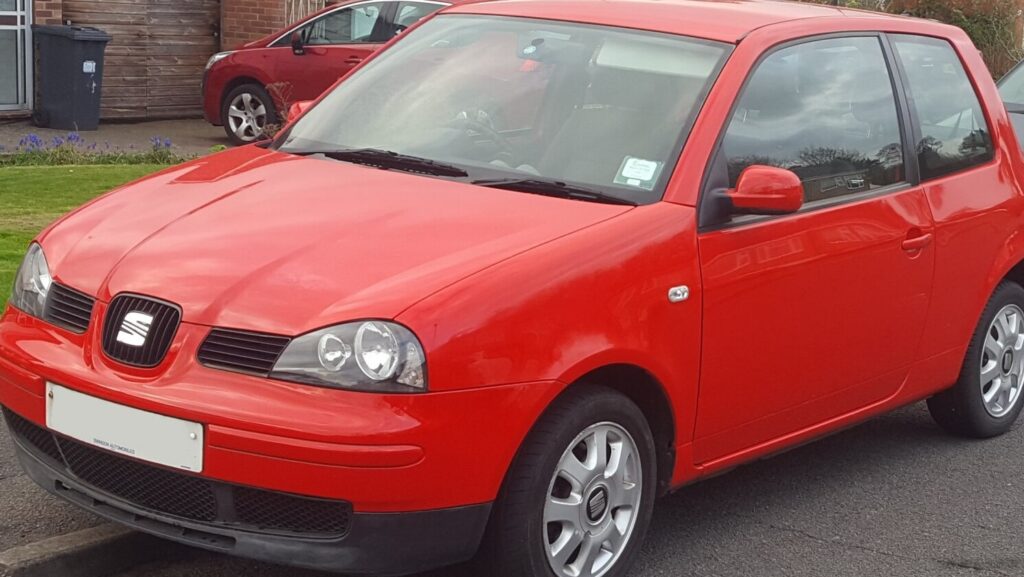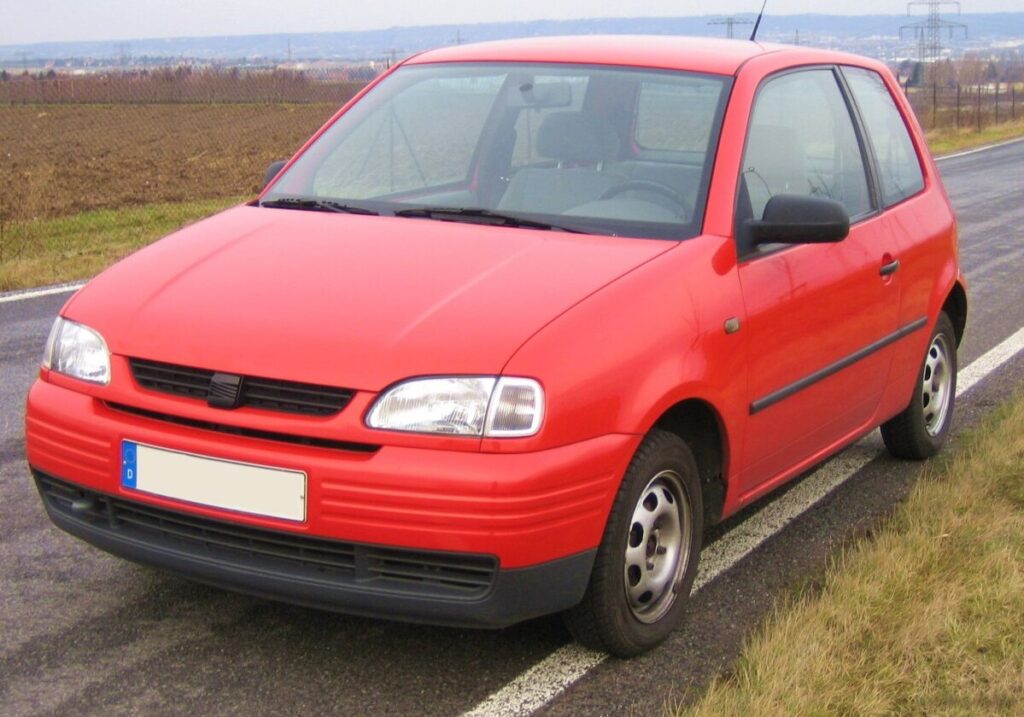
The SEAT Arosa 1.0, produced between February 1997 and September 1999, was an entry-level variant of the Arosa (6H) supermini. Positioned as the most affordable option in the Arosa lineup, it aimed to provide economical transportation within the European market. The Arosa itself was a collaborative effort between SEAT and Volkswagen, sharing its platform (the Volkswagen Polo 6N/A3 platform – 1HX0) and many components with the Polo. This model represented SEAT’s attempt to establish itself as a maker of accessible, practical vehicles, and the 1.0-liter engine was central to achieving a low price point.
Technical Specifications
| Brand | Seat |
| Model | Arosa |
| Generation | Arosa (6H) |
| Type (Engine) | 1.0 (50 Hp) |
| Start of production | February, 1997 |
| End of production | September, 1999 |
| Powertrain Architecture | Internal Combustion engine |
| Body type | Hatchback |
| Seats | 4 |
| Doors | 3 |
| Fuel consumption (urban) | 7.5 l/100 km (31.4 US mpg) |
| Fuel consumption (extra urban) | 4.7 l/100 km (50 US mpg) |
| Fuel Type | Petrol (Gasoline) |
| Acceleration 0 – 100 km/h | 17.4 sec |
| Acceleration 0 – 62 mph | 17.4 sec |
| Acceleration 0 – 60 mph | 16.5 sec |
| Maximum speed | 151 km/h (93.83 mph) |
| Weight-to-power ratio | 17.6 kg/Hp |
| Weight-to-torque ratio | 10.2 kg/Nm |
| Power | 50 Hp @ 5000 rpm |
| Power per litre | 50.1 Hp/l |
| Torque | 86 Nm @ 3000 rpm (63.43 lb.-ft. @ 3000 rpm) |
| Engine layout | Front, Transverse |
| Engine Model/Code | AER |
| Engine displacement | 999 cm3 (60.96 cu. in.) |
| Number of cylinders | 4 |
| Engine configuration | Inline |
| Cylinder Bore | 67.1 mm (2.64 in.) |
| Piston Stroke | 70.6 mm (2.78 in.) |
| Compression ratio | 10.5:1 |
| Number of valves per cylinder | 2 |
| Fuel injection system | Multi-port manifold injection |
| Engine aspiration | Naturally aspirated engine |
| Valvetrain | OHC |
| Engine oil capacity | 3.4 l (3.59 US qt | 2.99 UK qt) |
| Coolant | 5.6 l (5.92 US qt | 4.93 UK qt) |
| Kerb Weight | 880 kg (1940.07 lbs.) |
| Max. weight | 1360 kg (2998.29 lbs.) |
| Max load | 480 kg (1058.22 lbs.) |
| Trunk (boot) space – minimum | 130 l (4.59 cu. ft.) |
| Trunk (boot) space – maximum | 790 l (27.9 cu. ft.) |
| Fuel tank capacity | 34 l (8.98 US gal | 7.48 UK gal) |
| Length | 3536 mm (139.21 in.) |
| Width | 1639 mm (64.53 in.) |
| Height | 1480 mm (58.27 in.) |
| Wheelbase | 2323 mm (91.46 in.) |
| Front track | 1392 mm (54.8 in.) |
| Rear (Back) track | 1400 mm (55.12 in.) |
| Minimum turning circle | 9.8 m (32.15 ft.) |
| Drivetrain Architecture | The Internal combustion engine (ICE) drives the front wheels of the vehicle. |
| Drive wheel | Front wheel drive |
| Number of gears | 5 gears, manual transmission |
| Front suspension | Spring Strut |
| Rear suspension | Coil spring |
| Front brakes | Disc |
| Rear brakes | Drum |
| Assisting systems | ABS (Anti-lock braking system) |
| Steering type | Steering rack and pinion |
| Tires size | 155/70R13 |
INTRODUCTION
The SEAT Arosa 1.0, launched in 1997, was a key component of SEAT’s strategy to offer affordable and practical motoring to a wider audience. Built on the Volkswagen Polo 6N platform, the Arosa was a three-door hatchback designed to compete with rivals like the Renault Clio, Peugeot 106, and Ford Fiesta. The 1.0-liter variant, powered by the AER engine, represented the entry point into the Arosa range, prioritizing fuel efficiency and low running costs over outright performance. It was primarily marketed towards young drivers, city commuters, and those seeking a budget-friendly first car.
Powertrain & Engine Architecture
The heart of the Arosa 1.0 is the AER engine, a 999cc inline-four cylinder petrol engine. This engine, a member of Volkswagen Group’s EA111 family, is a naturally aspirated unit featuring a single overhead camshaft (OHC) and two valves per cylinder. Fuel delivery is managed by a multi-port fuel injection system. The AER engine produces 50 horsepower at 5000 rpm and 86 Nm (63.43 lb-ft) of torque at 3000 rpm. The engine’s relatively simple design contributes to its reliability and ease of maintenance. The Arosa 1.0 was exclusively offered with a five-speed manual transmission, designed to maximize fuel economy and provide adequate, if not exhilarating, performance. The transmission’s gear ratios are geared towards efficiency, with a relatively long final drive.
Driving Characteristics
The Arosa 1.0’s driving experience is defined by its modest power output. Acceleration is slow, taking approximately 17.4 seconds to reach 62 mph (100 km/h). Top speed is around 94 mph (151 km/h). However, the car is perfectly adequate for urban driving and short trips. The light steering and compact dimensions make it easy to maneuver in tight spaces. The five-speed gearbox allows drivers to keep the engine in its optimal rev range, maximizing efficiency. Compared to the more powerful 1.4-liter and 1.6-liter Arosa variants, the 1.0 feels significantly slower, particularly when fully loaded or tackling hills. The manual transmission provides a more engaging driving experience than the optional automatic transmission available on higher-spec Arosas, offering greater control and responsiveness.
Equipment & Trim Levels
The Arosa 1.0 was typically equipped with basic, but functional, features. Standard equipment included central locking, power steering, and a basic stereo system. Interior trim was simple, with cloth upholstery and plastic dashboard components. Optional extras included electric windows, air conditioning, and alloy wheels. The Arosa 1.0 was generally offered in a single trim level, focusing on affordability. The interior space, while adequate for a supermini, is not particularly generous, and rear passenger space can be limited. Safety features were also basic, with driver and passenger airbags being standard, but ABS was not always included as standard equipment.
Chassis & Braking
The Arosa 1.0 utilizes a simple suspension setup, featuring a spring strut front suspension and a coil spring rear suspension. This setup provides a comfortable, if not particularly sporty, ride. The front brakes are discs, while the rear brakes are drums. ABS (Anti-lock Braking System) was often an optional extra, depending on the market. The Arosa’s relatively light weight (approximately 880 kg or 1940 lbs) helps to compensate for its low power output, contributing to reasonable braking performance. The steering is a rack and pinion system, providing precise and responsive handling.
Market Reception & Comparison
The Arosa 1.0 was generally well-received as an affordable and economical city car. Critics praised its fuel efficiency and ease of driving, but noted its lack of performance. Compared to other 1.0-liter superminis of the time, such as the Fiat Punto 1.0 and the Renault Clio 1.0, the Arosa offered a similar level of performance and economy. However, the Arosa benefited from the Volkswagen Group’s reputation for build quality and reliability. The 1.4-liter Arosa offered a significant performance upgrade, but at a higher price point. The 1.6-liter Arosa was the performance-oriented option, but it was considerably more expensive and less fuel-efficient.
Legacy
The SEAT Arosa 1.0 has proven to be a relatively reliable and durable car, with many examples still on the road today. The AER engine is known for its simplicity and robustness, making it relatively easy and inexpensive to maintain. However, like all older cars, the Arosa 1.0 is susceptible to age-related issues, such as corrosion and wear and tear on suspension components. In the used car market, the Arosa 1.0 remains an affordable option for those seeking a cheap and cheerful city car. Its fuel efficiency and low running costs continue to appeal to budget-conscious buyers. While it may not offer the performance or refinement of more modern superminis, the Arosa 1.0 represents a practical and economical choice for basic transportation.