
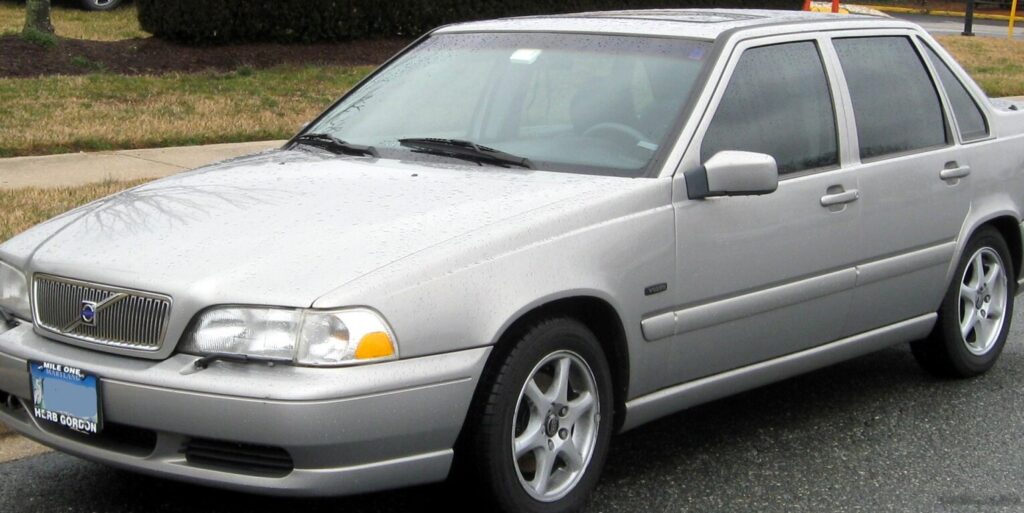
The Volvo S70 2.5 20V, produced between 1998 and 2000, represented a significant evolution in Volvo’s mid-size sedan offerings. Part of the broader S70 generation (which replaced the 850), this variant occupied a middle ground in the lineup, offering a balance between performance and affordability. It was positioned below the more powerful turbocharged models and above the base 2.3-liter engine, appealing to buyers seeking a comfortable and reliable family sedan with adequate power for everyday driving. The S70 itself was built upon Volvo’s P80 platform, shared with the V70 wagon, and aimed to provide a more refined and sophisticated experience than its predecessor.
Technical Specifications
| Brand | Volvo |
| Model | S70 |
| Generation | S70 |
| Type (Engine) | 2.5 20V (165 Hp) |
| Start of Production | 1998 |
| End of Production | 2000 |
| Powertrain Architecture | Internal Combustion Engine |
| Body Type | Sedan |
| Seats | 5 |
| Doors | 4 |
| Fuel Type | Petrol (Gasoline) |
| Power | 165 Hp |
| Engine Model/Code | B5254S |
| Engine Aspiration | Naturally Aspirated |
| Engine Oil Capacity | 5.8 l (6.13 US qt | 5.1 UK qt) |
| Coolant Capacity | 7.2 l (7.61 US qt | 6.34 UK qt) |
| Drivetrain | Front Wheel Drive |
Powertrain & Engine Architecture
The heart of the S70 2.5 20V is the B5254S engine, a 2.5-liter inline-five cylinder naturally aspirated powerplant. This engine is notable for its smooth operation and relatively high specific output for a non-turbocharged unit. The “20V” designation refers to the engine’s five valves per cylinder – four intake valves and one exhaust valve – a design intended to improve volumetric efficiency and broaden the powerband. Fuel delivery is managed by a Bosch Motronic fuel injection system, a sophisticated setup for its time, optimizing fuel atomization and combustion. The engine utilizes a single overhead camshaft (SOHC) design, simplifying the valvetrain and contributing to its reliability. The B5254S produces 165 horsepower and approximately 162 lb-ft of torque. The engine is paired with a four-speed automatic transmission, a common choice for buyers prioritizing ease of use over outright performance. This transmission, while not particularly advanced by modern standards, was known for its durability and smooth shifting characteristics.
Driving Characteristics
The S70 2.5 20V with the automatic transmission delivers a comfortable and predictable driving experience. Acceleration is adequate for merging onto highways and passing slower traffic, but it’s not a particularly sporty vehicle. The four-speed automatic transmission, while smooth, lacks the responsiveness of a manual gearbox or a more modern automatic with additional gears. Gear ratios are tuned for fuel efficiency and relaxed cruising rather than aggressive acceleration. Compared to the turbocharged S70 models (T5), the 2.5 20V feels noticeably less powerful, with a slower 0-60 mph time. However, it offers a more linear power delivery and a less demanding driving experience. Compared to the base 2.3-liter engine, the 2.5 20V provides a significant boost in performance, making it a more enjoyable option for drivers who frequently travel on the highway or carry passengers.
Equipment & Trim Levels
The S70 2.5 20V typically came standard with a respectable array of features for its time. These included power windows, power locks, power mirrors, air conditioning, and an AM/FM stereo with a cassette player. Upholstery was typically cloth, although leather was available as an option. Higher trim levels offered features such as a sunroof, heated front seats, automatic climate control, and a premium sound system. Optional extras also included traction control, side airbags, and a rear window defroster. The dashboard layout is functional and ergonomically designed, with easy-to-read gauges and intuitive controls. Interior color schemes were generally conservative, reflecting Volvo’s emphasis on understated elegance.
Chassis & Braking
The S70 utilizes a MacPherson strut front suspension and a multi-link independent rear suspension, providing a comfortable ride and good handling characteristics. Stabilizer bars are fitted to both the front and rear axles to reduce body roll during cornering. Braking duties are handled by ventilated disc brakes at the front and solid disc brakes at the rear. Anti-lock braking system (ABS) was standard equipment, enhancing safety and control in emergency braking situations. The chassis is robust and well-built, contributing to the S70’s reputation for safety and durability. Steering is power-assisted, providing light and effortless steering feel.
Market Reception & Comparison
The S70 2.5 20V was generally well-received by automotive critics. It was praised for its comfortable ride, spacious interior, and strong safety features. However, some critics noted that the engine lacked the punch of the turbocharged models and that the automatic transmission could feel sluggish at times. Fuel economy was considered average for its class, typically ranging from 20-24 mpg in combined driving. Compared to competitors such as the BMW 3 Series and the Mercedes-Benz C-Class, the S70 offered a more affordable price point and a reputation for exceptional reliability. The 2.5 20V offered a compelling alternative to the more expensive turbocharged models, appealing to buyers who prioritized comfort and practicality over outright performance.
Legacy
The B5254S engine, found in the S70 2.5 20V, is known for its long-term reliability and durability. With proper maintenance, these engines can easily exceed 200,000 miles. The automatic transmission, while not as sophisticated as modern units, is also generally reliable. In the used car market today, the S70 2.5 20V represents a good value for buyers seeking a comfortable, safe, and reliable sedan. Parts availability is generally good, and maintenance costs are relatively low. While it may not offer the performance or features of more modern vehicles, the S70 2.5 20V remains a popular choice for those who appreciate its classic Volvo qualities of safety, durability, and understated elegance. It stands as a testament to Volvo’s commitment to building long-lasting and dependable automobiles.
