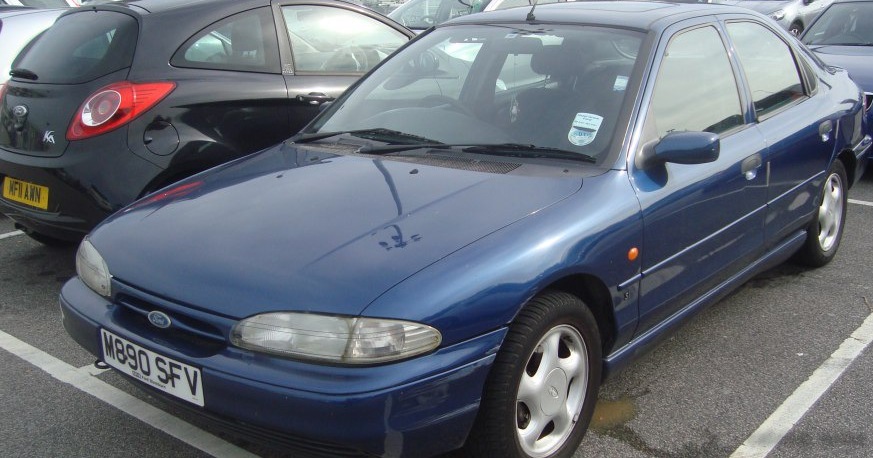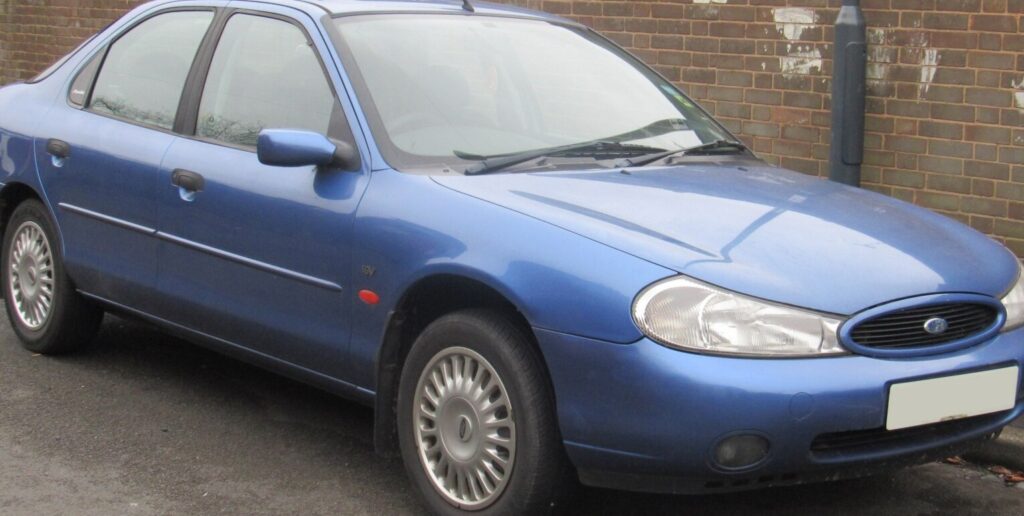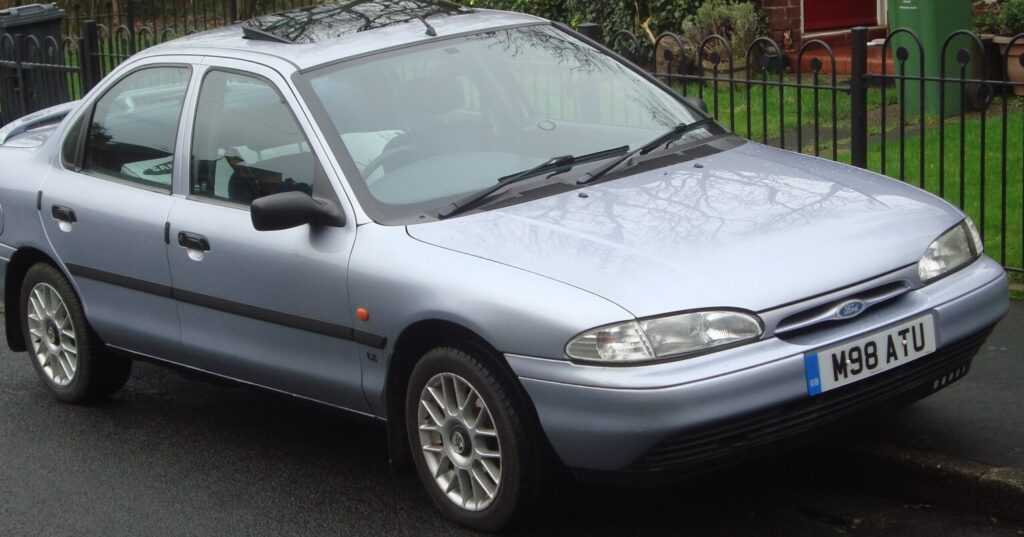
The Ford Mondeo I Sedan 1.8i 16V, produced between 1994 and 1996, represented a significant step forward for Ford’s mid-size offerings in Europe and, to a lesser extent, in other markets. Part of the Mondeo I generation (1993-1996), this variant occupied a middle ground in the lineup, offering a balance between affordability, fuel economy, and acceptable performance. It was designed to replace the aging Ford Sierra and Ford Taunus, aiming to provide a more modern and competitive vehicle in the increasingly crowded D-segment. The Mondeo I was notable for its contemporary styling, spacious interior, and focus on driving dynamics, a departure from some of its predecessors.
Technical Specifications
| Brand | Ford |
| Model | Mondeo |
| Generation | Mondeo I Sedan |
| Type (Engine) | 1.8i 16V (112 Hp) |
| Start of production | 1994 |
| End of production | 1996 |
| Powertrain Architecture | Internal Combustion engine |
| Body type | Sedan |
| Seats | 5 |
| Doors | 4 |
| Fuel consumption (combined) | 7.7 l/100 km |
| Fuel consumption (US mpg) | 30.5 US mpg |
| Fuel consumption (UK mpg) | 36.7 UK mpg |
| Fuel consumption (km/l) | 13 km/l |
| Fuel Type | Petrol (Gasoline) |
| Acceleration 0 – 100 km/h | 11.1 sec |
| Acceleration 0 – 62 mph | 11.1 sec |
| Acceleration 0 – 60 mph | 10.5 sec |
| Maximum speed | 195 km/h (121.17 mph) |
| Emission standard | Euro 2 |
| Weight-to-power ratio | 11.1 kg/Hp |
| Power | 112 Hp @ 5750 rpm |
| Torque | 158 Nm @ 3750 rpm (116.53 lb.-ft. @ 3750 rpm) |
| Engine layout | Front, Transverse |
| Engine Model/Code | RKB |
| Engine displacement | 1796 cm3 (109.6 cu. in.) |
| Number of cylinders | 4 |
| Engine configuration | Inline |
| Cylinder Bore | 80.6 mm (3.17 in.) |
| Piston Stroke | 88 mm (3.46 in.) |
| Compression ratio | 10:1 |
| Number of valves per cylinder | 4 |
| Fuel injection system | Multi-port manifold injection |
| Engine aspiration | Naturally aspirated engine |
| Valvetrain | DOHC |
| Engine oil capacity | 4.25 l (4.49 US qt | 3.74 UK qt) |
| Coolant capacity | 6.6 l (6.97 US qt | 5.81 UK qt) |
| Kerb Weight | 1240 kg (2733.73 lbs.) |
| Max. weight | 1800 kg (3968.32 lbs.) |
| Max load | 560 kg (1234.59 lbs.) |
| Trunk (boot) space – minimum | 480 l (16.95 cu. ft.) |
| Fuel tank capacity | 61 l (16.11 US gal | 13.42 UK gal) |
| Length | 4481 mm (176.42 in.) |
| Width | 1749 mm (68.86 in.) |
| Height | 1428 mm (56.22 in.) |
| Wheelbase | 2704 mm (106.46 in.) |
| Front track | 1503 mm (59.17 in.) |
| Rear track | 1487 mm (58.54 in.) |
| Drivetrain Architecture | Front wheel drive |
| Number of gears | 5 gears, manual transmission |
| Front suspension | Wishbone |
| Rear suspension | Coil spring |
| Front brakes | Ventilated discs |
| Rear brakes | Drum |
| Assisting systems | ABS (Anti-lock braking system) |
| Steering type | Steering rack and pinion |
| Power steering | Hydraulic Steering |
| Tires size | 185/65 R14 |
| Wheel rims size | 6J x 14 |
Powertrain & Engine Architecture
The 1.8i 16V engine, designated the RKB, was a naturally aspirated, inline-four cylinder powerplant. It featured a dual overhead camshaft (DOHC) valvetrain operating four valves per cylinder, contributing to its relatively high output for its displacement. Fuel delivery was handled by a multi-port fuel injection system, providing precise fuel metering for improved efficiency and performance. The engine’s 1796 cc displacement yielded 112 horsepower at 5750 rpm and 158 Nm (116.53 lb-ft) of torque at 3750 rpm. This engine was paired with a five-speed manual transmission, which was the most common configuration. While an automatic transmission was offered, it was less frequently selected and often perceived as detracting from the driving experience.
Driving Characteristics
The 1.8i 16V Mondeo offered a reasonably engaging driving experience, particularly with the five-speed manual transmission. Acceleration from 0-60 mph took around 10.5 seconds, which was adequate for the time but not particularly sporty. The engine felt responsive in the mid-range, making it suitable for everyday driving and overtaking maneuvers. The automatic transmission, while providing convenience, noticeably dulled performance and increased fuel consumption. Gear ratios were tuned for a balance of fuel economy and usability, rather than outright acceleration. Compared to the higher-performance 2.0L or V6 variants, the 1.8i felt less powerful, but it offered a more economical and refined driving experience.
Equipment & Trim Levels
The 1.8i 16V Mondeo typically came equipped with a reasonable level of standard features. These included power steering, central locking, electric front windows, and an adjustable steering column. Interior upholstery was generally cloth, with a relatively simple dashboard layout. Optional extras included air conditioning, alloy wheels, a sunroof, and upgraded audio systems. Trim levels varied depending on the market, but the 1.8i generally represented a mid-range offering, positioned above the base models but below the more luxurious and powerful trims.
Chassis & Braking
The Mondeo I utilized a front-wheel-drive layout with independent wishbone suspension at the front and a coil spring rear suspension. This setup provided a good balance of ride comfort and handling. Braking consisted of ventilated discs at the front and drum brakes at the rear. Anti-lock Braking System (ABS) was available, and became increasingly common as standard equipment. The chassis was designed to be relatively lightweight, contributing to the car’s agility. Stabilizer bars were fitted to both the front and rear axles to reduce body roll during cornering.
Market Reception & Comparison
The Ford Mondeo I Sedan 1.8i 16V was generally well-received by automotive critics. It was praised for its spacious interior, comfortable ride, and relatively affordable price point. However, some critics noted that the engine lacked the outright performance of its rivals, particularly the German offerings. Fuel economy was considered good for its class, and reliability was generally above average. Compared to the 2.0L and V6 models, the 1.8i offered a more economical option, appealing to buyers who prioritized fuel efficiency and value over outright performance. The automatic transmission version was often criticized for its sluggishness and reduced fuel economy.
Legacy
The Ford Mondeo I 1.8i 16V powertrain proved to be relatively durable and reliable. The RKB engine, while not particularly groundbreaking, was a well-engineered unit that could withstand years of use with proper maintenance. Today, these vehicles are relatively affordable on the used car market, but finding well-maintained examples can be challenging. Rust is a common issue, particularly in regions with harsh winters. The 1.8i 16V Mondeo remains a popular choice for those seeking a classic, affordable, and reasonably reliable family sedan. Its influence can be seen in subsequent Mondeo generations, which continued to build on the original’s strengths of spaciousness, comfort, and driving dynamics.