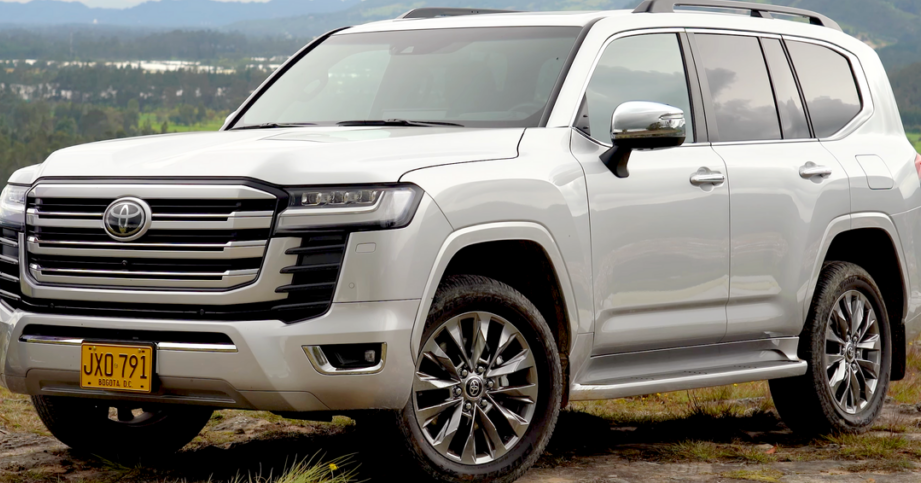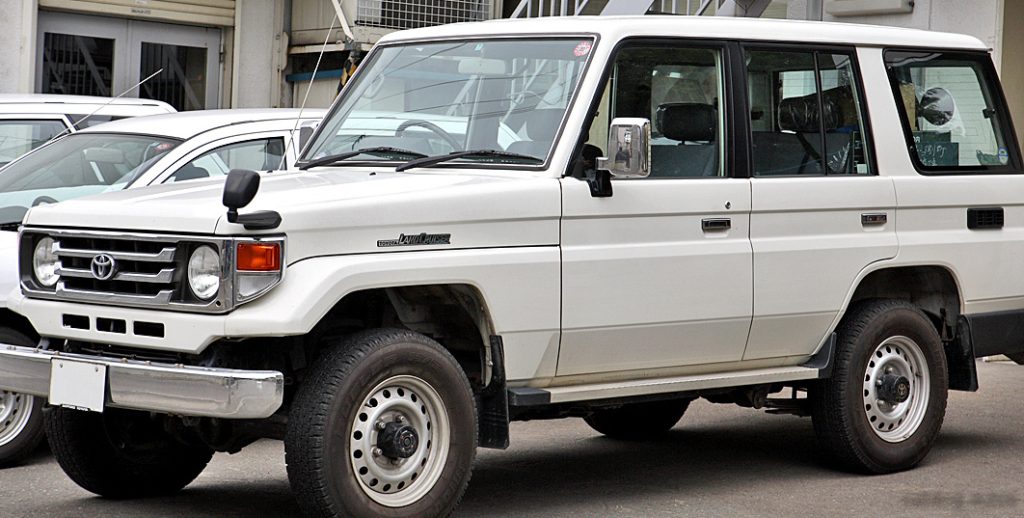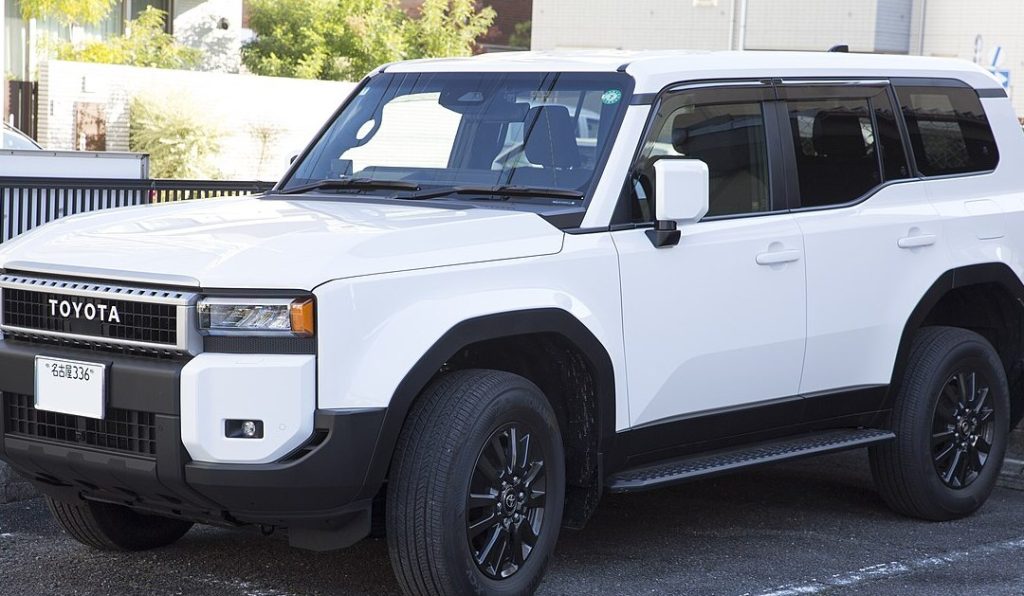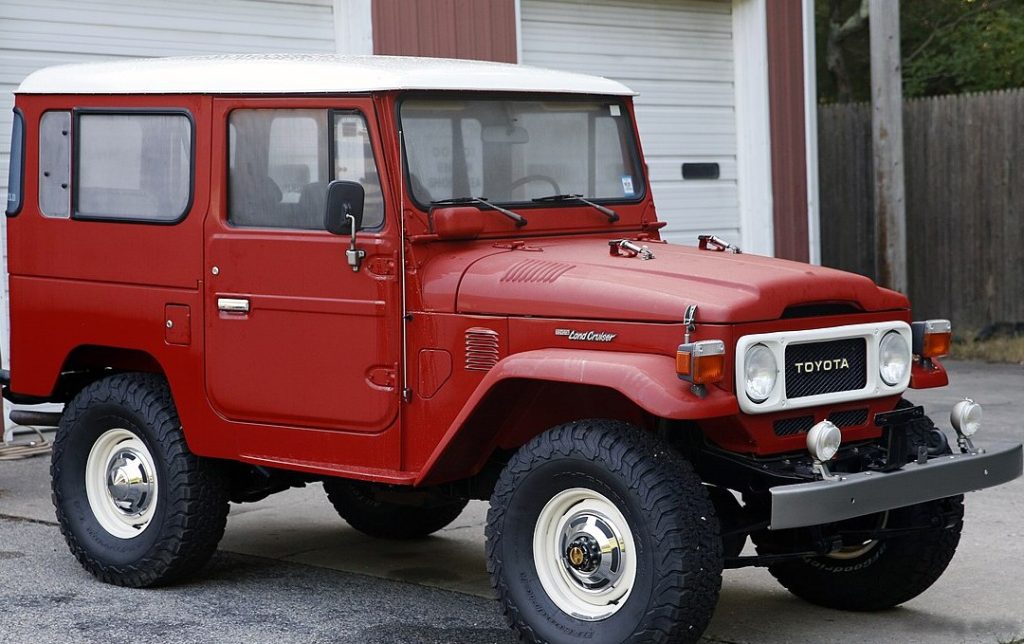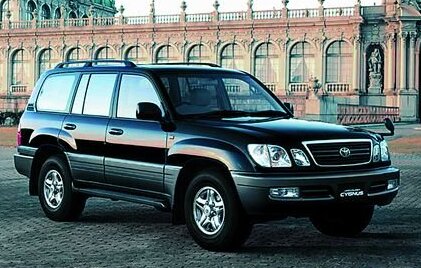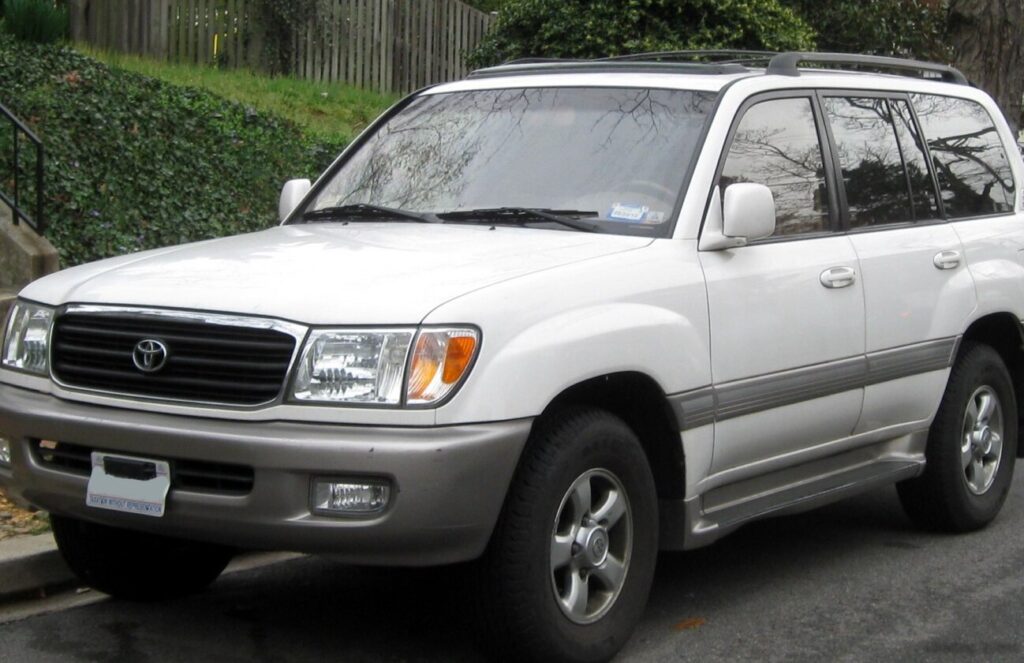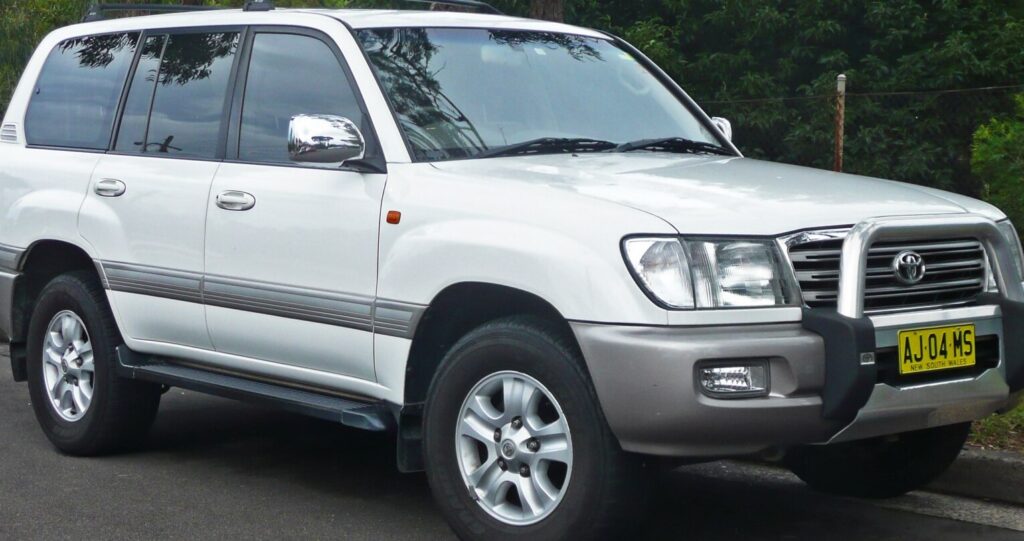
The Toyota Land Cruiser J100, particularly the facelifted version produced from 2002 to 2005, represented a significant evolution in the long and storied history of Toyota’s iconic off-road vehicle. This generation, internally designated as the J100 series, aimed to blend traditional Land Cruiser ruggedness with increased refinement and on-road comfort. The 4.2 TD variant, equipped with a 4.2-liter turbocharged diesel engine producing 204 horsepower and paired with a four-speed automatic transmission, was a key offering in many international markets, though less common in the United States. It occupied a middle ground in the J100 lineup, offering a balance between performance, fuel economy, and capability, appealing to buyers who needed a robust vehicle for both work and leisure.
Technical Specifications
| Brand | Toyota |
| Model | Land Cruiser |
| Generation | Land Cruiser (J100, facelift 2002) |
| Type (Engine) | 4.2 TD (204 Hp) 4WD Automatic |
| Start of production | 2002 |
| End of production | 2005 |
| Powertrain Architecture | Internal Combustion engine |
| Body type | SUV |
| Seats | 5-7 |
| Doors | 5 |
| Fuel consumption (urban) | 13.4 l/100 km (17.6 US mpg, 21.1 UK mpg, 7.5 km/l) |
| Fuel consumption (extra urban) | 10.6 l/100 km (22.2 US mpg, 26.6 UK mpg, 9.4 km/l) |
| Fuel consumption (combined) | 9 l/100 km (26.1 US mpg, 31.4 UK mpg, 11.1 km/l) |
| CO2 emissions | 282 g/km |
| Fuel Type | Diesel |
| Acceleration 0 – 100 km/h | 11.5 sec |
| Acceleration 0 – 62 mph | 11.5 sec |
| Acceleration 0 – 60 mph | 10.9 sec |
| Maximum speed | 180 km/h (111.85 mph) |
| Weight-to-power ratio | 12.1 kg/Hp, 82.9 Hp/tonne |
| Weight-to-torque ratio | 5.7 kg/Nm, 174.8 Nm/tonne |
| Power | 204 Hp |
| Power per litre | 49 Hp/l |
| Torque | 430 Nm @ 1200-3200 rpm (317.15 lb.-ft. @ 1200-3200 rpm) |
| Engine layout | Front, Longitudinal |
| Engine Model/Code | 1HD-FTE |
| Engine displacement | 4164 cm3 (254.1 cu. in.) |
| Number of cylinders | 6 |
| Engine configuration | Inline |
| Cylinder Bore | 94 mm (3.7 in.) |
| Piston Stroke | 100 mm (3.94 in.) |
| Compression ratio | 18.8:1 |
| Number of valves per cylinder | 4 |
| Fuel injection system | Direct injection |
| Engine aspiration | Turbocharger, Intercooler |
| Valvetrain | SOHC |
| Engine oil capacity | 11.4 l (12.05 US qt, 10.03 UK qt) |
| Coolant | 13.7 l (14.48 US qt, 12.05 UK qt) |
| Kerb Weight | 2460-2640 kg (5423.37 – 5820.2 lbs.) |
| Max. weight | 3260 kg (7187.07 lbs.) |
| Max load | 620-800 kg (1366.87 – 1763.7 lbs.) |
| Trunk (boot) space – minimum | 1318 l (46.54 cu. ft.) |
| Trunk (boot) space – maximum | 2212 l (78.12 cu. ft.) |
| Fuel tank capacity | 96 l (25.36 US gal, 21.12 UK gal) |
| Max. roof load | 100 kg (220.46 lbs.) |
| Permitted trailer load with brakes (12%) | 3500 kg (7716.18 lbs.) |
| Permitted trailer load without brakes | 750 kg (1653.47 lbs.) |
| Permitted towbar download | 140 kg (308.65 lbs.) |
| Length | 4890 mm (192.52 in.) |
| Width | 1940 mm (76.38 in.) |
| Height | 1880 mm (74.02 in.) |
| Wheelbase | 2850 mm (112.2 in.) |
| Front track | 1620 mm (63.78 in.) |
| Rear (Back) track | 1615 mm (63.58 in.) |
| Ride height (ground clearance) | 220 mm (8.66 in.) |
| Minimum turning circle | 12.6 m (41.34 ft.) |
| Approach angle | 34° |
| Departure angle | 26° |
| Ramp-over angle | 25° |
| Climb angle | 45° |
| Wading depth | 700 mm (27.56 in.) |
| Drivetrain Architecture | The Internal combustion engine (ICE) drives permanently the four wheels of the vehicle. |
| Drive wheel | All wheel drive (4×4) |
| Number of gears and type of gearbox | 5 gears, automatic transmission |
| Front suspension | Independent torsion bar, double wishbone, Transverse stabilizer |
| Rear suspension | Rigid axle suspension, Transverse stabilizer, Coil spring |
| Front brakes | Ventilated discs |
| Rear brakes | Ventilated discs |
| Assisting systems | ABS (Anti-lock braking system) |
| Steering type | Steering rack and pinion |
| Power steering | Hydraulic Steering |
| Tires size | 275/65 R17; 275/60 R18 |
| Wheel rims size | 8J x 17; 8J x 18 |
Powertrain & Engine Architecture
The heart of this Land Cruiser variant is the 1HD-FTE engine, a 4.2-liter inline-six cylinder diesel. This engine is renowned for its durability and torque output. The ‘FTE’ designation indicates a factory-turbocharged and intercooled version. The 1HD-FTE utilizes a direct injection system, injecting fuel directly into the combustion chamber under extremely high pressure. This, combined with the turbocharger and intercooler, allows for increased power and efficiency. The engine features a single overhead camshaft (SOHC) valvetrain, a design choice prioritizing robustness over ultimate performance. The four-speed automatic transmission, while not as sophisticated as modern gearboxes, was chosen for its reliability and ability to handle the engine’s substantial torque. It’s a traditional torque converter automatic, offering smooth, if not particularly quick, shifts.
Driving Characteristics
The 4.2 TD automatic Land Cruiser J100 delivers a driving experience focused on effortless capability rather than sporty performance. The 430 Nm (317 lb-ft) of torque available from 1200-3200 rpm provides ample pulling power, making it ideal for towing or navigating challenging terrain. However, the 204 horsepower and the four-speed automatic transmission mean acceleration is not brisk. The automatic transmission’s gear ratios are geared towards maximizing fuel economy and providing smooth cruising, rather than quick acceleration. Compared to the manual transmission versions or the gasoline-powered Land Cruisers, the 4.2 TD automatic feels noticeably slower. However, its low-end grunt and relaxed cruising demeanor make it a comfortable and capable long-distance vehicle.
Equipment & Trim Levels
The 4.2 TD automatic typically came with a reasonably well-equipped specification, though the exact features varied depending on the market. Standard equipment generally included air conditioning, power windows and locks, central locking, and an upgraded audio system. Higher trim levels added features like leather upholstery, woodgrain interior trim, sunroof, and upgraded sound systems. The J100 offered a range of optional extras, including a rear air suspension system for improved ride comfort, a navigation system, and various off-road enhancements like a front skid plate and a limited-slip differential.
Chassis & Braking
The J100 Land Cruiser features a robust body-on-frame construction, providing excellent durability and off-road capability. The front suspension utilizes an independent torsion bar and double wishbone setup, while the rear employs a rigid axle with coil springs and a transverse stabilizer bar. This configuration balances on-road comfort with off-road articulation. Braking duties are handled by ventilated disc brakes on all four wheels, coupled with an Anti-lock Braking System (ABS) for enhanced safety. The steering is a hydraulic rack and pinion system, providing a reasonable level of precision and feedback.
Market Reception & Comparison
The 4.2 TD automatic Land Cruiser J100 was generally well-received in markets where diesel engines were popular, particularly in Europe, Australia, and parts of Asia. Critics praised its robust build quality, comfortable ride, and impressive off-road capability. However, some noted the relatively slow acceleration and the somewhat dated feel of the four-speed automatic transmission. Compared to the gasoline-powered Land Cruisers, the 4.2 TD offered significantly better fuel economy and torque, making it a more practical choice for those who frequently towed or drove long distances. Compared to other diesel-powered SUVs of the time, the Land Cruiser stood out for its exceptional reliability and durability.
Legacy
The 1HD-FTE engine, found in this Land Cruiser variant, has earned a reputation as one of the most reliable diesel engines ever produced. With proper maintenance, these engines can easily exceed 300,000 miles (500,000 kilometers). Today, the J100 Land Cruiser 4.2 TD automatic remains a sought-after vehicle in the used car market, particularly among those seeking a durable and capable off-road vehicle. Its robust construction, reliable engine, and comfortable ride ensure its continued popularity for years to come. While fuel economy isn’t stellar by modern standards, its longevity and reputation for trouble-free operation make it a compelling choice for those prioritizing dependability over cutting-edge technology.