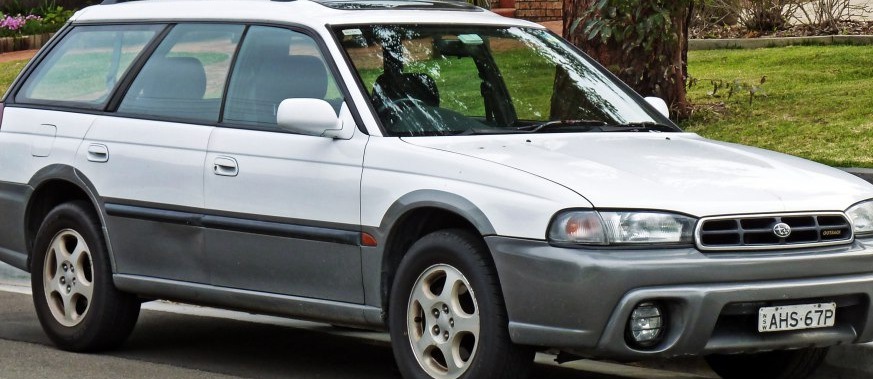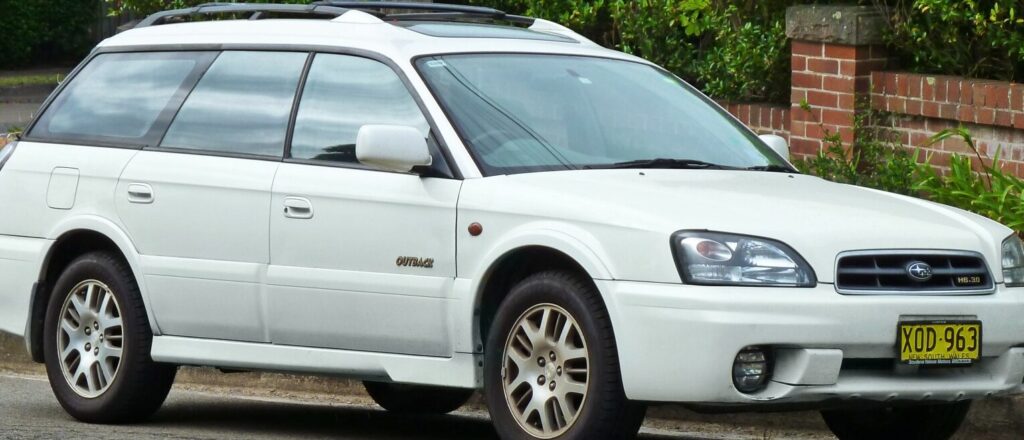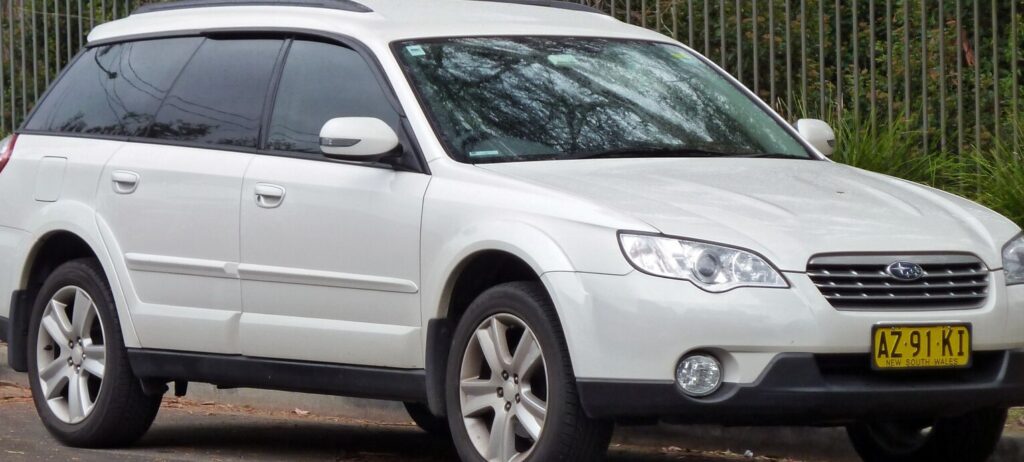
The Subaru Outback III (BL, BP) 2.5i, produced between 2003 and 2007, represented a significant evolution of Subaru’s popular crossover wagon. Positioned as a mid-range offering within the third-generation Outback lineup, the 2.5i variant aimed to balance affordability with Subaru’s renowned symmetrical all-wheel drive system and a comfortable driving experience. It served as a key model for Subaru in North America, where the Outback had established a strong following as a practical and capable vehicle for active lifestyles. This specific configuration – the 2.5-liter engine paired with a four-speed automatic transmission – was a popular choice for buyers prioritizing ease of use over outright performance.
Technical Specifications
| Brand | Subaru |
| Model | Outback |
| Generation | Outback III (BL, BP) |
| Type | 2.5i (165 Hp) AWD Automatic |
| Start of production | 2003 |
| End of production | 2007 |
| Powertrain Architecture | Internal Combustion engine |
| Body type | Station wagon (estate) |
| Seats | 5 |
| Doors | 5 |
| Fuel Type | Petrol (Gasoline) |
| Acceleration 0 – 100 km/h | 9.8 sec |
| Acceleration 0 – 62 mph | 9.8 sec |
| Acceleration 0 – 60 mph | 9.3 sec |
| Maximum speed | 198 km/h (123.03 mph) |
| Weight-to-power ratio | 8.7 kg/Hp, 115.4 Hp/tonne |
| Weight-to-torque ratio | 6.4 kg/Nm, 157.3 Nm/tonne |
| Power | 165 Hp @ 5600 rpm |
| Power per litre | 67.2 Hp/l |
| Torque | 225 Nm @ 4000 rpm (165.95 lb.-ft. @ 4000 rpm) |
| Engine layout | Front, Longitudinal |
| Engine Model/Code | EJ253 |
| Engine displacement | 2457 cm3 (149.94 cu. in.) |
| Number of cylinders | 4 |
| Engine configuration | Boxer |
| Cylinder Bore | 99.5 mm (3.92 in.) |
| Piston Stroke | 79 mm (3.11 in.) |
| Compression ratio | 10:1 |
| Number of valves per cylinder | 4 |
| Fuel injection system | Multi-port manifold injection |
| Engine aspiration | Naturally aspirated engine |
| Valvetrain | DOHC |
| Engine oil capacity | 4.2 l (4.44 US qt | 3.7 UK qt) |
| Coolant | 6.4 l (6.76 US qt | 5.63 UK qt) |
| Kerb Weight | 1430 kg (3152.61 lbs) |
| Trunk (boot) space – minimum | 459 l (16.21 cu. ft.) |
| Trunk (boot) space – maximum | 1649 l (58.23 cu. ft.) |
| Fuel tank capacity | 64 l (16.91 US gal | 14.08 UK gal) |
| Length | 4730 mm (186.22 in.) |
| Width | 1770 mm (69.69 in.) |
| Height | 1545 mm (60.83 in.) |
| Wheelbase | 2670 mm (105.12 in.) |
| Front track | 1495 mm (58.86 in.) |
| Rear (Back) track | 1485 mm (58.46 in.) |
| Drive wheel | All wheel drive (4×4) |
| Number of gears and type of gearbox | 4 gears, automatic transmission |
| Front suspension | Spring Strut |
| Rear suspension | Coil spring |
| Front brakes | Ventilated discs |
| Rear brakes | Disc |
| Assisting systems | ABS (Anti-lock braking system) |
| Steering type | Steering rack and pinion |
| Power steering | Hydraulic Steering |
| Tires size | 215/60 R16 |
Powertrain & Engine Architecture
The heart of the 2.5i Outback was the EJ253 engine, a 2.5-liter naturally aspirated boxer-four cylinder. Subaru’s horizontally opposed “boxer” configuration, where pistons move horizontally rather than vertically, contributes to a lower center of gravity, enhancing stability. The EJ253 featured a single overhead camshaft (SOHC) design for each cylinder bank, operating four valves per cylinder. Fuel delivery was managed by a multi-point fuel injection system. This engine produced 165 horsepower at 5600 rpm and 166 lb-ft of torque at 4000 rpm. The engine’s longitudinal mounting and the standard symmetrical all-wheel drive system contributed to the Outback’s balanced handling characteristics. The four-speed automatic transmission, while providing smooth shifts, was a somewhat dated design by the mid-2000s, lacking the efficiency and responsiveness of newer transmissions with more gears.
Driving Characteristics
The 2.5i Automatic Outback offered a comfortable and predictable driving experience. Acceleration was adequate for everyday driving, with a 0-60 mph time of around 9.3 seconds. However, it wasn’t particularly quick, especially when compared to the turbocharged models or even the manual transmission versions of the 2.5i. The automatic transmission’s gear ratios were tuned for fuel economy and smooth cruising rather than spirited performance. The all-wheel drive system provided excellent traction in various weather conditions, making the Outback a capable vehicle for those living in areas with snow or inclement weather. The suspension was tuned for comfort, absorbing bumps and providing a relatively smooth ride, though it could feel somewhat soft during aggressive cornering.
Equipment & Trim Levels
The 2.5i trim typically included standard features such as air conditioning, power windows and locks, a CD player, and cloth upholstery. Available options included a sunroof, leather upholstery, heated front seats, and a premium audio system. Subaru also offered various packages that bundled together popular options. The interior design was functional and straightforward, prioritizing practicality over luxury. The Outback’s spacious interior and large cargo area were key selling points, making it a versatile vehicle for families and those with active lifestyles.
Chassis & Braking
The Outback III utilized a MacPherson strut front suspension and a double-wishbone rear suspension. The suspension was tuned to provide a comfortable ride while maintaining reasonable handling characteristics. The 2.5i models were equipped with ventilated disc brakes in the front and solid disc brakes in the rear. Anti-lock brakes (ABS) were standard, enhancing safety and control during emergency braking situations. The steering was rack-and-pinion with hydraulic power assist, providing a responsive and predictable steering feel.
Market Reception & Comparison
The 2.5i Automatic Outback was generally well-received by critics and consumers alike. It was praised for its practicality, safety, and all-weather capability. However, some reviewers noted that the four-speed automatic transmission felt dated and that the engine lacked the power of the available turbocharged options. Compared to the 2.5XT (turbocharged) model, the 2.5i offered significantly lower fuel consumption but considerably less performance. The 2.5i also differed from the diesel options available in Europe, offering a smoother and quieter driving experience but with lower fuel economy. The 2.5i was positioned as the entry-level Outback, appealing to buyers who prioritized value and practicality over performance and luxury.
Legacy
The Subaru Outback III 2.5i Automatic has proven to be a relatively reliable vehicle, with many examples still on the road today. The EJ253 engine, while not without its potential issues (such as head gasket leaks), is generally considered durable when properly maintained. The four-speed automatic transmission is also reasonably reliable, though it may exhibit some wear and tear with high mileage. In the used car market, the 2.5i Outback remains a popular choice for buyers seeking a practical, affordable, and capable crossover wagon. Its reputation for reliability, combined with Subaru’s strong brand image, continues to make it a desirable vehicle for those looking for a versatile and dependable all-weather vehicle.