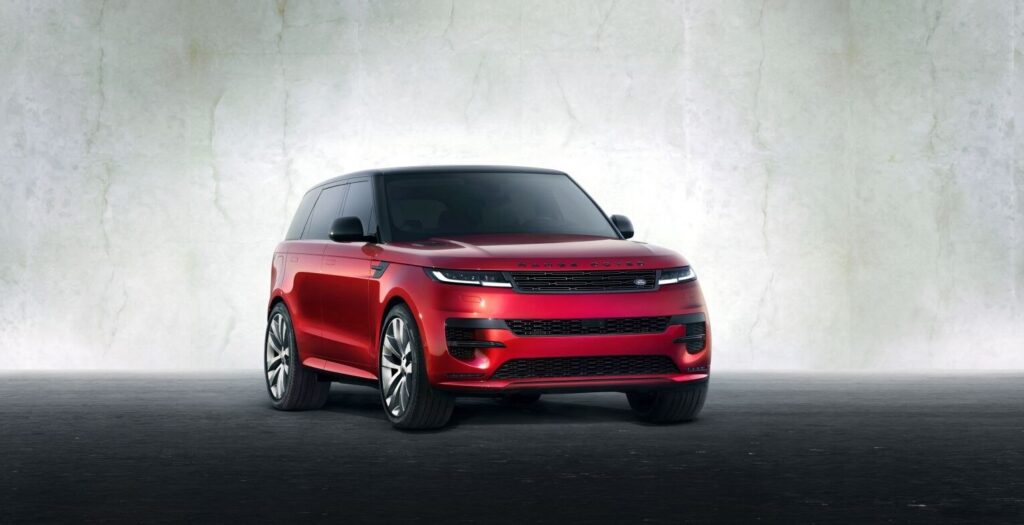
The Land Rover Range Rover Sport III 3.0 P510e, introduced in May 2022 and produced through May 2023, represents a significant step in the evolution of the Range Rover Sport line. This variant is a plug-in hybrid electric vehicle (PHEV) positioned as a high-performance, yet relatively efficient, offering within the third-generation Range Rover Sport (L461) family. It slots into the upper echelon of the lineup, offering a blend of luxury, capability, and electrified power. The P510e utilizes Land Rover’s Ingenium powertrain, combining a 3.0-liter inline-six cylinder engine with an electric motor and a substantial battery pack, delivering a combined system output of 510 horsepower. It’s designed to appeal to buyers seeking a premium SUV experience with reduced emissions and the flexibility of electric-only driving.
Technical Specifications
| Brand | Land Rover |
| Model | Range Rover Sport |
| Generation | Range Rover Sport III |
| Type (Engine) | 3.0 P510e (510 Hp) Plug-in Hybrid iAWD Automatic |
| Start of production | May, 2022 |
| End of production | May, 2023 |
| Powertrain Architecture | PHEV (Plug-in Hybrid Electric Vehicle) |
| Body type | SUV |
| Seats | 5 |
| Doors | 5 |
| Combined fuel consumption (WLTP) | 0.8-0.9 l/100 km (294 – 261.3 US mpg, 353.1 – 313.9 UK mpg, 125 – 111.1 km/l) |
| CO2 emissions (WLTP) | 18-20 g/km |
| Fuel consumption (NEDC, WLTP equivalent) | 1.6 l/100 km (147 US mpg, 176.6 UK mpg, 62.5 km/l) |
| CO2 emissions (NEDC, WLTP equivalent) | 37 g/km |
| Fuel Type | Petrol / electricity |
| Acceleration 0 – 100 km/h | 5.4 sec |
| Acceleration 0 – 62 mph | 5.4 sec |
| Acceleration 0 – 60 mph | 5.2 sec |
| Maximum speed | 242 km/h (150.37 mph) |
| Emission standard | Euro 6d |
| Weight-to-power ratio | 5.4 kg/Hp, 186.5 Hp/tonne |
| Weight-to-torque ratio | 3.9 kg/Nm, 255.9 Nm/tonne |
| Gross battery capacity | 38.2 kWh |
| Net (usable) battery capacity | 31.8 kWh |
| Battery technology | Lithium-ion (Li-Ion) |
| Battery location | Below the floor, under the rear seats |
| All-electric range (WLTP) | 113 km (70.21 mi) |
| All-electric range (NEDC, WLTP equivalent) | 125 km (77.67 mi) |
| Max speed (electric) | 140 km/h (86.99 mph) |
| Electric motor power | 143 Hp |
| Electric motor location | Between the combustion engine and the transmission |
| System power | 510 Hp @ 5500-6500 rpm |
| System torque | 700 Nm @ 1500-5000 rpm (516.29 lb.-ft. @ 1500-5000 rpm) |
| Engine layout | Front, Longitudinal |
| Engine displacement | 2996 cm3 (182.83 cu. in.) |
| Number of cylinders | 6 |
| Engine configuration | Inline |
| Cylinder Bore | 83 mm (3.27 in.) |
| Piston Stroke | 92.29 mm (3.63 in.) |
| Compression ratio | 10.5:1 |
| Number of valves per cylinder | 4 |
| Fuel injection system | Direct injection |
| Engine aspiration | Turbocharger, Intercooler |
| Engine oil capacity | 9.4 l (9.93 US qt | 8.27 UK qt) |
| Kerb Weight | 2735 kg (6029.64 lbs.) |
| Max. weight | 3450 kg (7605.95 lbs.) |
| Max load | 715 kg (1576.31 lbs.) |
| Trunk (boot) space – minimum | 450 l (15.89 cu. ft.) |
| Trunk (boot) space – maximum | 1860 l (65.69 cu. ft.) |
| Fuel tank capacity | 72 l (19.02 US gal | 15.84 UK gal) |
| Max. roof load | 100 kg (220.46 lbs.) |
| Permitted trailer load with brakes (12%) | 3000 kg (6613.87 lbs.) |
| Permitted trailer load without brakes | 750 kg (1653.47 lbs.) |
| Permitted towbar download | 120 kg (264.55 lbs.) |
| Length | 4946 mm (194.72 in.) |
| Width with mirrors folded | 2043 mm (80.43 in.) |
| Width including mirrors | 2209 mm (86.97 in.) |
| Height | 1820 mm (71.65 in.) |
| Wheelbase | 2997 mm (117.99 in.) |
| Front track | 1702 mm (67.01 in.) |
| Rear (Back) track | 1704 mm (67.09 in.) |
| Ride height (ground clearance) | 274 mm (10.79 in.) |
| Drag coefficient (Cd) | 0.29 |
| Minimum turning circle (turning diameter) | 12.53 m (41.11 ft.) |
| Approach angle | 33° |
| Departure angle | 30° |
| Ramp-over (brakeover) angle | 24.5° |
| Wading depth | 900 mm (35.43 in.) |
| Drivetrain Architecture | The Internal combustion engine (ICE) and the electric motor permanently drive the rear wheels of the vehicle, capable of running in full electric or mixed mode, and if necessary through the electrically or mechanically controlled clutch, the front wheels are driven. |
| Drive wheel | All wheel drive (4×4) |
| Number of gears and type of gearbox | 8 gears, automatic transmission ZF |
| Front suspension | Double wishbone |
| Rear suspension | Independent multi-link suspension |
| Front brakes | Ventilated discs, 400 mm |
| Rear brakes | Ventilated discs, 370 mm |
| Assisting systems | ABS (Anti-lock braking system), 4-wheel steering (4WS, active rear steering) |
| Steering type | Steering rack and pinion |
| Power steering | Electric Steering |
Powertrain & Engine Architecture
At the heart of the P510e lies Land Rover’s Ingenium 3.0-liter inline-six cylinder engine, designated as the P360. This engine utilizes a turbocharger and direct fuel injection to produce 360 horsepower on its own. However, the P510e’s true power comes from the integration of a 143 horsepower electric motor, positioned between the engine and the eight-speed ZF automatic transmission. The electric motor is powered by a 31.8 kWh (usable) lithium-ion battery pack located under the floor and rear seats. This configuration allows for a combined system output of 510 horsepower and 700 Nm (516 lb-ft) of torque. The engine features a relatively high 10.5:1 compression ratio and employs variable valve timing for optimized efficiency and performance. The ZF 8HP70 automatic transmission is known for its smooth shifts and responsiveness, and it’s specifically calibrated to work seamlessly with the electric motor for optimal power delivery.
Driving Characteristics
The P510e delivers a unique driving experience. In electric-only mode, it offers near-silent operation and brisk acceleration, suitable for shorter commutes and urban driving. Switching to hybrid mode blends the power of the engine and motor, providing strong acceleration and impressive performance. The 0-60 mph sprint takes just 5.2 seconds, and the vehicle feels remarkably composed even at higher speeds. The eight-speed automatic transmission provides smooth and quick gear changes, and the iAWD system ensures excellent traction in various conditions. Compared to the standard six-cylinder Range Rover Sport, the P510e offers a more refined and responsive low-end torque delivery thanks to the electric motor. While the added weight of the battery pack does slightly impact handling agility compared to lighter trims, the sophisticated suspension system mitigates this effect, providing a comfortable and controlled ride.
Equipment & Trim Levels
The P510e typically comes well-equipped, reflecting its position as a premium variant. Standard features include leather upholstery, a panoramic sunroof, a premium sound system, and a comprehensive suite of driver-assistance technologies such as adaptive cruise control, lane-keeping assist, and automatic emergency braking. The infotainment system features a large touchscreen display with navigation, Apple CarPlay, and Android Auto compatibility. Optional extras include upgraded leather trims, a head-up display, and advanced off-road packages. The interior design emphasizes luxury and comfort, with high-quality materials and meticulous attention to detail.
Chassis & Braking
The Range Rover Sport III utilizes a lightweight aluminum-intensive chassis, contributing to its overall rigidity and reducing weight. The suspension system features double wishbones at the front and an independent multi-link setup at the rear, providing a comfortable and controlled ride. The P510e is equipped with ventilated disc brakes on all four wheels, with larger 400mm front discs and 370mm rear discs providing ample stopping power. The vehicle also incorporates advanced braking systems such as ABS and electronic brake-force distribution. The iAWD system intelligently distributes torque between the front and rear axles, optimizing traction and stability in various driving conditions.
Market Reception & Comparison
The Range Rover Sport P510e was generally well-received by automotive critics. It was praised for its blend of performance, luxury, and efficiency. The electric-only range of 113 km (70.21 miles) was considered competitive within its segment. Compared to the petrol-only Range Rover Sport variants, the P510e offered significantly improved fuel economy and reduced emissions. However, the higher purchase price and added weight were noted as potential drawbacks. Compared to other PHEV SUVs, the Range Rover Sport P510e stood out for its premium brand image, luxurious interior, and off-road capability.
Legacy
The Land Rover Range Rover Sport III P510e represents a pivotal step in Land Rover’s electrification strategy. While long-term reliability data is still emerging, the Ingenium powertrain has proven to be generally robust. The P510e’s combination of performance, luxury, and efficiency has made it a desirable option in the used car market. As battery technology continues to evolve, the P510e is likely to become increasingly attractive to buyers seeking a premium SUV with a reduced environmental impact. The integration of a powerful electric motor with a refined combustion engine showcases Land Rover’s commitment to delivering a compelling and sustainable driving experience.