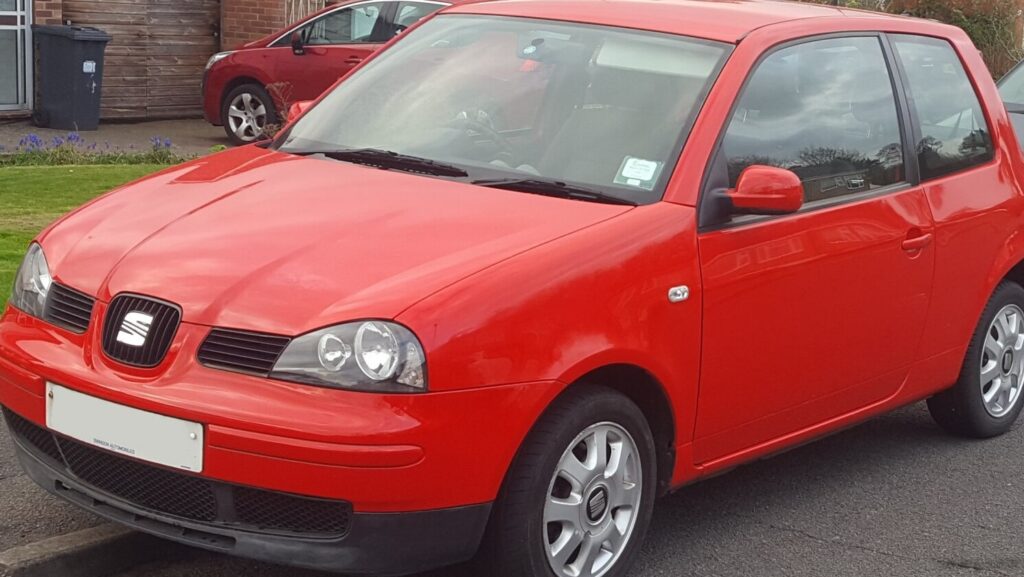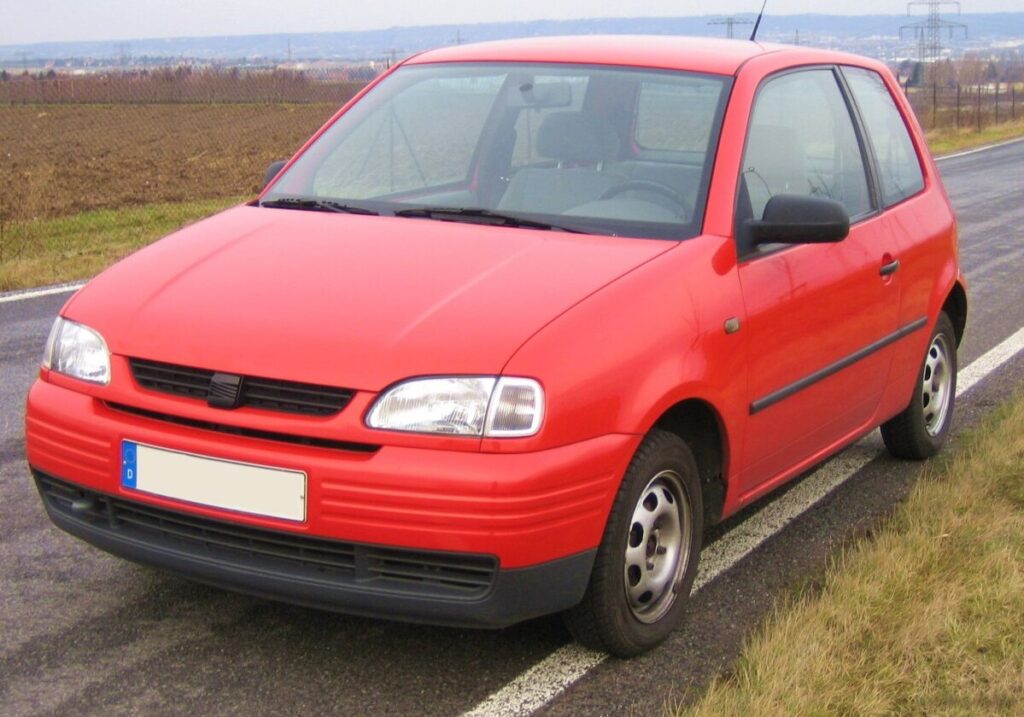
The SEAT Arosa 1.4 Automatic, produced between February 1997 and August 1998, represents an entry-level offering within the broader Arosa (6H) range. Positioned as a practical and affordable city car, it catered to buyers seeking ease of use and automatic transmission convenience. The Arosa itself was SEAT’s rebadged version of the Volkswagen Polo Mk3 (6N), sharing its platform – the 1HX0/A3 – and many mechanical components. This variant, with its modest 60 horsepower output, was aimed at drivers prioritizing fuel efficiency and low running costs over outright performance.
Technical Specifications
| Brand | Seat |
| Model | Arosa |
| Generation | Arosa (6H) |
| Type (Engine) | 1.4 (60 Hp) Automatic |
| Start of production | February, 1997 |
| End of production | August, 1998 |
| Powertrain Architecture | Internal Combustion engine |
| Body type | Hatchback |
| Seats | 4 |
| Doors | 3 |
| Fuel consumption (urban) | 10.4 l/100 km (22.6 US mpg, 27.2 UK mpg, 9.6 km/l) |
| Fuel consumption (extra urban) | 6.2 l/100 km (37.9 US mpg, 45.6 UK mpg, 16.1 km/l) |
| Fuel Type | Petrol (Gasoline) |
| Acceleration 0 – 100 km/h | 16.2 sec |
| Acceleration 0 – 62 mph | 16.2 sec |
| Acceleration 0 – 60 mph | 15.4 sec |
| Maximum speed | 155 km/h (96.31 mph) |
| Weight-to-power ratio | 15.5 kg/Hp, 64.5 Hp/tonne |
| Weight-to-torque ratio | 8 kg/Nm, 124.7 Nm/tonne |
| Power | 60 Hp @ 4700 rpm |
| Power per litre | 43.2 Hp/l |
| Torque | 116 Nm @ 3000 rpm (85.56 lb.-ft. @ 3000 rpm) |
| Engine layout | Front, Transverse |
| Engine Model/Code | AEX |
| Engine displacement | 1390 cm3 (84.82 cu. in.) |
| Number of cylinders | 4 |
| Engine configuration | Inline |
| Cylinder Bore | 76.5 mm (3.01 in.) |
| Piston Stroke | 75.6 mm (2.98 in.) |
| Compression ratio | 10.7:1 |
| Number of valves per cylinder | 2 |
| Fuel injection system | Multi-port manifold injection |
| Engine aspiration | Naturally aspirated engine |
| Valvetrain | OHC |
| Engine oil capacity | 3.4 l (3.59 US qt | 2.99 UK qt) |
| Coolant | 5.6 l (5.92 US qt | 4.93 UK qt) |
| Kerb Weight | 930 kg (2050.3 lbs.) |
| Max. weight | 1415 kg (3119.54 lbs.) |
| Max load | 485 kg (1069.24 lbs.) |
| Trunk (boot) space – minimum | 130 l (4.59 cu. ft.) |
| Trunk (boot) space – maximum | 790 l (27.9 cu. ft.) |
| Fuel tank capacity | 34 l (8.98 US gal | 7.48 UK gal) |
| Length | 3536 mm (139.21 in.) |
| Width | 1639 mm (64.53 in.) |
| Height | 1480 mm (58.27 in.) |
| Wheelbase | 2323 mm (91.46 in.) |
| Front track | 1392 mm (54.8 in.) |
| Rear (Back) track | 1400 mm (55.12 in.) |
| Minimum turning circle | 9.8 m (32.15 ft.) |
| Drivetrain Architecture | The Internal combustion engine (ICE) drives the front wheels of the vehicle. |
| Drive wheel | Front wheel drive |
| Number of gears and type of gearbox | 4 gears, automatic transmission |
| Front suspension | Spring Strut |
| Rear suspension | Coil spring |
| Front brakes | Disc |
| Rear brakes | Drum |
| Assisting systems | ABS (Anti-lock braking system) |
| Steering type | Steering rack and pinion |
| Power steering | Hydraulic Steering |
| Tires size | 155/70 R13 |
| Wheel rims size | 13 |
Introduction
The SEAT Arosa 1.4 Automatic, launched in 1997, was a key component of SEAT’s strategy to offer affordable and practical transportation to European buyers. Built on the Volkswagen Polo Mk3 platform, the Arosa aimed to provide a stylish and well-equipped small car at a competitive price point. The “Automatic” designation signified a four-speed automatic transmission, a relatively uncommon feature in this segment at the time, intended to broaden the Arosa’s appeal to drivers prioritizing convenience. This particular variant occupied the lower end of the Arosa lineup, serving as an accessible entry point into the model range.
Powertrain & Engine Architecture
The Arosa 1.4 Automatic is powered by the Volkswagen Group’s AEX engine, a 1.4-liter inline four-cylinder petrol engine. This engine, a staple in many VW and SEAT models of the era, utilizes a multi-port fuel injection system and a single overhead camshaft (OHC) valvetrain with two valves per cylinder. The AEX engine is known for its simplicity and relative reliability. The engine produces 60 horsepower at 4700 rpm and 116 Nm (85.56 lb-ft) of torque at 3000 rpm. The four-speed automatic transmission, while providing ease of use, was a conventional hydraulic unit, lacking the sophistication of more modern automatic gearboxes. It featured standard torque converter technology and relatively widely spaced gear ratios, prioritizing fuel economy over rapid acceleration.
Driving Characteristics
The driving experience in the Arosa 1.4 Automatic is best described as relaxed and undemanding. The 60 horsepower engine, coupled with the four-speed automatic, delivers modest acceleration. The 0-60 mph time of around 15.4 seconds and a top speed of 155 km/h (96.31 mph) reflect this. The automatic transmission’s gear changes are noticeable, and the engine can feel strained when accelerating hard or climbing hills. Compared to the five-speed manual version of the 1.4 Arosa, the automatic suffers a slight performance penalty. However, the automatic offers a smoother and more convenient driving experience, particularly in congested urban environments. The gear ratios are optimized for fuel efficiency, making it a suitable choice for city driving.
Equipment & Trim Levels
The Arosa 1.4 Automatic typically came with a basic but functional equipment level. Standard features generally included power steering, central locking, and front electric windows. Interior upholstery was typically cloth, and the dashboard featured a simple, straightforward design. Optional extras, depending on the market and year, could include air conditioning, alloy wheels, and a radio/cassette player. The trim level was generally considered basic, focusing on providing essential features at an affordable price. Higher trim levels within the Arosa range, such as the Stella or Style, offered more luxurious appointments and additional features.
Chassis & Braking
The Arosa 1.4 Automatic utilizes a relatively simple chassis setup. Front suspension consists of MacPherson strut springs, while the rear employs a torsion beam axle with coil springs. This configuration provides a comfortable ride quality, although handling is not particularly sporty. The braking system features disc brakes on the front wheels and drum brakes on the rear. Anti-lock Braking System (ABS) was standard, enhancing safety. The Arosa’s relatively light weight (930 kg / 2050.3 lbs) helps to compensate for the modest braking performance.
Market Reception & Comparison
The Arosa 1.4 Automatic received mixed reviews. Critics generally praised its affordability, practicality, and ease of use. However, the performance was often criticized as being underwhelming, particularly when compared to the manual transmission versions or higher-powered Arosa models like the 1.6. Fuel economy was a strong point, with combined fuel consumption figures around 6.2 l/100 km (37.9 US mpg). Compared to rivals like the Fiat Punto and Renault Clio, the Arosa offered a similar level of practicality and affordability, but the automatic transmission was a differentiating factor, albeit one that came with a performance trade-off.
Legacy
The Arosa 1.4 Automatic, while not a performance icon, has proven to be a relatively reliable and durable vehicle. The AEX engine is known for its longevity, and the automatic transmission, while not particularly advanced, is generally robust. Today, these cars are increasingly rare and are often sought after by enthusiasts looking for a simple, affordable, and classic European city car. Parts availability is generally good, thanks to the Arosa’s shared components with the Volkswagen Polo. The Arosa 1.4 Automatic represents a snapshot of late 1990s automotive engineering, prioritizing practicality and affordability over outright performance.