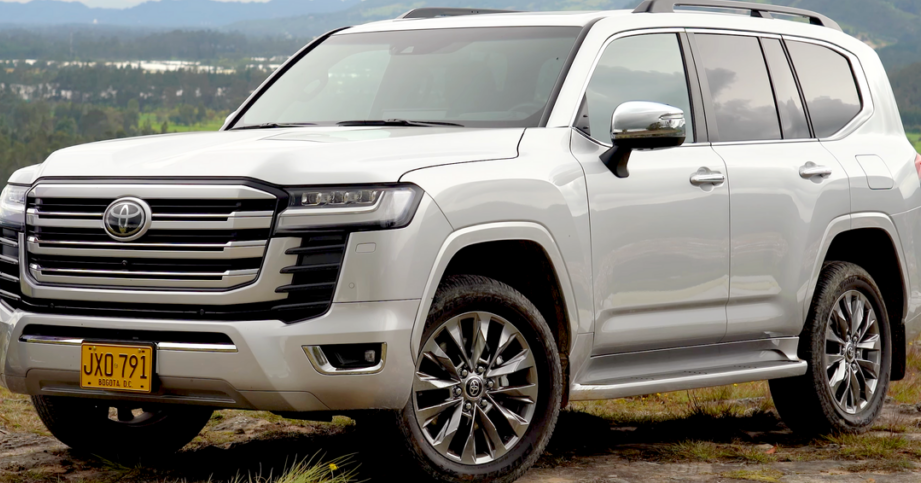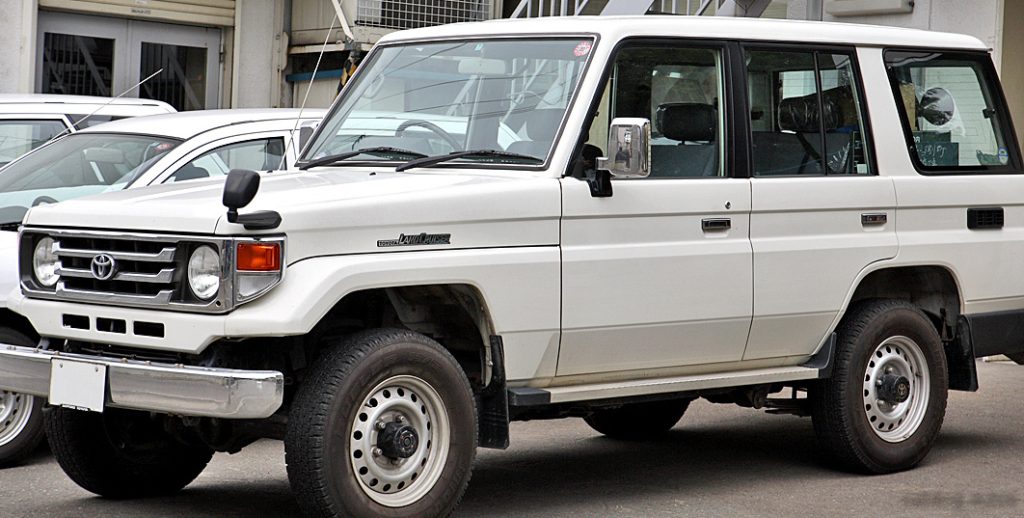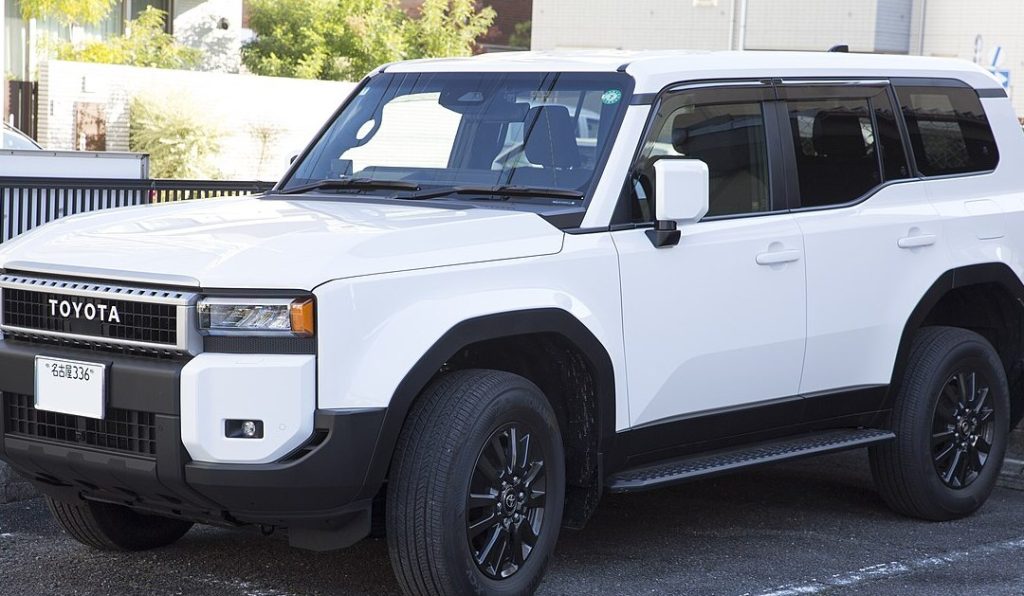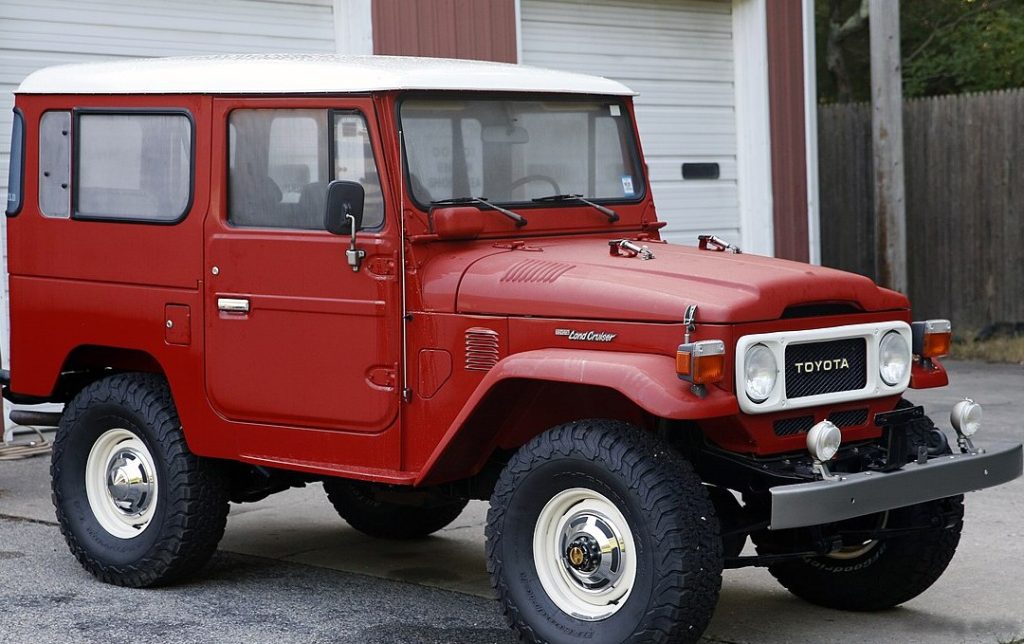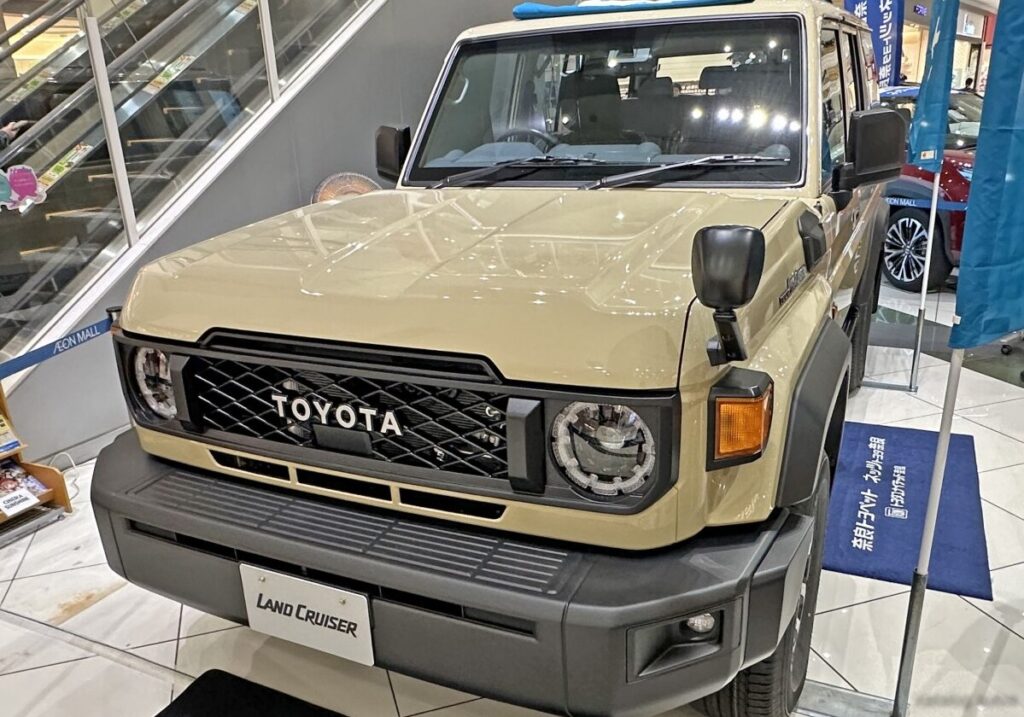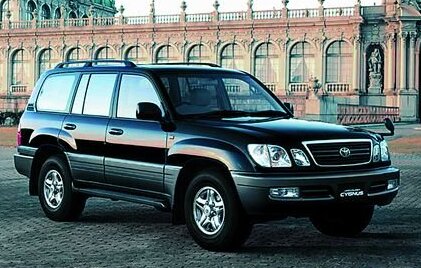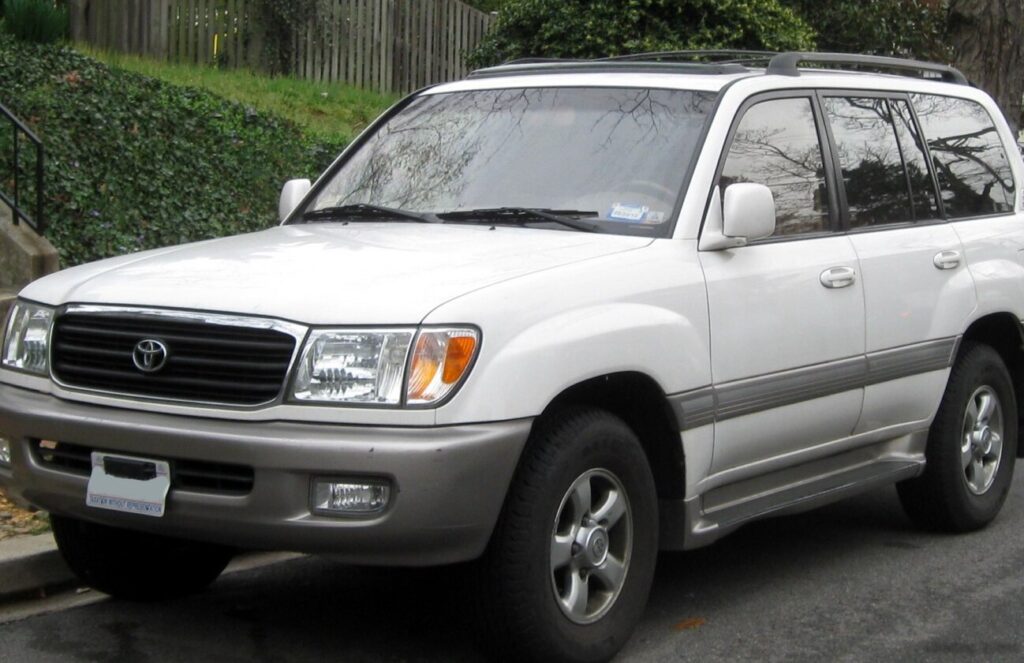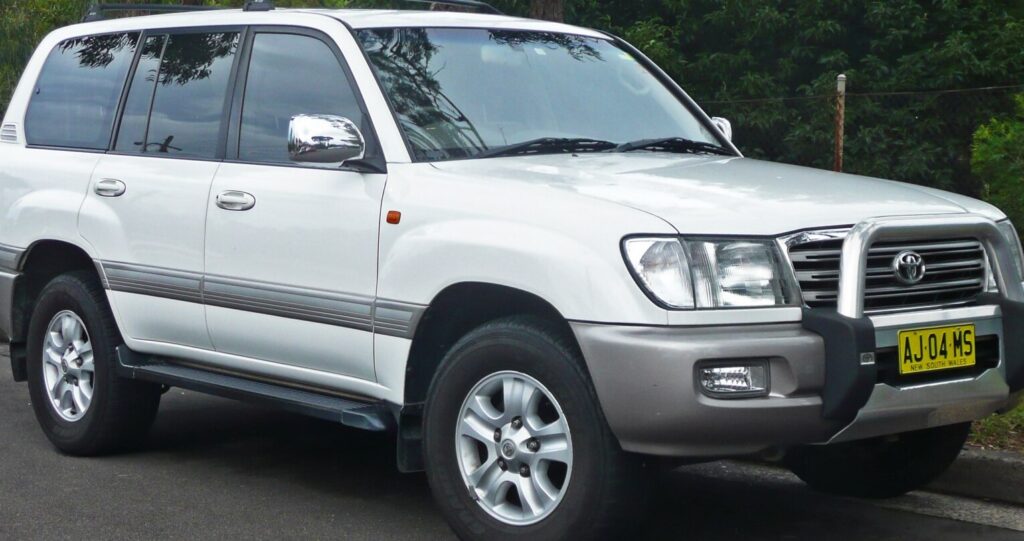
The Toyota Land Cruiser J100, particularly the facelifted version produced from 2002 to 2007, represented a significant leap forward in refinement and capability for Toyota’s iconic off-road vehicle. This generation, built on the platform designated J100, aimed to blend traditional Land Cruiser ruggedness with a more luxurious and comfortable driving experience. The 4.7-liter V8 engine paired with a four-speed automatic transmission was a popular configuration, especially in markets outside of North America where diesel engines dominated. This variant occupied a mid-range position in the J100 lineup, offering a balance between performance, fuel economy, and price, sitting below the more powerful 5.7-liter V8 and above the smaller six-cylinder options.
Technical Specifications
| Brand | Toyota |
| Model | Land Cruiser |
| Generation | Land Cruiser (J100, facelift 2002) |
| Type (Engine) | 4.7 V8 32V (238 Hp) 4WD Automatic |
| Start of production | 2002 year |
| End of production | 2007 year |
| Powertrain Architecture | Internal Combustion engine |
| Body type | SUV |
| Seats | 5-7 |
| Doors | 5 |
| Fuel consumption (economy) – urban | 21.5 l/100 km (10.9 US mpg, 13.1 UK mpg, 4.7 km/l) |
| Fuel consumption (economy) – extra urban | 13.4 l/100 km (17.6 US mpg, 21.1 UK mpg, 7.5 km/l) |
| Fuel consumption (economy) – combined | 16.3 l/100 km (14.4 US mpg, 17.3 UK mpg, 6.1 km/l) |
| CO2 emissions | 387 g/km |
| Fuel Type | Petrol (Gasoline) |
| Acceleration 0 – 100 km/h | 11.1 sec |
| Acceleration 0 – 62 mph | 11.1 sec |
| Acceleration 0 – 60 mph | 10.5 sec |
| Maximum speed | 180 km/h (111.85 mph) |
| Weight-to-power ratio | 9.5 kg/Hp, 104.8 Hp/tonne |
| Weight-to-torque ratio | 5.2 kg/Nm, 191.2 Nm/tonne |
| Power | 238 Hp |
| Power per litre | 51 Hp/l |
| Torque | 434 Nm @ 3400 rpm (320.1 lb.-ft. @ 3400 rpm) |
| Engine layout | Front, Longitudinal |
| Engine Model/Code | 2UZ-FE |
| Engine displacement | 4664 cm3 (284.61 cu. in.) |
| Number of cylinders | 8 |
| Engine configuration | V-engine |
| Cylinder Bore | 94 mm (3.7 in.) |
| Piston Stroke | 84 mm (3.31 in.) |
| Compression ratio | 9.6:1 |
| Number of valves per cylinder | 4 |
| Fuel injection system | Multi-port manifold injection |
| Engine aspiration | Naturally aspirated engine |
| Valvetrain | DOHC |
| Engine oil capacity | 6.8 l (7.19 US qt | 5.98 UK qt) |
| Coolant | 14.8 l (15.64 US qt | 13.02 UK qt) |
| Kerb Weight | 2270-2525 kg (5004.49 – 5566.67 lbs.) |
| Max. weight | 3260 kg (7187.07 lbs.) |
| Max load | 735-990 kg (1620.4 – 2182.58 lbs.) |
| Trunk (boot) space – minimum | 1318 l (46.54 cu. ft.) |
| Trunk (boot) space – maximum | 2212 l (78.12 cu. ft.) |
| Fuel tank capacity | 96 l (25.36 US gal | 21.12 UK gal) |
| Max. roof load | 100 kg (220.46 lbs.) |
| Permitted trailer load with brakes (12%) | 3500 kg (7716.18 lbs.) |
| Permitted trailer load without brakes | 750 kg (1653.47 lbs.) |
| Permitted towbar download | 140 kg (308.65 lbs.) |
| Length | 4890 mm (192.52 in.) |
| Width | 1940 mm (76.38 in.) |
| Height | 1880 mm (74.02 in.) |
| Wheelbase | 2850 mm (112.2 in.) |
| Front track | 1620 mm (63.78 in.) |
| Rear (Back) track | 1615 mm (63.58 in.) |
| Ride height (ground clearance) | 220 mm (8.66 in.) |
| Minimum turning circle (turning diameter) | 12.6 m (41.34 ft.) |
| Approach angle | 34° |
| Departure angle | 26° |
| Ramp-over (brakeover) angle | 25° |
| Climb angle | 45° |
| Wading depth | 700 mm (27.56 in.) |
| Drivetrain Architecture | The Internal combustion engine (ICE) drives permanently the four wheels of the vehicle. |
| Drive wheel | All wheel drive (4×4) |
| Number of gears and type of gearbox | 5 gears, automatic transmission |
| Front suspension | Double wishbone, Trailing arm |
| Rear suspension | Rigid axle suspension, Coil spring |
| Front brakes | Ventilated discs |
| Rear brakes | Ventilated discs |
| Assisting systems | ABS (Anti-lock braking system) |
| Steering type | Steering rack and pinion |
| Power steering | Hydraulic Steering |
| Tires size | 275/60 R18 |
| Wheel rims size | 8J x 18 |
Powertrain & Engine Architecture
The heart of this Land Cruiser variant is the 2UZ-FE 4.7-liter V8 engine. This naturally aspirated engine utilizes a 90-degree V configuration, featuring a cast-iron block and aluminum cylinder heads. It employs a double overhead camshaft (DOHC) valvetrain with four valves per cylinder, contributing to its relatively high output for its displacement. Fuel delivery is managed by a multi-port fuel injection system. The 2UZ-FE is known for its durability and relatively simple design, making it a reliable powerplant. The engine is longitudinally mounted in the chassis. Paired with the engine is a four-speed automatic transmission, designed to provide smooth shifts and adequate torque multiplication for off-road driving and towing. While not as technologically advanced as some later automatic transmissions, it proved to be robust and dependable.
Driving Characteristics
The 4.7-liter V8 with the four-speed automatic delivers a comfortable, if not particularly sporty, driving experience. Acceleration from 0-60 mph takes around 10.5 seconds, which is adequate for highway merging and passing, but doesn’t offer the briskness of some competitors. The automatic transmission’s gear ratios are tuned for torque delivery rather than outright speed. Compared to the manual transmission versions of the J100, the automatic sacrifices some responsiveness, but gains in ease of use, especially in challenging off-road conditions. The 4.7L V8 provides a noticeable step up in power compared to the smaller inline-six engines offered in the J100, making it a more suitable choice for those who frequently tow or carry heavy loads.
Equipment & Trim Levels
The 4.7 V8 Automatic Land Cruiser typically came well-equipped, though specific features varied depending on the market. Standard amenities generally included leather upholstery, power-adjustable front seats, automatic climate control, a premium sound system, and alloy wheels. Optional extras often included a sunroof, navigation system, and upgraded audio. The J100 facelift also introduced improved interior materials and a more modern dashboard design. The trim level with the 4.7L V8 and automatic transmission generally sat in the middle of the Land Cruiser range, offering a good balance of luxury and capability.
Chassis & Braking
The J100 Land Cruiser features a robust body-on-frame construction, providing excellent durability and off-road capability. The suspension utilizes a double wishbone and trailing arm setup at the front, and a rigid axle with coil springs at the rear. This configuration provides a comfortable ride on paved roads while maintaining ample articulation for off-road excursions. Braking duties are handled by ventilated disc brakes on all four wheels, coupled with an Anti-lock Braking System (ABS) for enhanced safety. The J100’s substantial weight necessitates a strong braking system, and the ventilated discs provide adequate stopping power.
Market Reception & Comparison
The 4.7 V8 Automatic Land Cruiser was generally well-received by automotive critics. It was praised for its comfortable ride, spacious interior, and robust build quality. However, its fuel economy was often criticized, with combined figures around 16.3 l/100 km. Compared to the smaller six-cylinder Land Cruisers, the 4.7 V8 offered significantly more power and towing capacity, but at the expense of fuel efficiency. Against competitors like the Range Rover, the Land Cruiser offered a more rugged and reliable alternative, albeit with a less luxurious interior.
Legacy
The 2UZ-FE engine, in particular, has earned a reputation for exceptional longevity and reliability. Many examples have surpassed 200,000 miles with proper maintenance. The four-speed automatic transmission, while not the most efficient, is also known for its durability. Today, the J100 Land Cruiser, including the 4.7 V8 Automatic variant, holds its value well in the used car market, particularly among those seeking a capable and dependable off-road vehicle. Its combination of luxury, capability, and proven reliability ensures its continued popularity among enthusiasts and adventurers alike.