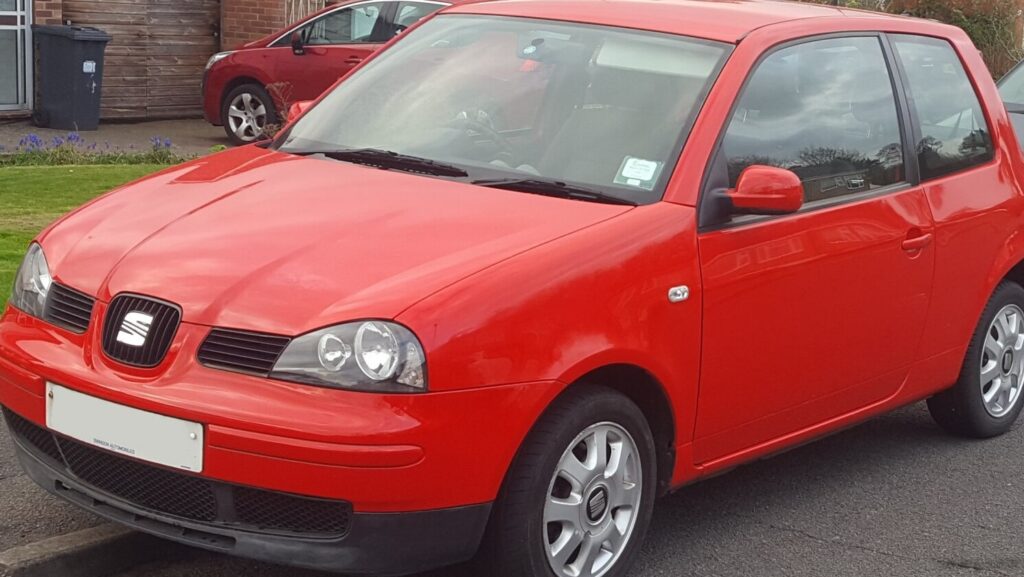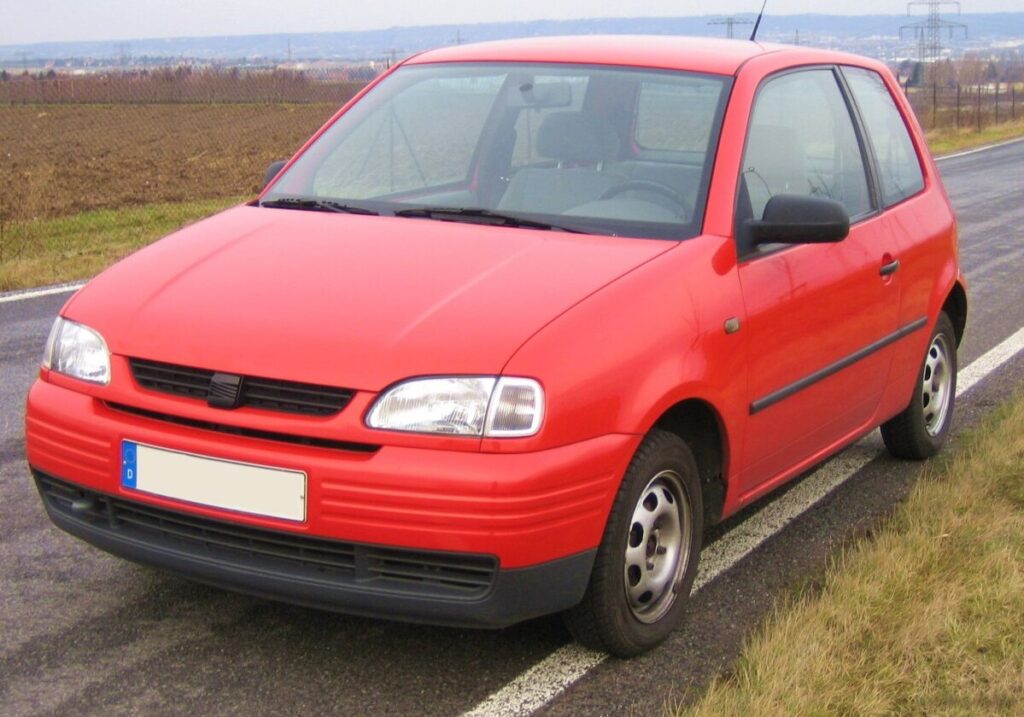
The SEAT Arosa 1.7 SDI, produced between 1997 and 2000, represented an entry-level offering within the broader Arosa range (6H). Positioned as a fuel-efficient and economical city car, it catered to buyers prioritizing practicality and low running costs over outright performance. The Arosa itself was a rebadged version of the Volkswagen Polo Mk3, developed as part of the Volkswagen Group’s strategy to offer distinct models across its various brands while sharing underlying mechanical components. The 1.7 SDI variant, with its 60 horsepower diesel engine, was a popular choice in European markets, particularly where diesel fuel was more affordable and government incentives favored lower-emission vehicles.
Technical Specifications
| Brand | Seat |
| Model | Arosa |
| Generation | Arosa (6H) |
| Type (Engine) | 1.7 SDI (60 Hp) |
| Start of production | August, 1997 |
| End of production | August, 2000 |
| Powertrain Architecture | Internal Combustion engine |
| Body type | Hatchback |
| Seats | 4 |
| Doors | 3 |
| Fuel consumption (urban) | 5.9 l/100 km (39.9 US mpg, 47.9 UK mpg, 16.9 km/l) |
| Fuel consumption (extra urban) | 3.6 l/100 km (65.3 US mpg, 78.5 UK mpg, 27.8 km/l) |
| Fuel Type | Diesel |
| Acceleration 0 – 100 km/h | 16.8 sec |
| Acceleration 0 – 62 mph | 16.8 sec |
| Acceleration 0 – 60 mph | 16 sec |
| Maximum speed | 157 km/h (97.56 mph) |
| Weight-to-power ratio | 15.9 kg/Hp, 62.8 Hp/tonne |
| Weight-to-torque ratio | 8.3 kg/Nm, 120.4 Nm/tonne |
| Power | 60 Hp @ 4200 rpm |
| Power per litre | 35 Hp/l |
| Torque | 115 Nm @ 2200 rpm (84.82 lb.-ft. @ 2200 rpm) |
| Engine layout | Front, Transverse |
| Engine Model/Code | AKU |
| Engine displacement | 1716 cm3 (104.72 cu. in.) |
| Number of cylinders | 4 |
| Engine configuration | Inline |
| Cylinder Bore | 79.5 mm (3.13 in.) |
| Piston Stroke | 86.4 mm (3.4 in.) |
| Compression ratio | 19:1 |
| Number of valves per cylinder | 2 |
| Fuel injection system | Direct injection |
| Engine aspiration | Naturally aspirated engine |
| Valvetrain | OHC |
| Engine oil capacity | 4.7 l (4.97 US qt | 4.14 UK qt) |
| Coolant | 6.5 l (6.87 US qt | 5.72 UK qt) |
| Kerb Weight | 955 kg (2105.41 lbs.) |
| Max. weight | 1445 kg (3185.68 lbs.) |
| Max load | 490 kg (1080.27 lbs.) |
| Trunk (boot) space – minimum | 130 l (4.59 cu. ft.) |
| Trunk (boot) space – maximum | 790 l (27.9 cu. ft.) |
| Fuel tank capacity | 34 l (8.98 US gal | 7.48 UK gal) |
| Length | 3536 mm (139.21 in.) |
| Width | 1639 mm (64.53 in.) |
| Height | 1480 mm (58.27 in.) |
| Wheelbase | 2323 mm (91.46 in.) |
| Front track | 1392 mm (54.8 in.) |
| Rear (Back) track | 1400 mm (55.12 in.) |
| Minimum turning circle | 9.8 m (32.15 ft.) |
| Drivetrain Architecture | The Internal combustion engine (ICE) drives the front wheels of the vehicle. |
| Drive wheel | Front wheel drive |
| Number of gears and type of gearbox | 5 gears, manual transmission |
| Front suspension | Spring Strut |
| Rear suspension | Coil spring |
| Front brakes | Disc |
| Rear brakes | Drum |
| Steering type | Steering rack and pinion |
| Power steering | Hydraulic Steering |
| Tires size | 175/65 R13 |
Powertrain & Engine Architecture
The Arosa 1.7 SDI utilized the AKU engine code, a 1.7-liter inline four-cylinder diesel engine. This engine was a naturally aspirated, direct injection (DI) diesel, meaning fuel was injected directly into the combustion chamber rather than the intake manifold. This design contributed to improved fuel efficiency and reduced emissions compared to older indirect injection systems. The engine featured an overhead camshaft (OHC) valvetrain with two valves per cylinder. The direct injection system, while efficient, was relatively basic compared to later common rail diesel technologies. The 1.7 SDI produced 60 horsepower at 4200 rpm and 115 Nm (84.82 lb-ft) of torque at 2200 rpm. The engine’s relatively low compression ratio of 19:1 was typical for SDI diesels of the era. The Arosa 1.7 SDI was exclusively offered with a five-speed manual transmission, prioritizing fuel economy over rapid acceleration.
Driving Characteristics
The Arosa 1.7 SDI’s driving experience was defined by its modest power output. Acceleration was leisurely, taking approximately 16.8 seconds to reach 62 mph (100 km/h). The engine’s torque, however, was available from relatively low engine speeds, making it reasonably tractable for urban driving. The five-speed manual transmission was well-matched to the engine’s characteristics, allowing drivers to keep the engine in its optimal power band. Compared to the more powerful petrol (gasoline) versions of the Arosa, the 1.7 SDI offered significantly less performance but substantially better fuel economy. The gearing was optimized for efficiency, with relatively long ratios contributing to the car’s ability to achieve over 65 mpg on the highway.
Equipment & Trim Levels
The Arosa 1.7 SDI typically came with a basic level of equipment, reflecting its position as an entry-level model. Standard features generally included power steering, central locking, and a basic stereo system. Interior upholstery was typically cloth, and the dashboard featured a simple, functional design. Optional extras included air conditioning, electric windows, and alloy wheels. Trim levels were relatively limited, with most Arosa 1.7 SDI models being fairly uniform in their specification. The focus was on providing a practical and affordable vehicle rather than luxury or extensive customization options.
Chassis & Braking
The Arosa 1.7 SDI utilized a relatively simple chassis design. Front suspension consisted of MacPherson strut springs, while the rear employed a twist beam setup with coil springs. Brakes were disc brakes on the front wheels and drum brakes on the rear, a common configuration for cars in this price range. The steering was a rack and pinion system with hydraulic power assistance. The relatively lightweight nature of the Arosa (around 955 kg or 2105 lbs) helped to mitigate the effects of the engine’s limited power. Stabilizer bars were typically absent or minimal on the base 1.7 SDI models.
Market Reception & Comparison
The SEAT Arosa 1.7 SDI was generally well-received as a practical and economical city car. Critics praised its fuel efficiency and low running costs, but noted its lack of performance. Compared to other trims in the Arosa lineup, such as the 1.4-liter petrol versions, the 1.7 SDI offered significantly better fuel economy but slower acceleration. Against competitors like the Fiat Punto and Renault Clio, the Arosa 1.7 SDI held its own in terms of fuel efficiency and practicality, but often lacked the refinement or features of some rivals. Its reliability was generally considered good, benefiting from the shared components with the Volkswagen Polo.
Legacy
The Arosa 1.7 SDI, while not a performance icon, has proven to be a durable and reliable vehicle. The AKU engine, while simple, is known for its longevity when properly maintained. Today, the Arosa 1.7 SDI can be found as an affordable used car, often appealing to buyers seeking a cheap and economical runabout. Parts availability is generally good, thanks to the shared components with the Volkswagen Polo. However, potential buyers should be aware of the age-related issues common to older diesel engines, such as injector wear and potential turbocharger problems (though the 1.7 SDI is naturally aspirated). The Arosa 1.7 SDI represents a practical and economical choice for those seeking a no-frills city car with a reputation for reliability.