
Technical Specifications
| Brand | Mahindra |
| Model | XUV500 |
| Generation | XUV500 (facelift 2015) |
| Type (Engine) | 2.0d (140 Hp) |
| Start of production | 2015 |
| End of production | 2017 |
| Powertrain Architecture | Internal Combustion engine |
| Body type | SUV |
| Seats | 7 |
| Doors | 5 |
| Fuel consumption (combined) | 6.3 l/100 km (37.3 US mpg, 44.8 UK mpg, 15.9 km/l) |
| Fuel Type | Diesel |
| Acceleration 0 – 100 km/h | 10 sec |
| Acceleration 0 – 62 mph | 10 sec |
| Acceleration 0 – 60 mph | 9.5 sec |
| Maximum speed | 185 km/h (114.95 mph) |
| Power | 140 Hp @ 3750 rpm |
| Power per litre | 70.1 Hp/l |
| Torque | 320 Nm @ 1600-2800 rpm (236.02 lb.-ft. @ 1600-2800 rpm) |
| Engine layout | Front, Transverse |
| Engine Model/Code | mHawk |
| Engine displacement | 1997 cm3 (121.86 cu. in.) |
| Number of cylinders | 4 |
| Engine configuration | Inline |
| Number of valves per cylinder | 4 |
| Engine aspiration | Turbocharger, Intercooler |
| Valvetrain | DOHC |
| Engine oil capacity | 6 l (6.34 US qt | 5.28 UK qt) |
| Max. weight | 2510 kg (5533.6 lbs.) |
| Trunk (boot) space – maximum | 720 l (25.43 cu. ft.) |
| Fuel tank capacity | 70 l (18.49 US gal | 15.4 UK gal) |
| Length | 4585 mm (180.51 in.) |
| Width | 1890 mm (74.41 in.) |
| Height | 1785 mm (70.28 in.) |
| Wheelbase | 2700 mm (106.3 in.) |
| Ride height (ground clearance) | 200 mm (7.87 in.) |
| Minimum turning circle | 11.2 m (36.75 ft.) |
| Drivetrain Architecture | The Internal combustion engine (ICE) drives the front wheels of the vehicle. |
| Drive wheel | Front wheel drive |
| Number of gears and type of gearbox | 6 gears, manual transmission |
| Front suspension | Independent, type McPherson with coil spring and anti-roll bar |
| Rear suspension | Independent multi-link suspension |
| Front brakes | Disc |
| Rear brakes | Disc |
| Assisting systems | ABS (Anti-lock braking system) |
| Steering type | Steering rack and pinion |
| Power steering | Electric Steering |
| Tires size | 235/65 R17 |
| Wheel rims size | 17 |
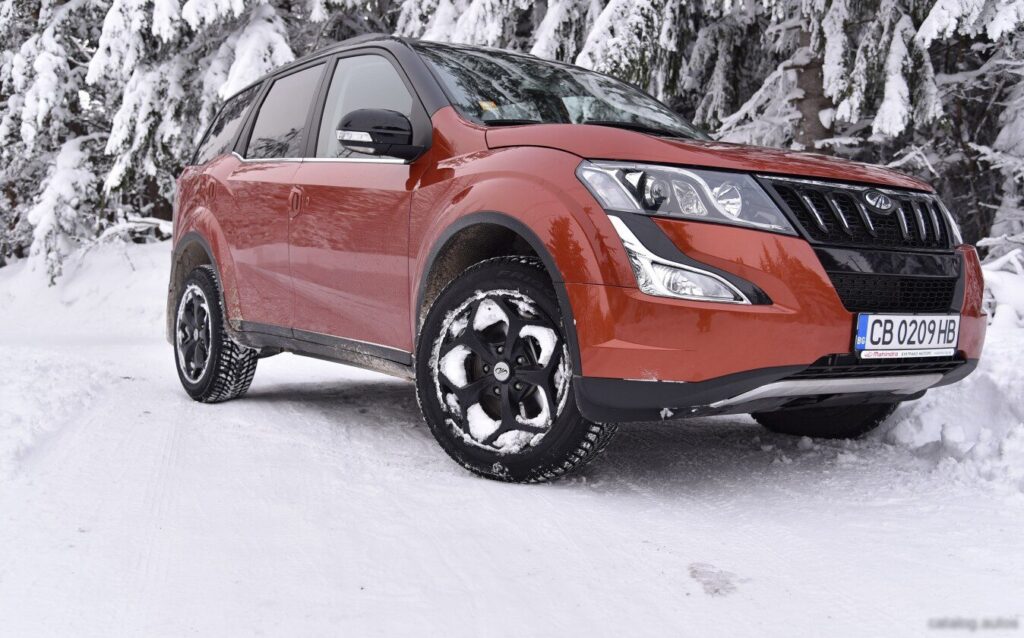
The Mahindra XUV500 (facelift 2015) 2.0d, producing 140 horsepower, represents a significant evolution of Mahindra’s flagship SUV. Introduced in 2015 and continuing through 2017, this variant played a vital role in establishing the XUV500 as a popular choice in the Indian market, offering a compelling combination of spaciousness, features, and diesel fuel efficiency. The facelift brought with it styling updates and refinements to the original XUV500, further solidifying its position as a seven-seater SUV geared towards families and those needing a versatile vehicle. This particular 2.0d variant occupied a middle ground within the XUV500 lineup, striking a balance between performance and fuel economy, and appealing to a wider customer base than the higher-output versions.
Powertrain & Engine Architecture
The heart of the XUV500 2.0d is Mahindra’s mHawk 2.0-liter inline-four diesel engine. This engine is known for its robust construction and relatively straightforward design, utilizing a turbocharger with an intercooler to enhance power output. The “mHawk” engine code signifies Mahindra’s internally developed diesel technology. Fuel delivery is managed by a common-rail direct injection system, contributing to improved fuel efficiency and reduced emissions. The engine features a double overhead camshaft (DOHC) valvetrain with four valves per cylinder, optimizing airflow for enhanced performance. The engine produces a peak of 140 horsepower at 3750 rpm, while 320 Nm (236 lb-ft) of torque is available across a broad range of 1600-2800 rpm, providing good low-end power for everyday driving. This variant was exclusively offered with a 6-speed manual transmission, prioritizing driver control and fuel economy over the convenience of an automatic.
Driving Characteristics
The XUV500 2.0d, equipped with the manual transmission, delivers a driving experience focused on practicality and efficiency. While not designed for high performance, the engine provides sufficient power for highway cruising and city driving. The 6-speed gearbox is well-matched to the engine’s torque curve, allowing for smooth gear changes and responsive acceleration. Compared to the higher-output versions of the XUV500, this variant feels less eager to rev, but the readily available torque makes it well-suited for navigating congested roads and carrying a full load of passengers. The gear ratios are tuned for fuel efficiency, resulting in a comfortable cruising speed with relatively low engine speeds. The front-wheel-drive configuration contributes to decent fuel economy, although it can sometimes exhibit torque steer during hard acceleration.
Equipment & Trim Levels
The 2015 facelift of the XUV500 2.0d typically came equipped with a reasonable array of standard features. These included air conditioning, power windows, power steering, and a basic audio system. Higher trim levels added features such as alloy wheels, a touchscreen infotainment system with navigation, rear parking sensors, and automatic climate control. Interior upholstery was generally cloth, with leather options available on higher trims. Standard safety features included ABS (Anti-lock Braking System), with airbags available depending on the trim level. Optional extras included a sunroof, cruise control, and a rearview camera.
Chassis & Braking
The XUV500 utilizes a monocoque chassis construction, providing a good balance of rigidity and weight. The front suspension employs an independent McPherson strut setup with coil springs and an anti-roll bar, while the rear suspension features an independent multi-link design. This suspension setup aims to provide a comfortable ride quality while maintaining reasonable handling characteristics. The braking system consists of disc brakes on all four wheels, providing adequate stopping power for the vehicle’s weight. The electric power steering offers a light and easy steering feel, making it convenient for maneuvering in urban environments.
Market Reception & Comparison
The Mahindra XUV500 2.0d was generally well-received in the Indian market. Critics praised its spacious interior, comfortable ride, and value for money. The 2.0d variant was often considered the sweet spot in the lineup, offering a good balance between performance, fuel economy, and price. Compared to the higher-output versions, the 2.0d was more fuel-efficient and slightly more affordable. However, it lacked the outright performance of its more powerful siblings. Compared to competitors like the Tata Safari Storme and the Hyundai Creta, the XUV500 offered a unique combination of size, features, and affordability.
Legacy
The Mahindra XUV500 2.0d has proven to be a relatively reliable powertrain over the long term. The mHawk engine is known for its durability, and with regular maintenance, it can provide years of trouble-free service. In the used car market, this variant remains a popular choice due to its affordability and practicality. While some owners have reported minor issues with the electrical system and suspension components, these are generally not major concerns. The XUV500 2.0d represents a significant milestone in Mahindra’s automotive history, establishing the brand as a serious contender in the SUV segment.

