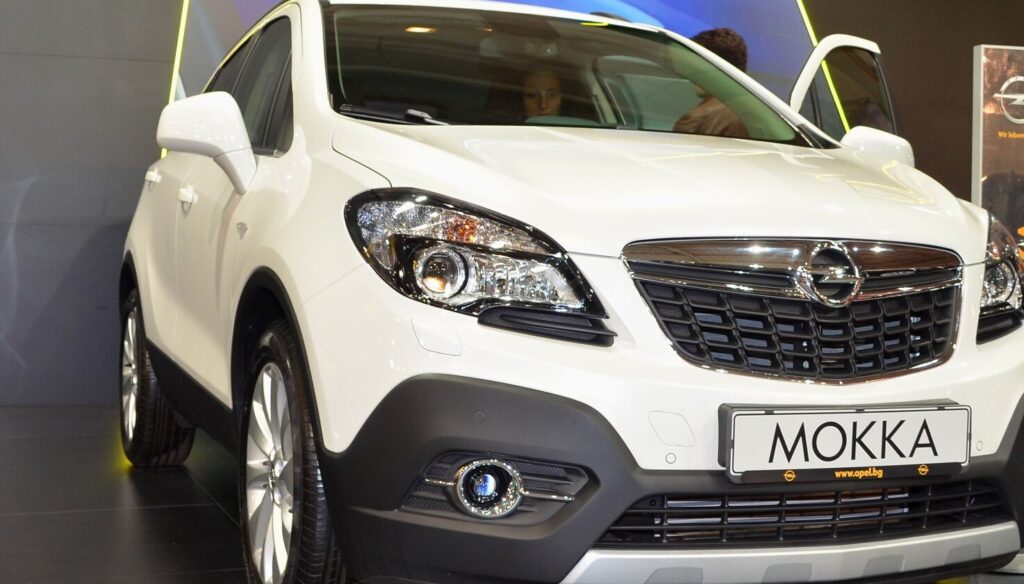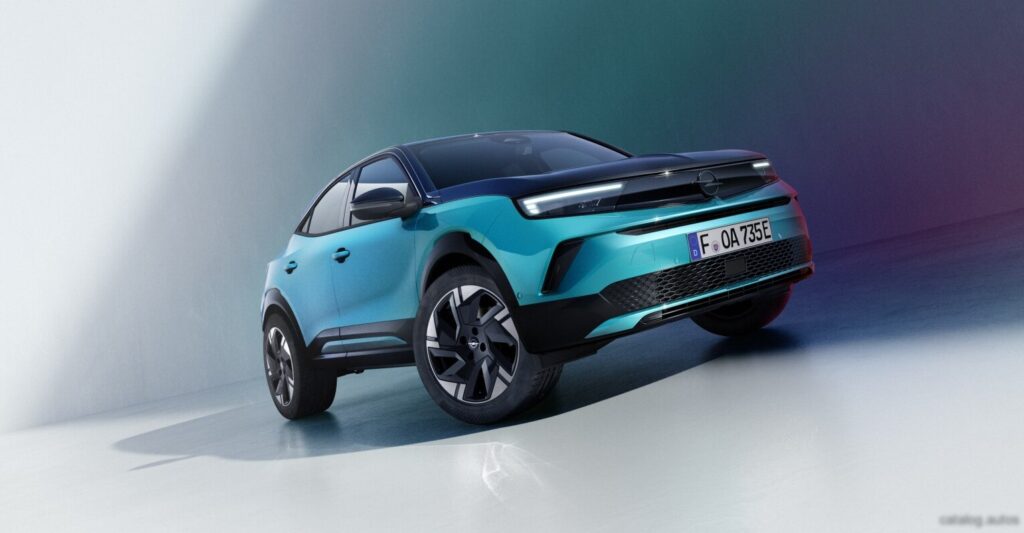
The Opel Mokka B (facelift 2024) 54 kWh Electric represents a significant step in Opel’s transition towards electrification. Introduced in October 2024, this variant builds upon the foundation of the Mokka B, a subcompact crossover SUV that debuted in 2021 as a complete redesign of the previous Mokka/Crossland X models. The facelift brings styling updates and refinements to the fully electric powertrain options, with the 54 kWh version positioned as a core offering in the Mokka B lineup, balancing range, performance, and affordability. It’s part of the broader Stellantis strategy to offer a diverse range of electric vehicles across its brands, targeting the increasingly competitive European and global EV markets.
Technical Specifications
| Brand | Opel |
| Model | Mokka |
| Generation | Mokka B (facelift 2024) |
| Type (Engine) | 54 kWh (156 Hp) Electric |
| Start of production | October, 2024 |
| Powertrain Architecture | BEV (Electric Vehicle) |
| Body type | SUV |
| Seats | 5 |
| Doors | 5 |
| Fuel Type | Electricity |
| Acceleration 0 – 100 km/h | 9 sec |
| Acceleration 0 – 62 mph | 9 sec |
| Acceleration 0 – 60 mph | 8.6 sec |
| Maximum speed | 150 km/h (93.21 mph) |
| Weight-to-power ratio | 9.9 kg/Hp, 101.3 Hp/tonne |
| Weight-to-torque ratio | 5.9 kg/Nm, 168.8 Nm/tonne |
| Gross battery capacity | 54 kWh |
| Net (usable) battery capacity | 51 kWh |
| Battery technology | Lithium-ion (Li-Ion) |
| Battery weight | 339 kg (747.37 lbs) |
| Battery location | Below the floor, under the front and rear seats |
| All-electric range (WLTP) | 403 km (250.41 mi) |
| Average Energy consumption (WLTP) | 15.5-15.6 kWh/100 km (24.94 – 25.11 kWh/100 mi) |
| Average Energy consumption (MPGe) | 135 – 134 |
| Average Energy consumption (km/kWh) | 6.5 – 6.4 |
| Average Energy consumption (mi/kWh) | 4 – 4 |
| Electric motor power | 156 Hp |
| Electric motor Torque | 260 Nm (191.77 lb.-ft.) |
| Electric motor model/code | ZK02 |
| Electric motor location | Front axle, Transverse |
| Electric motor type | Synchronous |
| System power | 156 Hp |
| System torque | 260 Nm (191.77 lb.-ft.) |
| Kerb Weight | 1540 kg (3395.12 lbs) |
| Max. weight | 2015 kg (4442.31 lbs) |
| Max load | 475 kg (1047.2 lbs) |
| Trunk (boot) space – minimum | 310 l (10.95 cu. ft.) |
| Trunk (boot) space – maximum | 1060 l (37.43 cu. ft.) |
| Max. roof load | 75 kg (165.35 lbs) |
| Length | 4150 mm (163.39 in) |
| Width | 1787 mm (70.35 in) |
| Width including mirrors | 1987 mm (78.23 in) |
| Height | 1515 mm (59.65 in) |
| Wheelbase | 2561 mm (100.83 in) |
| Front track | 1548 mm (60.94 in) |
| Rear (Back) track | 1545 mm (60.83 in) |
| Front overhang | 881 mm (34.69 in) |
| Rear overhang | 708 mm (27.87 in) |
| Minimum turning circle | 11.08 m (36.35 ft) |
| Drivetrain Architecture | One electric motor drives the front wheels |
| Drive wheel | Front wheel drive |
| Number of gears | 1 |
| Gearbox type | Automatic transmission |
| Front brakes | Ventilated discs |
| Rear brakes | Disc |
| Steering type | Steering rack and pinion |
| Power steering | Electric |
| Tires size | 215/65 R16; 215/60 R17; 195/60 R18; 215/55 R18 |
| Wheel rims size | 6.5J x 16; 6.5J x 17; 6.5J x 18; 7J x 18 |
Powertrain & Engine Architecture
The Mokka B 54 kWh Electric utilizes a single, synchronous electric motor driving the front wheels. This motor, designated ZK02, produces 156 horsepower and 260 Nm (191.77 lb-ft) of torque. The powertrain is built around a 54 kWh lithium-ion battery pack, providing a usable capacity of 51 kWh. The battery is strategically located under the floor and between the seats to optimize weight distribution and passenger space. The single-speed automatic transmission is inherent to electric vehicle design, providing seamless acceleration. The vehicle employs regenerative braking to recapture energy during deceleration, further enhancing efficiency. The charging system supports both AC and DC fast charging, allowing for convenient replenishment at home or on the go.
Driving Characteristics
The 54 kWh Mokka B Electric offers a responsive and refined driving experience. Acceleration from 0-60 mph takes approximately 8.6 seconds, making it suitable for everyday driving. The instant torque delivery characteristic of electric motors provides brisk acceleration in urban environments. While not as dynamically focused as some performance-oriented EVs, the Mokka B prioritizes comfort and ease of use. The single-speed transmission ensures smooth power delivery, and the relatively low center of gravity contributes to stable handling. Compared to potential higher-output electric Mokka variants (if offered), this version prioritizes efficiency and range over outright performance. The front-wheel-drive configuration provides adequate traction in most conditions, but may exhibit some torque steer under hard acceleration.
Equipment & Trim Levels
The Mokka B 54 kWh Electric typically comes well-equipped, even in base trim levels. Standard features often include a touchscreen infotainment system with Apple CarPlay and Android Auto compatibility, digital instrument cluster, automatic climate control, and a suite of advanced driver-assistance systems (ADAS) such as lane departure warning, automatic emergency braking, and traffic sign recognition. Interior upholstery is typically cloth, with options for leather or premium fabric upgrades. Higher trim levels may add features like heated seats, a panoramic sunroof, and upgraded audio systems. Exterior styling elements, such as alloy wheels and chrome accents, also vary depending on the chosen trim.
Chassis & Braking
The Mokka B utilizes a conventional MacPherson strut front suspension and a torsion beam rear suspension. The suspension is tuned for comfort, providing a compliant ride quality. Braking duties are handled by ventilated discs at the front and solid discs at the rear. The electronic stability control (ESC) system and anti-lock braking system (ABS) are standard, enhancing safety and control. Steering is electrically assisted, providing light and precise steering feel. Tire sizes typically range from 215/65 R16 to 215/55 R18, depending on the trim level.
Market Reception & Comparison
The Opel Mokka B Electric, including the 54 kWh variant, has been generally well-received by automotive critics. It’s praised for its stylish design, comfortable interior, and competitive range. Compared to other subcompact electric SUVs, such as the Peugeot e-2008 and the Renault Zoe, the Mokka B offers a compelling combination of features and value. Its energy consumption of around 15.5-15.6 kWh/100km is competitive within its class. Some reviewers have noted that the interior space is not as generous as some rivals, but the overall package remains attractive to buyers seeking a practical and affordable electric crossover.
Legacy
As a relatively new model, the long-term reliability of the Mokka B Electric powertrain is still being established. However, Opel’s parent company, Stellantis, has a strong track record in electric vehicle technology. The lithium-ion battery pack is expected to have a lifespan of at least eight years or 100,000 miles, and is typically covered by a manufacturer’s warranty. On the used car market, the Mokka B Electric is expected to hold its value reasonably well, given the growing demand for electric vehicles. Its combination of practicality, affordability, and environmental friendliness should make it a popular choice for years to come.