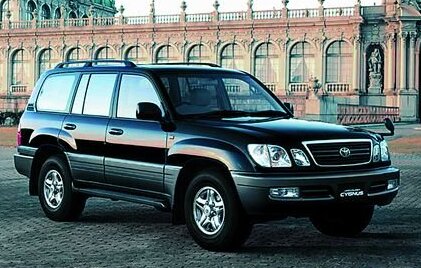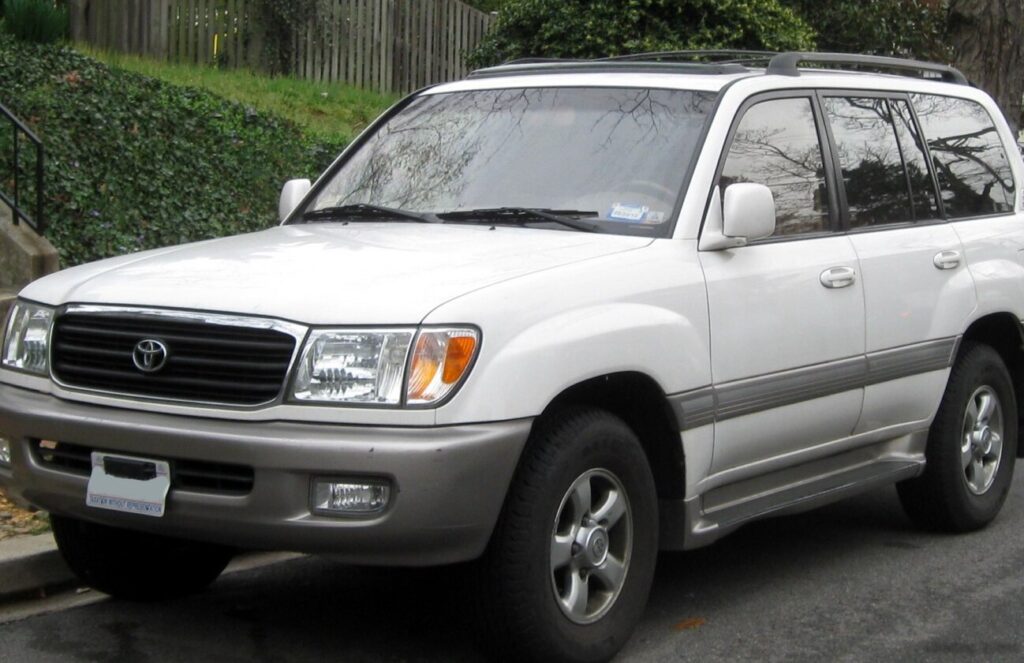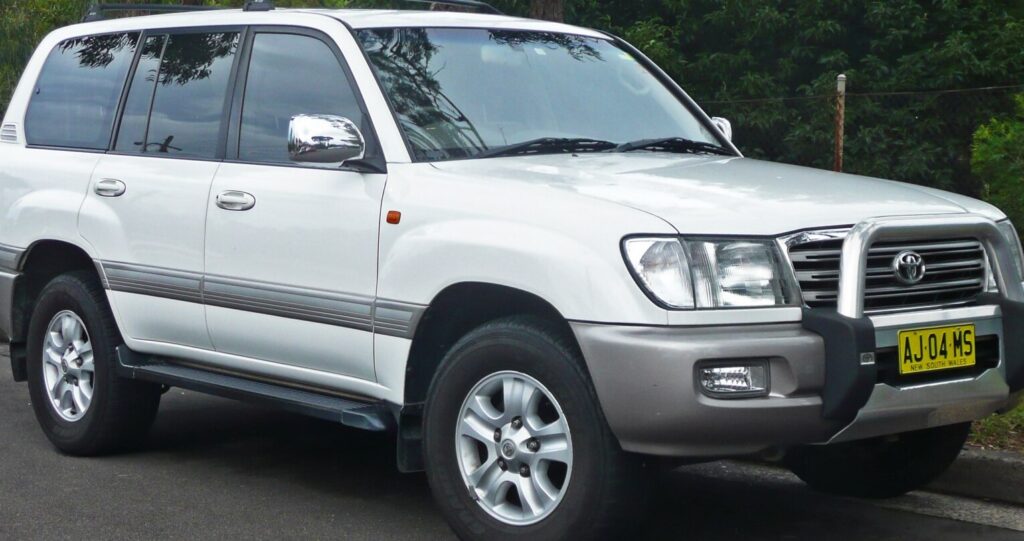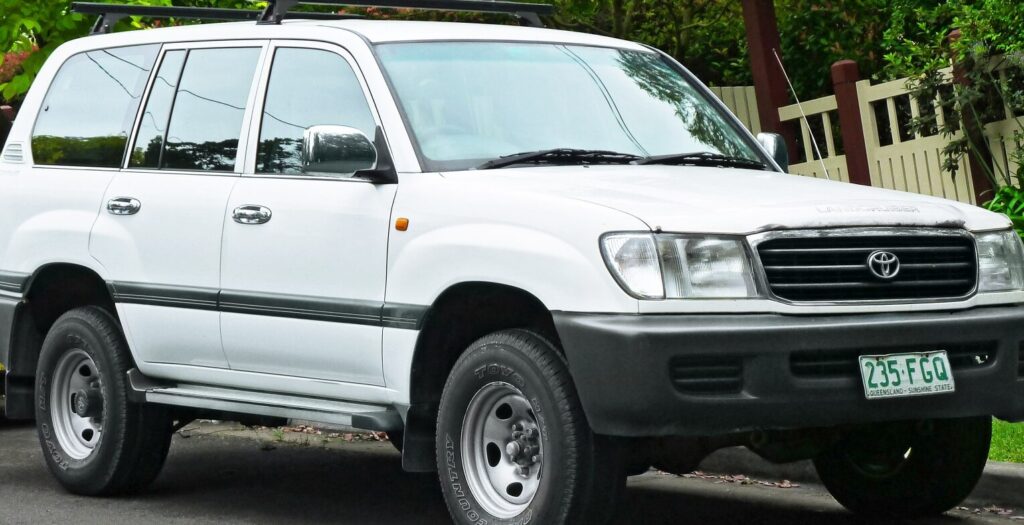
The Toyota Land Cruiser J105, produced from 1998 to 2005, represented a significant evolution in Toyota’s legendary off-road vehicle lineage. Positioned as a robust and reliable SUV, the J105 series aimed to balance off-road capability with improved on-road comfort and refinement. Within the J105 range, the 4.2 D variant with a 131 horsepower diesel engine and automatic transmission occupied a specific niche, offering a blend of torque for challenging terrain and ease of use for everyday driving. This configuration was particularly popular in markets outside of North America, where diesel engines held a strong preference due to their fuel efficiency and durability. The J105 series was built on a body-on-frame construction, retaining the Land Cruiser’s reputation for ruggedness.
Technical Specifications
| Brand | Toyota |
| Model | Land Cruiser |
| Generation | Land Cruiser (J105) |
| Type (Engine) | 4.2 D (131 Hp) Automatic |
| Start of production | 1998 |
| End of production | 2005 |
| Powertrain Architecture | Internal Combustion engine |
| Body type | SUV |
| Seats | 8 |
| Doors | 5 |
| Fuel Type | Diesel |
| Power | 131 Hp @ 4000 rpm |
| Power per litre | 31.5 Hp/l |
| Torque | 280 Nm @ 2000 rpm / 206.52 lb.-ft. @ 2000 rpm |
| Engine layout | Front, Longitudinal |
| Engine Model/Code | 1HZ |
| Engine displacement | 4164 cm3 / 254.1 cu. in. |
| Number of cylinders | 6 |
| Engine configuration | Inline |
| Cylinder Bore | 94 mm / 3.7 in. |
| Piston Stroke | 100 mm / 3.94 in. |
| Compression ratio | 22.7:1 |
| Number of valves per cylinder | 2 |
| Fuel injection system | Precombustion chamber injection |
| Engine aspiration | Naturally aspirated engine |
| Valvetrain | OHC |
| Engine oil capacity | 9.3 l / 9.83 US qt | 8.18 UK qt |
| Coolant | 14 l / 14.79 US qt | 12.32 UK qt |
| Max. weight | 3180 kg / 7010.7 lbs |
| Fuel tank capacity | 95 l / 25.1 US gal | 20.9 UK gal |
| Length | 4890 mm / 192.52 in |
| Width | 1920 mm / 75.59 in |
| Height | 1850 mm / 72.83 in |
| Wheelbase | 2850 mm / 112.2 in |
| Front track | 1605 mm / 63.19 in |
| Rear (Back) track | 1600 mm / 62.99 in |
| Front overhang | 895 mm / 35.24 in |
| Rear overhang | 1145 mm / 45.08 in |
| Minimum turning circle (turning diameter) | 12.8 m / 41.99 ft |
| Drivetrain Architecture | The Internal combustion engine (ICE) drives permanently the four wheels of the vehicle. |
| Drive wheel | All wheel drive (4×4) |
| Number of gears and type of gearbox | 5 gears, automatic transmission |
| Front suspension | Dependent spring suspension with anti-roll bar |
| Rear suspension | dependent spring suspension, Transverse stabilizer |
| Front brakes | Ventilated discs |
| Rear brakes | Drum |
| Assisting systems | ABS (Anti-lock braking system) |
| Steering type | Cone worm with recirculation balls |
| Tires size | 235/85 R16LT |
Powertrain & Engine Architecture
The heart of the Land Cruiser J105 4.2 D Automatic is the 1HZ engine, a 4.2-liter inline-six diesel. This engine is renowned for its exceptional durability and longevity, a hallmark of Toyota’s diesel engineering. The 1HZ utilizes a precombustion chamber injection system, a design common in older diesel engines, which contributes to its robust nature but also results in slightly higher emissions and noise levels compared to modern common-rail diesels. The engine produces 131 horsepower at 4000 rpm and 280 Nm (206.52 lb-ft) of torque at 2000 rpm. The automatic transmission is a 5-speed unit, designed to handle the engine’s torque output and provide relatively smooth shifts. While not as refined as some contemporary automatic transmissions, it was well-suited to the Land Cruiser’s intended purpose.
Driving Characteristics
The 4.2 D Automatic Land Cruiser prioritizes torque over outright speed. Acceleration is modest, but the engine delivers ample low-end grunt, making it exceptionally capable in off-road situations and when towing. The automatic transmission, while functional, isn’t particularly quick to downshift, so anticipating gear changes is necessary for optimal performance. Compared to the manual transmission versions of the same engine, the automatic offers greater convenience, especially in urban environments. However, the manual versions generally provide slightly better fuel economy and a more engaging driving experience. Compared to higher-output Land Cruiser variants, such as those equipped with larger gasoline engines, the 4.2 D Automatic is noticeably slower, but it compensates with superior fuel efficiency and a more relaxed driving style.
Equipment & Trim Levels
The 4.2 D Automatic trim level typically fell into the mid-range of the J105 lineup. Standard features generally included air conditioning, power windows, power locks, and a basic audio system. Interior upholstery was typically cloth, although leather options were available as upgrades. Dashboard configuration was functional and straightforward, prioritizing durability over luxury. Optional extras could include a sunroof, upgraded audio systems, and various off-road accessories such as a winch or upgraded suspension components. The level of equipment varied depending on the specific market, with European and Australian models often featuring a higher standard specification than those sold in other regions.
Chassis & Braking
The Land Cruiser J105 utilizes a traditional body-on-frame construction, providing a robust and durable platform. The suspension consists of dependent spring suspension with anti-roll bars both front and rear, designed to absorb impacts and maintain stability on rough terrain. Front brakes are ventilated discs, providing adequate stopping power, while rear brakes are drums. This configuration was common for vehicles in this weight class during the production period. The steering system is a cone worm with recirculation balls, offering a direct feel but requiring more effort than modern rack-and-pinion systems.
Market Reception & Comparison
The Land Cruiser J105 4.2 D Automatic was generally well-received by critics and buyers alike, particularly in markets where diesel engines were preferred. It was praised for its reliability, durability, and off-road capability. Fuel economy was a strong point, especially compared to gasoline-powered alternatives. However, some critics noted the engine’s relatively low power output and the somewhat dated feel of the automatic transmission. Compared to other trims in the lineup, the 4.2 D Automatic offered a compelling balance of performance, efficiency, and affordability. It appealed to buyers who prioritized practicality and reliability over outright speed and luxury.
Legacy
The Toyota Land Cruiser J105 4.2 D Automatic has earned a reputation as an exceptionally reliable and long-lasting vehicle. The 1HZ engine is known to withstand significant mileage with proper maintenance. In the used car market today, these Land Cruisers are highly sought after, particularly those that have been well-maintained and haven’t been subjected to extreme off-road abuse. Parts availability remains good, and the relatively simple mechanical design makes them relatively easy to repair. The J105 4.2 D Automatic continues to be a popular choice for those seeking a rugged, reliable, and capable SUV that can handle a wide range of conditions.