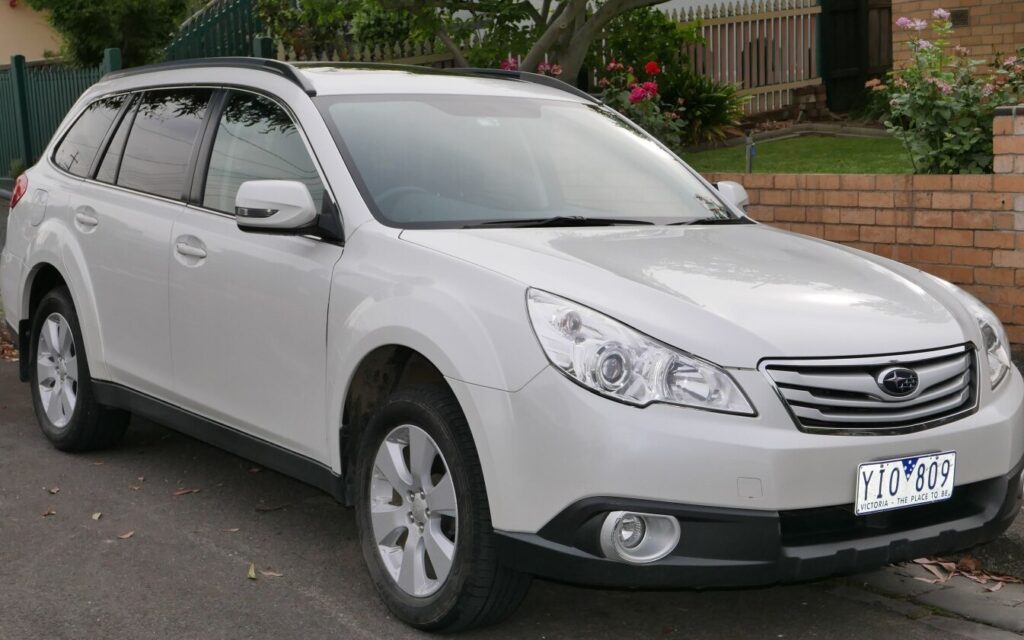
The Subaru Outback IV, designated chassis codes BR and BM, represents the fourth generation of Subaru’s popular all-wheel-drive wagon, produced from 2009 to 2013. Positioned as a more rugged alternative to traditional station wagons and early crossovers, the Outback IV continued Subaru’s commitment to standard all-wheel drive and a practical, outdoors-oriented vehicle. The 2.5i variant, powered by the 167 horsepower 2.5-liter naturally aspirated boxer engine, served as the mainstay of the Outback lineup in North America, offering a balance of fuel efficiency, capability, and affordability. It occupied the mid-range position within the fourth-generation Outback family, slotting below the more powerful 3.6R models and often serving as the entry point for buyers seeking the Outback experience.
Technical Specifications
| Brand | Subaru |
| Model | Outback |
| Generation | Outback IV (BR, BM) |
| Type | 2.5i (167 Hp) AWD |
| Start of production | 2009 |
| End of production | 2013 |
| Powertrain Architecture | Internal Combustion engine |
| Body type | Station wagon (estate) |
| Seats | 5 |
| Doors | 5 |
| Fuel Type | Petrol (Gasoline) |
| Power | 167 Hp @ 5160 rpm |
| Power per litre | 68 Hp/l |
| Torque | 229 Nm @ 4000 rpm / 168.9 lb.-ft. @ 4000 rpm |
| Engine layout | Front, Longitudinal |
| Engine Model/Code | EJ253 |
| Engine displacement | 2457 cm3 / 149.94 cu. in. |
| Number of cylinders | 4 |
| Engine configuration | Boxer |
| Number of valves per cylinder | 4 |
| Fuel injection system | Multi-port manifold injection |
| Engine aspiration | Naturally aspirated engine |
| Valvetrain | SOHC |
| Engine oil capacity | 4.3 l / 4.54 US qt | 3.78 UK qt |
| Coolant | 6.5 l / 6.87 US qt | 5.72 UK qt |
| Length | 4775 mm / 187.99 in. |
| Width | 1820 mm / 71.65 in. |
| Height | 1605 mm / 63.19 in. |
| Wheelbase | 2745 mm / 108.07 in. |
| Front track | 1540 mm / 60.63 in. |
| Rear track | 1540 mm / 60.63 in. |
| Drive wheel | All wheel drive (4×4) |
| Number of gears and type of gearbox | 6 gears, manual transmission |
| Front suspension | Independent type McPherson |
| Rear suspension | Double wishbone |
| Front brakes | Ventilated discs |
| Rear brakes | Disc |
| Assisting systems | ABS (Anti-lock braking system) |
| Power steering | Hydraulic Steering |
Powertrain & Engine Architecture
The heart of the 2.5i Outback is the EJ253 engine, a 2.5-liter horizontally-opposed (boxer) four-cylinder. This engine design, a Subaru hallmark, contributes to a lower center of gravity, enhancing stability and handling. The EJ253 utilizes a single overhead camshaft (SOHC) design per cylinder bank, operating 16 valves in total. Fuel delivery is managed by a multi-point fuel injection system, providing adequate atomization for efficient combustion. The engine’s 167 horsepower and 168.9 lb-ft of torque are respectable for its displacement, but the emphasis is on smooth, usable power rather than outright performance. The 6-speed manual transmission offered in this variant features well-spaced gear ratios designed to maximize fuel economy and provide adequate acceleration. The engine’s longitudinal mounting, coupled with Subaru’s symmetrical all-wheel-drive system, contributes to balanced handling characteristics.
Driving Characteristics
The 2.5i Outback with the manual transmission delivers a comfortable and predictable driving experience. Acceleration is adequate for everyday driving, with 0-60 mph times typically around 9-10 seconds. The boxer engine provides a unique engine note and a smooth power delivery. The manual gearbox is relatively light and precise, making it enjoyable to operate. Compared to the 3.6R models, the 2.5i feels less powerful, particularly during highway passing maneuvers. However, the lower weight of the 2.5i contributes to better fuel economy and a more nimble feel in corners. The all-wheel-drive system provides excellent traction in various weather conditions, making it a capable vehicle for year-round use. The gear ratios are tuned for efficiency, meaning the engine doesn’t feel strained at highway speeds, but it also doesn’t offer particularly brisk acceleration.
Equipment & Trim Levels
The 2.5i Outback typically came standard with features such as air conditioning, power windows and locks, a CD player with auxiliary input, and a basic trip computer. Safety features included anti-lock brakes (ABS), stability control, and a comprehensive airbag system. Higher trim levels, often denoted by “Premium” packages, added features like a power driver’s seat, a sunroof, upgraded audio systems, and leather upholstery. Optional extras included a navigation system, heated seats, and a rear cargo area cover. Interior upholstery was typically cloth in the base 2.5i, with leather available as an upgrade. The dashboard layout was functional and straightforward, prioritizing ease of use over flashy design.
Chassis & Braking
The Outback IV utilizes a McPherson strut front suspension and a double-wishbone rear suspension, providing a comfortable ride and predictable handling. Stabilizer bars are fitted to both the front and rear axles to reduce body roll during cornering. Braking duties are handled by ventilated discs at the front and solid discs at the rear. The hydraulic power steering provides a responsive feel without being overly heavy. The suspension tuning is geared towards comfort and all-weather capability, rather than sporty handling. The all-wheel-drive system utilizes a variable torque distribution system, automatically adjusting the power split between the front and rear axles based on road conditions and driver input.
Market Reception & Comparison
The 2.5i Outback was generally well-received by automotive critics, who praised its practicality, safety, and all-weather capability. Fuel economy was considered a strong point, averaging around 22 mpg city and 29 mpg highway. Compared to the 3.6R models, the 2.5i offered a more affordable entry point into the Outback lineup, making it accessible to a wider range of buyers. However, some critics noted that the 2.5i’s engine could feel underpowered when fully loaded or when climbing steep hills. Reliability was generally good, with the EJ253 engine proving to be a durable and long-lasting powerplant. The 2.5i competed with other compact crossovers and wagons, such as the Toyota RAV4, Honda CR-V, and Subaru Forester.
Legacy
The Subaru Outback IV 2.5i remains a popular choice in the used car market, known for its reliability, practicality, and all-weather capability. The EJ253 engine, while not without its potential maintenance needs (such as head gasket issues common to some Subaru engines), is generally considered a robust and durable unit when properly maintained. Parts availability is good, and the Outback’s relatively simple mechanical design makes it relatively easy to repair. The fourth-generation Outback helped solidify Subaru’s reputation as a maker of safe, reliable, and capable vehicles, and the 2.5i variant continues to offer a compelling value proposition for buyers seeking a practical and versatile wagon.