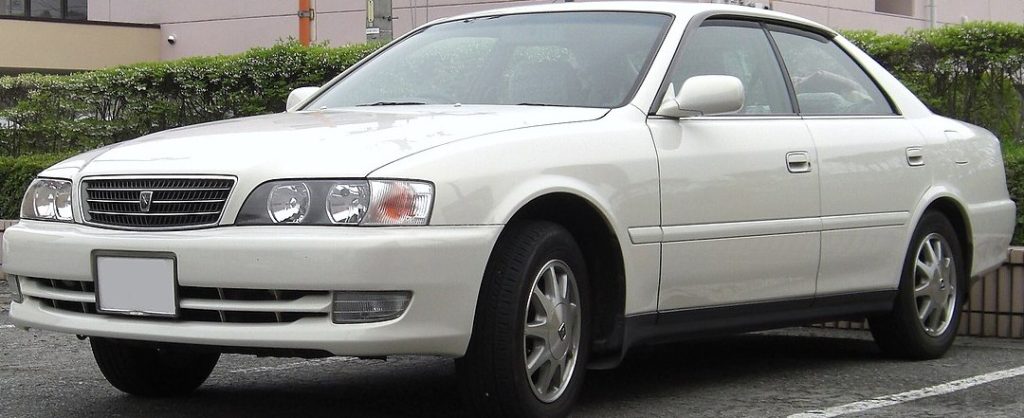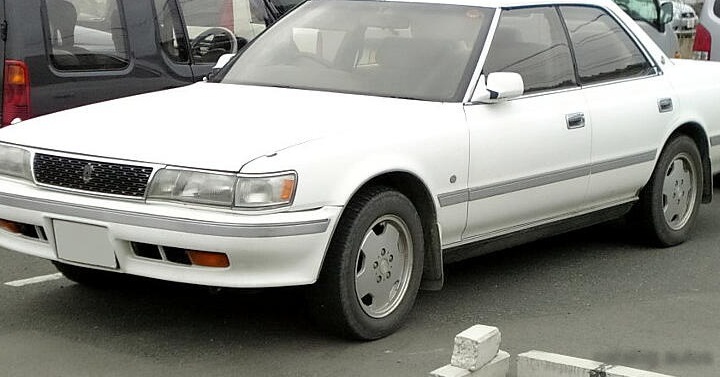
The Toyota Chaser 1.8 (105 hp) Automatic, produced between 1984 and 1988, represents an entry-level variant within the second generation (XG10) of the Chaser lineage. Positioned as a comfortable and practical sedan, it catered to buyers seeking a balance between affordability, reliability, and Toyota’s reputation for quality. The Chaser, in its broader context, was a Japan-market specific vehicle, designed to compete with the Nissan Skyline and Mazda Savanna, offering a more conservatively styled alternative to those sportier offerings. This particular 1.8L automatic configuration served as the base model, providing a stepping stone into the Chaser range for budget-conscious consumers.
Technical Specifications
| Brand | Toyota |
| Model | Chaser |
| Generation | Chaser (XG10) |
| Type (Engine) | 1.8 (105 Hp) Automatic |
| Start of production | 1984 |
| End of production | 1988 |
| Powertrain Architecture | Internal Combustion engine |
| Body type | Sedan |
| Seats | 5 |
| Doors | 4 |
| Fuel consumption (urban) | 9.8 l/100 km (24 US mpg, 28.8 UK mpg, 10.2 km/l) |
| Fuel consumption (extra urban) | 5.3 l/100 km (44.4 US mpg, 53.3 UK mpg, 18.9 km/l) |
| Fuel Type | Petrol (Gasoline) |
| Power | 105 Hp @ 5600 rpm |
| Power per litre | 57.1 Hp/l |
| Torque | 149 Nm @ 2800 rpm (109.9 lb.-ft. @ 2800 rpm) |
| Engine Model/Code | 4S-Fi |
| Engine displacement | 1838 cm3 (112.16 cu. in.) |
| Number of cylinders | 4 |
| Engine configuration | Inline |
| Number of valves per cylinder | 4 |
| Fuel injection system | Multi-port manifold injection |
| Engine aspiration | Naturally aspirated engine |
| Engine oil capacity | 3.3 l (3.49 US qt | 2.9 UK qt) |
| Fuel tank capacity | 65 l (17.17 US gal | 14.3 UK gal) |
| Length | 4690 mm (184.65 in.) |
| Width | 1695 mm (66.73 in.) |
| Height | 1375 mm (54.13 in.) |
| Wheelbase | 2680 mm (105.51 in.) |
| Drivetrain Architecture | Rear wheel drive |
| Number of gears and type of gearbox | 4 gears, automatic transmission |
| Front brakes | Ventilated discs |
| Rear brakes | Drum |
| Assisting systems | ABS (Anti-lock braking system) |
| Tires size | 185/70 R14 |
| Wheel rims size | 14 |
Powertrain & Engine Architecture
The heart of the Chaser 1.8 Automatic is the 4S-Fi inline-four cylinder engine, displacing 1.8 liters (1838 cc). This engine utilizes a multi-port fuel injection system, a significant advancement over earlier carburetor-equipped engines, contributing to improved fuel efficiency and smoother operation. The engine features a double overhead camshaft (DOHC) valvetrain, operating four valves per cylinder, which aids in maximizing volumetric efficiency and power output. The 4S-Fi engine, while not a high-performance unit, was known for its durability and relatively simple maintenance requirements. Paired with this engine is a four-speed automatic transmission. This transmission, while providing convenience, was geared towards fuel economy and smooth cruising rather than spirited acceleration. It was a common automatic transmission used in many Toyota models of the era.
Driving Characteristics
The 105 hp output and automatic transmission combination resulted in a driving experience focused on comfort and ease of use. Acceleration was adequate for everyday driving, but noticeably slower than the higher-powered Chaser variants equipped with larger engines and manual transmissions. The automatic transmission’s gear ratios were optimized for fuel efficiency, meaning the engine often operated at lower RPMs during cruising. This contributed to a quiet and relaxed driving experience, but could feel sluggish when attempting to overtake or climb hills. Compared to the manual transmission versions, the automatic Chaser 1.8 offered less driver engagement and a slower 0-60 mph time. The rear-wheel-drive layout provided a balanced feel, but the relatively narrow tires (185/70 R14) limited grip during cornering.
Equipment & Trim Levels
The Chaser 1.8 Automatic typically came with a fairly basic level of equipment, reflecting its position as the entry-level model. Standard features generally included cloth upholstery, a basic AM/FM radio, and manual windows and door locks. Air conditioning was often an optional extra. Interior trim was typically functional and durable, prioritizing practicality over luxury. Higher trim levels of the Chaser, such as the Super Extra, offered features like power windows, upgraded audio systems, and more comfortable seating. The 1.8 Automatic was often seen as a blank canvas for buyers who wanted to add optional extras to personalize their vehicle.
Chassis & Braking
The Chaser 1.8 Automatic utilized a conventional rear-wheel-drive chassis with independent front suspension and a solid rear axle. The front suspension employed MacPherson struts, while the rear utilized leaf springs. Braking was accomplished via ventilated discs on the front wheels and drum brakes on the rear. An Anti-lock Braking System (ABS) was available, but not standard on all models. The suspension setup was tuned for comfort, providing a relatively soft ride quality. Stabilizer bars were present, but were typically smaller in diameter compared to those found on higher-performance Chaser models.
Market Reception & Comparison
The Toyota Chaser 1.8 Automatic was generally well-received in the Japanese market as a reliable and affordable family sedan. Critics praised its fuel efficiency and comfortable ride, but noted its lack of sporting pretensions. Compared to the more powerful Chaser variants, such as those equipped with the 2.0-liter 1G-EU engine, the 1.8 Automatic offered significantly less performance. However, it also boasted better fuel economy and a lower purchase price. The 1.8L engine was considered a good balance for city driving, where fuel costs and ease of use were prioritized over outright speed. Against competitors like the Nissan Skyline and Mazda Savanna, the Chaser 1.8 offered a more conservative and practical alternative.
Legacy
The Toyota Chaser 1.8 Automatic, while not a particularly sought-after model today, enjoys a reputation for reliability and durability. The 4S-Fi engine is known to be a robust and long-lasting unit, and the automatic transmission, while not particularly sophisticated, is generally dependable. In the used car market, these Chasers are often found in relatively good condition, due to the generally careful ownership habits of Japanese drivers. Parts availability can be a challenge outside of Japan, but many components are still available through specialist suppliers. The Chaser 1.8 Automatic represents a snapshot of 1980s Japanese automotive engineering – a focus on practicality, reliability, and fuel efficiency, packaged in a comfortable and unassuming sedan.