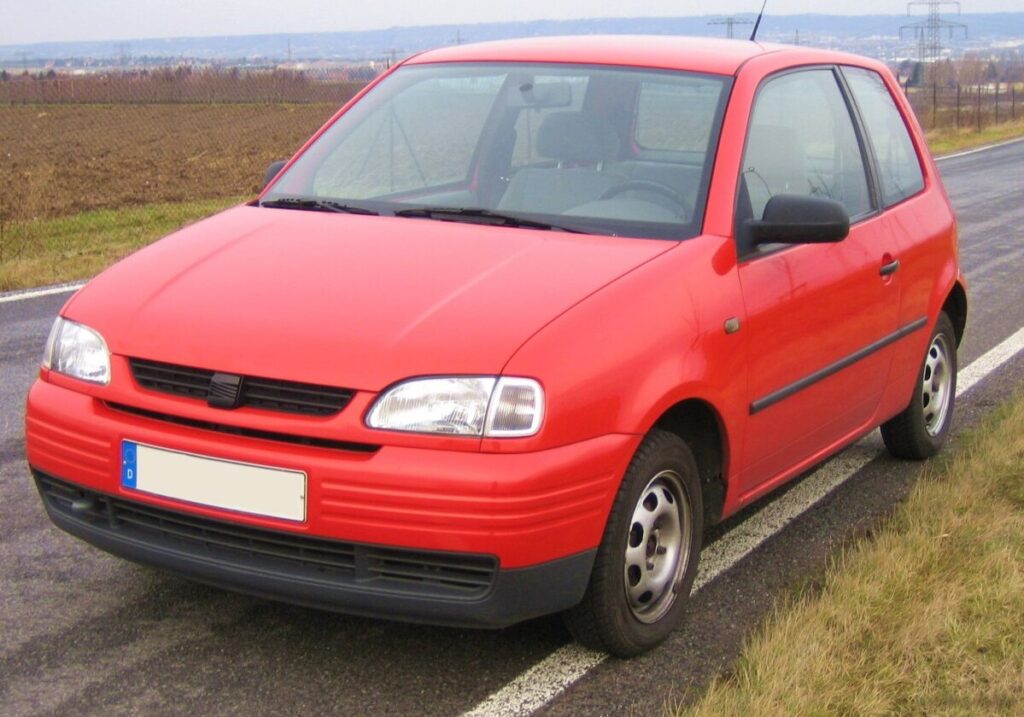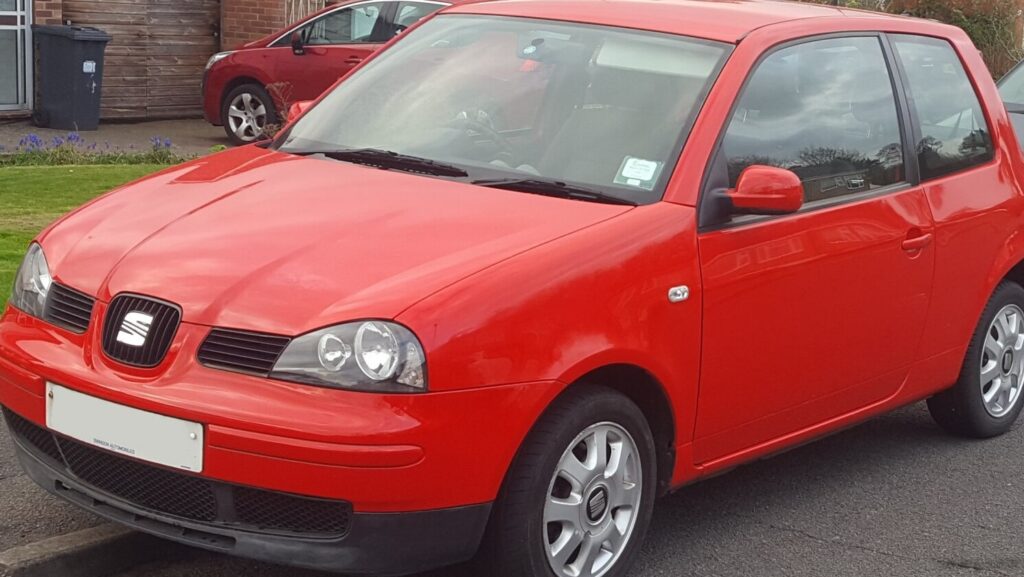
The Seat Arosa 1.4 16V, produced from February 2000 to March 2005, represented a significant step up in performance for the diminutive Arosa city car. Part of the 6H facelift generation, this variant offered a more spirited driving experience than the base models, appealing to buyers seeking a blend of practicality and agility. Positioned as a mid-range offering within the Arosa lineup, it bridged the gap between the entry-level 1.0-liter engines and the more expensive, sport-focused trims. The Arosa itself was a rebadged version of the Volkswagen Polo Mk3, developed as a cost-effective and modern small car for the European market.
Technical Specifications
| Brand | Seat |
| Model | Arosa |
| Generation | Arosa (6H, facelift 2000) |
| Type (Engine) | 1.4 16V (100 Hp) |
| Start of production | February, 2000 |
| End of production | March, 2005 |
| Powertrain Architecture | Internal Combustion engine |
| Body type | Hatchback |
| Seats | 4 |
| Doors | 3 |
| Fuel consumption (urban) | 9.3 l/100 km (25.3 US mpg) |
| Fuel consumption (extra urban) | 5.5 l/100 km (42.8 US mpg) |
| Fuel Type | Petrol (Gasoline) |
| Acceleration 0 – 100 km/h | 9.8 sec |
| Acceleration 0 – 62 mph | 9.8 sec |
| Acceleration 0 – 60 mph | 9.3 sec |
| Maximum speed | 188 km/h (116.82 mph) |
| Weight-to-power ratio | 9.5 kg/Hp |
| Weight-to-torque ratio | 7.5 kg/Nm |
| Power | 100 Hp @ 6000 rpm |
| Torque | 126 Nm @ 4400 rpm (92.93 lb.-ft. @ 4400 rpm) |
| Engine layout | Front, Transverse |
| Engine Model/Code | AFK, AUB, AQQ |
| Engine displacement | 1390 cm3 (84.82 cu. in.) |
| Number of cylinders | 4 |
| Engine configuration | Inline |
| Cylinder Bore | 76.5 mm (3.01 in.) |
| Piston Stroke | 75.6 mm (2.98 in.) |
| Compression ratio | 10.5:1 |
| Number of valves per cylinder | 4 |
| Fuel injection system | Multi-port manifold injection |
| Engine aspiration | Naturally aspirated engine |
| Valvetrain | OHC |
| Engine oil capacity | 3.4 l (3.59 US qt | 2.99 UK qt) |
| Coolant | 5.5 l (5.81 US qt | 4.84 UK qt) |
| Kerb Weight | 946 kg (2085.57 lbs.) |
| Max. weight | 1410 kg (3108.52 lbs.) |
| Max load | 464 kg (1022.94 lbs.) |
| Trunk (boot) space – minimum | 130 l (4.59 cu. ft.) |
| Trunk (boot) space – maximum | 790 l (27.9 cu. ft.) |
| Fuel tank capacity | 34 l (8.98 US gal | 7.48 UK gal) |
| Length | 3536 mm (139.21 in.) |
| Width | 1639 mm (64.53 in.) |
| Height | 1460 mm (57.48 in.) |
| Wheelbase | 2323 mm (91.46 in.) |
| Front track | 1392 mm (54.8 in.) |
| Rear (Back) track | 1400 mm (55.12 in.) |
| Minimum turning circle | 9.8 m (32.15 ft.) |
| Drivetrain Architecture | Front wheel drive |
| Number of gears | 5 gears, manual transmission |
| Front suspension | Spring Strut |
| Rear suspension | Coil spring |
| Front brakes | Ventilated discs |
| Rear brakes | Disc |
| Assisting systems | ABS (Anti-lock braking system) |
| Steering type | Steering rack and pinion |
| Power steering | Hydraulic Steering |
| Tires size | 185/55 R14 |
| Wheel rims size | 14 |
INTRODUCTION
The Seat Arosa 1.4 16V, launched in 2000 as part of the 6H facelift, was a key model in Seat’s strategy to offer a modern and affordable supermini. Built on the Volkswagen Group’s 1HX0/A3 platform – shared with the VW Polo Mk3 and SEAT Ibiza Mk2 – the Arosa aimed to provide a more refined and enjoyable driving experience than its predecessors. The facelift brought subtle cosmetic changes, but the introduction of the 1.4 16V engine was a more substantial upgrade, offering a noticeable performance boost over the lower-spec engines.
Powertrain & Engine Architecture
At the heart of the Arosa 1.4 16V lies the VW Group’s 1.4-liter, 16-valve inline-four engine, identified by engine codes AFK, AUB, and AQQ. This engine is a naturally aspirated unit featuring multi-port fuel injection. The 16-valve configuration, with dual overhead camshafts (DOHC), allowed for improved breathing and higher revs compared to engines with fewer valves. The engine produced 100 horsepower at 6000 rpm and 126 Nm (93 lb-ft) of torque at 4400 rpm. The Arosa 1.4 16V was typically paired with a five-speed manual transmission, although a four-speed automatic option was also available, albeit less common. The automatic transmission, while offering convenience, did impact acceleration and fuel economy.
Driving Characteristics
The Arosa 1.4 16V offered a noticeable improvement in performance over the 1.0-liter and 1.4 8V models. While not a sports car, the 100 hp engine provided sufficient power for confident overtaking and comfortable cruising on highways. The five-speed manual transmission allowed drivers to keep the engine in its sweet spot, maximizing acceleration. The automatic version, while smooth, felt somewhat sluggish, particularly during kickdown. The Arosa’s light weight (around 946 kg or 2086 lbs) contributed to its nimble handling, making it enjoyable to drive on twisty roads. Compared to the more powerful Ibiza Cupra, the Arosa 1.4 16V prioritized fuel efficiency and everyday usability over outright performance.
Equipment & Trim Levels
The Arosa 1.4 16V typically came equipped with features such as power steering, central locking, and front airbags. Higher trim levels added options like air conditioning, electric windows, and alloy wheels. Interior upholstery was generally cloth, with a functional and straightforward dashboard layout. Optional extras included a sunroof, upgraded audio system, and metallic paint finishes. The Arosa aimed for a balance between affordability and comfort, offering a reasonable level of equipment for its price point.
Chassis & Braking
The Arosa 1.4 16V utilized a simple yet effective chassis setup. Front suspension consisted of MacPherson struts, while the rear employed a torsion beam axle. This configuration provided a comfortable ride and predictable handling. Braking duties were handled by ventilated discs on the front wheels and discs on the rear, providing adequate stopping power for its weight class. ABS (Anti-lock Braking System) was standard, enhancing safety. The suspension was tuned for comfort rather than outright sportiness, prioritizing ride quality over aggressive cornering.
Market Reception & Comparison
The Seat Arosa 1.4 16V was generally well-received by automotive critics as a practical and enjoyable city car. It was praised for its nimble handling, fuel efficiency, and relatively spacious interior for its size. However, some reviewers noted that the engine could feel strained at higher speeds, and the interior materials were somewhat basic. Compared to the 1.0-liter Arosa, the 1.4 16V offered a significant performance upgrade, making it a more appealing option for drivers who frequently traveled on highways or carried passengers. Against rivals like the Ford Fiesta and Renault Clio, the Arosa offered a competitive package in terms of price, equipment, and driving dynamics.
Legacy
The Seat Arosa 1.4 16V has proven to be a relatively reliable car, with the 1.4-liter engine generally considered durable and long-lasting. Common issues include wear and tear on suspension components and occasional problems with the central locking system. Today, the Arosa 1.4 16V remains a popular choice among budget-conscious buyers looking for a small, economical, and easy-to-maintain car. Its simple mechanicals and readily available parts make it relatively inexpensive to repair. While not a collector’s item, well-maintained examples are increasingly sought after by enthusiasts who appreciate its retro charm and practical nature.