
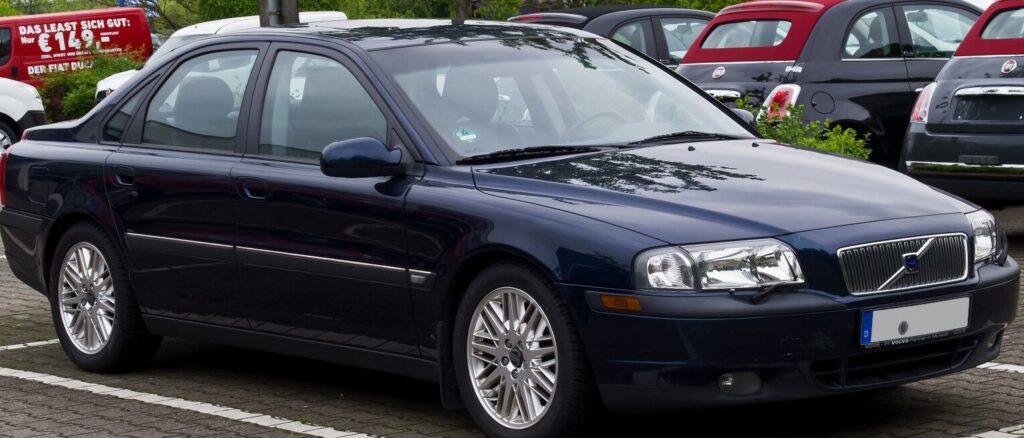
The Volvo S80 2.0 20V T5 Automatic, produced between 1998 and 2000, represented a compelling blend of Scandinavian luxury and turbocharged performance within the first generation (P1) S80 lineup. Positioned as a mid-range offering, it bridged the gap between the base 2.4-liter naturally aspirated engine and the more potent T6 variant. This model played a significant role in establishing the S80 as a sophisticated and capable executive sedan, particularly in European and North American markets where Volvo sought to expand its presence beyond its traditional niche. The S80, as a whole, was Volvo’s first foray into the full-size luxury sedan segment, aiming to compete with established German rivals.
Technical Specifications
| Brand | Volvo |
| Model | S80 |
| Generation | S80 (P1) |
| Type (Engine) | 2.0 20V T5 (226 Hp) Automatic |
| Start of production | 1998 |
| End of production | 2000 |
| Powertrain Architecture | Internal Combustion engine |
| Body type | Sedan |
| Seats | 5 |
| Doors | 4 |
| Fuel consumption (urban) | 11.4 l/100 km (20.6 US mpg) |
| Fuel consumption (extra urban) | 7.6 l/100 km (30.9 US mpg) |
| Fuel consumption (combined) | 10 l/100 km (23.5 US mpg) |
| Fuel Type | Petrol (Gasoline) |
| Acceleration 0 – 100 km/h | 7.9 sec |
| Acceleration 0 – 62 mph | 7.9 sec |
| Acceleration 0 – 60 mph | 7.5 sec |
| Maximum speed | 220 km/h (136.7 mph) |
| Weight-to-power ratio | 6.6 kg/Hp |
| Weight-to-torque ratio | 4.8 kg/Nm |
| Power | 226 Hp @ 5700 rpm |
| Torque | 310 Nm @ 2700 rpm (228.64 lb.-ft. @ 2700 rpm) |
| Engine layout | Front, Transverse |
| Engine Model/Code | B5204T3 |
| Engine displacement | 1984 cm3 (121.07 cu. in.) |
| Number of cylinders | 5 |
| Engine configuration | Inline |
| Cylinder Bore | 81 mm (3.19 in.) |
| Piston Stroke | 77 mm (3.03 in.) |
| Compression ratio | 8.4:1 |
| Number of valves per cylinder | 4 |
| Fuel injection system | Multi-port manifold injection |
| Engine aspiration | Turbocharger |
| Valvetrain | DOHC |
| Engine oil capacity | 5.8 l (6.13 US qt | 5.1 UK qt) |
| Coolant capacity | 8.8 l (9.3 US qt | 7.74 UK qt) |
| Kerb Weight | 1500 kg (3306.93 lbs.) |
| Max. weight | 2000 kg (4409.25 lbs.) |
| Max load | 500 kg (1102.31 lbs.) |
| Trunk (boot) space – minimum | 440 l (15.54 cu. ft.) |
| Trunk (boot) space – maximum | 1106 l (39.06 cu. ft.) |
| Fuel tank capacity | 80 l (21.13 US gal | 17.6 UK gal) |
| Length | 4820 mm (189.76 in.) |
| Width | 1830 mm (72.05 in.) |
| Height | 1440 mm (56.69 in.) |
| Wheelbase | 2790 mm (109.84 in.) |
| Front track | 1580 mm (62.2 in.) |
| Rear track | 1560 mm (61.42 in.) |
| Drivetrain Architecture | Front wheel drive |
| Number of gears | 4 |
| Gearbox type | Automatic transmission |
| Front suspension | Wishbone |
| Rear suspension | Coil spring |
| Front brakes | Ventilated discs |
| Rear brakes | Disc |
| Assisting systems | ABS (Anti-lock braking system) |
| Steering type | Steering rack and pinion |
| Power steering | Hydraulic |
| Tires size | 215/55 R16 |
| Wheel rims size | 16 |
Powertrain & Engine Architecture
The heart of the S80 2.0 T5 was the B5204T3 engine, a 1.984-liter inline-five cylinder powerplant. This engine was a key component of Volvo’s modular engine family, known for its robustness and relatively simple design. The “20V” designation refers to the engine’s 20 valves (four valves per cylinder). The B5204T3 utilized a low-pressure turbocharger, coupled with a Bosch Motronic fuel injection system, to deliver a respectable 226 horsepower and 310 Nm (228.64 lb-ft) of torque. The turbocharger provided a broad torque curve, enhancing drivability. The engine featured a double overhead camshaft (DOHC) valvetrain, contributing to its efficient breathing. The four-speed automatic transmission, sourced from Aisin Warner, was specifically calibrated to handle the engine’s torque output. While not known for its sportiness, the transmission offered smooth shifts and adequate responsiveness for everyday driving.
Driving Characteristics
The S80 2.0 T5 Automatic offered a comfortable and refined driving experience. Acceleration from 0-60 mph took approximately 7.5 to 7.9 seconds, making it reasonably quick for its time. However, it wasn’t as engaging as the manual transmission versions or the higher-output T6 model. The automatic transmission, while smooth, did exhibit some inherent efficiency losses compared to a manual gearbox. The gear ratios were tuned for comfort and fuel economy rather than outright performance. The turbocharger provided a noticeable boost in power, but turbo lag was present, particularly at lower engine speeds. The front-wheel-drive configuration offered predictable handling, but lacked the all-weather capability of Volvo’s all-wheel-drive systems found in other models.
Equipment & Trim Levels
The S80 2.0 T5 Automatic typically came equipped with a generous array of standard features, reflecting Volvo’s commitment to safety and comfort. These included power windows, power locks, a sunroof, air conditioning, and a premium audio system. Interior upholstery was typically cloth, with leather options available as an upgrade. Dashboard design was characterized by a clean, Scandinavian aesthetic, with intuitive controls. Optional extras included heated front seats, automatic climate control, and a navigation system. Safety features, a Volvo hallmark, were comprehensive, including ABS brakes, airbags, and side impact protection systems.
Chassis & Braking
The S80’s chassis featured an independent wishbone front suspension and a coil spring rear suspension. This setup provided a comfortable ride, absorbing bumps and imperfections in the road surface effectively. The front brakes were ventilated discs, offering good stopping power, while the rear brakes were solid discs. The steering was rack-and-pinion with hydraulic power assistance, providing a light and responsive feel. Stabilizer bars were fitted to both the front and rear axles to reduce body roll during cornering. The S80 2.0 T5’s curb weight of around 1500 kg (3306.93 lbs) influenced its handling characteristics, making it feel somewhat substantial compared to lighter competitors.
Market Reception & Comparison
The S80 2.0 T5 Automatic was generally well-received by automotive critics. It was praised for its comfortable ride, spacious interior, and strong safety credentials. However, some reviewers noted that the automatic transmission detracted from the engine’s performance potential. Compared to the naturally aspirated 2.4-liter S80, the 2.0 T5 offered a significant performance upgrade. In contrast to the range-topping T6 model, the 2.0 T5 was more affordable and fuel-efficient, appealing to a broader range of buyers. Fuel economy was rated at around 23.5 US mpg combined, which was competitive for a vehicle in its class. Reliability was generally good, although some owners reported minor issues with the automatic transmission over the long term.
Legacy
The Volvo S80 2.0 T5 Automatic remains a relatively common sight on the used car market today. The B5204T3 engine is known for its durability, and with proper maintenance, can provide many years of reliable service. While not a particularly sought-after collector’s item, the S80 2.0 T5 represents a well-built and comfortable luxury sedan from a period when Volvo was establishing itself as a serious contender in the premium car segment. Its blend of performance, safety, and Scandinavian design continues to appeal to buyers seeking a practical and refined vehicle.
