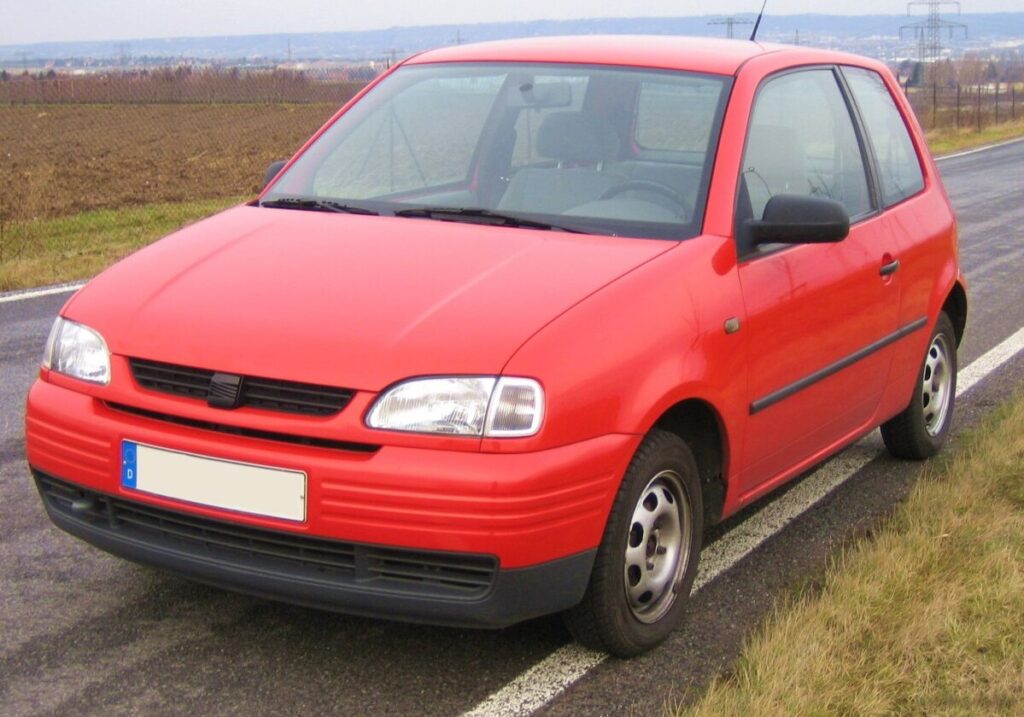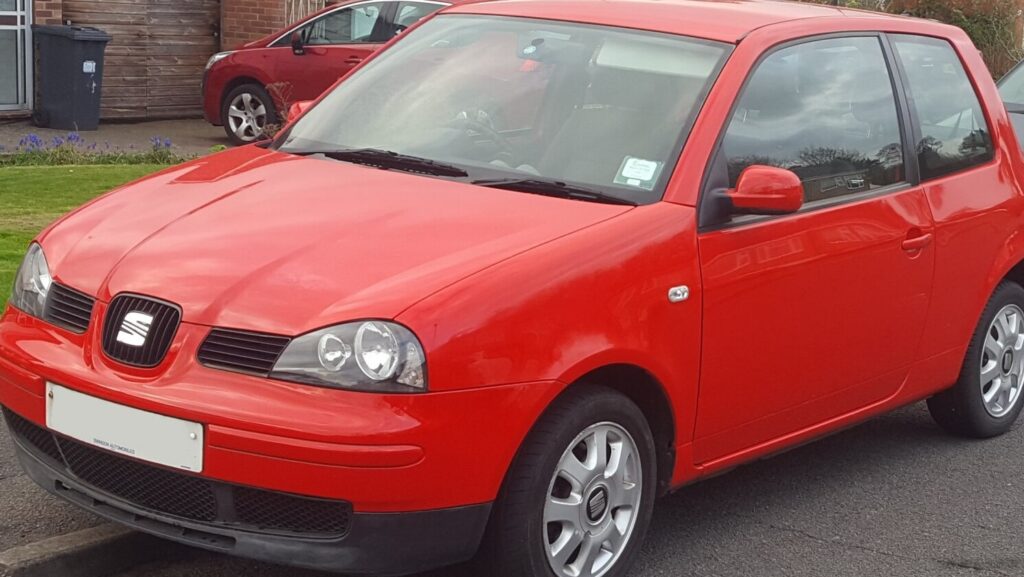
The Seat Arosa, specifically the 1.4 MPi variant produced from 2000 to 2004, represents a significant entry point into the supermini segment for the Spanish automaker. Part of the facelifted 6H generation, this model aimed to provide affordable and practical transportation, primarily within European markets. The Arosa shared its platform – the Volkswagen Group’s PQ24 – with the Volkswagen Polo and Škoda Fabia, benefiting from economies of scale and a proven mechanical base. The 1.4 MPi, producing 60 horsepower, was positioned as the base engine option, targeting budget-conscious buyers and those prioritizing fuel efficiency over outright performance.
Technical Specifications
| Brand | Seat |
| Model | Arosa |
| Generation | Arosa (6H, facelift 2000) |
| Type (Engine) | 1.4 MPi (60 Hp) |
| Start of production | 2000 |
| End of production | June, 2004 |
| Powertrain Architecture | Internal Combustion engine |
| Body type | Hatchback |
| Seats | 4 |
| Doors | 3 |
| Fuel consumption (urban) | 8.3 l/100 km (28.3 US mpg, 34 UK mpg, 12 km/l) |
| Fuel consumption (extra urban) | 4.9 l/100 km (48 US mpg, 57.6 UK mpg, 20.4 km/l) |
| Fuel consumption (combined) | 6.1 l/100 km (38.6 US mpg, 46.3 UK mpg, 16.4 km/l) |
| CO2 emissions | 146 g/km |
| Fuel Type | Petrol (Gasoline) |
| Acceleration 0 – 100 km/h | 14.2 sec |
| Acceleration 0 – 62 mph | 14.2 sec |
| Acceleration 0 – 60 mph | 13.5 sec |
| Maximum speed | 160 km/h (99.42 mph) |
| Emission standard | Euro 4 |
| Weight-to-power ratio | 15 kg/Hp |
| Weight-to-torque ratio | 7.8 kg/Nm |
| Power | 60 Hp @ 4700 rpm |
| Torque | 116 Nm @ 3000 rpm (85.56 lb.-ft. @ 3000 rpm) |
| Engine layout | Front, Transverse |
| Engine Model/Code | AKK, ANW, AUD |
| Engine displacement | 1390 cm3 (84.82 cu. in.) |
| Number of cylinders | 4 |
| Engine configuration | Inline |
| Cylinder Bore | 76.5 mm (3.01 in.) |
| Piston Stroke | 75.6 mm (2.98 in.) |
| Compression ratio | 10.5:1 |
| Number of valves per cylinder | 2 |
| Fuel injection system | Multi-port manifold injection |
| Engine aspiration | Naturally aspirated |
| Valvetrain | SOHC |
| Engine oil capacity | 3.2 l (3.38 US qt, 2.82 UK qt) |
| Coolant capacity | 5.6 l (5.92 US qt, 4.93 UK qt) |
| Kerb Weight | 899 kg (1981.96 lbs.) |
| Max. weight | 1400 kg (3086.47 lbs.) |
| Max load | 501 kg (1104.52 lbs.) |
| Trunk (boot) space – minimum | 130 l (4.59 cu. ft.) |
| Trunk (boot) space – maximum | 790 l (27.9 cu. ft.) |
| Fuel tank capacity | 34 l (8.98 US gal, 7.48 UK gal) |
| Permitted trailer load with brakes (12%) | 800 kg (1763.7 lbs.) |
| Length | 3551 mm (139.8 in.) |
| Width | 1639 mm (64.53 in.) |
| Height | 1460 mm (57.48 in.) |
| Wheelbase | 2323 mm (91.46 in.) |
| Front track | 1392 mm (54.8 in.) |
| Rear track | 1400 mm (55.12 in.) |
| Drag coefficient (Cd) | 0.33 |
| Minimum turning circle | 10.1 m (33.14 ft.) |
| Drivetrain Architecture | Front wheel drive |
| Number of gears | 5 |
| Gearbox type | Manual transmission |
| Front suspension | Independent type McPherson, Transverse stabilizer |
| Rear suspension | Trailing arm, Elastic beam |
| Front brakes | Disc |
| Rear brakes | Drum |
| Steering type | Steering rack and pinion |
| Power steering | Hydraulic |
| Tires size | 185/55 R14 |
| Wheel rims size | 6J x 14 |
Powertrain & Engine Architecture
The Arosa 1.4 MPi utilized engines from the Volkswagen EA827 family, specifically the AKK, ANW, or AUD engine codes depending on the specific production year and market. These were 1.4-liter, inline-four cylinder engines featuring a single overhead camshaft (SOHC) and two valves per cylinder. Fuel delivery was managed by a multi-port fuel injection system, a common setup for engines of this era. The engine’s relatively simple design prioritized reliability and affordability over high performance. The 1.4 MPi produced 60 horsepower at 4700 rpm and 116 Nm (85.56 lb-ft) of torque at 3000 rpm. The engine was transversely mounted in the front of the vehicle, driving the front wheels. The standard transmission was a five-speed manual, although a four-speed automatic transmission was also available, albeit less common. The automatic transmission, while offering convenience, did impact acceleration and fuel economy.
Driving Characteristics
The Arosa 1.4 MPi with the manual transmission offered adequate, if uninspiring, performance. Acceleration to 60 mph took around 13.5 seconds, and top speed was approximately 99 mph. The engine felt strained at higher speeds, and overtaking required careful planning. The automatic transmission further diminished performance, adding approximately a second to the 0-60 mph time. The gear ratios were optimized for fuel efficiency rather than spirited driving. Handling was generally good for a supermini, with predictable steering and a reasonably comfortable ride. However, the rear drum brakes on many models limited braking performance compared to those equipped with rear discs.
Equipment & Trim Levels
The Arosa 1.4 MPi typically came with a basic level of equipment. Standard features included power steering, central locking, and front airbags. Interior upholstery was typically cloth, and the dashboard featured a simple, functional design. Optional extras included air conditioning, electric windows, and alloy wheels. Higher trim levels, such as the ‘Style’ or ‘Sport’ variants, added more features and cosmetic enhancements. The Arosa was designed to be a practical and affordable car, so luxury features were generally kept to a minimum.
Chassis & Braking
The Arosa’s chassis featured an independent McPherson strut suspension at the front and a torsion beam suspension at the rear. This setup provided a good balance between ride comfort and handling. Front brakes were typically disc brakes, while rear brakes were often drum brakes, particularly on lower trim levels. This configuration was a cost-saving measure, but it did result in reduced braking performance compared to models with all-disc brakes. The steering was a rack-and-pinion system with hydraulic power assistance, providing light and precise steering feel.
Market Reception & Comparison
The Seat Arosa 1.4 MPi was generally well-received as an affordable and practical city car. Critics praised its fuel efficiency and ease of driving, but noted its lack of performance and basic interior. Compared to its siblings, the Volkswagen Polo and Škoda Fabia, the Arosa was positioned as the more budget-friendly option. The Polo offered a more refined driving experience and higher-quality interior, while the Fabia provided more space and practicality. The 1.8-liter versions of the Arosa offered significantly more performance but came at a higher price point. The 1.4 MPi appealed to buyers who prioritized economy and reliability over driving excitement.
Legacy
The Seat Arosa 1.4 MPi has proven to be a relatively reliable car, with the EA827 engine being known for its durability. However, like any older vehicle, it is prone to age-related issues such as corrosion and wear and tear on suspension components. In the used car market, the Arosa 1.4 MPi remains an affordable option for first-time drivers or those seeking a cheap and cheerful city car. Its simplicity and low running costs make it an attractive proposition for those on a tight budget. While it may not offer the performance or features of more modern superminis, the Arosa 1.4 MPi represents a solid and dependable choice for basic transportation.