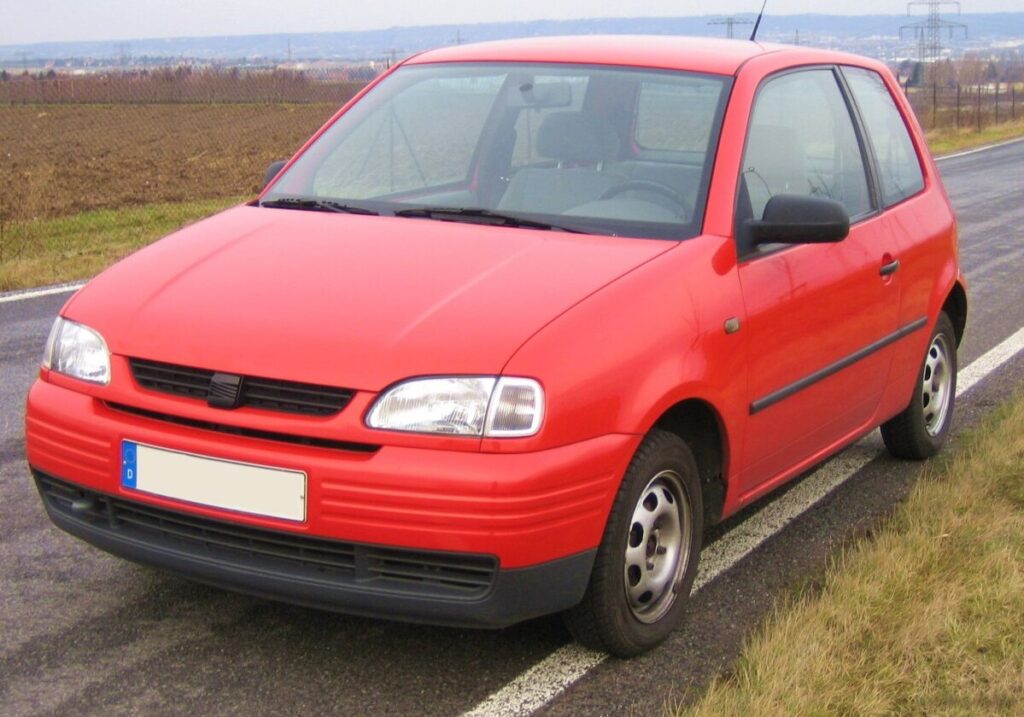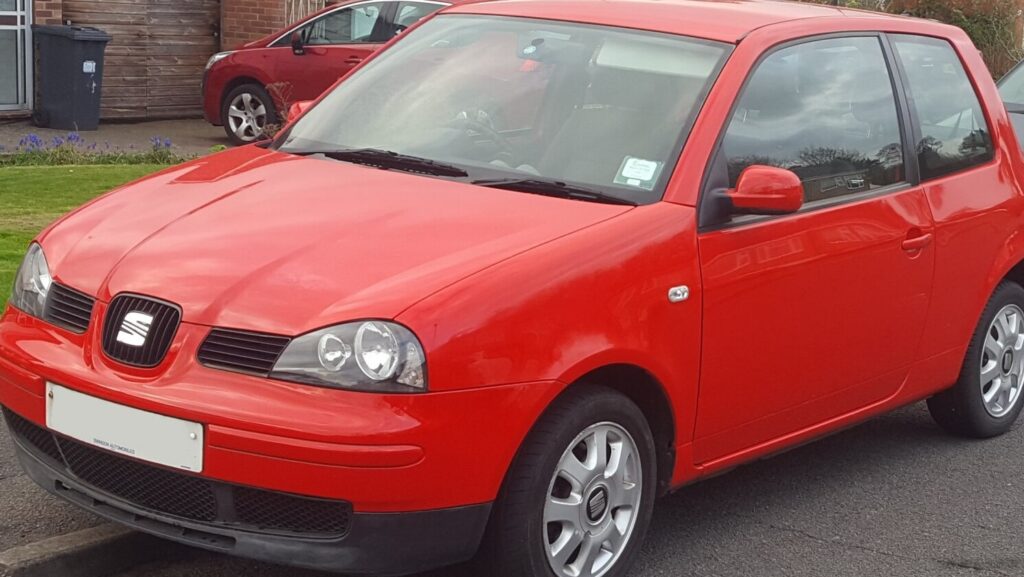
The Seat Arosa 1.4 MPi Automatic, produced from December 2000 to June 2004, represents a specific configuration within the facelifted second generation (6H) of the Arosa city car. Positioned as an entry-level offering, it aimed to provide affordable and convenient transportation, particularly appealing to drivers prioritizing ease of use over outright performance. This variant was primarily sold within European markets, where small, economical hatchbacks were – and continue to be – highly popular. The Arosa itself was a rebadged version of the Volkswagen Polo Mk3, sharing its platform (the 1HX0/A3) and many mechanical components, but offering a slightly more affordable and stylistically distinct alternative.
Technical Specifications
| Brand | Seat |
| Model | Arosa |
| Generation | Arosa (6H, facelift 2000) |
| Type (Engine) | 1.4 MPi (60 Hp) Automatic |
| Start of production | December, 2000 |
| End of production | June, 2004 |
| Powertrain Architecture | Internal Combustion engine |
| Body type | Hatchback |
| Seats | 5 |
| Doors | 3 |
| Fuel consumption (urban) | 10 l/100 km (23.5 US mpg, 28.2 UK mpg, 10 km/l) |
| Fuel consumption (extra urban) | 6.1 l/100 km (38.6 US mpg, 46.3 UK mpg, 16.4 km/l) |
| Fuel consumption (combined) | 7.5 l/100 km (31.4 US mpg, 37.7 UK mpg, 13.3 km/l) |
| CO2 emissions | 180 g/km |
| Fuel Type | Petrol (Gasoline) |
| Acceleration 0 – 100 km/h | 16.4 sec |
| Acceleration 0 – 62 mph | 16.4 sec |
| Acceleration 0 – 60 mph | 15.6 sec |
| Maximum speed | 156 km/h (96.93 mph) |
| Weight-to-power ratio | 15.5 kg/Hp, 64.6 Hp/tonne |
| Weight-to-torque ratio | 8 kg/Nm, 124.9 Nm/tonne |
| Power | 60 Hp @ 4700 rpm |
| Power per litre | 43.2 Hp/l |
| Torque | 116 Nm @ 3000 rpm (85.56 lb.-ft. @ 3000 rpm) |
| Engine layout | Front, Transverse |
| Engine Model/Code | AKK, ANW, AUD |
| Engine displacement | 1390 cm3 (84.82 cu. in.) |
| Number of cylinders | 4 |
| Engine configuration | Inline |
| Cylinder Bore | 76.5 mm (3.01 in.) |
| Piston Stroke | 75.6 mm (2.98 in.) |
| Compression ratio | 10.5:1 |
| Number of valves per cylinder | 2 |
| Fuel injection system | Multi-port manifold injection |
| Engine aspiration | Naturally aspirated engine |
| Valvetrain | SOHC |
| Engine oil capacity | 3.2 l (3.38 US qt | 2.82 UK qt) |
| Coolant | 5.6 l (5.92 US qt | 4.93 UK qt) |
| Kerb Weight | 929 kg (2048.09 lbs.) |
| Max. weight | 1415 kg (3119.54 lbs.) |
| Max load | 486 kg (1071.45 lbs.) |
| Trunk (boot) space – minimum | 130 l (4.59 cu. ft.) |
| Trunk (boot) space – maximum | 790 l (27.9 cu. ft.) |
| Fuel tank capacity | 34 l (8.98 US gal | 7.48 UK gal) |
| Permitted trailer load with brakes (12%) | 800 kg (1763.7 lbs.) |
| Length | 3551 mm (139.8 in.) |
| Width | 1639 mm (64.53 in.) |
| Height | 1460 mm (57.48 in.) |
| Wheelbase | 2323 mm (91.46 in.) |
| Front track | 1392 mm (54.8 in.) |
| Rear (Back) track | 1400 mm (55.12 in.) |
| Front overhang | 753 mm (29.65 in.) |
| Rear overhang | 475 mm (18.7 in.) |
| Drag coefficient (Cd) | 0.33 |
| Minimum turning circle | 10.1 m (33.14 ft.) |
| Drivetrain Architecture | The Internal combustion engine (ICE) drives the front wheels of the vehicle. |
| Drive wheel | Front wheel drive |
| Number of gears and type of gearbox | 4 gears, automatic transmission |
| Front suspension | Independent, type McPherson with coil spring and anti-roll bar |
| Rear suspension | Trailing arm, Torsion |
| Front brakes | Ventilated discs |
| Rear brakes | Drum |
| Assisting systems | ABS (Anti-lock braking system) |
| Steering type | Worm-reduction unit |
| Power steering | Hydraulic Steering |
| Tires size | 185/55 R16 |
| Wheel rims size | 6J x 14 |
Powertrain & Engine Architecture
The Arosa 1.4 MPi Automatic utilizes the AKK, ANW, or AUD engine code, all representing variations of the same 1.4-liter inline-four cylinder petrol engine. This engine is a relatively simple, naturally aspirated unit employing a single overhead camshaft (SOHC) valvetrain with two valves per cylinder. Fuel delivery is managed by a multi-port fuel injection system, providing adequate, though not exceptional, combustion efficiency. The engine produces 60 horsepower at 4700 rpm and 116 Nm (85.56 lb-ft) of torque at 3000 rpm. The automatic transmission is a conventional four-speed unit, designed for smooth, if not particularly rapid, gear changes. It’s a hydraulic automatic, lacking the modern electronic controls found in later transmissions.
Driving Characteristics
The Arosa 1.4 Automatic’s driving experience is best described as relaxed and undemanding. Acceleration is leisurely, taking approximately 16.4 seconds to reach 62 mph (100 km/h). The four-speed automatic transmission contributes to this, with relatively wide gear ratios prioritizing fuel economy over performance. Compared to the five-speed manual version, the automatic suffers a noticeable performance deficit. The automatic also feels less responsive during overtaking maneuvers. However, within the confines of urban driving, the automatic transmission’s convenience outweighs its performance shortcomings. The steering is light and easy, making maneuvering in tight spaces straightforward.
Equipment & Trim Levels
The Arosa 1.4 Automatic typically came equipped with basic, but functional, features. Standard equipment included central locking, power steering, and front airbags. Interior upholstery was typically cloth, with a simple dashboard layout. Optional extras included air conditioning, electric windows, and a radio/cassette player. The trim level was generally considered entry-level, focusing on providing essential transportation at an affordable price point. It lacked the more luxurious appointments found in higher-spec Arosa models.
Chassis & Braking
The Arosa’s chassis features an independent McPherson strut suspension at the front, providing a reasonable level of ride comfort. The rear suspension utilizes a torsion beam setup, which is cost-effective but less sophisticated than a fully independent system. Braking is comprised of ventilated discs at the front and drum brakes at the rear. Anti-lock Braking System (ABS) was standard, enhancing safety during emergency braking situations. The suspension setup and braking system were adequate for the car’s weight and power output, but not designed for spirited driving.
Market Reception & Comparison
The Arosa 1.4 Automatic received mixed reviews. Critics acknowledged its affordability and ease of use, but often criticized its lack of performance and somewhat dated interior. Compared to the more powerful 1.6-liter versions, the 1.4 Automatic felt significantly slower. The 1.4 TDI diesel variant offered superior fuel economy, but at a higher initial cost. However, the 1.4 Automatic appealed to buyers who prioritized convenience and low running costs over driving excitement. Its fuel economy of around 31.4 US mpg combined was respectable for its time.
Legacy
The Seat Arosa 1.4 Automatic, while not a performance icon, has proven to be a relatively reliable and durable vehicle. The 1.4 MPi engine is known for its robustness, and the four-speed automatic transmission, while simple, is generally dependable. In the used car market, these Arosas are now quite affordable, making them attractive options for first-time car buyers or those seeking a cheap and cheerful city runabout. However, potential buyers should be aware of potential age-related issues, such as corrosion and wear and tear on suspension components. Parts availability is generally good, thanks to the Arosa’s shared components with the Volkswagen Polo.