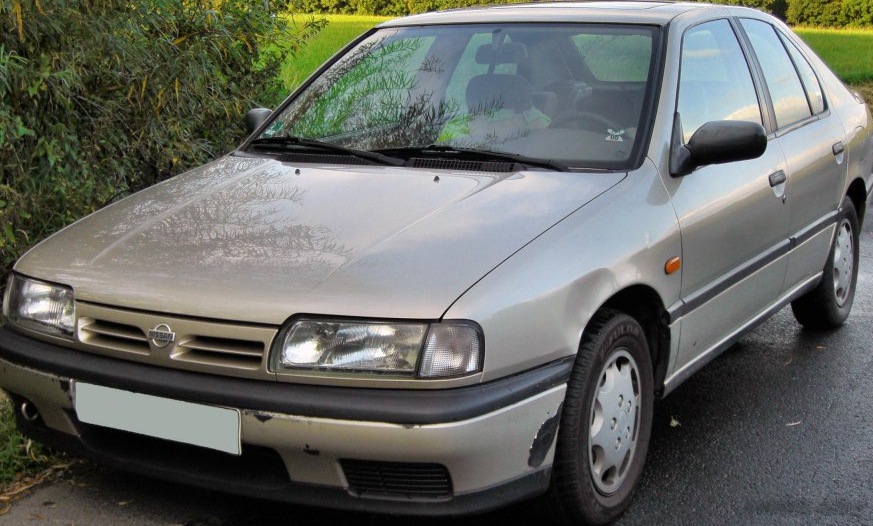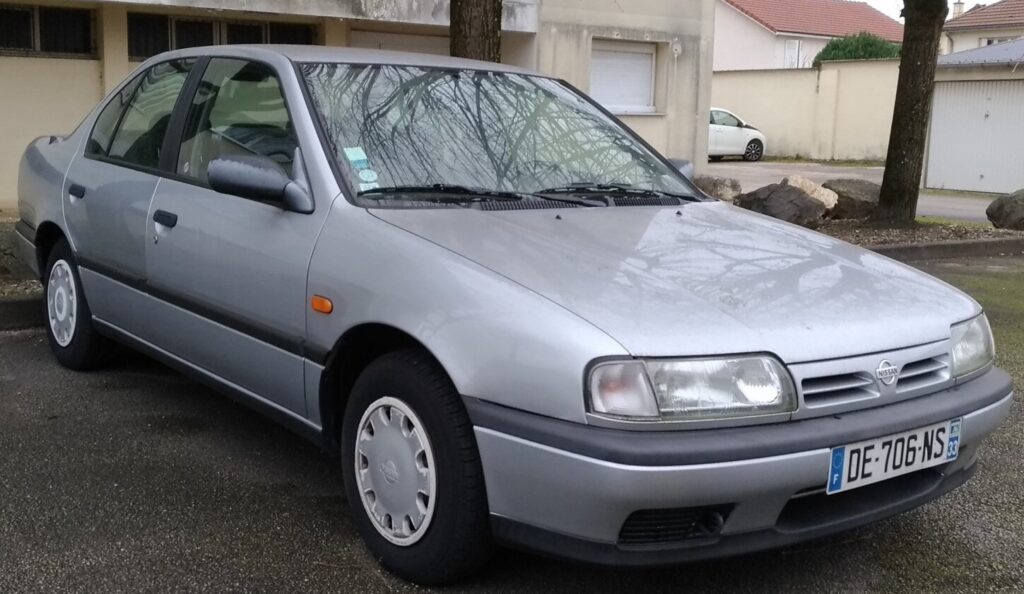
The Nissan Primera (P10) 2.0 16V, produced between 1990 and 1996, represented a significant step forward for Nissan’s mid-size offering. Positioned as a more premium and technologically advanced alternative to the Sunny and Bluebird, the P10 Primera aimed to compete with established European and Japanese rivals like the Ford Mondeo, Opel Vectra, and Toyota Camry. This 2.0-liter, 16-valve variant, producing 115 horsepower, occupied a middle ground in the Primera lineup, offering a balance between performance and fuel economy. It was a popular choice in European markets, where the Primera sought to establish a foothold as a comfortable and reliable family sedan.
Technical Specifications
| Brand | Nissan |
| Model | Primera |
| Generation | Primera (P10) |
| Type (Engine) | 2.0 16V (115 Hp) |
| Start of production | 1990 |
| End of production | 1996 |
| Powertrain Architecture | Internal Combustion engine |
| Body type | Sedan |
| Seats | 5 |
| Doors | 4 |
| Fuel consumption (combined) | 8.3 l/100 km |
| Fuel consumption (US mpg) | 28.3 US mpg |
| Fuel consumption (UK mpg) | 34 UK mpg |
| Fuel consumption (km/l) | 12 km/l |
| Fuel Type | Petrol (Gasoline) |
| Acceleration 0 – 100 km/h | 9.9 sec |
| Acceleration 0 – 62 mph | 9.9 sec |
| Acceleration 0 – 60 mph | 9.4 sec |
| Maximum speed | 200 km/h (124.27 mph) |
| Weight-to-power ratio | 10.4 kg/Hp |
| Weight-to-torque ratio | 7.2 kg/Nm |
| Power | 115 Hp @ 6000 rpm |
| Power per litre | 57.6 Hp/l |
| Torque | 166 Nm @ 4800 rpm (122.44 lb.-ft. @ 4800 rpm) |
| Engine layout | Front, Transverse |
| Engine displacement | 1998 cm3 (121.93 cu. in.) |
| Number of cylinders | 4 |
| Engine configuration | Inline |
| Cylinder Bore | 86 mm (3.39 in.) |
| Piston Stroke | 86 mm (3.39 in.) |
| Compression ratio | 9.5:1 |
| Number of valves per cylinder | 4 |
| Fuel injection system | Multi-port manifold injection |
| Engine aspiration | Naturally aspirated engine |
| Valvetrain | DOHC |
| Engine oil capacity | 3.4 l (3.59 US qt | 2.99 UK qt) |
| Coolant capacity | 6.4 l (6.76 US qt | 5.63 UK qt) |
| Kerb Weight | 1201 kg (2647.75 lbs.) |
| Max. weight | 1730 kg (3814 lbs.) |
| Max load | 529 kg (1166.25 lbs.) |
| Trunk (boot) space – minimum | 480 l (16.95 cu. ft.) |
| Fuel tank capacity | 60 l (15.85 US gal | 13.2 UK gal) |
| Length | 4400 mm (173.23 in.) |
| Width | 1700 mm (66.93 in.) |
| Height | 1390 mm (54.72 in.) |
| Wheelbase | 2550 mm (100.39 in.) |
| Front track | 1470 mm (57.87 in.) |
| Rear track | 1460 mm (57.48 in.) |
| Drivetrain Architecture | Front wheel drive |
| Number of gears | 5 gears, manual transmission |
| Front suspension | Double wishbone |
| Rear suspension | Double wishbone |
| Front brakes | Ventilated discs |
| Rear brakes | Disc |
| Steering type | Steering rack and pinion |
| Power steering | Hydraulic Steering |
| Tires size | 185/65 R14 |
Powertrain & Engine Architecture
The heart of the Primera 2.0 16V was the GA20DE engine, a 1998cc inline-four cylinder powerplant. This engine featured a double overhead camshaft (DOHC) valvetrain operating four valves per cylinder, contributing to its relatively high output for its displacement. The GA20DE utilized multi-port fuel injection, a common feature for engines of this era, ensuring precise fuel delivery and improved efficiency. The engine’s 9.5:1 compression ratio was a compromise between performance and the ability to run on readily available fuel grades. The five-speed manual transmission was the standard offering, providing drivers with full control over the engine’s power. The engine was transversely mounted, a layout common in front-wheel-drive vehicles, optimizing space utilization within the engine bay. A four-speed automatic transmission was also available, though it impacted performance.
Driving Characteristics
The 115 horsepower and 122 lb-ft of torque produced by the GA20DE engine in the Primera 2.0 16V provided adequate, though not exhilarating, performance. Acceleration from 0-60 mph took around 9.4 seconds, making it competitive with other vehicles in its class. The five-speed manual transmission allowed for effective use of the engine’s powerband, although the gear ratios were somewhat spaced to prioritize fuel economy over outright acceleration. Compared to the more powerful 2.0 SRi variant, the 16V model felt noticeably less responsive, particularly during overtaking maneuvers. However, it offered a smoother and more relaxed driving experience, making it well-suited for everyday commuting and long-distance journeys. The manual transmission provided a more engaging driving experience than the optional four-speed automatic, which further dulled performance. The automatic, while convenient, resulted in slower acceleration and a less connected feel.
Equipment & Trim Levels
The Primera 2.0 16V typically came equipped with a reasonable level of standard features. These included power steering, central locking, electric front windows, and an adjustable steering column. Interior upholstery was typically cloth, with a relatively simple and functional dashboard layout. Optional extras included air conditioning, a sunroof, and upgraded audio systems. The trim level sat in the mid-range of the Primera lineup, offering more features than the base models but lacking the sporty enhancements found in the SRi variants. The focus was on providing a comfortable and well-equipped vehicle for family use. This trim was aimed at buyers who prioritized comfort and practicality over outright performance.
Chassis & Braking
The Primera P10 featured an independent double wishbone suspension system at both the front and rear, providing a comfortable ride and good handling characteristics. The front brakes were ventilated discs, offering good stopping power, while the rear brakes were solid discs. The hydraulic power steering provided light and precise steering feel. The chassis was relatively lightweight, contributing to the car’s nimble handling. Stabilizer bars were fitted to both the front and rear axles, helping to reduce body roll during cornering. This suspension setup provided a good balance between ride comfort and handling precision for a family sedan.
Market Reception & Comparison
The Nissan Primera P10 2.0 16V was generally well-received by automotive critics. It was praised for its comfortable ride, spacious interior, and good build quality. However, some critics noted that the engine lacked the refinement and performance of some of its rivals. Fuel economy was considered to be reasonable, averaging around 28.3 US mpg in combined driving. Compared to the more powerful SRi variant, the 16V model offered better fuel economy and lower insurance costs, making it a more practical choice for budget-conscious buyers. The 1.6L models were even more economical but lacked the performance of the 2.0L. The Primera aimed to offer a more sophisticated alternative to mainstream competitors like the Ford Escort and Opel Astra.
Legacy
The Nissan Primera P10, including the 2.0 16V variant, has proven to be a relatively reliable vehicle over the long term. The GA20DE engine is known for its durability, and with regular maintenance, can withstand high mileage. However, like all vehicles of this age, they are susceptible to rust, particularly in areas with harsh winters. Today, the Primera P10 is becoming increasingly sought after by classic car enthusiasts, particularly well-maintained examples. The 2.0 16V model offers a good balance of performance, reliability, and affordability, making it a popular choice in the used car market. While not as highly regarded as some of its rivals, the Primera P10 2.0 16V remains a solid and dependable choice for those seeking a classic 1990s family sedan.