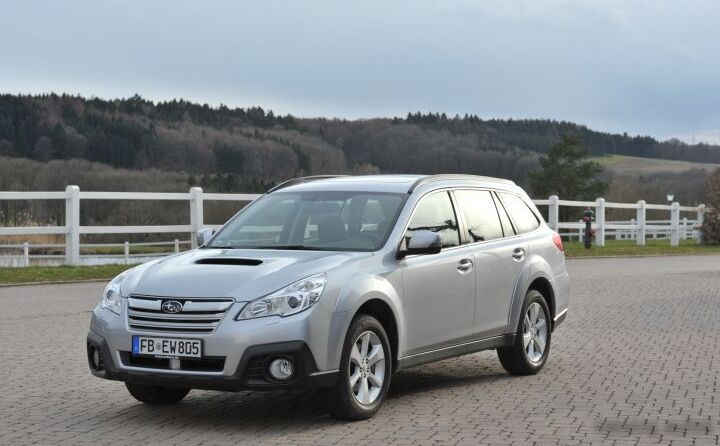
The Subaru Outback IV, specifically the 2.5i variant with the Lineartronic continuously variable transmission (CVT) and all-wheel drive, represents a significant iteration in Subaru’s popular crossover wagon lineage. Produced from 2013 to 2014 as a facelift of the BR/BM generation (introduced in 2009), this model aimed to refine the Outback’s blend of practicality, capability, and comfort. Positioned as a mid-range offering within the fourth-generation Outback lineup, it served as a sweet spot between the more affordable base models and the higher-trim, feature-rich versions. This variant was primarily marketed in North America, Europe, and Australia, catering to buyers seeking a versatile vehicle for both daily commuting and outdoor adventures.
Technical Specifications
| Brand | Subaru |
| Model | Outback |
| Generation | Outback IV (BR, BM, facelift 2013) |
| Type (Engine) | 2.5i (173 Hp) AWD Lineartronic |
| Start of production | 2013 |
| End of production | 2014 |
| Powertrain Architecture | Internal Combustion engine |
| Body type | Station wagon (estate) |
| Seats | 5 |
| Doors | 5 |
| Fuel consumption (urban) | 10.1 l/100 km (23.3 US mpg, 28 UK mpg, 9.9 km/l) |
| Fuel consumption (extra urban) | 6.1 l/100 km (38.6 US mpg, 46.3 UK mpg, 16.4 km/l) |
| Fuel consumption (combined) | 7.6 l/100 km (30.9 US mpg, 37.2 UK mpg, 13.2 km/l) |
| CO2 emissions | 175 g/km |
| Fuel Type | Petrol (Gasoline) |
| Acceleration 0 – 100 km/h | 9.9 sec |
| Acceleration 0 – 62 mph | 9.9 sec |
| Acceleration 0 – 60 mph | 9.4 sec |
| Maximum speed | 198 km/h (123.03 mph) |
| Emission standard | Euro 5 |
| Weight-to-power ratio | 8.9 kg/Hp, 112.9 Hp/tonne |
| Weight-to-torque ratio | 6.5 kg/Nm, 153.3 Nm/tonne |
| Power | 173 Hp @ 5600 rpm |
| Power per litre | 69.3 Hp/l |
| Torque | 235 Nm @ 4100 rpm (173.33 lb.-ft. @ 4100 rpm) |
| Engine layout | Front, Longitudinal |
| Engine Model/Code | FB25 |
| Engine displacement | 2498 cm3 (152.44 cu. in.) |
| Number of cylinders | 4 |
| Engine configuration | Boxer |
| Cylinder Bore | 94 mm (3.7 in.) |
| Piston Stroke | 90 mm (3.54 in.) |
| Compression ratio | 10:1 |
| Number of valves per cylinder | 4 |
| Fuel injection system | Multi-port manifold injection |
| Engine aspiration | Naturally aspirated engine |
| Valvetrain | DOHC |
| Engine oil capacity | 4.8 l (5.07 US qt | 4.22 UK qt) |
| Coolant | 7.6 l (8.03 US qt | 6.69 UK qt) |
| Kerb Weight | 1533 kg (3379.69 lbs.) |
| Trunk (boot) space – minimum | 1726 l (60.95 cu. ft.) |
| Fuel tank capacity | 65 l (17.17 US gal | 14.3 UK gal) |
| Permitted trailer load with brakes (12%) | 1800 kg (3968.32 lbs.) |
| Length | 4790 mm (188.58 in.) |
| Width | 1820 mm (71.65 in.) |
| Height | 1605 mm (63.19 in.) |
| Wheelbase | 2745 mm (108.07 in.) |
| Front track | 1535 mm (60.43 in.) |
| Rear (Back) track | 1530 mm (60.24 in.) |
| Ride height (ground clearance) | 200 mm (7.87 in.) |
| Minimum turning circle (turning diameter) | 11 m (36.09 ft.) |
| Drive wheel | All wheel drive (4×4) |
| Front suspension | Independent type McPherson |
| Rear suspension | Double wishbone |
| Front brakes | Ventilated discs |
| Rear brakes | Disc |
| Assisting systems | ABS (Anti-lock braking system) |
| Steering type | Steering rack and pinion |
| Tires size | 225/60 R17 |
| Wheel rims size | 7J x 17 |
Powertrain & Engine Architecture
At the heart of the 2.5i Outback lies the FB25 2.5-liter naturally aspirated boxer-four engine. This engine, a hallmark of Subaru’s engineering, features a horizontally opposed configuration, which contributes to a lower center of gravity and improved balance. The FB25 utilizes multi-point fuel injection and a double overhead camshaft (DOHC) valvetrain with four valves per cylinder. The engine produces 173 horsepower at 5,600 rpm and 235 Nm (173 lb-ft) of torque at 4,100 rpm. Paired with this engine is Subaru’s Lineartronic CVT, a chain-driven continuously variable transmission. This CVT is designed to provide smooth, stepless gear changes and optimize fuel efficiency. The Lineartronic transmission features simulated “shift points” to mimic the feel of a traditional automatic transmission, addressing a common complaint about early CVTs. The engine is longitudinally mounted, directing power to all four wheels via Subaru’s symmetrical all-wheel-drive system.
Driving Characteristics
The 2.5i Outback with the Lineartronic CVT offers a comfortable and predictable driving experience. While not particularly sporty, the engine provides adequate power for everyday driving and highway cruising. Acceleration from 0-60 mph takes approximately 9.4 seconds, and the top speed is around 123 mph. The CVT, while smooth, can sometimes feel less responsive than a traditional automatic, especially during quick acceleration. Subaru addressed this with paddle shifters, allowing drivers to manually select “gear” ratios within the CVT’s range. Compared to the more powerful 3.6R Outback, the 2.5i feels noticeably less energetic, but it offers significantly better fuel economy. The all-wheel-drive system provides excellent traction in various weather conditions, making it a capable vehicle for inclement weather and light off-road use.
Equipment & Trim Levels
The 2.5i Outback typically came standard with features such as automatic climate control, a touchscreen infotainment system, Bluetooth connectivity, and a rearview camera. Interior upholstery was typically cloth, with optional leather available on higher trim levels. Common optional extras included a power sunroof, heated front seats, and a premium audio system. The facelifted 2013-2014 models received updated interior trim and improved infotainment systems compared to the pre-facelift versions. Safety features were a strong point, with standard equipment including anti-lock brakes, stability control, and multiple airbags.
Chassis & Braking
The Outback IV utilizes a McPherson strut front suspension and a double-wishbone rear suspension. This setup provides a comfortable ride and good handling characteristics. The 2.5i variant typically featured ventilated front disc brakes and solid rear disc brakes. The suspension was tuned for comfort and stability, prioritizing ride quality over sporty handling. The all-wheel-drive system utilizes a variable torque distribution system, automatically adjusting the amount of power sent to each wheel based on road conditions and driver input.
Market Reception & Comparison
The 2.5i Outback was generally well-received by automotive critics, who praised its practicality, safety, and fuel efficiency. However, some reviewers noted that the engine could feel underpowered, especially when fully loaded or driving uphill. Compared to the 3.6R Outback, the 2.5i offered a more affordable price point and better fuel economy, making it a popular choice for budget-conscious buyers. The 2.5i also compared favorably to competitors such as the Honda CR-V and Toyota RAV4 in terms of cargo space and all-wheel-drive capability.
Legacy
The FB25 engine, when properly maintained, has proven to be a relatively reliable powertrain. Common issues include oil consumption and occasional head gasket leaks, but these are not widespread problems. The Lineartronic CVT, while generally durable, requires regular fluid changes to ensure optimal performance and longevity. Today, the 2013-2014 Subaru Outback 2.5i remains a popular choice in the used car market, offering a compelling combination of practicality, reliability, and affordability. Its reputation for safety and all-weather capability continues to attract buyers seeking a versatile and dependable crossover wagon.