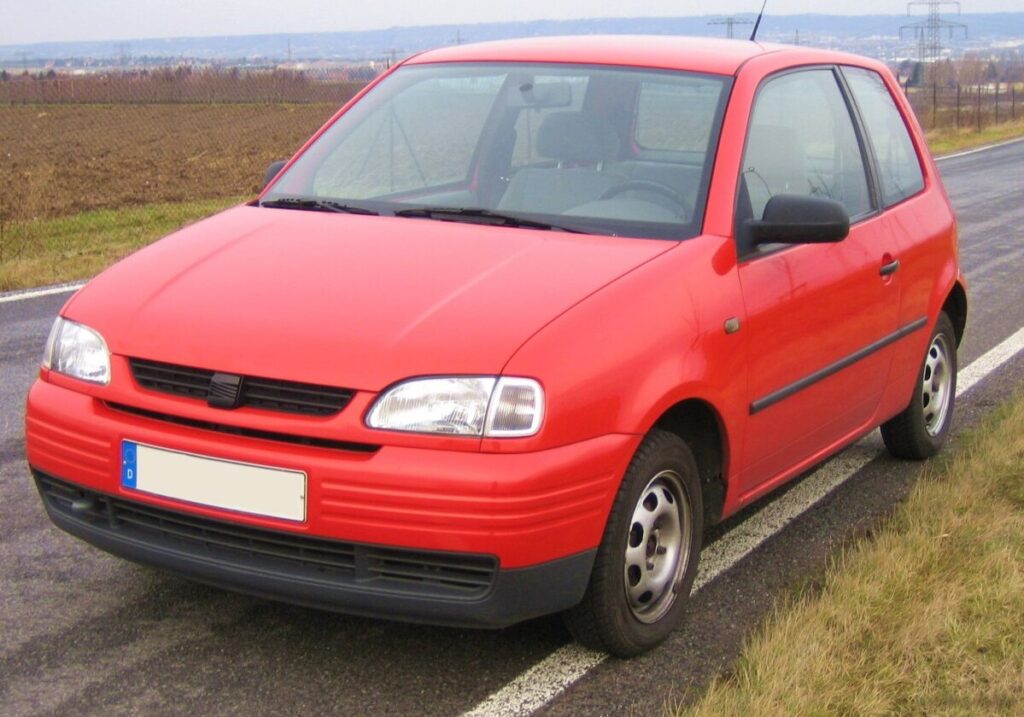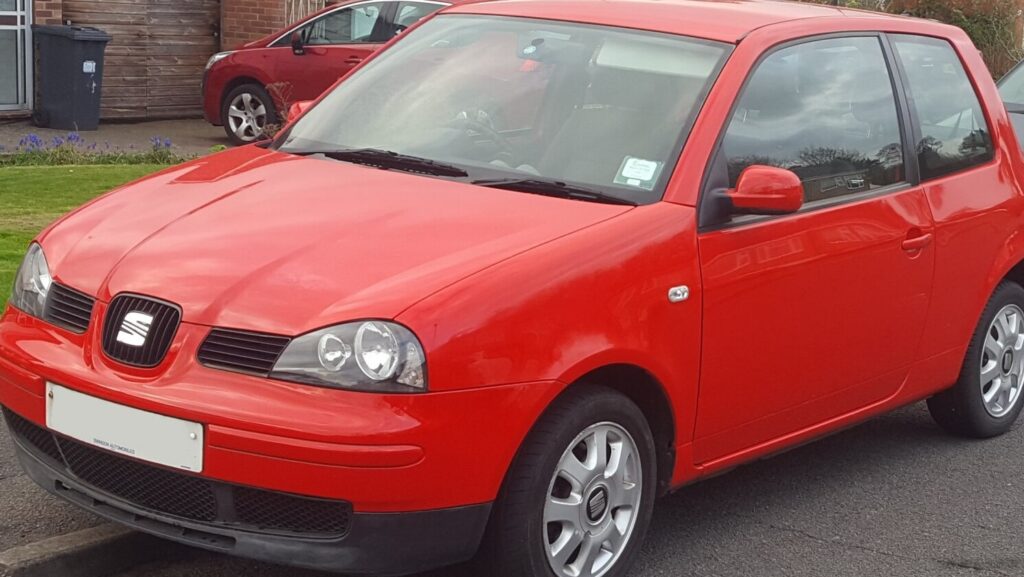
The Seat Arosa 1.7 SDI, produced from 2000 to 2003, represents a budget-focused offering within the Arosa range (6H facelift). Positioned as the entry-level diesel variant, it aimed to provide economical transportation in the European city car segment. The Arosa itself was a rebadged version of the Volkswagen Polo Mk3, sharing its platform (PQ24) and many mechanical components. The 1.7 SDI model, with its modest 60 horsepower, was designed for maximizing fuel efficiency rather than outright performance, appealing to drivers prioritizing low running costs.
Technical Specifications
| Brand | Seat |
| Model | Arosa |
| Generation | Arosa (6H, facelift 2000) |
| Type (Engine) | 1.7 SDI (60 Hp) |
| Start of production | 2000 |
| End of production | 2003 |
| Powertrain Architecture | Internal Combustion engine |
| Body type | Hatchback |
| Seats | 4 |
| Doors | 3 |
| Fuel consumption (urban) | 5.9 l/100 km (39.9 US mpg, 47.9 UK mpg, 16.9 km/l) |
| Fuel consumption (extra urban) | 3.6 l/100 km (65.3 US mpg, 78.5 UK mpg, 27.8 km/l) |
| Fuel consumption (combined) | 4.4 l/100 km (53.5 US mpg, 64.2 UK mpg, 22.7 km/l) |
| CO2 emissions | 119 g/km |
| Fuel Type | Diesel |
| Acceleration 0 – 100 km/h | 16.6 sec |
| Acceleration 0 – 62 mph | 16.6 sec |
| Acceleration 0 – 60 mph | 15.8 sec |
| Maximum speed | 157 km/h (97.56 mph) |
| Emission standard | Euro 3 |
| Weight-to-power ratio | 15.9 kg/Hp |
| Weight-to-torque ratio | 8.3 kg/Nm |
| Power | 60 Hp @ 4200 rpm |
| Torque | 115 Nm @ 2200-3000 rpm (84.82 lb.-ft. @ 2200-3000 rpm) |
| Engine layout | Front, Transverse |
| Engine Model/Code | AKU |
| Engine displacement | 1716 cm3 (104.72 cu. in.) |
| Number of cylinders | 4 |
| Engine configuration | Inline |
| Cylinder Bore | 79.5 mm (3.13 in.) |
| Piston Stroke | 86.4 mm (3.4 in.) |
| Compression ratio | 19.5:1 |
| Number of valves per cylinder | 2 |
| Fuel injection system | Direct injection |
| Engine aspiration | Naturally aspirated |
| Valvetrain | SOHC |
| Engine oil capacity | 4.7 l (4.97 US qt | 4.14 UK qt) |
| Coolant capacity | 6.5 l (6.87 US qt | 5.72 UK qt) |
| Kerb Weight | 955 kg (2105.41 lbs.) |
| Max. weight | 1440 kg (3174.66 lbs.) |
| Max load | 485 kg (1069.24 lbs.) |
| Trunk (boot) space – minimum | 130 l (4.59 cu. ft.) |
| Trunk (boot) space – maximum | 790 l (27.9 cu. ft.) |
| Fuel tank capacity | 34 l (8.98 US gal | 7.48 UK gal) |
| Permitted trailer load with brakes (12%) | 800 kg (1763.7 lbs.) |
| Length | 3551 mm (139.8 in.) |
| Width | 1639 mm (64.53 in.) |
| Height | 1460 mm (57.48 in.) |
| Wheelbase | 2323 mm (91.46 in.) |
| Front track | 1392 mm (54.8 in.) |
| Rear track | 1400 mm (55.12 in.) |
| Drag coefficient (Cd) | 0.33 |
| Minimum turning circle | 10.1 m (33.14 ft.) |
| Drivetrain Architecture | Front wheel drive |
| Number of gears | 5 |
| Gearbox type | Manual transmission |
| Front suspension | Independent type McPherson, Transverse stabilizer |
| Rear suspension | Trailing arm, Elastic beam |
| Front brakes | Disc |
| Rear brakes | Drum |
| Steering type | Steering rack and pinion |
| Power steering | Hydraulic |
| Tires size | 185/55 R14 |
| Wheel rims size | 6J x 14 |
INTRODUCTION
The Seat Arosa 1.7 SDI (2000-2003) was a key component of Seat’s strategy to offer affordable and practical transportation. Built on the Volkswagen Polo Mk3 platform (internally designated PQ24), the Arosa aimed to provide a stylish and economical alternative to other superminis in the European market. The 1.7 SDI variant specifically targeted buyers seeking the lowest possible running costs, prioritizing fuel economy over performance. It occupied the base trim level in the Arosa diesel range, sitting below the more powerful 1.4 TDI and 1.8 TDI models.
Powertrain & Engine Architecture
The heart of the Arosa 1.7 SDI is the AKU engine code, a 1716cc inline four-cylinder diesel engine. This engine utilizes a naturally aspirated, direct injection system, a common feature in European diesels of the era. Unlike modern common-rail diesels, the AKU employs a mechanical injection pump, which contributes to its simplicity and robustness, but also results in a more agricultural engine note and slightly lower refinement. The engine features a single overhead camshaft (SOHC) operating two valves per cylinder. The high compression ratio of 19.5:1 is typical for indirect injection diesel engines, maximizing combustion efficiency. The Arosa 1.7 SDI was exclusively offered with a five-speed manual transmission, chosen for its efficiency and cost-effectiveness. The transmission’s gear ratios were geared towards maximizing fuel economy, with a relatively long final drive.
Driving Characteristics
The Arosa 1.7 SDI’s driving experience is defined by its modest power output. With only 60 horsepower, acceleration is leisurely, taking approximately 16.6 seconds to reach 62 mph (100 km/h). The engine’s torque peak of 115 Nm (84.82 lb-ft) is available between 2200 and 3000 rpm, providing adequate pulling power for everyday driving, but requiring frequent downshifts when overtaking or climbing hills. The five-speed manual transmission is light and easy to use, but the long gearing can feel somewhat sluggish. The Arosa’s suspension provides a comfortable ride, absorbing bumps and imperfections in the road reasonably well. However, the car’s light weight and relatively narrow track width can result in noticeable body roll during cornering. Compared to the 1.4 TDI, the 1.7 SDI feels noticeably slower, but offers a simpler and potentially more durable powertrain.
Equipment & Trim Levels
The Arosa 1.7 SDI was typically equipped with basic, but functional, features. Standard equipment generally included power steering, central locking, and a basic stereo system. Interior upholstery was typically cloth, with a simple dashboard layout. Optional extras included air conditioning, electric windows, and alloy wheels. The trim level was generally considered entry-level, focusing on providing essential features at an affordable price. The interior plastics were durable but lacked the refinement found in higher-spec Arosa models.
Chassis & Braking
The Arosa 1.7 SDI utilizes a front-wheel-drive layout with an independent McPherson strut suspension at the front and a trailing arm (elastic beam) suspension at the rear. The front brakes are discs, providing adequate stopping power, while the rear brakes are drums, a cost-saving measure common in this class of vehicle. The steering is a rack and pinion system with hydraulic assistance, offering a reasonably direct and responsive feel. The car’s relatively light weight (955 kg / 2105.41 lbs) contributes to its nimble handling, despite the lack of sophisticated suspension components.
Market Reception & Comparison
The Arosa 1.7 SDI was generally well-received by critics as a practical and economical city car. Its low fuel consumption and affordable price were key selling points. However, its lack of performance and relatively basic equipment levels were often noted. Compared to the 1.4 TDI, the 1.7 SDI offered slightly lower fuel economy but was considered more robust and less prone to turbocharger issues. The 1.8 TDI provided significantly more power but came at a higher price and with increased running costs. The Arosa 1.7 SDI’s main competitors included the Renault Clio, Peugeot 206, and Ford Fiesta.
Legacy
The Seat Arosa 1.7 SDI has proven to be a relatively reliable and durable vehicle, particularly when well-maintained. The AKU engine, while not particularly powerful, is known for its longevity and simplicity. Today, the Arosa 1.7 SDI is a relatively rare sight on the roads, but it remains a popular choice among budget-conscious buyers and those seeking a simple, economical, and reliable city car. Parts availability is generally good, thanks to the Arosa’s shared components with the Volkswagen Polo. The car’s enduring appeal lies in its practicality, affordability, and the inherent robustness of its mechanicals.