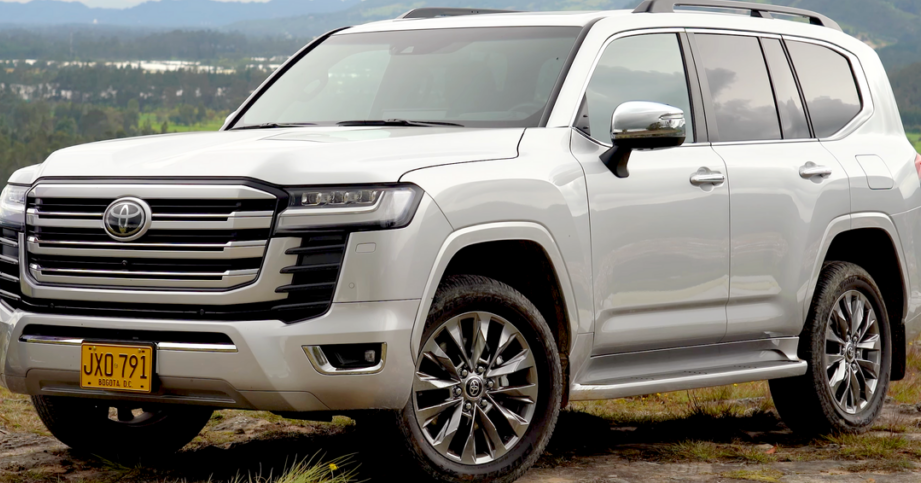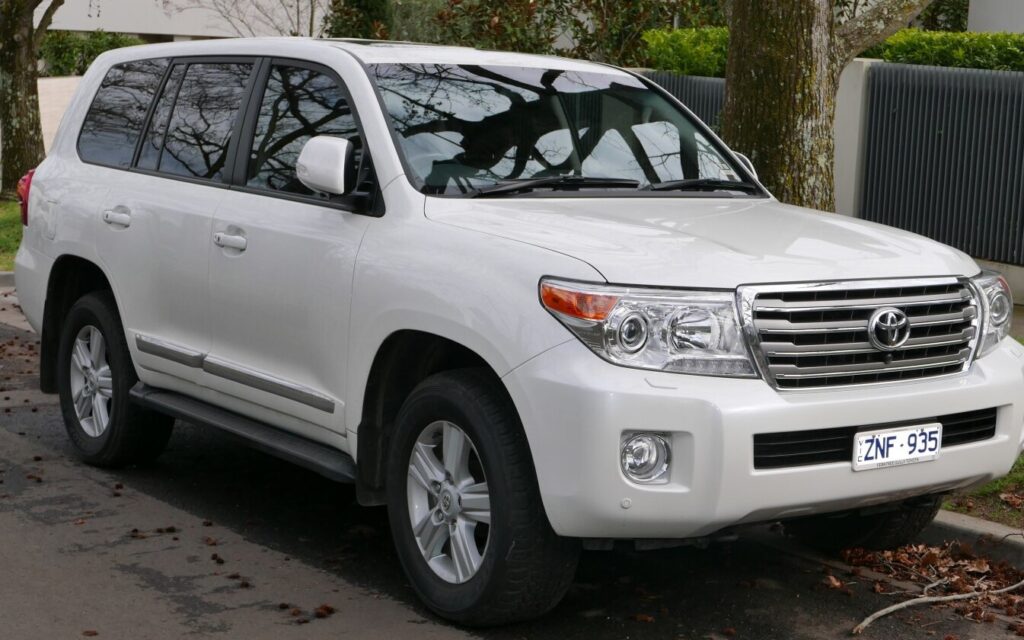
The Toyota Land Cruiser J200, specifically the facelifted model produced from 2013 to 2015 equipped with the 4.6-liter V8 engine and a six-speed automatic transmission, represents a high point in the Land Cruiser’s long history of combining luxury with exceptional off-road capability. This variant was primarily aimed at the North American, Middle Eastern, and Australian markets, where large, body-on-frame SUVs remained popular. It sat towards the upper end of the J200 lineup, offering a significant step up in performance and refinement compared to the smaller displacement engines available in other regions. The J200 series, introduced in 2007, aimed to modernize the Land Cruiser while retaining its legendary durability and go-anywhere ability.
Technical Specifications
| Brand | Toyota |
| Model | Land Cruiser |
| Generation | Land Cruiser (J200, facelift 2013) |
| Type (Engine) | 4.6 V8 (318 Hp) Automatic |
| Start of production | 2013 |
| End of production | 2015 |
| Powertrain Architecture | Internal Combustion engine |
| Body type | SUV |
| Seats | 5-7 |
| Doors | 5 |
| Fuel consumption (economy) – urban | 18 l/100 km (13.1 US mpg, 15.7 UK mpg, 5.6 km/l) |
| Fuel consumption (economy) – extra urban | 10.6 l/100 km (22.2 US mpg, 26.6 UK mpg, 9.4 km/l) |
| Fuel consumption (economy) – combined | 13.3 l/100 km (17.7 US mpg, 21.2 UK mpg, 7.5 km/l) |
| Fuel Type | Petrol (Gasoline) |
| Acceleration 0 – 100 km/h | 8.6 sec |
| Acceleration 0 – 62 mph | 8.6 sec |
| Acceleration 0 – 60 mph | 8.2 sec |
| Maximum speed | 205 km/h (127.38 mph) |
| Emission standard | EURO 5 J |
| Weight-to-power ratio | 7.9 kg/Hp, 126.7 Hp/tonne |
| Weight-to-torque ratio | 5.5 kg/Nm, 183.3 Nm/tonne |
| Power | 318 Hp @ 5600 rpm |
| Power per litre | 69 Hp/l |
| Torque | 460 Nm @ 3400 rpm (339.28 lb.-ft. @ 3400 rpm) |
| Engine layout | Front, Transverse |
| Engine Model/Code | 1UR-FE |
| Engine displacement | 4608 cm3 (281.2 cu. in.) |
| Number of cylinders | 8 |
| Engine configuration | V-engine |
| Cylinder Bore | 94 mm (3.7 in.) |
| Piston Stroke | 83 mm (3.27 in.) |
| Compression ratio | 10.2:1 |
| Number of valves per cylinder | 4 |
| Fuel injection system | Multi-port manifold injection |
| Engine aspiration | Naturally aspirated engine |
| Valvetrain | DOHC – Dual VVT-i |
| Engine oil capacity | 7.5 l (7.93 US qt | 6.6 UK qt) |
| Coolant | 13.8 l (14.58 US qt | 12.14 UK qt) |
| Kerb Weight | 2510 kg (5533.6 lbs.) |
| Max. weight | 3350 kg (7385.49 lbs.) |
| Max load | 840 kg (1851.88 lbs.) |
| Fuel tank capacity | 93 l (24.57 US gal | 20.46 UK gal) |
| Length | 4950 mm (194.88 in.) |
| Width | 1970 mm (77.56 in.) |
| Height | 1865 mm (73.43 in.) |
| Wheelbase | 2850 mm (112.2 in.) |
| Front track | 1640 mm (64.57 in.) |
| Rear (Back) track | 1635 mm (64.37 in.) |
| Minimum turning circle | 11.8 m (38.71 ft.) |
| Drive wheel | All wheel drive (4×4) |
| Number of gears | 6 |
| Gearbox type | automatic transmission |
| Front suspension | Double wishbone |
| Rear suspension | Dependent, multi-link spring with telescopic shock absorbers |
| Front brakes | Ventilated discs |
| Rear brakes | Ventilated discs |
| Assisting systems | ABS (Anti-lock braking system) |
| Steering type | Steering rack and pinion |
Powertrain & Engine Architecture
The heart of this Land Cruiser variant is the 1UR-FE 4.6-liter V8 engine. This engine is a naturally aspirated, all-aluminum alloy engine featuring dual overhead camshafts (DOHC) and Toyota’s Variable Valve Timing-intelligent (VVT-i) system on both intake and exhaust valves. The 1UR-FE utilizes multi-port fuel injection, delivering fuel directly to each cylinder. Its robust construction and relatively simple design (compared to turbocharged engines) contribute to its reputation for reliability. The engine produces 318 horsepower at 5,600 rpm and 460 Nm (339 lb-ft) of torque at 3,400 rpm. This power is channeled through a six-speed automatic transmission, known for its smooth shifts and durability. The transmission is electronically controlled, adapting to driving conditions and driver input. While not the most technologically advanced transmission available at the time, it was well-suited to the Land Cruiser’s intended use – providing reliable power delivery both on and off-road.
Driving Characteristics
The 4.6-liter V8 and six-speed automatic combination delivers a comfortable and capable driving experience. Acceleration to 60 mph takes around 8.2 seconds, which is respectable for a large, heavy SUV. The engine provides ample torque for towing and navigating challenging terrain. The automatic transmission is programmed for smooth, relaxed shifts, prioritizing comfort over outright performance. Compared to the available diesel engines in other markets, the V8 offers a more refined and responsive driving experience, albeit with higher fuel consumption. The gear ratios are optimized for both on-road cruising and low-speed off-road crawling. While the V8 doesn’t offer the same fuel efficiency as smaller displacement engines, it provides a level of effortless power that many Land Cruiser owners appreciate.
Equipment & Trim Levels
The 2013-2015 Land Cruiser J200 with the 4.6 V8 automatic typically came well-equipped, even in its base form. Standard features included leather upholstery, tri-zone automatic climate control, a premium audio system, navigation, and a rearview camera. Higher trim levels added features such as heated and ventilated front seats, a power moonroof, and advanced safety technologies like adaptive cruise control and lane departure alert. Interior appointments were generally luxurious, with high-quality materials and a focus on comfort. Optional extras included a rear-seat entertainment system and upgraded audio options.
Chassis & Braking
The Land Cruiser J200 utilizes a traditional body-on-frame construction, providing exceptional strength and durability. The suspension consists of double wishbones at the front and a dependent, multi-link spring setup with telescopic shock absorbers at the rear. This configuration provides a comfortable ride while maintaining excellent off-road capability. Braking duties are handled by ventilated discs on all four wheels, coupled with an Anti-lock Braking System (ABS). The large brakes provide ample stopping power, even when towing or carrying a full load. The steering system is a rack and pinion setup, offering precise and responsive handling.
Market Reception & Comparison
The 4.6-liter V8 Land Cruiser was generally well-received by automotive critics. It was praised for its luxurious interior, comfortable ride, and impressive off-road capability. However, its fuel economy was often cited as a drawback, especially compared to more fuel-efficient SUVs. Compared to the smaller displacement engines available in other markets, the V8 offered a more refined and powerful driving experience. It also provided a significant advantage in towing capacity. The Land Cruiser’s high price point limited its appeal to a relatively small segment of the market.
Legacy
The 4.6-liter V8-powered Land Cruiser J200 has earned a reputation for exceptional reliability and longevity. The 1UR-FE engine is known for its robust construction and ability to withstand high mileage. These vehicles continue to hold their value well in the used car market, particularly those that have been well-maintained. The combination of luxury, capability, and reliability has made the Land Cruiser J200 a highly sought-after SUV among enthusiasts and those seeking a durable and dependable vehicle for long-term ownership. While newer Land Cruisers have embraced more modern technologies, the J200 with the 4.6 V8 remains a benchmark for combining refinement with off-road prowess.