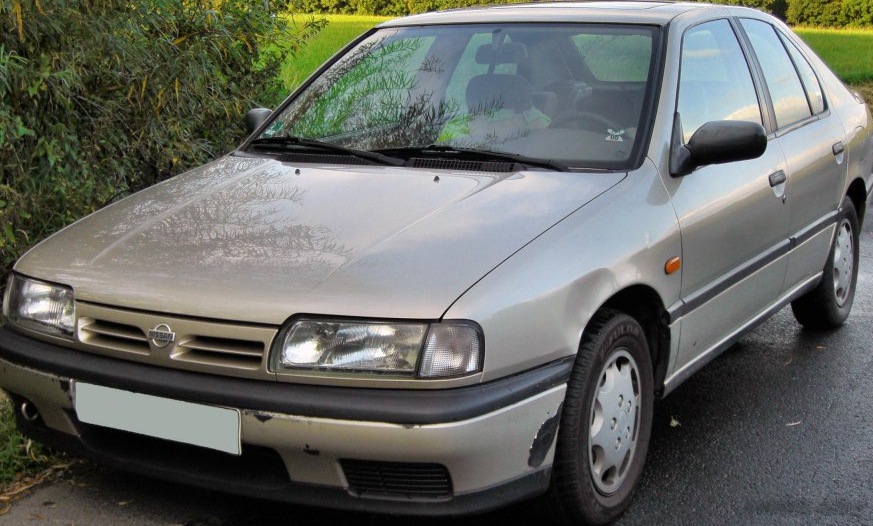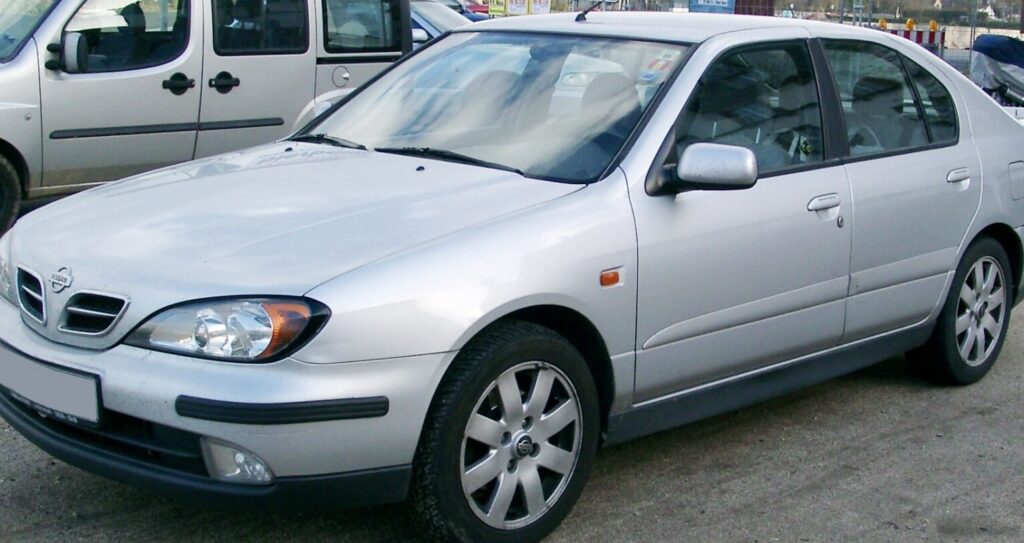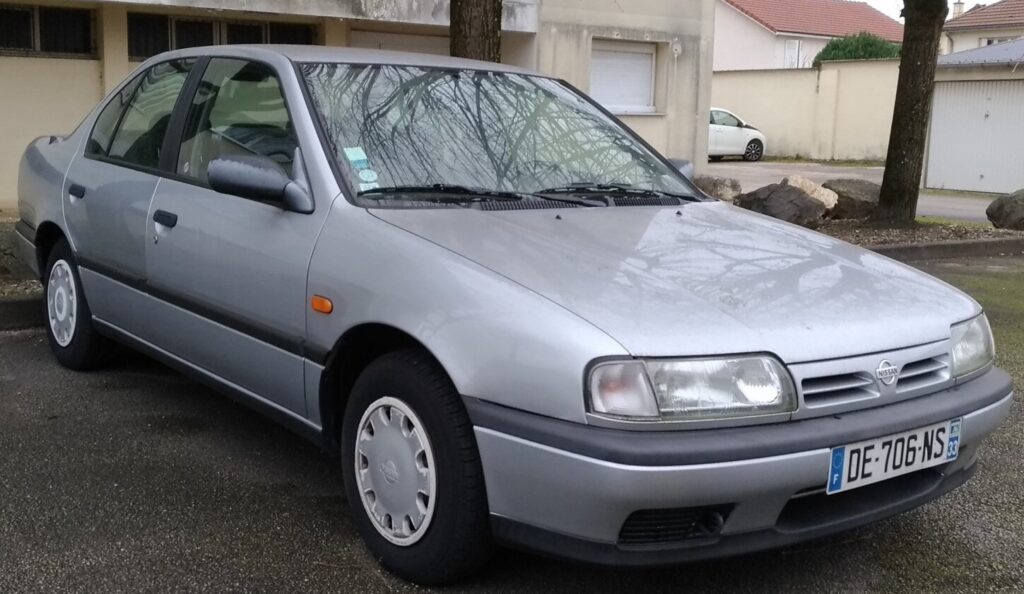
The Nissan Primera (P10) 2.0 D, produced between 1991 and 1996, represented Nissan’s entry into the competitive mid-size family car segment in Europe and other international markets. This variant, equipped with the CD20 2.0-liter diesel engine producing 75 horsepower, occupied the lower end of the Primera P10 lineup, focusing on fuel efficiency and affordability. It served as a practical and economical option for buyers prioritizing low running costs over outright performance. The P10 generation Primera was a significant model for Nissan, showcasing a move towards more contemporary styling and improved build quality compared to its predecessors.
Technical Specifications
| Brand | Nissan |
| Model | Primera |
| Generation | Primera (P10) |
| Type (Engine) | 2.0 D (75 Hp) |
| Start of production | 1991 |
| End of production | 1996 |
| Powertrain Architecture | Internal Combustion engine |
| Body type | Sedan |
| Seats | 5 |
| Doors | 4 |
| Fuel consumption (combined) | 6 l/100 km (39.2 US mpg, 47.1 UK mpg, 16.7 km/l) |
| Fuel Type | Diesel |
| Acceleration 0 – 100 km/h | 16.5 sec |
| Acceleration 0 – 62 mph | 16.5 sec |
| Acceleration 0 – 60 mph | 15.7 sec |
| Maximum speed | 165 km/h (102.53 mph) |
| Weight-to-power ratio | 16.3 kg/Hp (61.2 Hp/tonne) |
| Weight-to-torque ratio | 9.3 kg/Nm (107.7 Nm/tonne) |
| Power | 75 Hp @ 4800 rpm |
| Power per litre | 38 Hp/l |
| Torque | 132 Nm @ 2800 rpm (97.36 lb.-ft. @ 2800 rpm) |
| Engine layout | Front, Transverse |
| Engine Model/Code | CD20 |
| Engine displacement | 1974 cm3 (120.46 cu. in.) |
| Number of cylinders | 4 |
| Engine configuration | Inline |
| Cylinder Bore | 84.5 mm (3.33 in.) |
| Piston Stroke | 88 mm (3.46 in.) |
| Compression ratio | 22.2:1 |
| Number of valves per cylinder | 2 |
| Fuel injection system | Precombustion chamber injection |
| Engine aspiration | Naturally aspirated engine |
| Valvetrain | OHC |
| Engine oil capacity | 4.7 l (4.97 US qt | 4.14 UK qt) |
| Coolant | 5.8 l (6.13 US qt | 5.1 UK qt) |
| Kerb Weight | 1226 kg (2702.87 lbs.) |
| Max. weight | 1710 kg (3769.9 lbs.) |
| Max load | 484 kg (1067.04 lbs.) |
| Trunk (boot) space – minimum | 480 l (16.95 cu. ft.) |
| Fuel tank capacity | 60 l (15.85 US gal | 13.2 UK gal) |
| Length | 4400 mm (173.23 in.) |
| Width | 1700 mm (66.93 in.) |
| Height | 1390 mm (54.72 in.) |
| Wheelbase | 2550 mm (100.39 in.) |
| Front track | 1470 mm (57.87 in.) |
| Rear (Back) track | 1460 mm (57.48 in.) |
| Drivetrain Architecture | The Internal combustion engine (ICE) drives the front wheels of the vehicle. |
| Drive wheel | Front wheel drive |
| Number of gears and type of gearbox | 5 gears, manual transmission |
| Front suspension | Double wishbone |
| Rear suspension | Double wishbone |
| Front brakes | Ventilated discs |
| Rear brakes | Disc |
| Assisting systems | ABS (Anti-lock braking system) |
| Steering type | Steering rack and pinion |
| Power steering | Hydraulic Steering |
| Tires size | 175/70 R14 |
Powertrain & Engine Architecture
The heart of the Primera 2.0 D was the CD20 diesel engine, a 1.974-liter inline-four cylinder unit. This engine utilized precombustion chamber injection, a common diesel technology of the era, which involved injecting fuel into a small pre-chamber within the cylinder head before the main combustion chamber. This design aided in cold-starting and reduced engine noise compared to direct injection systems. The CD20 featured a single overhead camshaft (OHC) valvetrain, operating two valves per cylinder. The engine’s relatively low compression ratio of 22.2:1 was typical for indirect injection diesels. The five-speed manual transmission was the standard offering, providing a balance between fuel economy and usability. While an automatic transmission was available on other Primera models, it wasn’t typically paired with the 2.0 D engine due to the engine’s limited torque output.
Driving Characteristics
The Primera 2.0 D with a manual transmission offered modest performance. Acceleration was leisurely, with a 0-60 mph time of around 15.7 seconds. The engine’s 132 Nm (97.36 lb-ft) of torque, delivered at 2800 rpm, provided adequate pulling power for everyday driving, but overtaking required careful planning. The five-speed gearbox was well-matched to the engine’s characteristics, allowing drivers to keep the engine within its optimal operating range. Compared to the more powerful 2.0-liter gasoline Primera variants, the diesel model prioritized fuel economy over outright speed. The manual transmission provided a more engaging driving experience than an automatic would have, given the engine’s limited power.
Equipment & Trim Levels
The 2.0 D trim level of the Primera P10 was generally considered the entry-level offering. Standard equipment typically included power steering, central locking, and basic instrumentation. Interior upholstery was usually cloth, and the dashboard featured a functional, if somewhat austere, design. Optional extras, such as air conditioning, electric windows, and a radio/cassette player, were available, but often added significantly to the vehicle’s price. The focus was on providing a practical and affordable family car, so luxury features were kept to a minimum.
Chassis & Braking
The Primera P10 featured a fully independent suspension system, with double wishbones at both the front and rear. This setup provided a comfortable ride and decent handling characteristics. The front brakes were ventilated discs, offering good stopping power, while the rear brakes were solid discs. Anti-lock braking system (ABS) was available, enhancing safety, particularly in wet or slippery conditions. The chassis was designed to provide a balance between ride comfort and handling, making it suitable for both city driving and longer journeys.
Market Reception & Comparison
The Nissan Primera 2.0 D was generally well-received as a practical and economical family car. Critics praised its fuel efficiency and comfortable ride, but noted its lack of outright performance. Compared to the gasoline-powered Primera models, the diesel variant offered significantly better fuel economy, but at the expense of acceleration and refinement. Against competitors like the Ford Mondeo and Vauxhall/Opel Vectra, the Primera 2.0 D offered a competitive package, particularly for buyers prioritizing low running costs. Reliability was generally good, although diesel engines of this era could be prone to wear and tear if not properly maintained.
Legacy
The Nissan Primera P10 2.0 D, while not a performance icon, remains a reasonably well-regarded vehicle in the used car market. The CD20 diesel engine, when properly maintained, proved to be durable and long-lasting. However, finding well-maintained examples today can be challenging, as many have accumulated high mileage. The Primera P10 represented a step forward for Nissan in terms of build quality and design, and the 2.0 D variant offered a practical and economical option for buyers seeking a reliable family car. Its legacy lies in providing affordable transportation for a generation of drivers.