
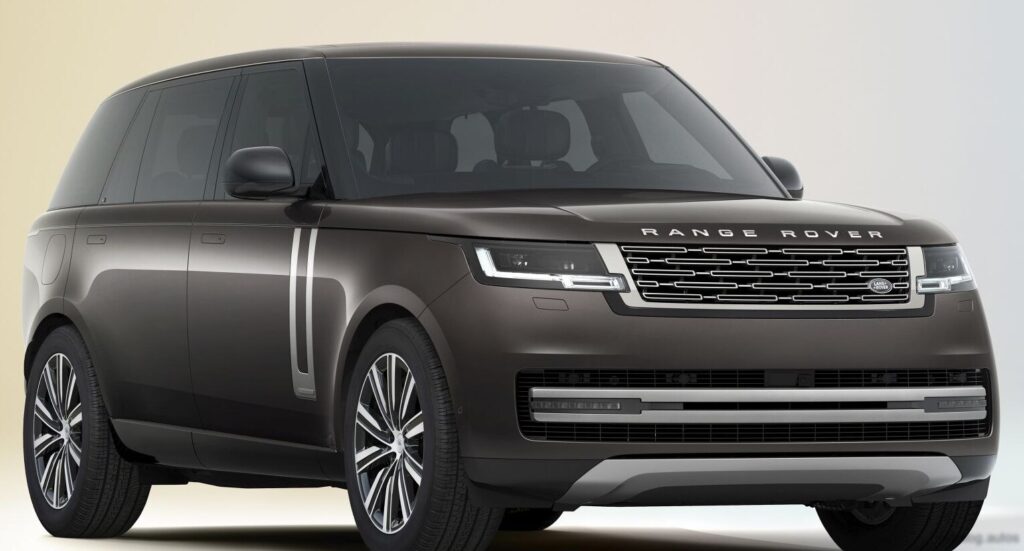
The Land Rover Range Rover V LWB 3.0 P400, introduced in October 2021, represents the fifth generation of the iconic Range Rover, specifically the long-wheelbase (LWB) variant. This model is positioned as a luxury, full-size SUV, offering a blend of off-road capability, opulent comfort, and modern technology. The “P400” designation signifies its powertrain: a 3.0-liter inline-six cylinder engine producing 400 horsepower, coupled with a mild-hybrid system and an eight-speed automatic transmission. The LWB configuration adds extended rear legroom, making it particularly appealing to chauffeur-driven buyers or families prioritizing passenger space. It sits within the Range Rover lineup as a mid-to-high trim level, offering a significant step up in performance and features compared to the base models, but remaining below the more powerful and expensive supercharged or plug-in hybrid options.
Technical Specifications
| Brand | Land Rover |
| Model | Range Rover |
| Generation | Range Rover V LWB |
| Type | 3.0 P400 (400 Hp) Mild Hybrid AWD Automatic 7 Seat |
| Start of production | October, 2021 |
| Powertrain Architecture | MHEV (Mild Hybrid Electric Vehicle) |
| Body type | SUV |
| Seats | 7 |
| Doors | 5 |
| Combined fuel consumption (WLTP) | 9.7-10.2 l/100 km |
| Combined fuel consumption (US mpg) | 24.2 – 23.1 |
| Combined fuel consumption (UK mpg) | 29.1 – 27.7 |
| Combined fuel consumption (km/l) | 10.3 – 9.8 |
| CO2 emissions (WLTP) | 219-231 g/km |
| CO2 emissions (NEDC, WLTP equivalent) | 213 g/km |
| Fuel Type | Petrol (Gasoline) |
| Acceleration 0 – 100 km/h | 6.1 sec |
| Acceleration 0 – 62 mph | 6.1 sec |
| Acceleration 0 – 60 mph | 5.8 sec |
| Maximum speed | 242 km/h (150.37 mph) |
| Emission standard | Euro 6d Final |
| Weight-to-power ratio | 6.4 kg/Hp |
| Weight-to-torque ratio | 4.6 kg/Nm |
| Power | 400 Hp |
| Power per litre | 133.5 Hp/l |
| Torque | 550 Nm (405.66 lb.-ft.) |
| Engine layout | Front, Longitudinal |
| Engine displacement | 2996 cm3 (182.83 cu. in.) |
| Number of cylinders | 6 |
| Engine configuration | Inline |
| Cylinder Bore | 83 mm (3.27 in.) |
| Piston Stroke | 92.29 mm (3.63 in.) |
| Compression ratio | 10.5:1 |
| Number of valves per cylinder | 4 |
| Fuel injection system | Direct injection |
| Engine aspiration | Turbocharger, Intercooler |
| Engine oil capacity | 9.4 l (9.93 US qt | 8.27 UK qt) |
| Kerb Weight | 2541 kg (5601.95 lbs.) |
| Trunk (boot) space – minimum | 229 l (8.09 cu. ft.) |
| Trunk (boot) space – maximum | 2601 l (91.85 cu. ft.) |
| Fuel tank capacity | 90 l (23.78 US gal | 19.8 UK gal) |
| Permitted trailer load with brakes (12%) | 3500 kg (7716.18 lbs.) |
| Permitted trailer load without brakes | 750 kg (1653.47 lbs.) |
| Length | 5252 mm (206.77 in.) |
| Width with mirrors folded | 2047 mm (80.59 in.) |
| Width including mirrors | 2209 mm (86.97 in.) |
| Height | 1870 mm (73.62 in.) |
| Wheelbase | 3197 mm (125.87 in.) |
| Front track | 1702 mm (67.01 in.) |
| Rear track | 1704 mm (67.09 in.) |
| Front overhang | 860 mm (33.86 in.) |
| Rear overhang | 1195 mm (47.05 in.) |
| Ride height (ground clearance) | 294-295 mm (11.57 – 11.61 in.) |
| Drag coefficient (Cd) | 0.32 |
| Minimum turning circle | 11.96 m (39.24 ft.) |
| Approach angle | 34.7° |
| Departure angle | 29° |
| Ramp-over angle | 25.2° |
| Wading depth | 900 mm (35.43 in.) |
| Drivetrain Architecture | ICE and electric motor, permanent all-wheel drive |
| Drive wheel | All wheel drive (4×4) |
| Number of gears | 8 |
| Gearbox type | Automatic transmission |
| Front suspension | Double wishbone |
| Rear suspension | Independent multi-link suspension |
| Front brakes | Ventilated discs, 380 mm |
| Rear brakes | Ventilated discs, 355 mm |
Powertrain & Engine Architecture
The heart of the Range Rover P400 is Land Rover’s Ingenium engine family. Specifically, it utilizes a 2.9-liter inline-six cylinder engine, turbocharged and featuring direct fuel injection. This engine benefits from a 48-volt mild-hybrid system, incorporating a Belt-integrated Starter Generator (BiSG). The BiSG assists the engine during acceleration, allowing for smoother starts and improved fuel efficiency, and enables the start/stop system to operate more seamlessly. The engine produces 400 horsepower and 550 Nm (405.66 lb.-ft.) of torque. The eight-speed automatic transmission, sourced from ZF, is known for its smooth shifting and responsiveness. It’s calibrated to provide a balance between performance and fuel economy, with gear ratios optimized for both on-road cruising and off-road crawling.
Driving Characteristics
The P400 powertrain delivers a refined and capable driving experience. Acceleration is brisk, with a 0-60 mph time of around 5.8 seconds. The mild-hybrid system provides a noticeable boost in low-end torque, making the vehicle feel responsive in everyday driving situations. Compared to the more powerful supercharged six-cylinder or V8 models, the P400 offers a slightly less aggressive driving experience, but it compensates with improved fuel economy. The eight-speed automatic transmission shifts smoothly and efficiently, and the all-wheel-drive system provides excellent traction in various conditions. The long wheelbase contributes to a comfortable ride, absorbing bumps and imperfections in the road effectively.
Equipment & Trim Levels
The Range Rover V LWB 3.0 P400 comes standard with a high level of equipment, befitting its luxury status. This includes premium leather upholstery, heated and ventilated front seats, a panoramic sunroof, a Meridian sound system, and a comprehensive suite of driver-assistance features such as adaptive cruise control, lane-keeping assist, and automatic emergency braking. Optional extras include executive-class rear seating with individual climate control and massage functions, a rear entertainment system, and a variety of interior trim options. The dashboard features a dual touchscreen infotainment system, providing access to navigation, entertainment, and vehicle settings.
Chassis & Braking
The Range Rover V LWB utilizes a robust aluminum monocoque chassis, providing a strong and lightweight foundation. The suspension system consists of double wishbones at the front and an independent multi-link setup at the rear, with air suspension standard. This allows for adjustable ride height and damping, enhancing both comfort and off-road capability. Braking duties are handled by ventilated discs on all four wheels, with larger discs at the front (380mm) compared to the rear (355mm). The vehicle is equipped with ABS, electronic brake-force distribution, and brake assist systems.
Market Reception & Comparison
The Range Rover V LWB 3.0 P400 has been well-received by critics and consumers alike. It’s praised for its luxurious interior, comfortable ride, and capable performance. Fuel economy, while not exceptional for a vehicle of its size and weight, is respectable for a gasoline-powered SUV, thanks to the mild-hybrid system. Compared to the diesel-powered Range Rovers, the P400 offers a smoother and quieter driving experience, but it may not match the diesel’s fuel efficiency. Against competitors like the BMW X7 and Mercedes-Benz GLS, the Range Rover stands out with its superior off-road capability and iconic brand image.
Legacy
The Ingenium engine family, including the 3.0-liter inline-six used in the P400, has proven to be relatively reliable. While long-term durability data is still emerging, early reports suggest that the engine is robust and well-engineered. The eight-speed ZF automatic transmission is also known for its reliability. In the used car market, the Range Rover V LWB 3.0 P400 is expected to hold its value well, due to its desirable features, luxurious appointments, and strong brand reputation. Regular maintenance, including oil changes and fluid checks, is crucial to ensure the longevity of this sophisticated powertrain.


