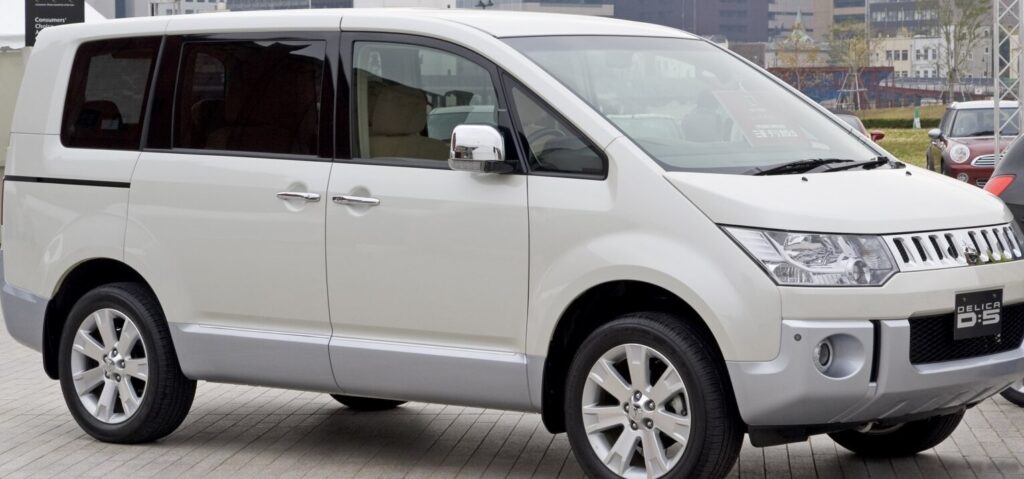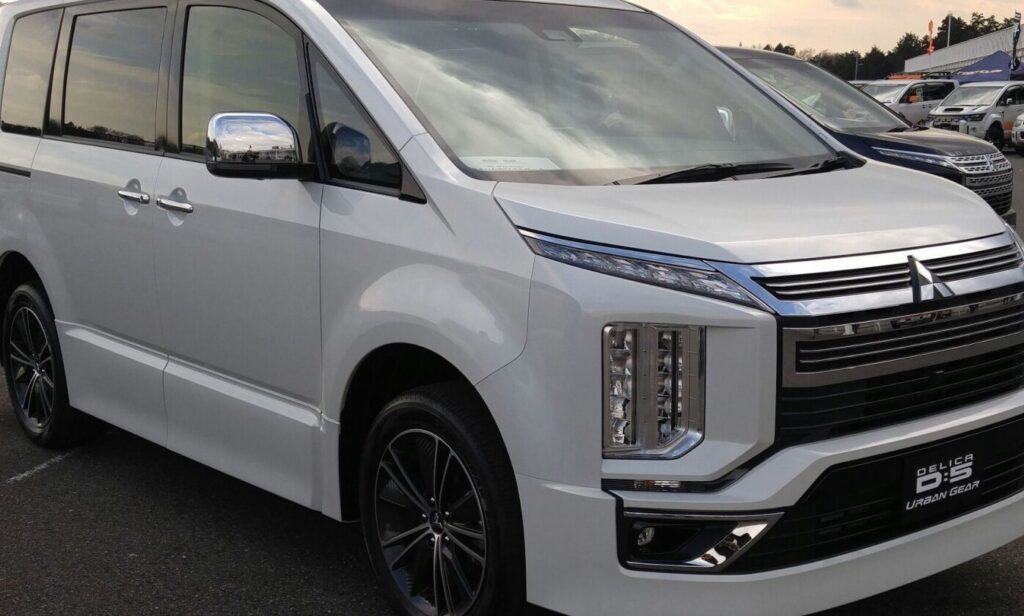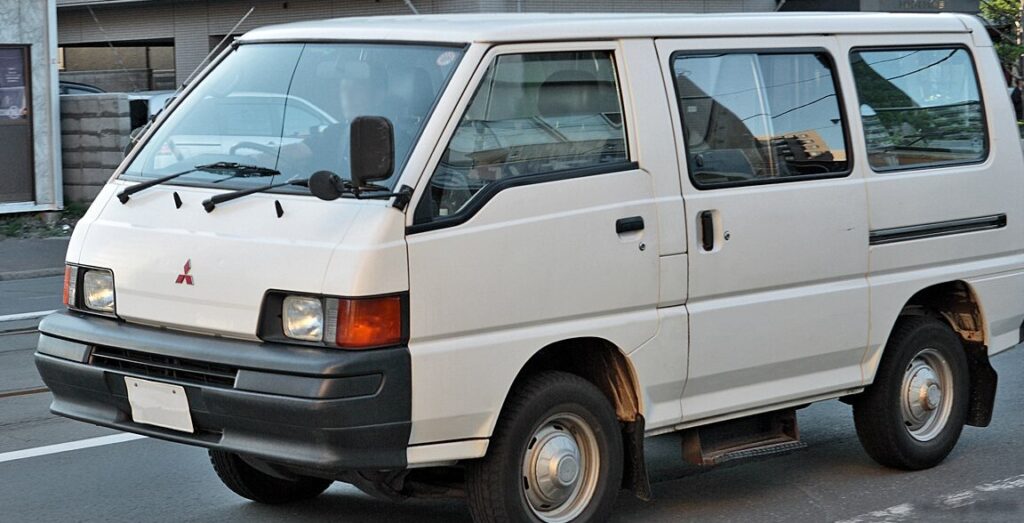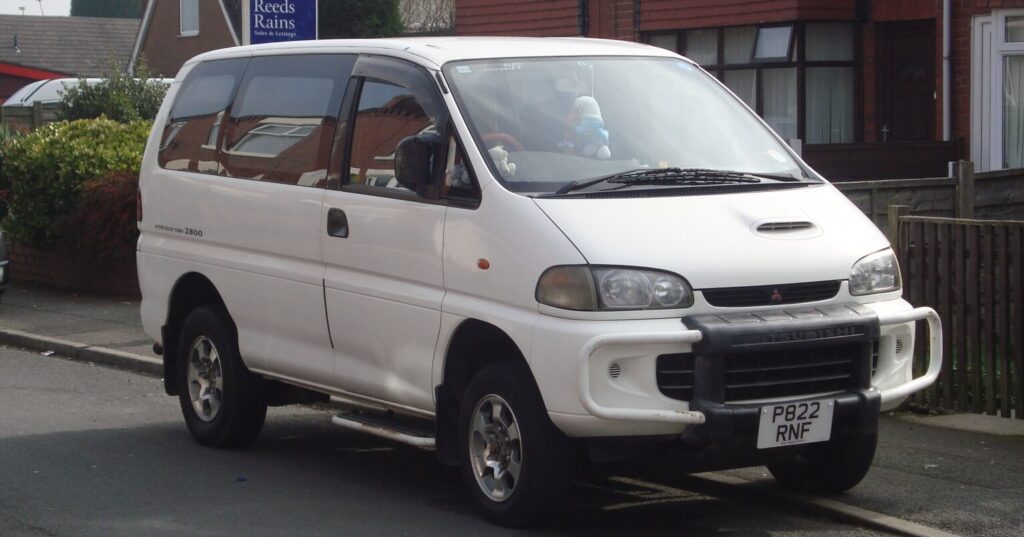
The Mitsubishi Delica L400, specifically the 2.4-liter (145 hp) variant, represents a significant iteration of Mitsubishi’s long-running Delica line of vans and light commercial vehicles. Produced from 1993 to 1999, this generation – internally designated as the L400 – was primarily aimed at the Asian and Australasian markets, offering a blend of passenger comfort, cargo capacity, and respectable off-road capability. Within the broader L400 range, the 2.4-liter engine paired with a four-speed automatic transmission occupied a middle ground, providing a balance between performance and ease of use, appealing to families and commercial users alike. It was positioned as a step up from the lower-powered diesel options, but below the more performance-oriented turbocharged petrol engines.
Technical Specifications
| Brand | Mitsubishi |
| Model | Delica |
| Generation | Delica (L400) |
| Type (Engine) | 2.4 (145 Hp) |
| Start of production | 1993 |
| End of production | 1999 |
| Powertrain Architecture | Internal Combustion engine |
| Body type | Minivan |
| Seats | 8 |
| Doors | 4 |
| Fuel consumption (urban) | 14 l/100 km (16.8 US mpg, 20.2 UK mpg, 7.1 km/l) |
| Fuel consumption (extra urban) | 8 l/100 km (29.4 US mpg, 35.3 UK mpg, 12.5 km/l) |
| Fuel consumption (combined) | 9.5 l/100 km (24.8 US mpg, 29.7 UK mpg, 10.5 km/l) |
| Fuel Type | Petrol (Gasoline) |
| Maximum speed | 165 km/h (102.53 mph) |
| Weight-to-power ratio | 11.4 kg/Hp, 87.3 Hp/tonne |
| Weight-to-torque ratio | 8.1 kg/Nm, 124.1 Nm/tonne |
| Power | 145 Hp @ 5250 rpm |
| Power per litre | 61.7 Hp/l |
| Torque | 206 Nm @ 2750 rpm (151.94 lb.-ft. @ 2750 rpm) |
| Engine layout | Front, Longitudinal |
| Engine displacement | 2350 cm3 (143.41 cu. in.) |
| Number of cylinders | 4 |
| Engine configuration | Inline |
| Number of valves per cylinder | 4 |
| Fuel injection system | Multi-port manifold injection |
| Engine aspiration | Naturally aspirated engine |
| Kerb Weight | 1660 kg (3659.67 lbs.) |
| Max. weight | 2400 kg (5291.09 lbs.) |
| Max load | 740 kg (1631.42 lbs.) |
| Fuel tank capacity | 67 l (17.7 US gal | 14.74 UK gal) |
| Length | 4725 mm (186.02 in.) |
| Width | 1695 mm (66.73 in.) |
| Height | 1960 mm (77.17 in.) |
| Wheelbase | 2800 mm (110.24 in.) |
| Front track | 1445 mm (56.89 in.) |
| Rear track | 1420 mm (55.91 in.) |
| Drivetrain Architecture | The Internal combustion engine (ICE) drives the front wheels of the vehicle. |
| Drive wheel | Front wheel drive |
| Number of gears and type of gearbox | 4 gears, automatic transmission |
| Front suspension | Torsion |
| Rear suspension | Coil spring |
| Front brakes | Ventilated discs |
| Rear brakes | Drum |
| Tires size | 195/80 R14 |
Powertrain & Engine Architecture
The heart of this Delica variant is the 4G63 2.4-liter inline-four cylinder engine. This engine, a staple in many Mitsubishi vehicles of the era, is a naturally aspirated design featuring a cast iron block and an aluminum cylinder head. It utilizes a multi-port fuel injection system, delivering fuel directly to each intake port for improved efficiency and responsiveness. The engine boasts four valves per cylinder (DOHC – Double Overhead Camshaft), contributing to its respectable power output for its displacement. The 4G63 in this application produces 145 horsepower at 5250 rpm and 206 Nm (151.94 lb-ft) of torque at 2750 rpm. Paired with this engine is a four-speed automatic transmission, designed for smooth and convenient operation. This transmission, while not offering the most advanced gear ratios, was known for its durability and reliability.
Driving Characteristics
The 2.4-liter automatic Delica L400 delivers a comfortable and predictable driving experience. Acceleration is adequate for everyday driving, but it’s not particularly sporty. The four-speed automatic transmission, while smooth, can feel somewhat dated compared to more modern transmissions with more gears. The gear ratios are tuned for fuel efficiency and ease of driving rather than outright performance. Compared to the manual transmission versions of the same engine, the automatic suffers a slight performance penalty due to torque converter losses. It also lacks the driver engagement offered by a manual gearbox. Compared to the turbocharged variants, the 2.4-liter naturally aspirated engine feels significantly less powerful, especially when fully loaded with passengers and cargo. However, the naturally aspirated engine offers a more linear power delivery, making it easier to modulate in everyday traffic.
Equipment & Trim Levels
The 2.4-liter automatic Delica L400 typically came equipped with a reasonable level of standard features. These included power windows, power steering, air conditioning, and a basic audio system. Interior upholstery was typically cloth, with a durable and practical design. Higher trim levels offered upgrades such as alloy wheels, upgraded audio systems, and woodgrain interior trim. Optional extras included a sunroof, rear air conditioning, and upgraded seating configurations. The Delica L400 was designed with practicality in mind, offering a spacious interior with flexible seating arrangements, capable of accommodating up to eight passengers.
Chassis & Braking
The Delica L400 utilizes a body-on-frame construction, providing a robust and durable platform. Front suspension consists of torsion bars, while the rear utilizes coil springs. This setup provides a comfortable ride, although it can feel somewhat bouncy when fully loaded. Braking duties are handled by ventilated discs at the front and drum brakes at the rear. While adequate for normal driving conditions, the drum brakes at the rear can lack the stopping power of disc brakes, especially under heavy braking. The vehicle’s relatively high curb weight of 1660 kg (3659.67 lbs) contributes to its stable handling characteristics.
Market Reception & Comparison
The Delica L400 2.4-liter automatic was generally well-received in its target markets. Critics praised its spacious interior, comfortable ride, and overall practicality. However, some criticized its lack of performance compared to the turbocharged variants and its somewhat dated automatic transmission. Fuel economy was considered average for a vehicle of its size and type, averaging around 9.5 l/100 km (24.8 US mpg). Compared to the diesel-powered Delicas, the 2.4-liter petrol engine offered a quieter and smoother driving experience, but at the cost of fuel efficiency. The 2.4-liter automatic was often seen as a good compromise for families and commercial users who prioritized comfort and convenience over outright performance.
Legacy
The Mitsubishi Delica L400 2.4-liter automatic has proven to be a relatively reliable vehicle, with many examples still on the road today. The 4G63 engine is known for its durability, and the four-speed automatic transmission, while not the most sophisticated, is generally robust. Common maintenance issues include wear and tear on suspension components, brake wear, and occasional oil leaks. In the used car market, the Delica L400 2.4-liter automatic remains a popular choice for those seeking a spacious, practical, and affordable minivan. Its reputation for reliability and its comfortable ride continue to make it a desirable vehicle, particularly in regions where these vans were originally popular.