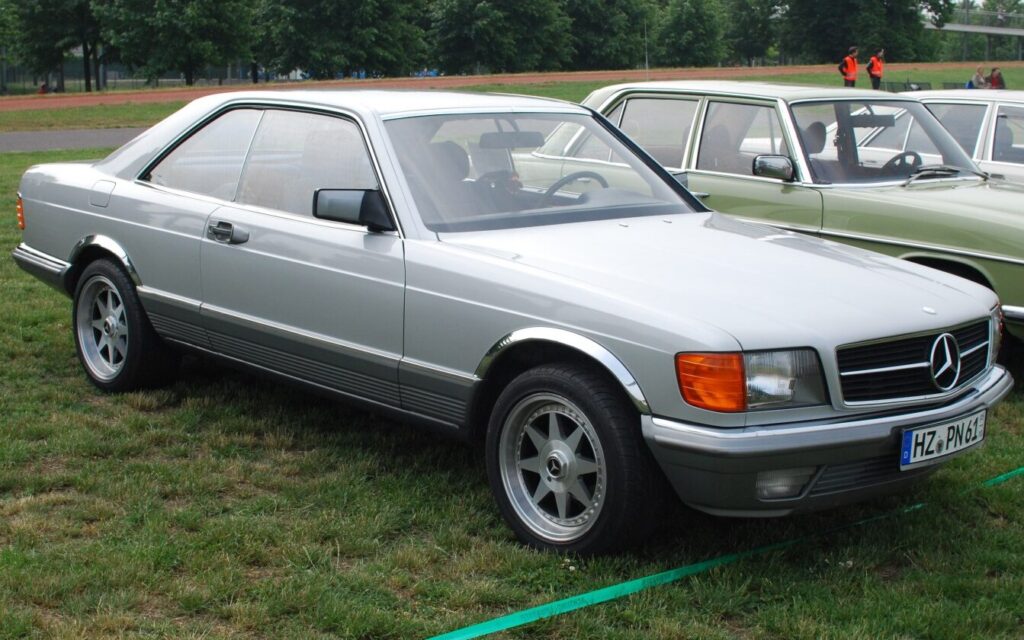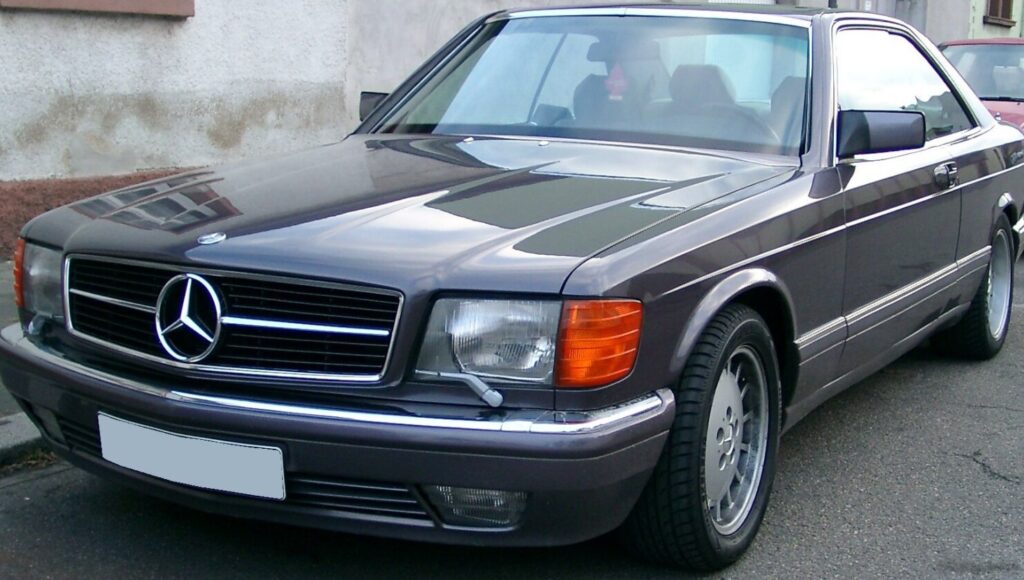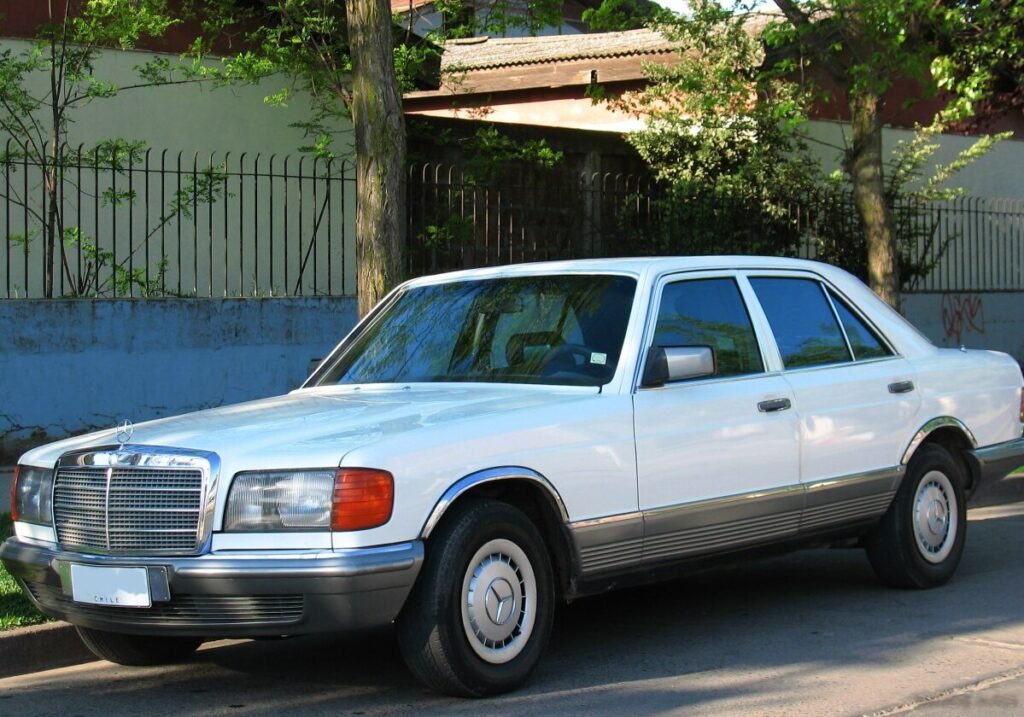
The Mercedes-Benz W126 S-Class, produced from 1979 to 1991, represented a significant leap forward in automotive luxury and safety. The 280 S, introduced in April 1979 and continuing through November 1985, served as the entry point to the W126 range, offering a blend of prestige and relatively accessible performance. Positioned below the 380 S and 560 S models, the 280 S appealed to buyers seeking the S-Class experience without the higher price tag and increased running costs of the larger-displacement engines. It was a mainstay of the initial W126 production run, establishing the model series’ reputation for quality and engineering excellence.
Technical Specifications
| Brand | Mercedes-Benz |
| Model | S-class |
| Generation | S-class SE (W126) |
| Type (Engine) | 280 S (156 Hp) |
| Start of production | April, 1979 |
| End of production | November, 1985 |
| Powertrain Architecture | Internal Combustion engine |
| Body type | Sedan |
| Seats | 5 |
| Doors | 4 |
| Fuel consumption (urban) | 16.9 l/100 km (13.9 US mpg, 16.7 UK mpg, 5.9 km/l) |
| Fuel consumption (extra urban) | 8.9 l/100 km (26.4 US mpg, 31.7 UK mpg, 11.2 km/l) |
| Fuel Type | Petrol (Gasoline) |
| Acceleration 0 – 100 km/h | 10.1 sec |
| Acceleration 0 – 62 mph | 10.1 sec |
| Acceleration 0 – 60 mph | 9.6 sec |
| Maximum speed | 200 km/h (124.27 mph) |
| Weight-to-power ratio | 10 kg/Hp, 100 Hp/tonne |
| Weight-to-torque ratio | 7 kg/Nm, 142.9 Nm/tonne |
| Power | 156 Hp @ 5500 rpm |
| Power per litre | 56.8 Hp/l |
| Torque | 223 Nm @ 4000 rpm (164.48 lb.-ft. @ 4000 rpm) |
| Engine layout | Front, Longitudinal |
| Engine Model/Code | M 110 V 28 / 110.924 |
| Engine displacement | 2746 cm3 (167.57 cu. in.) |
| Number of cylinders | 6 |
| Engine configuration | Inline |
| Cylinder Bore | 86 mm (3.39 in.) |
| Piston Stroke | 78.8 mm (3.1 in.) |
| Compression ratio | 9:1 |
| Number of valves per cylinder | 2 |
| Fuel injection system | Carburettor |
| Engine aspiration | Naturally aspirated engine |
| Valvetrain | DOHC |
| Engine oil capacity | 7 l (7.4 US qt | 6.16 UK qt) |
| Coolant | 10.5 l (11.1 US qt | 9.24 UK qt) |
| Kerb Weight | 1560 kg (3439.21 lbs.) |
| Max. weight | 2080 kg (4585.62 lbs.) |
| Max load | 520 kg (1146.4 lbs.) |
| Trunk (boot) space – minimum | 500 l (17.66 cu. ft.) |
| Fuel tank capacity | 90 l (23.78 US gal | 19.8 UK gal) |
| Length | 4995 mm (196.65 in.) |
| Width | 1820 mm (71.65 in.) |
| Height | 1430 mm (56.3 in.) |
| Wheelbase | 2930 mm (115.35 in.) |
| Front track | 1545 mm (60.83 in.) |
| Rear (Back) track | 1517 mm (59.72 in.) |
| Drivetrain Architecture | The Internal combustion engine (ICE) drives the rear wheels of the vehicle. |
| Drive wheel | Rear wheel drive |
| Number of gears and type of gearbox | 4 gears, manual transmission |
| Front suspension | Double wishbone |
| Rear suspension | Trailing arm |
| Front brakes | Ventilated discs |
| Rear brakes | Disc |
| Steering type | Cone worm with recirculation balls |
| Power steering | Hydraulic Steering |
| Tires size | Front wheel tires: 195/70 R14Rear wheel tires: 195/70 R14 |
| Wheel rims size | Front wheel rims: 6J x 14Rear wheel rims: 6J x 14 |
Powertrain & Engine Architecture
The 280 S was powered by the M110.924, a 2.8-liter (2746 cc) inline-six cylinder engine. This engine, a descendant of the long-running M110 family, featured a cast-iron block and aluminum cylinder head. It utilized a single overhead camshaft (SOHC) design, operating two valves per cylinder. Unlike later Mercedes-Benz engines, the 280 S employed a Bosch K-Jetronic fuel injection system, a mechanical continuous injection system known for its reliability but less precise control compared to electronic fuel injection. The engine produced 156 horsepower at 5500 rpm and 223 Nm (164.48 lb-ft) of torque at 4000 rpm. The engine was mounted longitudinally in the engine bay, driving the rear wheels. The standard transmission was a 4-speed manual, though an optional 4-speed automatic transmission was frequently specified by buyers.
Driving Characteristics
The 280 S, with its 156 hp and relatively lightweight construction (for an S-Class), offered a balanced driving experience. Acceleration to 60 mph took around 9.6 seconds, and it could reach a top speed of 200 km/h (124 mph). While not a sports car, the 280 S provided adequate performance for comfortable highway cruising and city driving. Compared to the more powerful 380 S and 560 S models, the 280 S felt less effortless in acceleration, particularly when fully loaded. The automatic transmission, while smooth, contributed to a slight reduction in responsiveness compared to the manual gearbox. The suspension, tuned for comfort, provided a smooth ride, absorbing bumps and imperfections in the road effectively.
Equipment & Trim Levels
The 280 S came standard with a generous array of features for its time, including power-assisted steering, power-assisted brakes, central locking, and electric windows. The interior was typically upholstered in cloth, with leather upholstery available as an option. Wood trim adorned the dashboard and door panels, enhancing the luxurious ambiance. Optional extras included a sunroof, air conditioning, and a high-end audio system. The dashboard layout was classic Mercedes-Benz, with clearly marked gauges and intuitive controls. The 280 S generally featured a more restrained level of trim compared to the higher-spec models, focusing on understated elegance rather than ostentatious displays of wealth.
Chassis & Braking
The W126 S-Class featured a robust chassis with independent suspension all around. The front suspension utilized double wishbones, while the rear employed a trailing arm setup. This configuration provided a comfortable ride and good handling characteristics. The 280 S was equipped with ventilated disc brakes at the front and solid disc brakes at the rear. The braking system was effective, providing ample stopping power for the vehicle’s weight and performance. The steering was a recirculating ball system, offering a degree of feel and precision, though it lacked the directness of more modern steering technologies.
Market Reception & Comparison
The 280 S was well-received by critics and buyers alike. It offered a compelling combination of luxury, comfort, and reliability at a more accessible price point than its larger-engined siblings. Fuel economy, while not exceptional by modern standards, was reasonable for a vehicle of its size and class. Compared to the 380 S, the 280 S offered a more economical option, appealing to buyers who prioritized fuel efficiency and lower running costs. The 560 S, with its powerful V8 engine, was aimed at a different segment of the market, catering to those who demanded maximum performance. The 280 S’s carburetor-equipped engine was sometimes criticized for its slightly less refined performance compared to the fuel-injected engines in the higher-spec models.
Legacy
The W126 S-Class 280 S remains a sought-after classic car today. Its robust construction and relatively simple mechanicals contribute to its long-term reliability. While maintenance can be costly due to the age of the vehicle and the availability of parts, the 280 S offers a rewarding ownership experience for enthusiasts. The M110 engine, when properly maintained, is known for its durability. The 280 S represents a pivotal moment in Mercedes-Benz history, embodying the brand’s commitment to engineering excellence and luxurious comfort. Well-maintained examples command respectable prices in the used car market, reflecting their enduring appeal and historical significance.