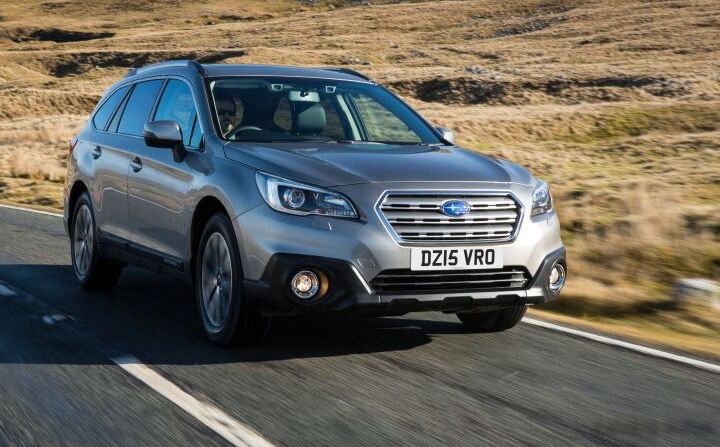
The Subaru Outback V (BS) 2.0d AWD Lineartronic, produced between 2014 and 2018, represents a significant iteration of Subaru’s popular all-wheel-drive wagon. Positioned as a fuel-efficient alternative within the fifth-generation Outback lineup (BS), it catered to buyers seeking the Outback’s practicality and capability with a diesel engine and continuously variable transmission (CVT). This variant aimed to balance economy with the Outback’s renowned all-weather performance, offering a compelling option in the European and Asian markets where diesel engines were more prevalent. It sat in the mid-range of the Outback offerings, below the more powerful petrol options but above the base models.
| Brand | Subaru |
| Model | Outback |
| Generation | Outback V (BS) |
| Type | 2.0d (150 Hp) AWD Lineartronic |
| Start of production | 2014 |
| End of production | 2018 |
| Powertrain Architecture | Internal Combustion engine |
| Body type | Station wagon (estate) |
| Seats | 5 |
| Doors | 5 |
| Fuel consumption (urban) | 7.5 l/100 km (31.4 US mpg) |
| Fuel consumption (extra urban) | 5.3 l/100 km (44.4 US mpg) |
| Fuel consumption (combined) | 6.1 l/100 km (38.6 US mpg) |
| CO2 emissions | 159 g/km |
| Fuel Type | Diesel |
| Acceleration 0 – 100 km/h | 9.9 sec |
| Acceleration 0 – 62 mph | 9.9 sec |
| Acceleration 0 – 60 mph | 9.4 sec |
| Maximum speed | 192 km/h (119.3 mph) |
| Emission standard | Euro 6 |
| Power | 150 Hp @ 3600 rpm |
| Torque | 350 Nm @ 1600-2800 rpm (258.15 lb.-ft.) |
| Engine layout | Front, Longitudinal |
| Engine Model/Code | EE20 |
| Engine displacement | 1998 cm3 (121.93 cu. in.) |
| Number of cylinders | 4 |
| Engine configuration | Boxer |
| Cylinder Bore | 86 mm (3.39 in.) |
| Piston Stroke | 86 mm (3.39 in.) |
| Compression ratio | 15.2:1 |
| Number of valves per cylinder | 4 |
| Fuel injection system | Diesel Commonrail |
| Engine aspiration | Turbocharger, Intercooler |
| Engine oil capacity | 5.9 l (6.23 US qt | 5.19 UK qt) |
| Coolant capacity | 9 l (9.51 US qt | 7.92 UK qt) |
| Max. weight | 2180 kg (4806.08 lbs.) |
| Trunk (boot) space – minimum | 559 l (19.74 cu. ft.) |
| Trunk (boot) space – maximum | 1848 l (65.26 cu. ft.) |
| Fuel tank capacity | 60 l (15.85 US gal | 13.2 UK gal) |
| Max. roof load | 80 kg (176.37 lbs.) |
| Permitted trailer load with brakes (8%) | 2000 kg (4409.25 lbs.) |
| Permitted trailer load with brakes (12%) | 1800 kg (3968.32 lbs.) |
| Permitted trailer load without brakes | 750 kg (1653.47 lbs.) |
| Length | 4815 mm (189.57 in.) |
| Width | 1840 mm (72.44 in.) |
| Height | 1605 mm (63.19 in.) |
| Wheelbase | 2745 mm (108.07 in.) |
| Front track | 1575 mm (62.01 in.) |
| Rear track | 1590 mm (62.6 in.) |
| Ride height (ground clearance) | 200 mm (7.87 in.) |
| Minimum turning circle | 11.8 m (38.71 ft.) |
Powertrain & Engine Architecture
The heart of the Outback 2.0d Lineartronic is the EE20 diesel engine, a 2.0-liter (1998 cc) horizontally-opposed (boxer) four-cylinder. This engine, a staple in Subaru’s diesel offerings, utilizes a turbocharger and intercooler to produce 150 horsepower at 3600 rpm and 350 Nm (258 lb-ft) of torque between 1600 and 2800 rpm. The boxer configuration, known for its inherent balance, contributes to smoother operation. The EE20 features a common rail direct injection system, delivering fuel directly into the cylinders at high pressure for optimized combustion. It also incorporates a diesel particulate filter (DPF) to meet stringent Euro 6 emission standards. The engine is longitudinally mounted, driving all four wheels through Subaru’s symmetrical all-wheel-drive system.
Paired with the EE20 is Subaru’s Lineartronic CVT, a continuously variable transmission. Unlike traditional automatic transmissions with fixed gear ratios, the Lineartronic uses a belt and pulley system to provide a virtually infinite number of gear ratios. This allows the engine to operate at its most efficient point, maximizing fuel economy. The Lineartronic in the Outback 2.0d is programmed with simulated “shift points” to mimic the feel of a conventional automatic, addressing some driver preferences.
Driving Characteristics
The 2.0d Lineartronic Outback delivers a comfortable and relaxed driving experience. While not offering the brisk acceleration of the petrol-powered variants, the diesel engine’s ample torque provides sufficient power for everyday driving and highway cruising. The CVT contributes to smooth, seamless acceleration, although it can sometimes feel less responsive than a traditional automatic, particularly during quick overtaking maneuvers. The all-wheel-drive system provides excellent traction in various weather conditions, a hallmark of the Outback. The CVT’s programming prioritizes fuel efficiency, resulting in a noticeable difference in fuel consumption compared to the petrol models. The gear ratios are optimized for mid-range torque, making it well-suited for towing within its specified limits.
Equipment & Trim Levels
The 2.0d Lineartronic trim typically included standard features such as automatic climate control, a touchscreen infotainment system with Bluetooth connectivity, alloy wheels, and a comprehensive suite of safety features including ABS, stability control, and multiple airbags. Interior upholstery was generally cloth, with options for leather available as upgrades. Higher trim levels within the 2.0d range offered additional features like a sunroof, premium audio system, and advanced driver-assistance systems such as adaptive cruise control and lane departure warning. The dashboard layout was functional and user-friendly, prioritizing practicality over outright luxury.
Chassis & Braking
The Outback 2.0d Lineartronic utilizes a McPherson strut front suspension and a double-wishbone rear suspension, providing a comfortable ride and predictable handling. Stabilizer bars are fitted to both axles to reduce body roll during cornering. Braking duties are handled by ventilated disc brakes at the front and typically solid disc brakes at the rear, although some base models may have rear drum brakes. The braking system is assisted by ABS and electronic brakeforce distribution (EBD). The Outback’s relatively high ground clearance (200 mm / 7.87 inches) enhances its off-road capability.
Market Reception & Comparison
The Outback 2.0d Lineartronic was generally well-received by automotive critics, particularly for its fuel efficiency and all-weather capability. However, some reviewers noted the CVT’s lack of responsiveness compared to traditional automatics and the engine’s relatively modest power output. Compared to the 2.5-liter petrol Outback, the 2.0d offered significantly better fuel economy but less outright performance. Against competitors like the Volkswagen Passat Alltrack and Skoda Octavia Scout, the Outback 2.0d stood out with its standard all-wheel drive and robust build quality. Reliability reports suggest the EE20 engine and Lineartronic CVT are generally durable, although regular maintenance is crucial, particularly regarding the DPF system.
Legacy
The Subaru Outback V (BS) 2.0d Lineartronic remains a popular choice in the used car market, particularly for buyers seeking a practical, reliable, and fuel-efficient all-wheel-drive wagon. The EE20 engine, while requiring diligent maintenance to prevent DPF issues, is known for its longevity. The Lineartronic CVT, if properly serviced, can provide years of trouble-free operation. The Outback’s reputation for safety and durability continues to make it a desirable vehicle, and the 2.0d variant offers a compelling blend of economy and capability for those prioritizing fuel efficiency and all-weather performance.