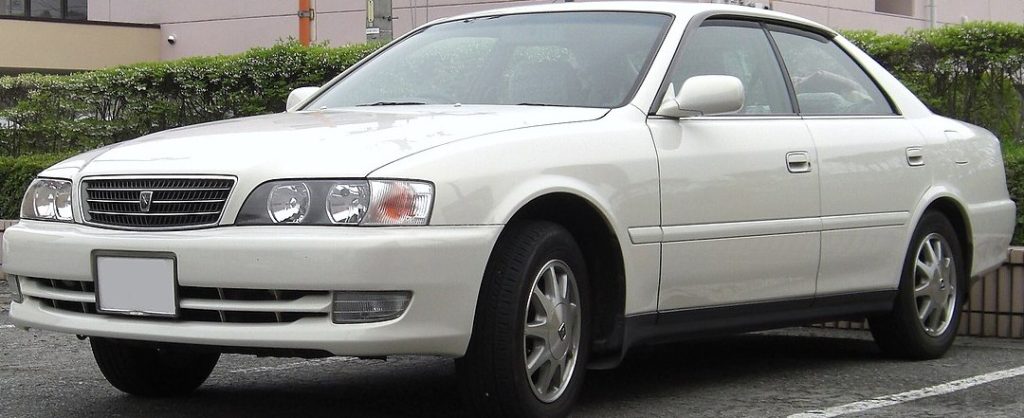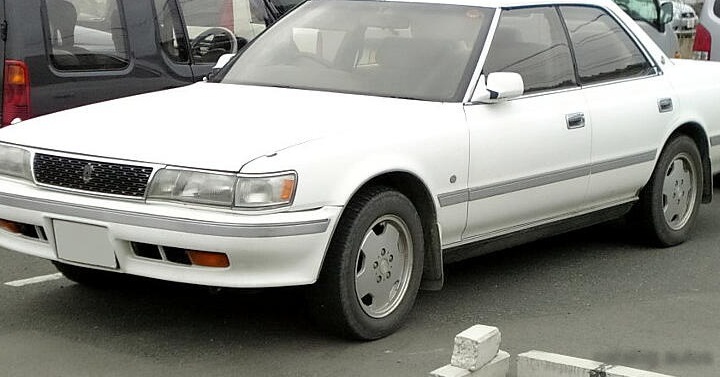
The Toyota Chaser 2.0i Automatic, produced between 1988 and 1991, represents a notable iteration of Toyota’s popular Chaser lineage. Positioned within the JX81 generation (1988-1992), this variant occupied a middle-ground role in the Chaser lineup, aiming to balance performance with comfort. Primarily a domestic market (Japan) vehicle, the Chaser gained a dedicated international following, particularly among motorsports enthusiasts and those seeking a platform for modification. The 2.0i Automatic was designed to appeal to buyers desiring a refined driving experience without completely sacrificing the sporty character associated with the Chaser’s design.
Technical Specifications
| Brand | Toyota |
| Model | Chaser |
| Generation | Chaser (JX81) |
| Type | 2.0i (170 Hp) Automatic |
| Start of production | 1988 |
| End of production | 1991 |
| Powertrain Architecture | Internal Combustion Engine |
| Body type | Sedan |
| Seats | 5 |
| Doors | 4 |
| Fuel consumption (urban) | 12 l/100 km (19.6 US mpg) |
| Fuel consumption (extra urban) | 5.4 l/100 km (43.6 US mpg) |
| Fuel Type | Petrol (Gasoline) |
| Power | 170 Hp @ 6000 rpm |
| Torque | 226 Nm @ 3600 rpm (166.69 lb.-ft. @ 3600 rpm) |
| Engine layout | Front, Longitudinal |
| Engine Model/Code | 1G-GZE |
| Engine displacement | 1988 cm3 (121.32 cu. in.) |
| Number of cylinders | 6 |
| Engine configuration | Inline |
| Cylinder Bore | 75 mm (2.95 in.) |
| Piston Stroke | 75 mm (2.95 in.) |
| Compression ratio | 8:1 |
| Number of valves per cylinder | 4 |
| Fuel injection system | Multi-port manifold injection |
| Engine aspiration | Naturally aspirated |
| Fuel tank capacity | 65 l (17.17 US gal) |
| Length | 4690 mm (184.65 in.) |
| Width | 1695 mm (66.73 in.) |
| Height | 1375 mm (54.13 in.) |
| Wheelbase | 2680 mm (105.51 in.) |
| Drivetrain | Rear wheel drive |
| Number of gears | 4 |
| Gearbox type | Automatic transmission |
| Front brakes | Ventilated discs |
| Rear brakes | Disc |
| Tire size | 185/70 R14 |
| Wheel rims size | 14 |
Powertrain & Engine Architecture
The Toyota Chaser 2.0i Automatic is powered by the 1G-GZE engine, a 2.0-liter inline-six cylinder powerplant. It’s important to note that while the “ZE” designation often signifies a supercharged variant, the 1988-1991 Chaser 2.0i utilized a naturally aspirated version of this engine. This engine incorporates multi-port fuel injection, a double overhead camshaft (DOHC) valvetrain, and a compression ratio of 8:1. The 1G-GZE was well-regarded for its smooth power delivery and robust construction. The engine is paired with a four-speed automatic transmission, a common Toyota unit of the era. This transmission prioritized comfortable cruising and ease of use, rather than sporty performance, with gear ratios optimized for fuel efficiency and smooth shifts.
Driving Characteristics
The 2.0i Automatic Chaser delivers a comfortable and refined driving experience. The 170 horsepower engine provides sufficient power for everyday driving, though it isn’t a particularly quick vehicle. Acceleration is respectable, but the automatic transmission diminishes the engine’s responsiveness compared to the available five-speed manual option. The automatic’s gear ratios are geared towards fuel economy, resulting in a less engaging experience for driving enthusiasts. Handling is typical of a rear-wheel-drive sedan from that period – predictable and stable, but not exceptionally sporty. The suspension is tuned for comfort, effectively absorbing bumps and road imperfections. Compared to higher-performance Chaser variants, particularly those equipped with the supercharged 1G-GZE engine, the 2.0i Automatic feels noticeably less powerful and responsive.
Equipment & Trim Levels
The Chaser 2.0i Automatic generally came equipped with a reasonable level of standard features for its time. These included power steering, air conditioning, and a basic audio system. Interior upholstery was typically cloth, with a relatively straightforward dashboard layout. Optional extras included power windows, central locking, and upgraded audio systems. The trim level of the 2.0i Automatic positioned it as a mid-range offering within the Chaser lineup. It was better equipped than the base models but lacked the more luxurious features found in the higher-end trims.
Chassis & Braking
The Chaser 2.0i Automatic employs a traditional rear-wheel-drive chassis layout. The front suspension utilizes MacPherson struts, while the rear suspension features a semi-trailing arm design. Braking is provided by ventilated discs at the front and solid discs at the rear. An Anti-lock Braking System (ABS) was often included as standard equipment, enhancing safety and control during hard braking. The chassis is designed to strike a balance between comfort and handling, prioritizing stability and ride quality over outright sportiness. The 185/70 R14 tires offer adequate grip for typical driving conditions.
Market Reception & Comparison
The Toyota Chaser 2.0i Automatic was generally well-received in the Japanese market as a practical and reliable sedan. Critics praised its comfortable ride, spacious interior, and fuel efficiency. However, some reviewers pointed out that the automatic transmission limited the engine’s performance potential. Compared to other trims within the Chaser lineup, the 2.0i Automatic offered a more affordable entry point. It proved popular with families and commuters who prioritized comfort and convenience over high performance. Fuel economy was competitive with other 2.0-liter sedans of the era, and reliability was typically excellent, consistent with Toyota’s reputation.
Legacy
The Toyota Chaser 2.0i Automatic, while not the most coveted variant of the JX81 generation, remains a respected and reliable classic car. The 1G-GZE engine, even in its naturally aspirated form, is known for its durability and relatively simple maintenance requirements. Today, these cars are increasingly sought after by enthusiasts and collectors, particularly those interested in Japanese domestic market (JDM) vehicles. Finding a pristine example can be challenging, but well-maintained Chaser 2.0i Automatics offer a unique combination of classic styling, comfortable driving dynamics, and Toyota’s renowned reliability. The car’s relatively affordable price compared to higher-performance variants makes it an appealing option for those entering the world of classic Japanese motoring.