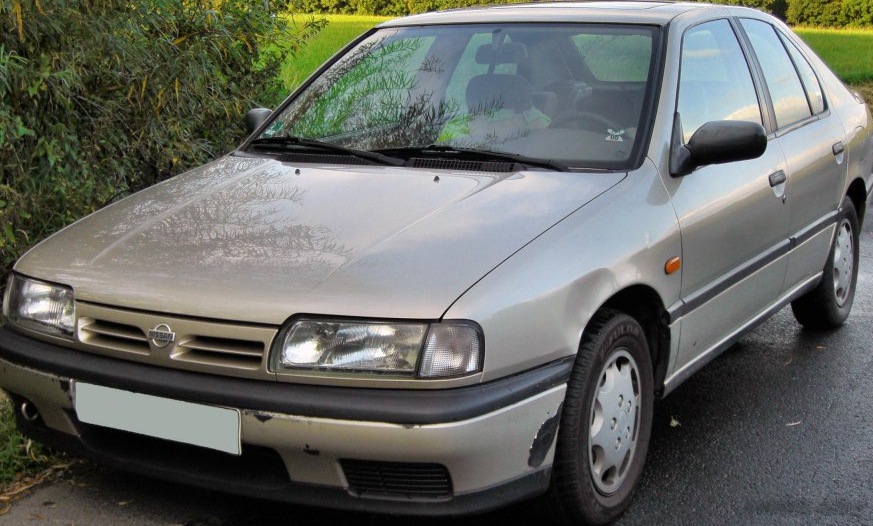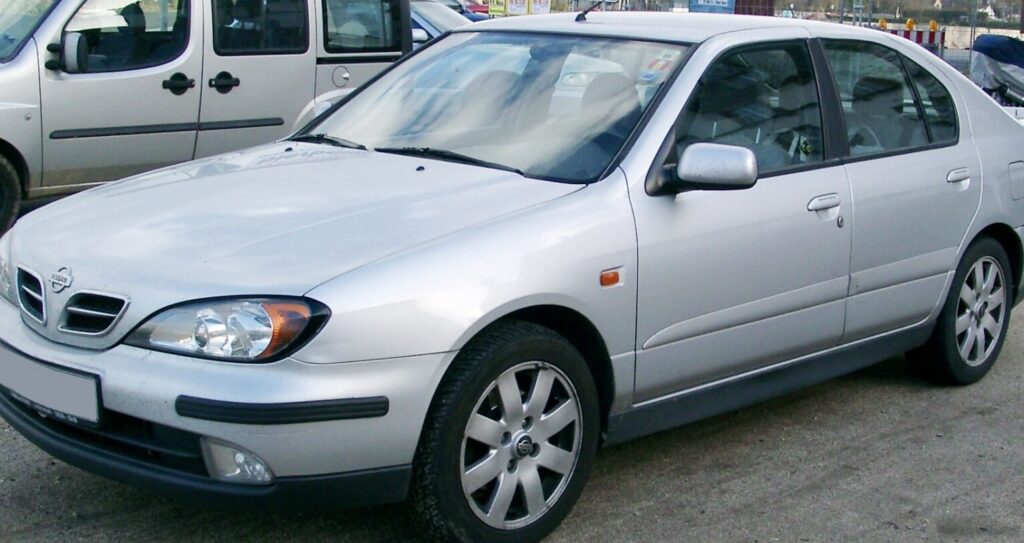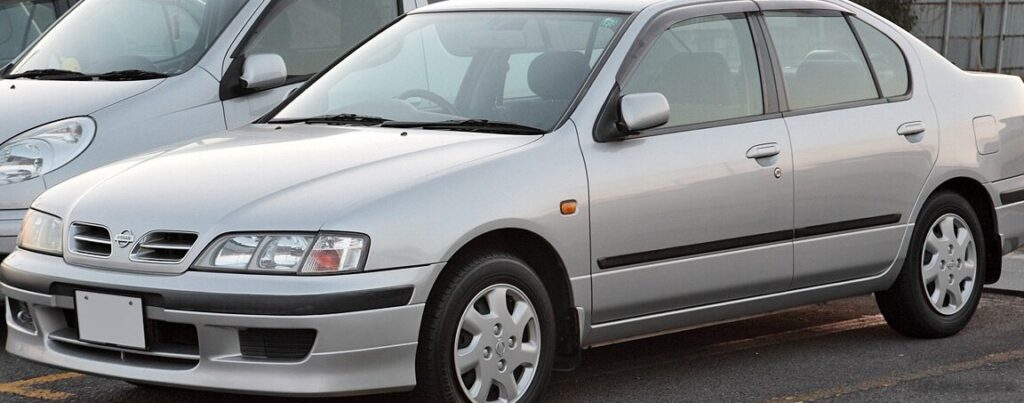
The Nissan Primera (P11) 1.6 16V, producing 99 horsepower, was a mainstay of the Primera lineup from 1996 to 2002. Positioned as the entry-level model in many European and Asian markets, it offered a balance of affordability, practicality, and Nissan’s reputation for reliability. The P11 generation Primera represented a significant step forward for Nissan in the mid-size family car segment, competing with established rivals like the Ford Mondeo, Vauxhall/Opel Vectra, and Toyota Carina. This particular variant, with its 1.6-liter engine and typically a four or five-speed automatic transmission, was aimed at buyers prioritizing fuel efficiency and ease of driving over outright performance.
Technical Specifications
| Brand | Nissan |
| Model | Primera |
| Generation | Primera (P11) |
| Type (Engine) | 1.6 16V (99 Hp) |
| Start of production | 1996 |
| End of production | 2002 |
| Powertrain Architecture | Internal Combustion engine |
| Body type | Sedan |
| Seats | 5 |
| Doors | 4 |
| Fuel consumption (urban) | 9.3 l/100 km (25.3 US mpg) |
| Fuel consumption (extra urban) | 5.6 l/100 km (42 US mpg) |
| Fuel Type | Petrol (Gasoline) |
| Acceleration 0 – 100 km/h | 12 sec |
| Acceleration 0 – 62 mph | 12 sec |
| Acceleration 0 – 60 mph | 11.4 sec |
| Maximum speed | 180 km/h (111.85 mph) |
| Weight-to-power ratio | 11 kg/Hp |
| Weight-to-torque ratio | 8 kg/Nm |
| Power | 99 Hp @ 6000 rpm |
| Power per litre | 62 Hp/l |
| Torque | 136 Nm @ 4000 rpm (100.31 lb.-ft. @ 4000 rpm) |
| Engine layout | Front, Transverse |
| Engine Model/Code | GA16DE |
| Engine displacement | 1597 cm3 (97.45 cu. in.) |
| Number of cylinders | 4 |
| Engine configuration | Inline |
| Cylinder Bore | 76 mm (2.99 in.) |
| Piston Stroke | 88 mm (3.46 in.) |
| Compression ratio | 9.8:1 |
| Number of valves per cylinder | 4 |
| Fuel injection system | Multi-port manifold injection |
| Engine aspiration | Naturally aspirated engine |
| Valvetrain | DOHC |
| Engine oil capacity | 3.3 l (3.49 US qt | 2.9 UK qt) |
| Coolant | 5.5 l (5.81 US qt | 4.84 UK qt) |
| Kerb Weight | 1090 kg (2403.04 lbs.) |
| Max. weight | 1670 kg (3681.72 lbs.) |
| Max load | 580 kg (1278.68 lbs.) |
| Trunk (boot) space – minimum | 490 l (17.3 cu. ft.) |
| Fuel tank capacity | 60 l (15.85 US gal | 13.2 UK gal) |
| Length | 4430 mm (174.41 in.) |
| Width | 1715 mm (67.52 in.) |
| Height | 1410 mm (55.51 in.) |
| Wheelbase | 2600 mm (102.36 in.) |
| Front track | 1465 mm (57.68 in.) |
| Rear (Back) track | 1454 mm (57.24 in.) |
| Drivetrain Architecture | The Internal combustion engine (ICE) drives the front wheels of the vehicle. |
| Drive wheel | Front wheel drive |
| Number of gears and type of gearbox | 5 gears, manual transmission |
Powertrain & Engine Architecture
The heart of the Primera 1.6 16V is the GA16DE engine, a 1.6-liter inline-four cylinder powerplant. This engine utilizes a multi-port fuel injection system, delivering fuel directly to each intake port for improved combustion efficiency. The engine features a double overhead camshaft (DOHC) valvetrain, operating 16 valves (four per cylinder) to optimize airflow and enhance performance. The GA16DE is known for its relatively simple design and robust construction, contributing to its reputation for reliability. The automatic transmission typically paired with this engine was a four-speed unit, designed for smooth and comfortable shifts rather than sporty acceleration. While a five-speed manual transmission was also available, the automatic was a popular choice for buyers prioritizing convenience.
Driving Characteristics
The 1.6-liter engine, producing 99 horsepower, provided adequate, but not exhilarating, performance. Acceleration from 0 to 60 mph took around 11.4 to 12 seconds, making it suitable for everyday commuting and highway cruising. The automatic transmission, while smooth, did detract from the overall responsiveness compared to the manual version. Gear ratios were tuned for fuel economy, meaning the engine often felt strained during quick acceleration or when climbing hills. The power delivery was linear, but lacked the punch of the higher-spec 2.0-liter variants. The focus was clearly on providing a comfortable and economical driving experience.
Equipment & Trim Levels
The 1.6 16V Primera typically came with a reasonable level of standard equipment, though it was less lavish than the higher trim levels. Standard features often included power steering, central locking, electric front windows, and an AM/FM radio. Air conditioning was frequently an optional extra. Interior upholstery was typically cloth, with a relatively simple dashboard layout. Higher trim levels offered upgrades such as alloy wheels, a sunroof, and upgraded audio systems. The specific trim levels varied depending on the market, but the 1.6L model generally represented the base or mid-range offering.
Chassis & Braking
The Primera P11 featured a MacPherson strut front suspension and a multi-link rear suspension, providing a comfortable ride and decent handling characteristics. The front brakes were typically ventilated discs, while the rear brakes were often solid discs, although some base models utilized drum brakes. Anti-lock Braking System (ABS) was a common feature, enhancing safety. The suspension was tuned for comfort, prioritizing ride quality over sporty handling. Stabilizer bars were fitted to both the front and rear axles to reduce body roll during cornering.
Market Reception & Comparison
The Primera 1.6 16V was generally well-received as a practical and reliable family car. Critics praised its comfortable ride, spacious interior, and fuel efficiency. However, it was often criticized for its lack of outright performance compared to rivals like the Ford Mondeo. The 1.6L engine offered significantly better fuel economy than the 2.0L variants, but at the cost of performance. Compared to the more powerful engines in the Primera lineup, the 1.6L automatic was noticeably slower and less engaging to drive. However, its lower running costs and ease of use made it a popular choice for budget-conscious buyers.
Legacy
The Nissan Primera P11 1.6 16V has proven to be a durable and reliable vehicle. The GA16DE engine is known for its longevity, and many examples are still on the road today. While not a particularly sought-after classic, well-maintained examples hold a reasonable value in the used car market. The automatic transmission, while not known for its sportiness, has generally proven to be reliable. The Primera P11, in all its variants, helped establish Nissan as a serious contender in the European and Asian mid-size family car market, and the 1.6L model played a key role in offering an accessible entry point to the Primera range.