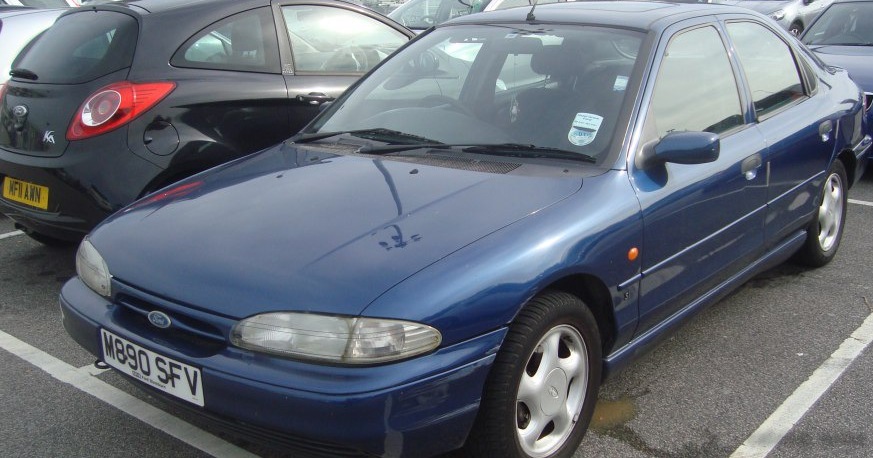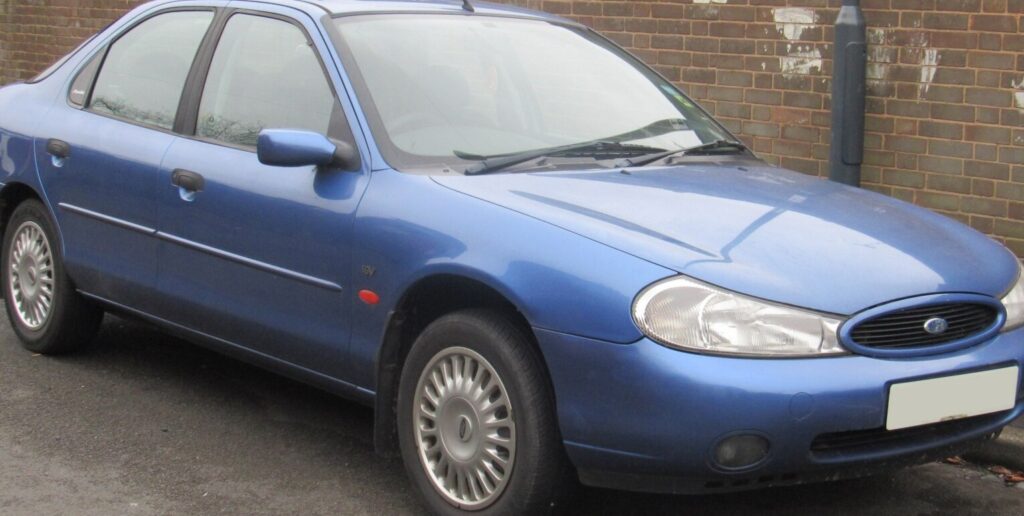
The Ford Mondeo I Wagon 2.0i 4×4, produced between 1994 and 1996, represented a significant offering in Ford’s European lineup. Positioned as a more capable and practical variant of the Mondeo estate, it catered to buyers needing all-weather capability and additional space. This model was part of the first generation Mondeo (1993-1996), known internally as the project code ‘CDW27’, and built upon the Ford CDW27 platform. The 2.0i 4×4 trim sat towards the upper end of the Mondeo Wagon range, offering a blend of performance and utility not found in the base models.
Technical Specifications
| Brand | Ford |
| Model | Mondeo |
| Generation | Mondeo I Wagon |
| Type (Engine) | 2.0i 4×4 (136 Hp) |
| Start of production | 1994 |
| End of production | 1996 |
| Powertrain Architecture | Internal Combustion engine |
| Body type | Station wagon (estate) |
| Seats | 5 |
| Doors | 5 |
| Fuel consumption (combined) | 9.1 l/100 km (25.8 US mpg, 31 UK mpg, 11 km/l) |
| Fuel Type | Petrol (Gasoline) |
| Maximum speed | 198 km/h (123.03 mph) |
| Weight-to-power ratio | 10.3 kg/Hp, 96.8 Hp/tonne |
| Weight-to-torque ratio | 7.8 kg/Nm, 128.1 Nm/tonne |
| Power | 136 Hp @ 6000 rpm |
| Power per litre | 68.4 Hp/l |
| Torque | 180 Nm @ 4000 rpm (132.76 lb.-ft. @ 4000 rpm) |
| Engine layout | Front, Transverse |
| Engine Model/Code | NGA |
| Engine displacement | 1988 cm3 (121.32 cu. in.) |
| Number of cylinders | 4 |
| Engine configuration | Inline |
| Cylinder Bore | 84.8 mm (3.34 in.) |
| Piston Stroke | 88 mm (3.46 in.) |
| Compression ratio | 10:1 |
| Number of valves per cylinder | 4 |
| Fuel injection system | Multi-port manifold injection |
| Engine aspiration | Naturally aspirated engine |
| Valvetrain | DOHC |
| Engine oil capacity | 4.25 l (4.49 US qt | 3.74 UK qt) |
| Coolant | 6.6 l (6.97 US qt | 5.81 UK qt) |
| Kerb Weight | 1405 kg (3097.49 lbs.) |
| Max. weight | 2050 kg (4519.48 lbs.) |
| Max load | 645 kg (1421.98 lbs.) |
| Trunk (boot) space – minimum | 650 l (22.95 cu. ft.) |
| Trunk (boot) space – maximum | 900 l (31.78 cu. ft.) |
| Fuel tank capacity | 61 l (16.11 US gal | 13.42 UK gal) |
| Length | 4631 mm (182.32 in.) |
| Width | 1749 mm (68.86 in.) |
| Height | 1442 mm (56.77 in.) |
| Wheelbase | 2704 mm (106.46 in.) |
| Front track | 1503 mm (59.17 in.) |
| Rear (Back) track | 1504 mm (59.21 in.) |
| Drive wheel | All wheel drive (4×4) |
| Number of gears and type of gearbox | 5 gears, manual transmission |
| Front suspension | Trailing arm |
| Rear suspension | Coil spring |
| Front brakes | Ventilated discs |
| Rear brakes | Drum |
| Assisting systems | ABS (Anti-lock braking system) |
| Steering type | Steering rack and pinion |
| Power steering | Hydraulic Steering |
| Tires size | 185/65 R14 |
| Wheel rims size | 6J x 14 |
Powertrain & Engine Architecture
The heart of the Mondeo I Wagon 2.0i 4×4 was the Ford NGA engine, a 1.988-liter inline-four cylinder gasoline engine. This engine utilized multi-port fuel injection and a double overhead camshaft (DOHC) valvetrain, contributing to its respectable power output for the time. The NGA engine was a relatively simple design, prioritizing reliability and ease of maintenance. The 4×4 system employed a viscous coupling to distribute power between the front and rear axles, providing all-wheel drive capability without a traditional transfer case. This system was fully automatic, requiring no driver intervention. The five-speed manual transmission was the only gearbox option available with this engine and drivetrain combination.
Driving Characteristics
The 2.0i 4×4 Mondeo Wagon offered a noticeable improvement in traction compared to its front-wheel drive counterparts, particularly on slippery surfaces. However, the added weight of the 4×4 system and the engine itself meant that acceleration wasn’t particularly brisk. The 136 horsepower engine provided adequate power for everyday driving and highway cruising, but it wasn’t a sporty performer. The five-speed manual transmission allowed for reasonable control over the engine’s powerband, but the gear ratios were geared more towards fuel efficiency than outright performance. Compared to the higher-output 2.5 V6 version, the 2.0i 4×4 felt significantly less powerful, but it offered better fuel economy and lower running costs.
Equipment & Trim Levels
The 2.0i 4×4 trim typically included features such as power steering, ABS brakes, and central locking. Interior appointments were generally comfortable, with cloth upholstery and a functional dashboard layout. Optional extras included air conditioning, electric windows, and a sunroof. The Mondeo Wagon, in general, was known for its spacious interior and large cargo area, making it a practical choice for families. The 4×4 variant didn’t necessarily add any unique trim features beyond the drivetrain itself, but it was often specified with slightly more robust suspension components to handle the added weight and potential for off-road use.
Chassis & Braking
The Mondeo I Wagon featured a trailing arm rear suspension, which was a cost-effective and space-efficient design. The front suspension utilized MacPherson struts. The 2.0i 4×4 model typically had slightly stiffer springs and dampers compared to the base models to cope with the increased weight. Braking duties were handled by ventilated discs at the front and drum brakes at the rear. The ABS system provided enhanced braking performance and stability, particularly on slippery surfaces. The steering was a rack and pinion system with hydraulic power assistance, offering a reasonable level of feel and responsiveness.
Market Reception & Comparison
The Mondeo I Wagon 2.0i 4×4 was generally well-received by automotive critics as a practical and capable estate car. It was praised for its spacious interior, comfortable ride, and all-weather capability. However, some critics noted that the engine lacked outright performance and that the 4×4 system added weight and complexity. Compared to other estate cars in its class, such as the Volvo 940 or the Audi 80 Avant, the Mondeo offered a more affordable price point and a more modern design. Fuel economy was respectable for the time, averaging around 25.8 US mpg in combined driving. Reliability was generally good, although the 4×4 system could require occasional maintenance.
Legacy
The Ford Mondeo I Wagon 2.0i 4×4 remains a relatively common sight on European roads today, testament to its durability and practicality. The NGA engine is known for its robustness, and with proper maintenance, it can continue to provide reliable service for many years. The 4×4 system, while not as sophisticated as modern all-wheel drive systems, proved to be reasonably reliable. In the used car market, these models are often sought after by buyers looking for a spacious, practical, and affordable estate car with all-weather capability. While not a collector’s item, the Mondeo I Wagon 2.0i 4×4 holds a place as a solid and dependable family vehicle from the 1990s.