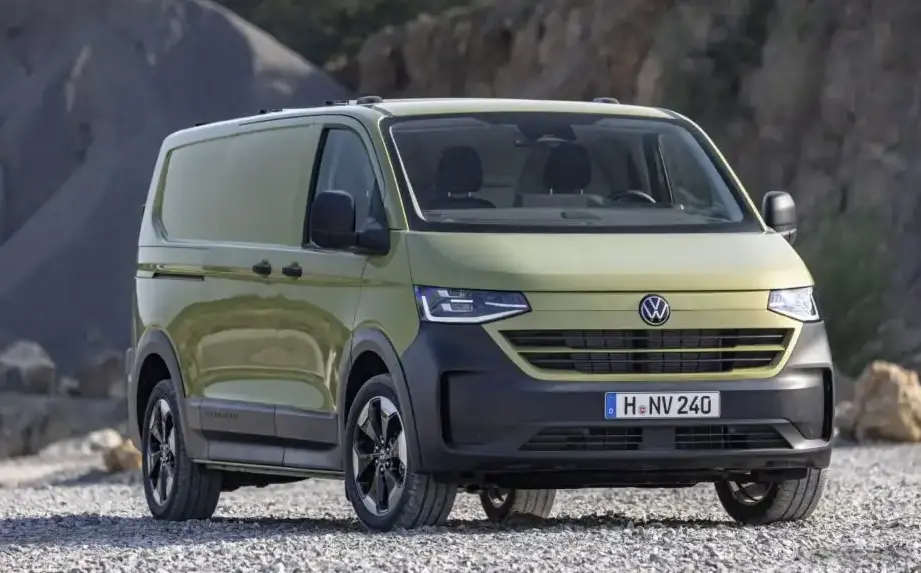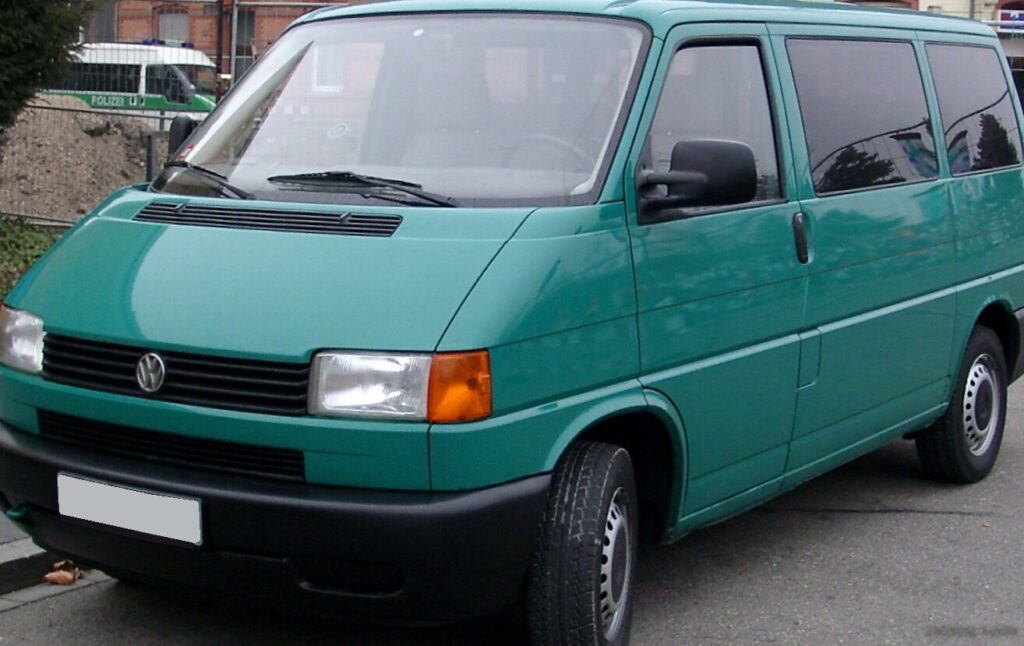
The Volkswagen Transporter (T4), particularly the Kombi variant with the 1.9 TD (68 hp) engine introduced during the 1996 facelift, represented a significant evolution of Volkswagen’s iconic commercial vehicle. Produced from 1996 through 2003, this configuration – often designated as the L2H1 denoting its wheelbase and roof height – served as a practical and economical choice within the T4 lineup, primarily aimed at commercial users and families needing a versatile vehicle. It occupied a position as the entry-level diesel option, offering a balance between affordability, fuel efficiency, and load-carrying capability. The T4 generation, and this variant specifically, was a mainstay in the European market, though limited numbers were also imported to other regions.
Technical Specifications
| Brand | Volkswagen |
| Model | Transporter |
| Generation | Transporter (T4, facelift 1996) Kombi |
| Type (Engine) | 1.9 TD (68 Hp) L2H1 |
| Start of production | 1996 |
| End of production | 2003 |
| Powertrain Architecture | Internal Combustion engine |
| Body type | Van |
| Seats | 2-9 |
| Doors | 4-5 |
| Fuel consumption (urban) | 9 l/100 km (26.1 US mpg, 31.4 UK mpg, 11.1 km/l) |
| Fuel consumption (extra urban) | 6.9 l/100 km (34.1 US mpg, 40.9 UK mpg, 14.5 km/l) |
| Fuel Type | Diesel |
| Maximum speed | 132 km/h (82.02 mph) |
| Weight-to-power ratio | 24 kg/Hp, 41.7 Hp/tonne |
| Weight-to-torque ratio | 11.6 kg/Nm, 85.9 Nm/tonne |
| Power | 68 Hp @ 3700 rpm |
| Power per litre | 35.9 Hp/l |
| Torque | 140 Nm @ 2000-3000 rpm (103.26 lb.-ft. @ 2000-3000 rpm) |
| Engine layout | Front, Transverse |
| Engine Model/Code | ABL |
| Engine displacement | 1896 cm3 (115.7 cu. in.) |
| Number of cylinders | 4 |
| Engine configuration | Inline |
| Cylinder Bore | 79.5 mm (3.13 in.) |
| Piston Stroke | 95.5 mm (3.76 in.) |
| Compression ratio | 22.5:1 |
| Number of valves per cylinder | 2 |
| Fuel injection system | Precombustion chamber injection |
| Engine aspiration | Turbocharger |
| Valvetrain | SOHC |
| Engine oil capacity | 5 l (5.28 US qt | 4.4 UK qt) |
| Coolant | 9 l (9.51 US qt | 7.92 UK qt) |
| Kerb Weight | 1630 kg (3593.53 lbs.) |
| Max. weight | 2625-2800 kg (5787.13 – 6172.94 lbs.) |
| Max load | 995-1170 kg (2193.6 – 2579.41 lbs.) |
| Trunk (boot) space – maximum | 6300 l (222.48 cu. ft.) |
| Fuel tank capacity | 80 l (21.13 US gal | 17.6 UK gal) |
| Max. roof load | 100 kg (220.46 lbs.) |
| Permitted trailer load with brakes (12%) | 2000 kg (4409.25 lbs.) |
| Permitted trailer load without brakes | 700 kg (1543.24 lbs.) |
| Permitted towbar download | 100 kg (220.46 lbs.) |
| Length | 5107 mm (201.06 in.) |
| Width | 1840 mm (72.44 in.) |
| Width including mirrors | 2175 mm (85.63 in.) |
| Height | 1940 mm (76.38 in.) |
| Wheelbase | 3320 mm (130.71 in.) |
| Front track | 1589 mm (62.56 in.) |
| Rear (Back) track | 1554 mm (61.18 in.) |
| Front overhang | 886 mm (34.88 in.) |
| Rear overhang | 901 mm (35.47 in.) |
| Ride height (ground clearance) | 180 mm (7.09 in.) |
| Minimum turning circle (turning diameter) | 12.9 m (42.32 ft.) |
| Wading depth | 350 mm (13.78 in.) |
| Drivetrain Architecture | Front wheel drive |
| Drive wheel | Front wheel drive |
| Number of gears and type of gearbox | 5 gears, manual transmission |
| Front suspension | Independent torsion bar, double wishbone, Transverse stabilizer |
| Rear suspension | Independent coil spring, Trailing arm |
| Front brakes | Disc |
| Rear brakes | Disc |
| Assisting systems | ABS (Anti-lock braking system) |
| Steering type | Steering rack and pinion |
| Power steering | Hydraulic Steering |
| Tires size | 195/70 R15; 205/65 R15 |
| Wheel rims size | 6J x 15 |
Powertrain & Engine Architecture
The heart of this Transporter variant is the 1.9-liter, inline four-cylinder diesel engine, specifically the ABL engine code. This engine utilizes a precombustion chamber injection system, a common technology for diesel engines of the era. This system involves injecting fuel into a precombustion chamber connected to the main cylinder, promoting more complete combustion and reducing noise. The engine is turbocharged, providing a modest boost in power and torque. The single overhead camshaft (SOHC) valvetrain operates two valves per cylinder. The engine’s relatively high compression ratio of 22.5:1 is typical for indirect injection diesel engines. The 1.9 TD engine is known for its durability, though it can be prone to wear in the injection pump and turbocharger over time. The standard transmission was a five-speed manual, though a four-speed automatic transmission was also available, albeit less common. The automatic gearbox, while offering convenience, generally resulted in reduced fuel economy and slightly slower acceleration.
Driving Characteristics
The 1.9 TD with 68 horsepower and the manual transmission offered adequate, but not exhilarating, performance. Acceleration was leisurely, and overtaking required careful planning. The engine’s torque peak of 140 Nm (103 lb-ft) arrived at a relatively low 2000-3000 rpm, providing reasonable pulling power for carrying loads. The automatic transmission further diminished performance, with noticeable delays in gear changes and a less responsive feel. The T4’s suspension, featuring a torsion bar front and trailing arm rear setup, provided a comfortable ride, even when laden. Steering was precise thanks to the rack and pinion system with hydraulic assistance. The van’s high center of gravity and relatively soft suspension meant it wasn’t a particularly sporty vehicle, but it excelled at providing a stable and predictable driving experience.
Equipment & Trim Levels
The Kombi trim level, even in its base 1.9 TD configuration, offered a reasonable level of equipment. Standard features typically included power steering, central locking, and a basic audio system. Interior upholstery was typically cloth, with durable plastics used throughout the cabin. The dashboard layout was functional and straightforward. Optional extras included air conditioning, electric windows, and upgraded audio systems. The Kombi’s versatility was enhanced by its flexible seating arrangements, with options for multiple rear seats and various cargo configurations. The L2H1 designation indicated a long wheelbase and a standard roof height, maximizing interior space.
Chassis & Braking
The T4 Transporter utilized a front-wheel-drive layout. The front suspension employed independent torsion bars and double wishbones, while the rear suspension featured an independent coil spring and trailing arm setup. This configuration provided a good balance between ride comfort and load-carrying capacity. Braking duties were handled by disc brakes on all four wheels, supplemented by an Anti-lock Braking System (ABS) for improved stopping power and stability. The steering system was a rack and pinion type with hydraulic power assistance, offering precise and responsive steering.
Market Reception & Comparison
The 1.9 TD Kombi was well-received in the European market as a practical and economical workhorse. Critics praised its fuel efficiency and durability, but noted its modest performance. Compared to the more powerful 2.5 TDI variants, the 1.9 TD offered significantly less power and acceleration. However, it was also more affordable to purchase and maintain. The 1.9 TDI with a manual transmission was generally preferred over the automatic version due to its superior fuel economy and responsiveness. The 1.9 TD also offered a more refined driving experience compared to older, naturally aspirated diesel engines.
Legacy
The Volkswagen T4 Transporter, and the 1.9 TD variant in particular, has earned a reputation for reliability and longevity. Many examples are still on the road today, testament to their robust construction. The ABL engine, while not without its potential issues, is generally considered durable when properly maintained. In the used car market, these vans remain popular among tradespeople, camper van enthusiasts, and those seeking a practical and affordable vehicle. Parts availability is generally good, and the relatively simple mechanical design makes them relatively easy to repair. The T4 continues to be a beloved and iconic vehicle, representing a golden age of Volkswagen commercial vehicles.