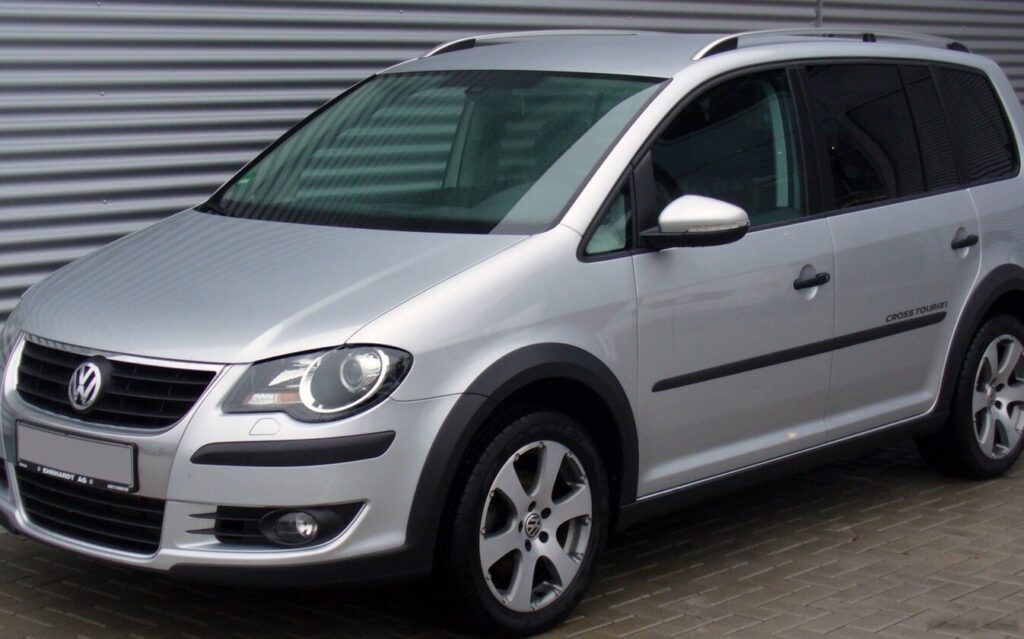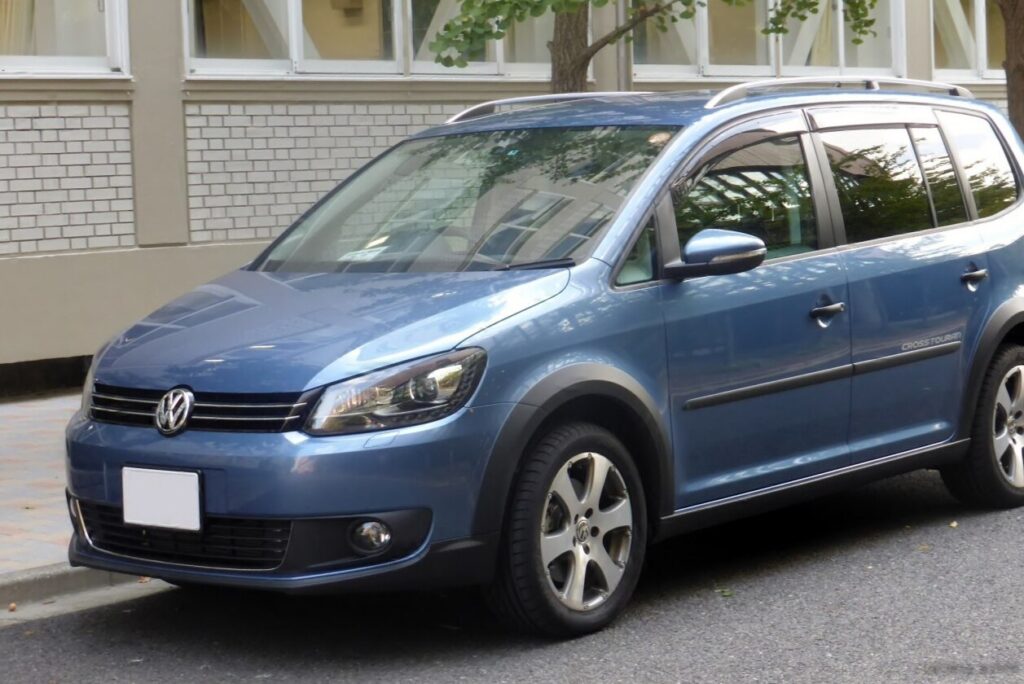
The Volkswagen Cross Touran I (facelift, 2010) 1.4 TSI 140 horsepower, 7-seat configuration represents a specific iteration within the broader Touran range, a compact minivan designed to appeal to families seeking versatility and practicality. Introduced as part of the facelift for the first-generation Cross Touran, produced from 2010 to 2012, this variant aimed to bridge the gap between standard Touran models and the more rugged, off-road inspired aesthetic of the Cross Touran line. It occupied a mid-range position in the lineup, offering a balance of performance, fuel efficiency, and seating capacity. The Cross Touran, in general, was primarily marketed in Europe, where compact MPVs were – and continue to be – a popular choice for family transportation.
Technical Specifications
| Brand | Volkswagen |
| Model | Touran |
| Generation | Cross Touran I (facelift 2010) |
| Type (Engine) | 1.4 TSI (140 Hp) 7 Seat |
| Start of production | 2010 |
| End of production | 2012 |
| Powertrain Architecture | Internal Combustion engine |
| Body type | Minivan |
| Seats | 7 |
| Doors | 5 |
| Fuel consumption (urban) | 9.1 l/100 km (25.8 US mpg, 31 UK mpg, 11 km/l) |
| Fuel consumption (extra urban) | 6.1 l/100 km (38.6 US mpg, 46.3 UK mpg, 16.4 km/l) |
| Fuel consumption (combined) | 7.2 l/100 km (32.7 US mpg, 39.2 UK mpg, 13.9 km/l) |
| CO2 emissions | 168 g/km |
| Fuel Type | Petrol (Gasoline) |
| Acceleration 0 – 100 km/h | 9.8 sec |
| Acceleration 0 – 62 mph | 9.8 sec |
| Acceleration 0 – 60 mph | 9.3 sec |
| Maximum speed | 194 km/h (120.55 mph) |
| Emission standard | Euro 5 |
| Power | 140 Hp @ 5600 rpm |
| Power per litre | 100.7 Hp/l |
| Torque | 220 Nm @ 1500 rpm (162.26 lb.-ft. @ 1500 rpm) |
| Engine layout | Front, Transverse |
| Engine Model/Code | CAVC, CTHC |
| Engine displacement | 1390 cm3 (84.82 cu. in.) |
| Number of cylinders | 4 |
| Engine configuration | Inline |
| Number of valves per cylinder | 4 |
| Fuel injection system | Direct injection |
| Engine aspiration | Turbocharging and Supercharger, Intercooler |
| Engine oil capacity | 3.6 l (3.8 US qt, 3.17 UK qt) |
| Trunk (boot) space – minimum | 121 l (4.27 cu. ft.) |
| Trunk (boot) space – maximum | 1913 l (67.56 cu. ft.) |
| Fuel tank capacity | 60 l (15.85 US gal, 13.2 UK gal) |
| Length | 4406 mm (173.46 in.) |
| Width | 1799 mm (70.83 in.) |
| Width including mirrors | 2081 mm (81.93 in.) |
| Height | 1685 mm (66.34 in.) |
| Wheelbase | 2677 mm (105.39 in.) |
| Front track | 1550 mm (61.02 in.) |
| Rear (Back) track | 1531 mm (60.28 in.) |
| Ride height (ground clearance) | 152 mm (5.98 in.) |
| Minimum turning circle | 11.2 m (36.75 ft.) |
| Front brakes | Ventilated discs |
| Assisting systems | ABS (Anti-lock braking system) |
| Steering type | Steering rack and pinion |
| Tires size | 215/50 R17; 235/45 R17 |
| Wheel rims size | 6.5J x 17; 8J x 17 |
| Number of gears | 6 |
| Type of gearbox | Manual transmission |
Powertrain & Engine Architecture
The heart of the Cross Touran 1.4 TSI is the EA111 engine family, specifically the 1.4-liter turbocharged and supercharged four-cylinder gasoline engine. Engine codes CAVC and CTHC were commonly used for this configuration. This engine is notable for its twin-charging system – a supercharger provides boost at low engine speeds for immediate response, while a turbocharger takes over at higher RPMs for sustained power. This combination aimed to mitigate turbo lag and deliver a broader, more usable powerband. Direct fuel injection (FSI) further enhances efficiency and performance. The engine produces 140 horsepower at 5600 rpm and 220 Nm (162 lb-ft) of torque at 1500 rpm. The engine is transversely mounted at the front of the vehicle. The 6-speed manual transmission was standard, providing a good balance between fuel economy and driver engagement.
Driving Characteristics
The 1.4 TSI engine, paired with the manual transmission, offered a respectable driving experience for a seven-seat minivan. Acceleration from 0-60 mph took approximately 9.3 seconds, and top speed was around 120 mph. While not particularly sporty, the engine provided sufficient power for everyday driving and highway cruising, even when fully loaded with passengers and luggage. The twin-charging system ensured a relatively responsive feel, particularly at lower speeds. The manual gearbox allowed for greater driver control, but the gear ratios were tuned more for fuel efficiency than outright performance. Compared to the more powerful 1.8 TSI or diesel variants, this 1.4 TSI model felt less effortless when overtaking or climbing hills. However, it offered a more economical option for those prioritizing fuel costs.
Equipment & Trim Levels
The Cross Touran 1.4 TSI 7-seat typically came equipped with a reasonable level of standard features. These included air conditioning, power windows, power mirrors, a CD/MP3 stereo system, and ABS brakes. The “Cross” designation added some visual differentiation, such as silver-colored exterior trim, roof rails, and unique alloy wheel designs. Interior upholstery was typically cloth, with options for upgraded materials. Common optional extras included parking sensors, a navigation system, climate control, and a panoramic sunroof. The specific trim level could vary depending on the market, but generally, this 1.4 TSI variant represented a mid-range offering, positioned above the base models but below the higher-specification versions with larger engines and more luxurious appointments.
Chassis & Braking
The Cross Touran utilized a MacPherson strut front suspension and a multi-link rear suspension, providing a comfortable ride and decent handling characteristics. The suspension was tuned to prioritize comfort over sporty handling. Front brakes were ventilated discs, while rear brakes were typically solid discs, adequate for the vehicle’s weight and intended use. ABS (Anti-lock Braking System) was standard. The Cross Touran featured a slightly raised ride height compared to the standard Touran, contributing to its more rugged appearance and providing a bit more ground clearance for navigating uneven surfaces. Stabilizer bars were fitted to both the front and rear axles to reduce body roll during cornering.
Market Reception & Comparison
The Cross Touran 1.4 TSI 7-seat was generally well-received by automotive critics as a practical and versatile family vehicle. The twin-charged engine was praised for its responsiveness and fuel efficiency. However, some reviewers noted that the engine could feel strained when fully loaded or driving uphill. Compared to the 1.8 TSI variant, the 1.4 TSI offered lower running costs but less outright performance. The diesel-powered Tourans (particularly the 1.9 TDI and 2.0 TDI) were often favored by those prioritizing fuel economy and long-distance cruising. The 1.4 TSI found its niche among buyers who wanted a balance of performance, efficiency, and seating capacity.
Legacy
The EA111 1.4 TSI engine, while innovative, has been known to exhibit some long-term reliability issues, particularly related to carbon buildup on the intake valves. Regular maintenance, including the use of high-quality fuel and oil, is crucial to mitigate these problems. The Cross Touran, as a whole, has proven to be a relatively durable vehicle, with many examples still on the road today. In the used car market, the 1.4 TSI variant represents an affordable entry point into the Cross Touran range, appealing to budget-conscious buyers seeking a practical and spacious family vehicle. However, potential buyers should be aware of the engine’s potential maintenance requirements and thoroughly inspect any vehicle before purchase.