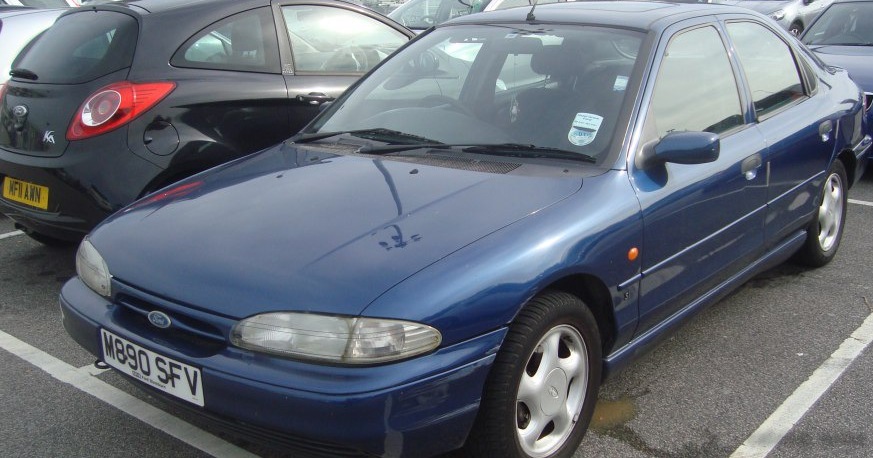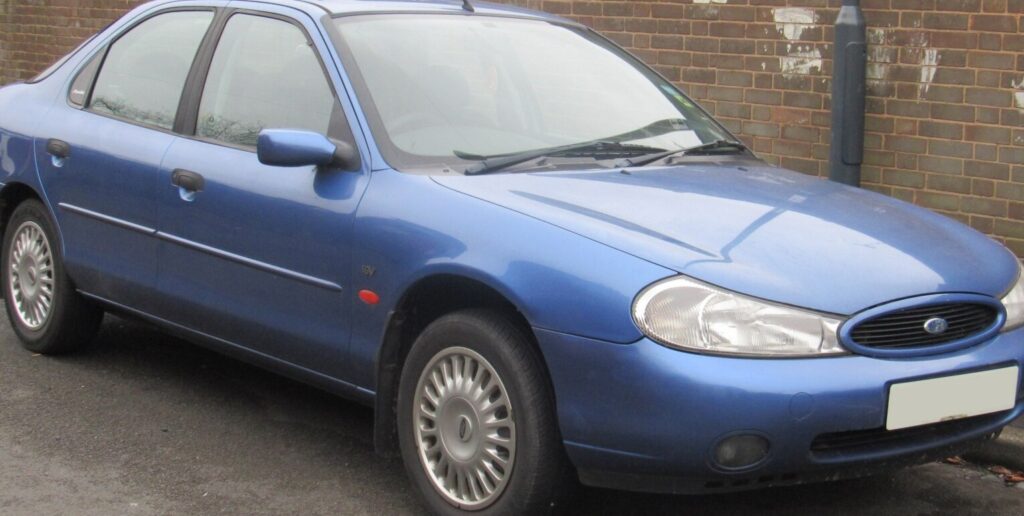
The Ford Mondeo I Wagon 2.5i 24V, produced between 1994 and 1996, represented a significant step forward for Ford’s presence in the European and, to a lesser extent, North American mid-size family car market. Part of the Mondeo Mk I series (internally designated as the B586 project), the wagon body style, or estate as it was commonly known in Europe, offered a practical and stylish alternative to traditional sedans. This 2.5-liter variant occupied the premium position within the initial Mondeo lineup, offering a blend of performance and space aimed at families and drivers seeking a more refined experience. It was a key model in establishing the Mondeo as a competitor to established rivals like the Vauxhall/Opel Vectra, Ford’s own previous Sierra, and the Volkswagen Passat.
Technical Specifications
| Brand | Ford |
| Model | Mondeo |
| Generation | Mondeo I Wagon |
| Type (Engine) | 2.5i 24V (170 Hp) |
| Start of production | 1994 |
| End of production | 1996 |
| Powertrain Architecture | Internal Combustion engine |
| Body type | Station wagon (estate) |
| Seats | 5 |
| Doors | 5 |
| Fuel consumption (combined) | 9.7 l/100 km |
| Fuel consumption (US mpg) | 24.2 US mpg |
| Fuel consumption (UK mpg) | 29.1 UK mpg |
| Fuel consumption (km/l) | 10.3 km/l |
| Fuel Type | Petrol (Gasoline) |
| Acceleration 0 – 100 km/h | 8.7 sec |
| Acceleration 0 – 62 mph | 8.7 sec |
| Acceleration 0 – 60 mph | 8.3 sec |
| Maximum speed | 215 km/h (133.59 mph) |
| Weight-to-power ratio | 8.1 kg/Hp |
| Weight-to-torque ratio | 6.3 kg/Nm |
| Power | 170 Hp @ 6250 rpm |
| Power per litre | 66.8 Hp/l |
| Torque | 220 Nm @ 4250 rpm (162.26 lb.-ft. @ 4250 rpm) |
| Engine layout | Front, Transverse |
| Engine Model/Code | SEA |
| Engine displacement | 2544 cm3 (155.24 cu. in.) |
| Number of cylinders | 6 |
| Engine configuration | V-engine |
| Cylinder Bore | 82.4 mm (3.24 in.) |
| Piston Stroke | 79.5 mm (3.13 in.) |
| Compression ratio | 9.7:1 |
| Number of valves per cylinder | 4 |
| Fuel injection system | Multi-port manifold injection |
| Engine aspiration | Naturally aspirated engine |
| Valvetrain | DOHC |
| Engine oil capacity | 5.5 l (5.81 US qt | 4.84 UK qt) |
| Coolant capacity | 9.5 l (10.04 US qt | 8.36 UK qt) |
| Kerb Weight | 1380 kg (3042.38 lbs.) |
| Max. weight | 2000 kg (4409.25 lbs.) |
| Max load | 620 kg (1366.87 lbs.) |
| Trunk (boot) space – minimum | 650 l (22.95 cu. ft.) |
| Trunk (boot) space – maximum | 900 l (31.78 cu. ft.) |
| Fuel tank capacity | 61 l (16.11 US gal | 13.42 UK gal) |
| Length | 4631 mm (182.32 in.) |
| Width | 1749 mm (68.86 in.) |
| Height | 1442 mm (56.77 in.) |
| Wheelbase | 2704 mm (106.46 in.) |
| Front track | 1503 mm (59.17 in.) |
| Rear track | 1504 mm (59.21 in.) |
| Drivetrain Architecture | Front wheel drive |
| Drive wheel | Front wheel drive |
| Number of gears | 5 gears, manual transmission |
| Front suspension | Wishbone |
| Rear suspension | Coil spring |
| Front brakes | Ventilated discs |
| Rear brakes | Ventilated discs |
| Assisting systems | ABS (Anti-lock braking system) |
| Steering type | Steering rack and pinion |
| Power steering | Hydraulic Steering |
| Tires size | 205/55 R15 |
INTRODUCTION
The Ford Mondeo I Wagon 2.5i 24V, launched in 1994, was a pivotal model for Ford in Europe. It represented a significant departure from the aging Sierra, offering a more modern, sophisticated, and dynamically capable package. The Mondeo was designed to be a truly global car, with engineering input from Ford’s teams in Europe and North America. The wagon variant, in particular, catered to the European preference for practicality and load-carrying capacity. The 2.5i 24V engine was the top-of-the-line offering in the initial Mondeo range, positioned above the 1.6L and 1.8L variants, and offering a substantial performance upgrade over the diesel options. It was a car designed to appeal to buyers who wanted a family vehicle that was also enjoyable to drive.
Powertrain & Engine Architecture
The heart of the Mondeo 2.5i 24V is the SEA engine, a 2.5-liter, naturally aspirated V6. This engine, while not a completely new design, was heavily revised from earlier Ford V6s. It featured a 90-degree V-angle, contributing to a smoother running character. The ‘24V’ designation refers to the four valves per cylinder, operated by a dual overhead camshaft (DOHC) valvetrain. Fuel delivery is managed by a multi-port fuel injection system, providing precise control over the air-fuel mixture. The engine produces 170 horsepower at 6250 rpm and 220 Nm (162 lb-ft) of torque at 4250 rpm. The engine’s transverse mounting and front-wheel-drive configuration were relatively standard for the time, but the V6 layout required careful packaging within the engine bay. The standard transmission was a five-speed manual, although a four-speed automatic was also available, though less common.
Driving Characteristics
The Mondeo 2.5i 24V offered a noticeably more spirited driving experience than its lower-powered siblings. Acceleration to 60 mph took around 8.3 seconds, and it could reach a top speed of 133.59 mph. The V6 engine provided a broad powerband, making it responsive in most driving situations. While the five-speed manual transmission allowed for precise control, the automatic option, while offering convenience, did slightly diminish performance and fuel economy. The Mondeo’s independent front suspension (wishbone) and coil-sprung rear suspension provided a comfortable ride, while also maintaining good handling characteristics. Compared to the 1.8L models, the 2.5i felt significantly more powerful, especially during overtaking maneuvers. However, the added weight of the V6 engine did result in slightly more noticeable body roll in corners.
Equipment & Trim Levels
The 2.5i 24V typically came with a higher level of standard equipment than the base Mondeo models. This included central locking, electric front windows, power steering, and an anti-lock braking system (ABS). Interior trim generally featured upgraded cloth upholstery, and some models included options such as air conditioning, a sunroof, and a premium sound system. The dashboard layout was functional and well-designed, with clear instrumentation. The wagon body style, of course, offered a generous amount of cargo space, making it ideal for families or those who frequently needed to transport large items. The rear seats could be folded down to further increase cargo capacity.
Chassis & Braking
The Mondeo I Wagon featured a robust chassis designed to handle the increased power of the 2.5i engine. The front suspension utilized independent wishbones, providing good wheel control and ride comfort. The rear suspension employed coil springs, offering a balance between comfort and handling. Braking duties were handled by ventilated discs on all four wheels, providing ample stopping power. The inclusion of ABS was a significant safety feature, helping to prevent wheel lockup during hard braking. Stabilizer bars were fitted to both the front and rear axles to reduce body roll during cornering.
Market Reception & Comparison
The Mondeo 2.5i 24V was generally well-received by automotive critics. It was praised for its refined engine, comfortable ride, and spacious interior. However, some reviewers noted that the price was relatively high compared to its competitors. Compared to the 1.8L models, the 2.5i offered a significant performance advantage, but at the cost of slightly higher fuel consumption. The 2.5i also represented a substantial price jump over the more economical diesel options. Against rivals like the Vauxhall/Opel Vectra and Volkswagen Passat, the Mondeo offered a compelling combination of features, performance, and value.
Legacy
The Ford Mondeo I Wagon 2.5i 24V remains a fondly remembered car among enthusiasts. The SEA V6 engine, while not without its quirks, proved to be relatively reliable when properly maintained. Today, finding a well-preserved example can be challenging, as many have succumbed to age or neglect. However, those that remain are often sought after by collectors and enthusiasts who appreciate their blend of performance, practicality, and classic Ford styling. The Mondeo I series, as a whole, established Ford as a serious contender in the mid-size family car segment, and the 2.5i 24V played a key role in that success.