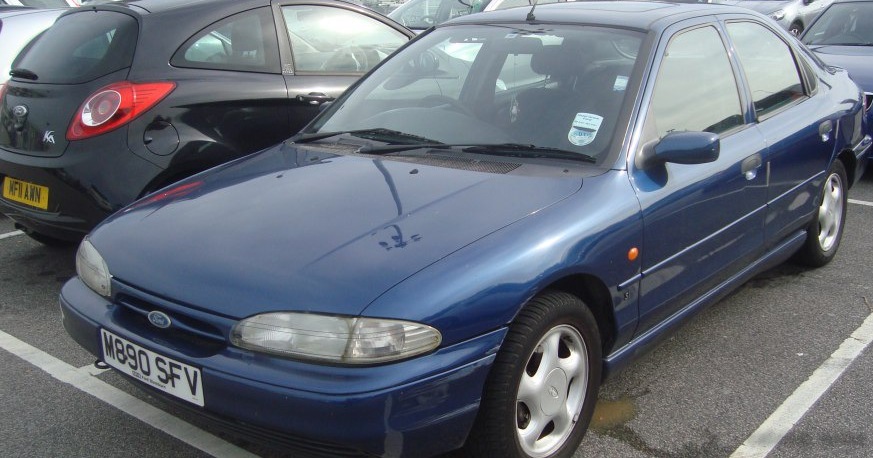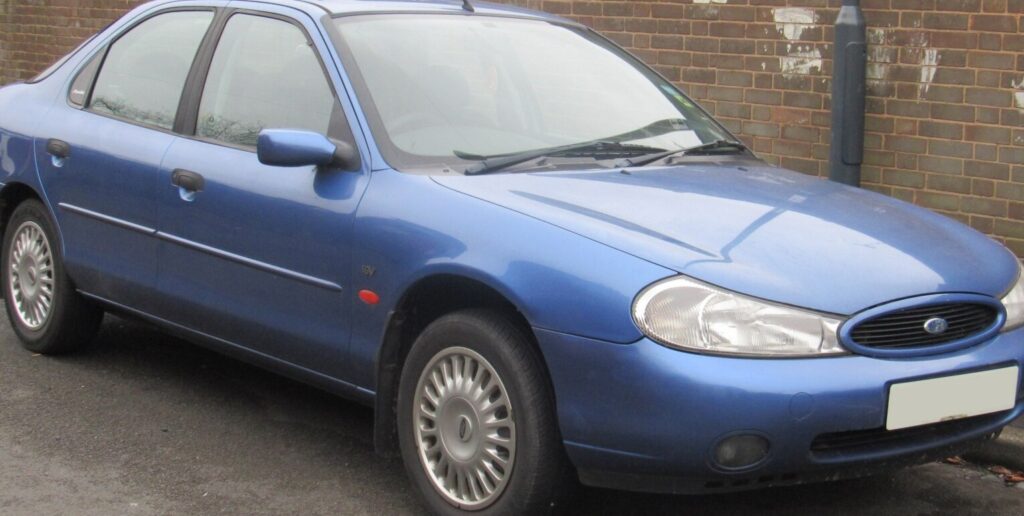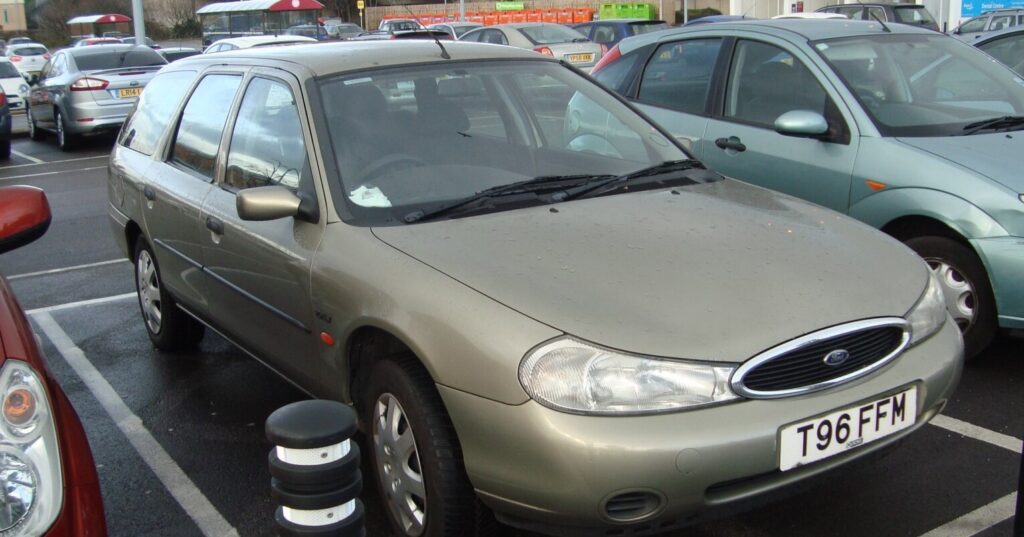
The Ford Mondeo I Wagon 1.6i 16V, produced from 1999 to 2001, represented an entry-level offering within the facelifted first generation of Ford’s globally significant Mondeo range. Positioned as a practical and affordable family vehicle, this variant catered to buyers prioritizing fuel efficiency and everyday usability over outright performance. It built upon the foundation of the Mondeo Mk I, launched in 1993, which aimed to replace the aging Sierra and Escort ranges with a single, modern family car. The 1996 facelift brought subtle styling revisions and improvements to the interior, solidifying the Mondeo’s position as a strong competitor in the mid-size segment, particularly in Europe where it was a sales success.
Technical Specifications
| Brand | Ford |
| Model | Mondeo |
| Generation | Mondeo I Wagon (facelift 1996) |
| Type (Engine) | 1.6i 16V (95 Hp) |
| Start of production | 1999 year |
| End of production | 2001 year |
| Powertrain Architecture | Internal Combustion engine |
| Body type | Station wagon (estate) |
| Seats | 5 |
| Doors | 5 |
| Fuel consumption (urban) | 10.7 l/100 km (22 US mpg, 26.4 UK mpg, 9.3 km/l) |
| Fuel consumption (extra urban) | 6.1 l/100 km (38.6 US mpg, 46.3 UK mpg, 16.4 km/l) |
| Fuel Type | Petrol (Gasoline) |
| Acceleration 0 – 100 km/h | 13.2 sec |
| Acceleration 0 – 62 mph | 13.2 sec |
| Acceleration 0 – 60 mph | 12.5 sec |
| Maximum speed | 180 km/h (111.85 mph) |
| Weight-to-power ratio | 13.6 kg/Hp, 73.4 Hp/tonne |
| Weight-to-torque ratio | 9.1 kg/Nm, 109.7 Nm/tonne |
| Power | 95 Hp @ 5250 rpm |
| Power per litre | 59.5 Hp/l |
| Torque | 142 Nm @ 3600 rpm (104.73 lb.-ft. @ 3600 rpm) |
| Engine layout | Front, Transverse |
| Engine Model/Code | Zetec / L1L, L1N, L1Q |
| Engine displacement | 1597 cm3 (97.45 cu. in.) |
| Number of cylinders | 4 |
| Engine configuration | Inline |
| Cylinder Bore | 76 mm (2.99 in.) |
| Piston Stroke | 88 mm (3.46 in.) |
| Compression ratio | 10.3:1 |
| Number of valves per cylinder | 4 |
| Fuel injection system | Multi-port manifold injection |
| Engine aspiration | Naturally aspirated engine |
| Valvetrain | DOHC |
| Engine oil capacity | 4.25 l (4.49 US qt, 3.74 UK qt) |
| Coolant | 6.6 l (6.97 US qt, 5.81 UK qt) |
| Kerb Weight | 1295 kg (2854.99 lbs.) |
| Max. weight | 1850 kg (4078.55 lbs.) |
| Max load | 555 kg (1223.57 lbs.) |
| Trunk (boot) space – minimum | 540 l (19.07 cu. ft.) |
| Trunk (boot) space – maximum | 1610 l (56.86 cu. ft.) |
| Fuel tank capacity | 61 l (16.11 US gal, 13.42 UK gal) |
| Length | 4671 mm (183.9 in.) |
| Width | 1751 mm (68.94 in.) |
| Height | 1480 mm (58.27 in.) |
| Wheelbase | 2704 mm (106.46 in.) |
| Front track | 1503 mm (59.17 in.) |
| Rear (Back) track | 1504 mm (59.21 in.) |
| Drivetrain Architecture | The Internal combustion engine (ICE) drives the front wheels of the vehicle. |
| Drive wheel | Front wheel drive |
| Number of gears and type of gearbox | 5 gears, manual transmission |
| Front suspension | Wishbone |
| Rear suspension | Coil spring |
| Front brakes | Ventilated discs |
| Rear brakes | Disc |
| Assisting systems | ABS (Anti-lock braking system) |
| Steering type | Steering rack and pinion |
| Power steering | Hydraulic Steering |
| Tires size | 185/65 R14 |
Powertrain & Engine Architecture
The Mondeo 1.6i 16V wagon utilized Ford’s Zetec engine family, specifically the Zetec-S variant. Engine codes L1L, L1N, and L1Q were commonly found in this model. This 1.6-liter inline-four engine featured a dual overhead camshaft (DOHC) valvetrain with four valves per cylinder, contributing to its relatively high output for its displacement. Fuel delivery was managed by a multi-port fuel injection system, providing precise fuel metering for improved efficiency and reduced emissions. The engine’s 95 horsepower at 5250 rpm and 142 Nm (104.73 lb-ft) of torque at 3600 rpm were respectable for the time, but positioned it as the entry point to the Mondeo range. The engine’s design prioritized smoothness and refinement over outright performance. The five-speed manual transmission was the standard offering, providing adequate gear ratios for everyday driving.
Driving Characteristics
The 1.6i 16V Mondeo Wagon offered a comfortable and predictable driving experience. Acceleration was adequate for most situations, with a 0-60 mph time of around 12.5 seconds. However, it was noticeably slower than the higher-powered variants, such as the 2.0-liter or V6 models. The engine required frequent downshifts when overtaking or climbing hills. The five-speed manual transmission was well-matched to the engine’s characteristics, offering a reasonable spread of gears. The suspension provided a good balance between comfort and handling, absorbing bumps effectively while maintaining reasonable body control. Compared to the more powerful Mondeos, the 1.6i felt less eager to rev and lacked the same level of responsiveness. However, its lighter weight contributed to slightly better fuel economy.
Equipment & Trim Levels
The 1.6i 16V Mondeo Wagon typically came equipped with a reasonable level of standard features. These included central locking, power steering, electric front windows, and an adjustable steering column. Interior upholstery was typically cloth, with a functional and durable design. Optional extras included air conditioning, alloy wheels, a sunroof, and an upgraded audio system. Trim levels varied depending on the market, but generally, the 1.6i represented the base trim, with more luxurious features reserved for the higher-spec models. The dashboard layout was straightforward and user-friendly, prioritizing practicality over stylistic flair.
Chassis & Braking
The Mondeo I Wagon featured a front-wheel-drive layout with independent wishbone suspension at the front and a coil spring rear suspension. This setup provided a comfortable ride and decent handling characteristics. Braking duties were handled by ventilated discs at the front and solid discs at the rear. Anti-lock Braking System (ABS) was standard, enhancing safety by preventing wheel lockup during hard braking. The steering was rack and pinion, providing precise and responsive control. The chassis was designed to provide a stable and predictable platform, prioritizing safety and comfort over sporty handling.
Market Reception & Comparison
The 1.6i 16V Mondeo Wagon was generally well-received by critics as a practical and affordable family car. It was praised for its spacious interior, comfortable ride, and reasonable fuel economy. However, it was often criticized for its lack of outright performance compared to the higher-powered variants. Compared to rivals such as the Vauxhall/Opel Vectra and Peugeot 406, the Mondeo offered a more modern and refined driving experience. The 1.6i’s fuel economy was competitive, but the 2.0-liter models offered a better balance of performance and efficiency. Reliability was generally good, although some owners reported minor issues with the Zetec engine’s cooling system.
Legacy
The Ford Mondeo I Wagon 1.6i 16V remains a popular choice in the used car market, particularly for buyers seeking an affordable and reliable family vehicle. The Zetec engine is generally considered to be durable and relatively easy to maintain. However, potential buyers should be aware of the possibility of age-related issues, such as corrosion and wear and tear on suspension components. The Mondeo’s spacious interior and practical wagon body style continue to appeal to families. The 1.6i variant, while not the most powerful, offers a good balance of affordability, fuel efficiency, and usability, making it a sensible choice for those prioritizing practicality over performance.