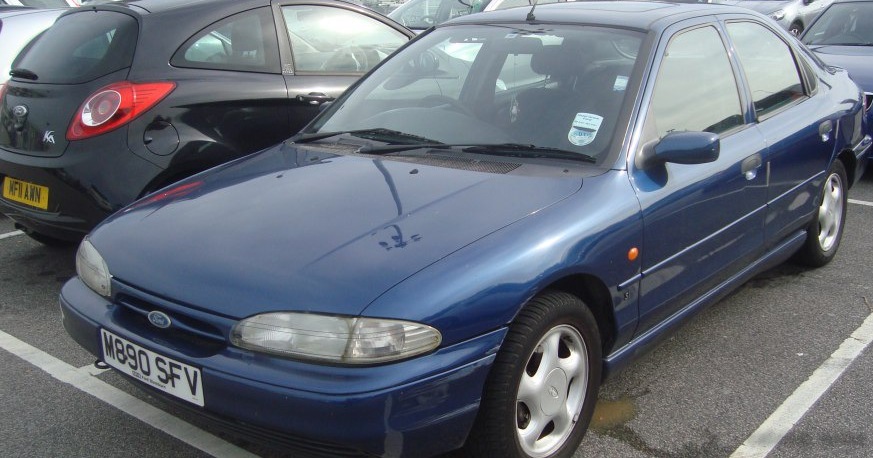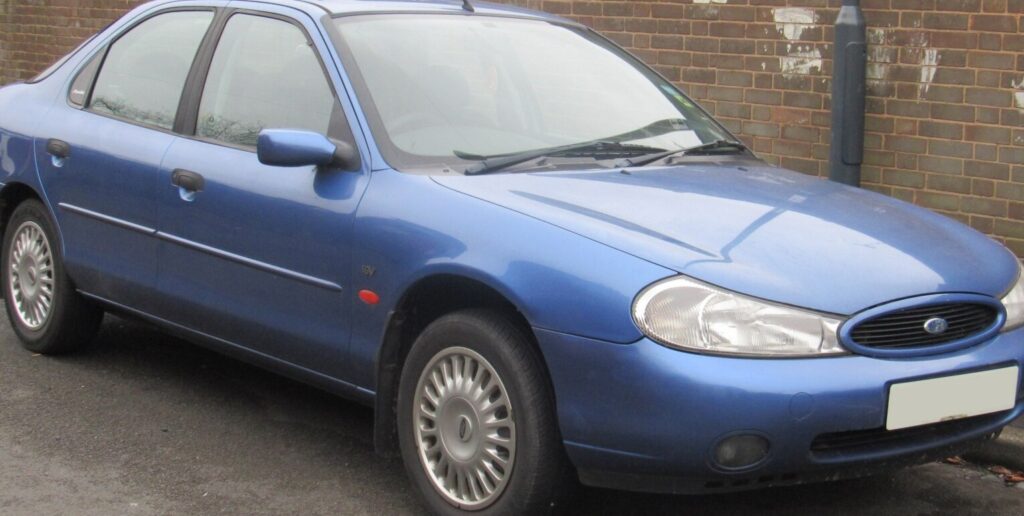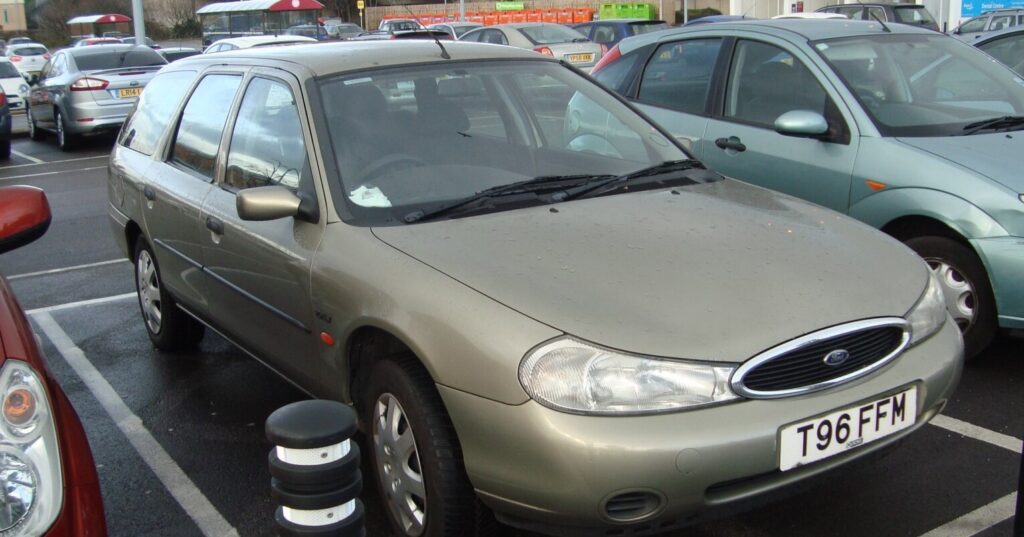
The Ford Mondeo I Wagon 1.8 TD, produced from 1995 to 2001, represented a significant offering in the European market as a practical and fuel-efficient family vehicle. This variant, powered by the Endura-RFN 1.8-liter turbocharged diesel engine producing 90 horsepower, occupied a key position in the Mondeo lineup, appealing to buyers prioritizing economy and usability over outright performance. It was part of the facelifted first generation (Mk I) Mondeo range, designated internally as the 1HX0/A3 platform, which brought styling updates and refinements to the original model launched in 1993. The wagon (estate) body style further enhanced its practicality, making it a popular choice for families and those requiring substantial cargo space.
Technical Specifications
| Brand | Ford |
| Model | Mondeo |
| Generation | Mondeo I Wagon (facelift 1996) |
| Type (Engine) | 1.8 TD (90 Hp) |
| Start of production | 1995 |
| End of production | 2001 |
| Powertrain Architecture | Internal Combustion engine |
| Body type | Station wagon (estate) |
| Seats | 5 |
| Doors | 5 |
| Fuel consumption (urban) | 7.5 l/100 km (31.4 US mpg, 37.7 UK mpg, 13.3 km/l) |
| Fuel consumption (extra urban) | 5.5 l/100 km (42.8 US mpg, 51.4 UK mpg, 18.2 km/l) |
| Fuel consumption (combined) | 6.7 l/100 km (35.1 US mpg, 42.2 UK mpg, 14.9 km/l) |
| Fuel Type | Diesel |
| Acceleration 0 – 100 km/h | 13.6 sec |
| Acceleration 0 – 62 mph | 13.6 sec |
| Acceleration 0 – 60 mph | 12.9 sec |
| Maximum speed | 176 km/h (109.36 mph) |
| Weight-to-power ratio | 15.7 kg/Hp, 63.6 Hp/tonne |
| Weight-to-torque ratio | 7.9 kg/Nm, 127.1 Nm/tonne |
| Power | 90 Hp @ 4500 rpm |
| Power per litre | 51.3 Hp/l |
| Torque | 180 Nm @ 2000 rpm (132.76 lb.-ft. @ 2000 rpm) |
| Engine layout | Front, Transverse |
| Engine Model/Code | Endura / RFN |
| Engine displacement | 1753 cm3 (106.97 cu. in.) |
| Number of cylinders | 4 |
| Engine configuration | Inline |
| Cylinder Bore | 82.5 mm (3.25 in.) |
| Piston Stroke | 82 mm (3.23 in.) |
| Compression ratio | 21.5:1 |
| Number of valves per cylinder | 2 |
| Fuel injection system | Precombustion chamber injection |
| Engine aspiration | Turbocharger |
| Valvetrain | OHC |
| Engine oil capacity | 5.1 l (5.39 US qt | 4.49 UK qt) |
| Coolant | 9.3 l (9.83 US qt | 8.18 UK qt) |
| Kerb Weight | 1416 kg (3121.75 lbs.) |
| Max. weight | 2010 kg (4431.29 lbs.) |
| Max load | 594 kg (1309.55 lbs.) |
| Trunk (boot) space – minimum | 540 l (19.07 cu. ft.) |
| Trunk (boot) space – maximum | 1610 l (56.86 cu. ft.) |
| Fuel tank capacity | 61 l (16.11 US gal | 13.42 UK gal) |
| Length | 4671 mm (183.9 in.) |
| Width | 1751 mm (68.94 in.) |
| Height | 1510 mm (59.45 in.) |
| Wheelbase | 2704 mm (106.46 in.) |
| Front track | 1503 mm (59.17 in.) |
| Rear (Back) track | 1504 mm (59.21 in.) |
| Drivetrain Architecture | Front wheel drive |
| Number of gears and type of gearbox | 5 gears, manual transmission |
| Front suspension | Wishbone |
| Rear suspension | Coil spring |
| Front brakes | Ventilated discs |
| Rear brakes | Disc |
| Assisting systems | ABS (Anti-lock braking system) |
| Steering type | Steering rack and pinion |
| Power steering | Hydraulic Steering |
| Tires size | 185/65 R14 |
Powertrain & Engine Architecture
The heart of the Mondeo 1.8 TD Wagon was the Ford Endura-RFN diesel engine. This 1.8-liter, inline-four cylinder engine utilized precombustion chamber injection, a common technology for diesel engines of the era. This system involved injecting fuel into a precombustion chamber connected to the main cylinder, promoting more complete combustion and reducing noise. The engine was turbocharged, which significantly boosted power output to 90 hp at 4500 rpm and 180 Nm (132.76 lb-ft) of torque at 2000 rpm. The RFN engine was known for its relatively robust construction, though it wasn’t without its quirks, including potential issues with the turbocharger and fuel injectors over time. The engine’s overhead camshaft (OHC) configuration simplified the valvetrain. The 5-speed manual transmission was the standard offering, providing a balance between fuel efficiency and drivability.
Driving Characteristics
The 1.8 TD variant of the Mondeo Wagon offered a distinctly different driving experience compared to its gasoline-powered siblings. Acceleration was modest, taking around 13.6 seconds to reach 62 mph, and a top speed of 176 km/h (109.36 mph). However, the engine’s strong low-end torque made it surprisingly capable for everyday driving and overtaking maneuvers. The manual transmission’s gear ratios were geared towards maximizing fuel economy, meaning the engine often needed to be revved to access its full potential. Compared to the higher-output 2.0-liter gasoline engines, the 1.8 TD lacked the responsiveness and outright speed, but it excelled in fuel efficiency, achieving around 35.1 US mpg on a combined cycle. The wagon’s suspension provided a comfortable ride, though it wasn’t particularly sporty.
Equipment & Trim Levels
The 1.8 TD Wagon typically came with a reasonable level of standard equipment, reflecting its position as a mainstream family car. This included central locking, power steering, and an adjustable steering column. Interior upholstery was typically cloth, and the dashboard featured a functional, if somewhat utilitarian, design. Optional extras included air conditioning, electric windows, and an upgraded audio system. Trim levels varied depending on the market, but generally, the 1.8 TD was positioned as a mid-range offering, bridging the gap between the basic models and the more luxurious trims.
Chassis & Braking
The Mondeo I Wagon featured a front-wheel-drive layout with independent wishbone suspension at the front and a coil spring rear suspension. This setup provided a good balance of ride comfort and handling. Braking was handled by ventilated discs at the front and solid discs at the rear. Anti-lock Braking System (ABS) was standard, enhancing safety. The steering was rack and pinion, providing precise control. The tires were typically 185/65 R14, offering a good compromise between grip and rolling resistance.
Market Reception & Comparison
The Ford Mondeo I Wagon 1.8 TD was generally well-received by critics and buyers alike. It was praised for its practicality, fuel efficiency, and comfortable ride. However, some reviewers noted its lack of outright performance compared to gasoline-powered rivals. Compared to the 2.0-liter gasoline versions, the 1.8 TD offered significantly better fuel economy but lacked the same level of refinement and responsiveness. Against other diesel estate cars of the time, such as the Vauxhall/Opel Vectra and Volkswagen Passat, the Mondeo offered a competitive package in terms of price, space, and features.
Legacy
The Ford Mondeo I Wagon 1.8 TD has proven to be a relatively durable and reliable vehicle, particularly the engine itself. While issues with the turbocharger and fuel injectors can occur, these are generally manageable with proper maintenance. Today, these cars are increasingly sought after by enthusiasts and collectors, particularly well-maintained examples. The 1.8 TD powertrain, while not particularly powerful, is known for its longevity and fuel efficiency, making it a practical and affordable option for classic car enthusiasts. The Mondeo I Wagon, in general, is remembered as a pivotal model for Ford, establishing the brand as a serious contender in the European family car market.