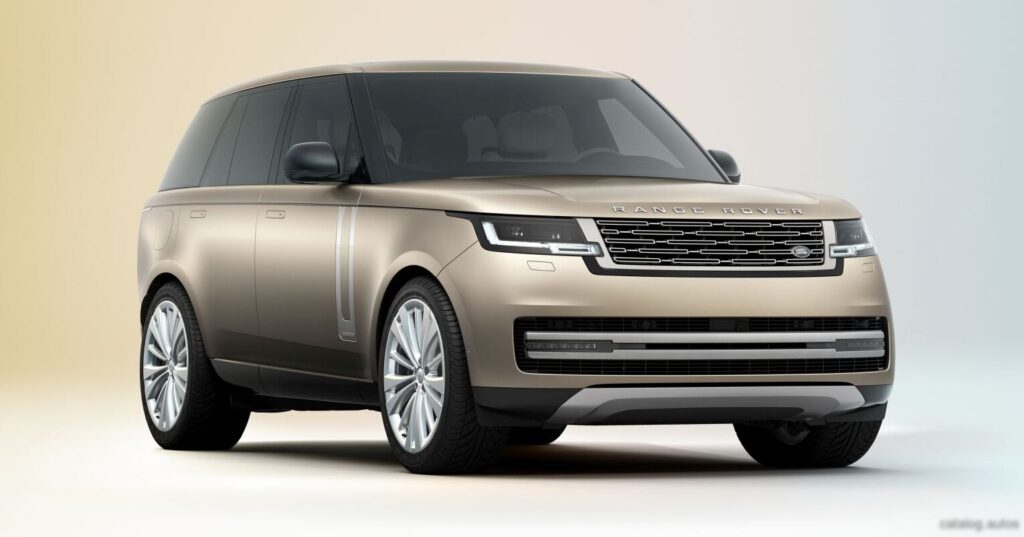
The Land Rover Range Rover V SWB 3.0 D250, introduced in October 2021, represents a key variant within the fifth-generation Range Rover (L460) lineup. Positioned as a mid-range offering in the short wheelbase (SWB) body style, this model combines a potent diesel engine with mild hybrid technology, offering a balance of performance, efficiency, and luxury. The SWB configuration, shorter by 7.3 inches compared to the standard wheelbase model, prioritizes agility and is particularly popular in European and Asian markets where navigating tighter urban environments is common. This variant caters to buyers seeking the Range Rover experience without the full commitment to the higher-performance or extended-length models.
Technical Specifications
| Brand | Land Rover |
| Model | Range Rover |
| Generation | Range Rover V SWB |
| Type (Engine) | 3.0 D250 (249 Hp) Mild Hybrid AWD Automatic |
| Start of production | October, 2021 |
| Powertrain Architecture | MHEV (Mild Hybrid Electric Vehicle) |
| Body type | SUV |
| Seats | 5 |
| Doors | 5 |
| Combined fuel consumption (WLTP) | 7.6-8.2 l/100 km (30.9 – 28.7 US mpg, 37.2 – 34.4 UK mpg, 13.2 – 12.2 km/l) |
| CO2 emissions (WLTP) | 198-215 g/km |
| Fuel Type | Diesel |
| Acceleration 0 – 100 km/h | 8.3 sec |
| Acceleration 0 – 62 mph | 8.3 sec |
| Acceleration 0 – 60 mph | 7.8 sec |
| Maximum speed | 206 km/h (128 mph) |
| Emission standard | Euro 6d Final |
| Weight-to-power ratio | 9.8 kg/Hp, 102.5 Hp/tonne |
| Weight-to-torque ratio | 4.1 kg/Nm, 246.9 Nm/tonne |
| Power | 249 Hp |
| Power per litre | 83.1 Hp/l |
| Torque | 600 Nm (442.54 lb.-ft.) |
| Engine layout | Front, Longitudinal |
| Engine displacement | 2997 cm3 (182.89 cu. in.) |
| Number of cylinders | 6 |
| Engine configuration | Inline |
| Cylinder Bore | 83 mm (3.27 in.) |
| Piston Stroke | 92.31 mm (3.63 in.) |
| Compression ratio | 15.5:1 |
| Number of valves per cylinder | 4 |
| Fuel injection system | Diesel Commonrail |
| Engine aspiration | Turbocharger, Intercooler |
| Engine oil capacity | 10.4 l (10.99 US qt | 9.15 UK qt) |
| Kerb Weight | 2430 kg (5357.23 lbs.) |
| Trunk (boot) space – minimum | 725 l (25.6 cu. ft.) |
| Trunk (boot) space – maximum | 1841 l (65.01 cu. ft.) |
| Fuel tank capacity | 80 l (21.13 US gal | 17.6 UK gal) |
| AdBlue tank | 20 l (5.28 US gal | 4.4 UK gal) |
| Permitted trailer load with brakes (12%) | 3500 kg (7716.18 lbs.) |
| Permitted trailer load without brakes | 750 kg (1653.47 lbs.) |
| Length | 5052 mm (198.9 in.) |
| Width with mirrors folded | 2047 mm (80.59 in.) |
| Width including mirrors | 2209 mm (86.97 in.) |
| Height | 1870 mm (73.62 in.) |
| Wheelbase | 2997 mm (117.99 in.) |
| Front track | 1702 mm (67.01 in.) |
| Rear (Back) track | 1704 mm (67.09 in.) |
| Front overhang | 860 mm (33.86 in.) |
| Rear overhang | 1195 mm (47.05 in.) |
| Ride height (ground clearance) | 295 mm (11.61 in.) |
| Drag coefficient (Cd) | 0.31 |
| Minimum turning circle (turning diameter) | 11.37 m (37.3 ft.) |
| Approach angle | 34.7° |
| Departure angle | 29° |
| Ramp-over (brakeover) angle | 27.7° |
| Wading depth | 900 mm (35.43 in.) |
| Drivetrain Architecture | ICE and electric motor permanently drive all four wheels. |
| Drive wheel | All wheel drive (4×4) |
| Number of gears and type of gearbox | 8 gears, automatic transmission |
| Front suspension | Double wishbone |
| Rear suspension | Independent multi-link suspension |
| Front brakes | Ventilated discs, 380 mm |
| Rear brakes | Ventilated discs, 355 mm |
| Steering type | Steering rack and pinion |
| Power steering | Electric Steering |
Powertrain & Engine Architecture
The heart of the Range Rover D250 SWB is the Ingenium 3.0-liter inline-six cylinder diesel engine, designated as a ‘D250’ due to its approximate power output. This engine utilizes a sophisticated diesel commonrail fuel injection system and a single turbocharger with an intercooler to deliver a balance of power and efficiency. The engine’s architecture incorporates a mild hybrid system (MHEV), featuring a 48-volt electrical system and a Belt-integrated Starter Generator (BiSG). The BiSG assists the engine during acceleration, allowing for smoother starts and improved fuel economy. The engine produces 249 horsepower and a substantial 600 Nm (442.54 lb.-ft.) of torque. The engine is longitudinally mounted, driving all four wheels through a refined eight-speed automatic transmission. This transmission is known for its smooth shifts and intelligent gear selection, optimizing performance and fuel efficiency.
Driving Characteristics
The D250 SWB offers a composed and refined driving experience. While not as overtly sporty as higher-powered Range Rover variants, the 249 hp and 600 Nm of torque provide ample power for everyday driving and confident overtaking. The eight-speed automatic transmission contributes to a relaxed cruising experience, with well-chosen gear ratios that keep the engine within its optimal power band. Acceleration from 0-60 mph takes approximately 7.8 seconds. The shorter wheelbase of the SWB model enhances agility compared to the standard wheelbase version, making it feel more nimble in urban environments. The mild hybrid system provides a subtle boost during acceleration, improving responsiveness.
Equipment & Trim Levels
The Range Rover D250 SWB typically comes well-equipped as standard. Features include premium leather upholstery, a touchscreen infotainment system with navigation, Apple CarPlay and Android Auto compatibility, a panoramic sunroof, and a comprehensive suite of safety features. Optional extras often include upgraded audio systems, adaptive cruise control, a head-up display, and various interior trim options. The trim level dictates the level of luxury and technology included, with higher trims offering more bespoke customization options.
Chassis & Braking
The Range Rover V SWB utilizes a robust chassis designed for both on-road comfort and off-road capability. It features a double wishbone front suspension and an independent multi-link rear suspension, providing a smooth and controlled ride. The braking system consists of ventilated discs on all four wheels, with larger discs at the front (380mm) compared to the rear (355mm). The vehicle is equipped with ABS (Anti-lock Braking System) and electronic stability control as standard.
Market Reception & Comparison
The Range Rover D250 SWB has been well-received by critics and consumers alike. It offers a compelling combination of luxury, performance, and efficiency. Compared to the higher-powered petrol variants, the D250 offers significantly better fuel economy. Against other diesel-powered luxury SUVs, the Range Rover stands out for its refined ride quality, spacious interior, and iconic design. The mild hybrid system further enhances its appeal by reducing emissions and improving fuel efficiency.
Legacy
The Ingenium diesel engine family, including the 3.0-liter unit found in the D250, has proven to be relatively reliable. Early reports suggest good long-term durability, although regular maintenance is crucial for any diesel engine. The mild hybrid technology adds a layer of complexity, but Land Rover has addressed potential issues through software updates. On the used car market, the Range Rover D250 SWB holds its value well, reflecting the brand’s prestige and the vehicle’s desirable attributes. Its balance of performance, luxury, and efficiency makes it a popular choice for buyers seeking a versatile and capable luxury SUV.