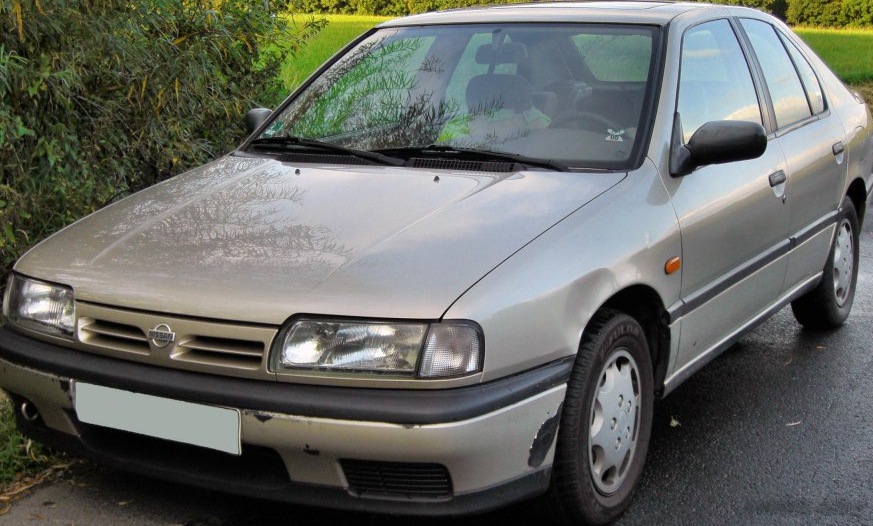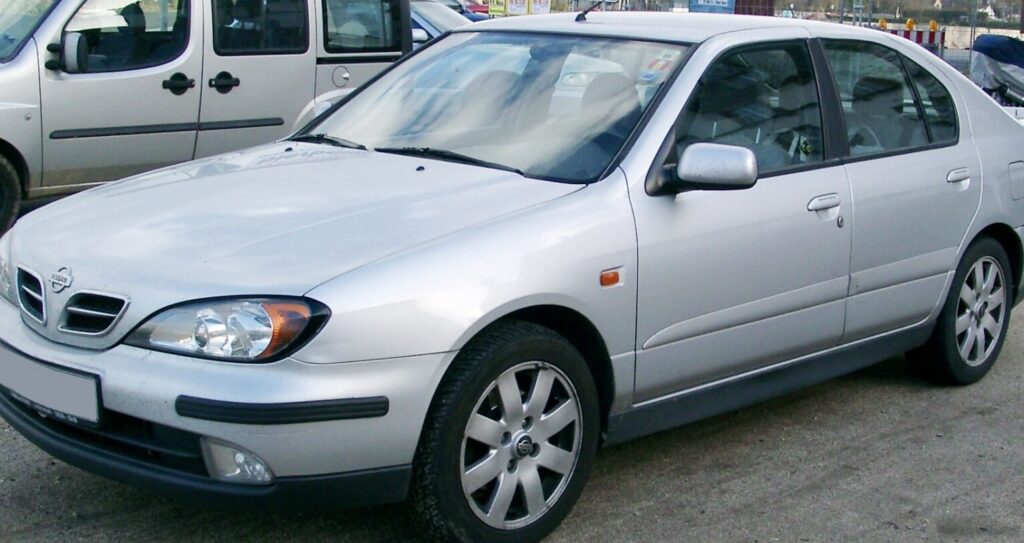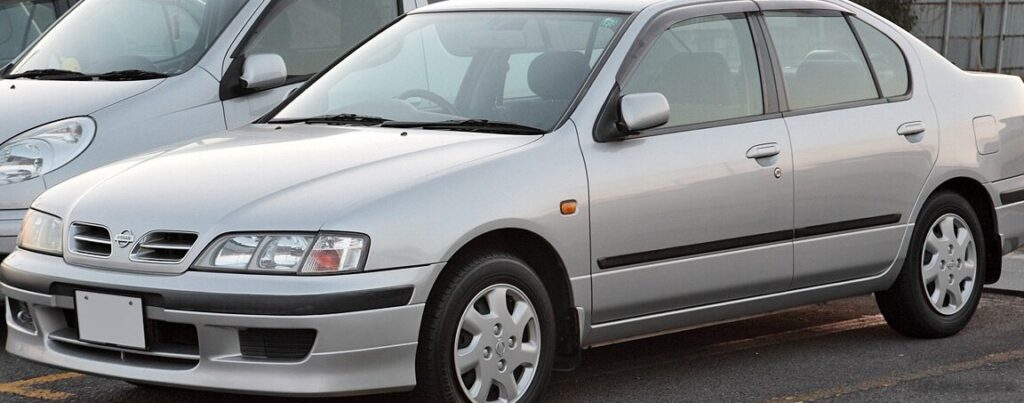
The Nissan Primera (P11) 2.0 16V Automatic, produced between 1996 and 2000, represented a significant offering in Nissan’s European and international lineup. Positioned as a mid-range trim within the P11 Primera generation, it aimed to provide a balance of performance, comfort, and practicality for family car buyers. The P11 series, built on Nissan’s ‘FF-L’ platform, was designed to compete with established rivals like the Ford Mondeo, Vauxhall/Opel Vectra, and Toyota Camry. This particular variant, combining a 2.0-liter engine with a four-speed automatic transmission, was a popular choice for those prioritizing ease of driving over outright sportiness.
Technical Specifications
| Brand | Nissan |
| Model | Primera |
| Generation | Primera (P11) |
| Type (Engine) | 2.0 16V (130 Hp) Automatic |
| Start of production | 1996 |
| End of production | 2000 |
| Powertrain Architecture | Internal Combustion engine |
| Body type | Sedan |
| Seats | 5 |
| Doors | 4 |
| Fuel consumption (urban) | 12.1 l/100 km (19.4 US mpg) |
| Fuel consumption (extra urban) | 6.8 l/100 km (34.6 US mpg) |
| Fuel Type | Petrol (Gasoline) |
| Acceleration 0 – 100 km/h | 11.2 sec |
| Acceleration 0 – 62 mph | 11.2 sec |
| Acceleration 0 – 60 mph | 10.6 sec |
| Maximum speed | 198 km/h (123.03 mph) |
| Weight-to-power ratio | 9.3 kg/Hp |
| Weight-to-torque ratio | 7 kg/Nm |
| Power | 130 Hp @ 5600 rpm |
| Torque | 173 Nm @ 4800 rpm (127.6 lb.-ft. @ 4800 rpm) |
| Engine layout | Front, Transverse |
| Engine Model/Code | SR20DE |
| Engine displacement | 1998 cm3 (121.93 cu. in.) |
| Number of cylinders | 4 |
| Engine configuration | Inline |
| Cylinder Bore | 86 mm (3.39 in.) |
| Piston Stroke | 86 mm (3.39 in.) |
| Compression ratio | 10:1 |
| Number of valves per cylinder | 4 |
| Fuel injection system | Multi-port manifold injection |
| Engine aspiration | Naturally aspirated engine |
| Valvetrain | DOHC |
| Engine oil capacity | 3.7 l (3.91 US qt | 3.26 UK qt) |
| Coolant capacity | 6.6 l (6.97 US qt | 5.81 UK qt) |
| Kerb Weight | 1205 kg (2656.57 lbs.) |
| Max. weight | 1740 kg (3836.04 lbs.) |
| Max load | 535 kg (1179.47 lbs.) |
| Trunk (boot) space – minimum | 490 l (17.3 cu. ft.) |
| Fuel tank capacity | 60 l (15.85 US gal | 13.2 UK gal) |
| Length | 4430 mm (174.41 in.) |
| Width | 1715 mm (67.52 in.) |
| Height | 1410 mm (55.51 in.) |
| Wheelbase | 2600 mm (102.36 in.) |
| Front track | 1465 mm (57.68 in.) |
| Rear track | 1454 mm (57.24 in.) |
| Drivetrain Architecture | Front wheel drive |
| Number of gears | 4 |
| Gearbox type | Automatic transmission |
| Front suspension | Spring-loaded rack |
| Rear suspension | Spring-loaded rack |
| Front brakes | Ventilated discs |
| Rear brakes | Disc |
| Assisting systems | ABS (Anti-lock braking system) |
| Steering type | Steering rack and pinion |
| Power steering | Hydraulic Steering |
| Tires size | 195/60 R15 |
| Wheel rims size | 15 |
Powertrain & Engine Architecture
The heart of the Primera 2.0 Automatic was the SR20DE engine, a 1.998-liter inline-four cylinder powerplant. This engine featured a double overhead camshaft (DOHC) valvetrain with four valves per cylinder, contributing to its relatively high output for its displacement. The SR20DE utilized multi-port fuel injection, delivering fuel directly into the intake ports for improved combustion efficiency. The engine’s 10:1 compression ratio was a standard figure for naturally aspirated gasoline engines of the era. Paired with this engine was a four-speed automatic transmission, designed for smooth and convenient operation. While not offering the performance of a manual gearbox, it catered to drivers prioritizing comfort and ease of use. The transmission was electronically controlled, adapting shift points based on throttle position and vehicle speed.
Driving Characteristics
The 130 horsepower and 127.6 lb-ft of torque produced by the SR20DE, when channeled through the four-speed automatic, resulted in a respectable, though not particularly exhilarating, driving experience. Acceleration from 0-60 mph took around 10.6 seconds, and top speed was approximately 123 mph. The automatic transmission, while smooth, did result in some power loss compared to the manual versions. Gear ratios were tuned for fuel efficiency and comfortable cruising rather than aggressive acceleration. In real-world driving, the Primera 2.0 Automatic felt competent for everyday tasks, offering sufficient power for highway merging and overtaking, but lacking the responsiveness of the higher-output variants or those equipped with a manual transmission.
Equipment & Trim Levels
The 2.0 Automatic trim typically included features such as power windows, central locking, power steering, and an AM/FM radio with cassette player. Air conditioning was often standard, though sometimes offered as an option depending on the specific market. Interior upholstery was typically cloth, with options for upgraded materials available. Higher-spec versions within the 2.0 range might have included alloy wheels, a sunroof, and upgraded audio systems. The dashboard layout was functional and straightforward, prioritizing usability over stylistic flair. Safety features included ABS anti-lock brakes, which were becoming increasingly common on vehicles of this class.
Chassis & Braking
The Primera P11 utilized a fully independent suspension system, with MacPherson struts at the front and a multi-link setup at the rear. This configuration provided a good balance of ride comfort and handling. The 2.0 Automatic variant typically featured ventilated disc brakes at the front and solid disc brakes at the rear. The braking system, combined with ABS, offered adequate stopping power for everyday driving conditions. Stabilizer bars were fitted to both the front and rear axles to reduce body roll during cornering. The chassis was designed to provide a stable and predictable driving experience, prioritizing comfort and safety over outright sportiness.
Market Reception & Comparison
The Nissan Primera P11 2.0 Automatic was generally well-received by automotive critics as a practical and reliable family car. However, it wasn’t often lauded for its performance or driving dynamics. Compared to the more powerful 2.0 SRi or the diesel-powered variants, the 2.0 Automatic offered less excitement but greater fuel economy and a more relaxed driving experience. Fuel economy figures were around 19.4 mpg in urban conditions and 34.6 mpg on the highway. Reliability was a strong point, with the SR20DE engine proving to be durable and relatively maintenance-free. The automatic transmission, while smooth, was sometimes criticized for being slightly sluggish in its responses.
Legacy
The Nissan Primera P11, and specifically the 2.0 16V Automatic variant, has developed a reputation as a dependable and affordable used car. The SR20DE engine is known for its longevity, and parts availability remains relatively good. While not a particularly sought-after model by enthusiasts, it represents a solid and practical choice for those seeking a comfortable and reliable family sedan. Today, well-maintained examples can still be found, offering a glimpse into the automotive landscape of the late 1990s and early 2000s. The P11 Primera, in its various forms, helped establish Nissan as a credible competitor in the European and international mid-size car segments.