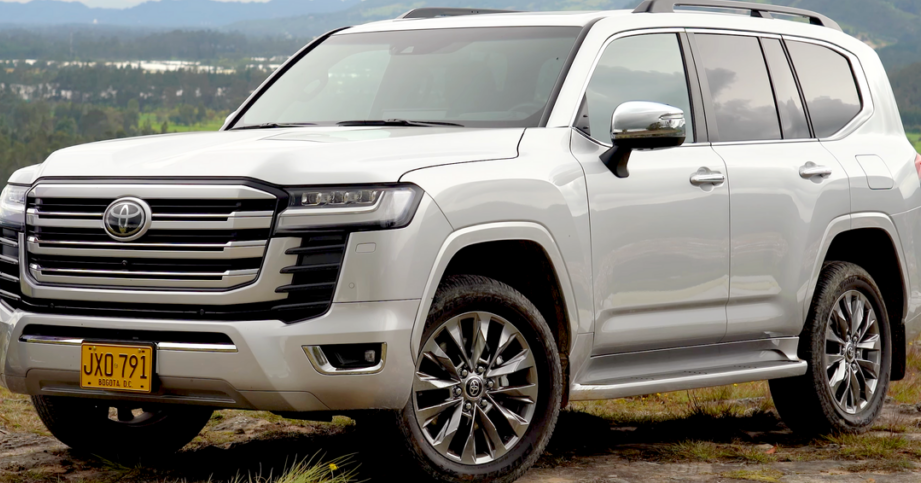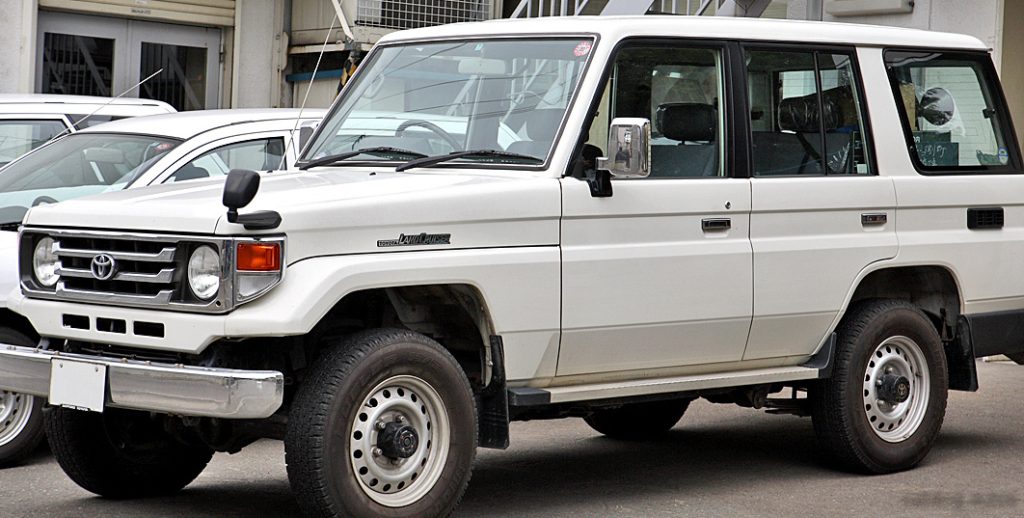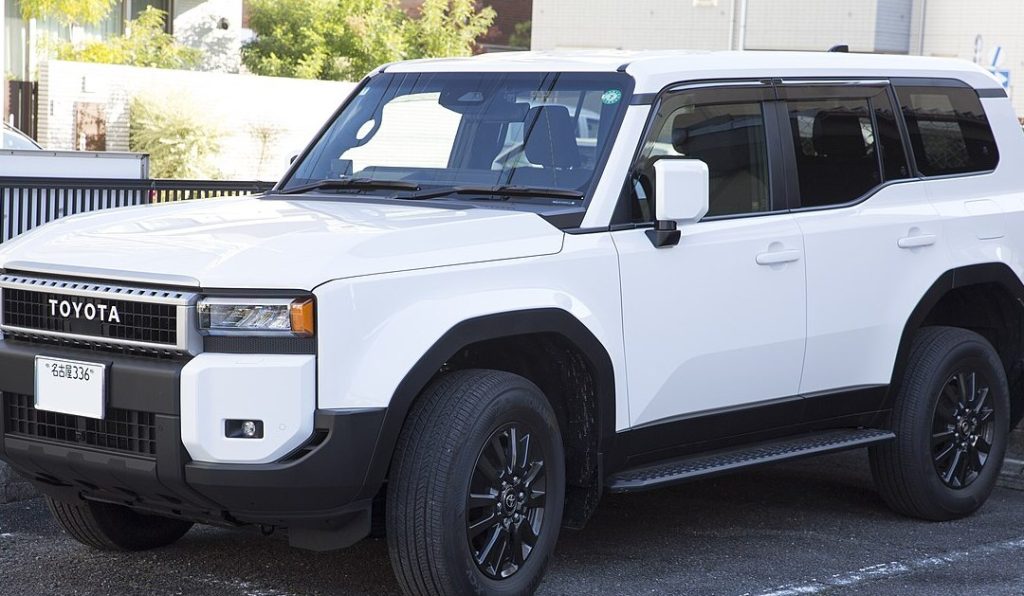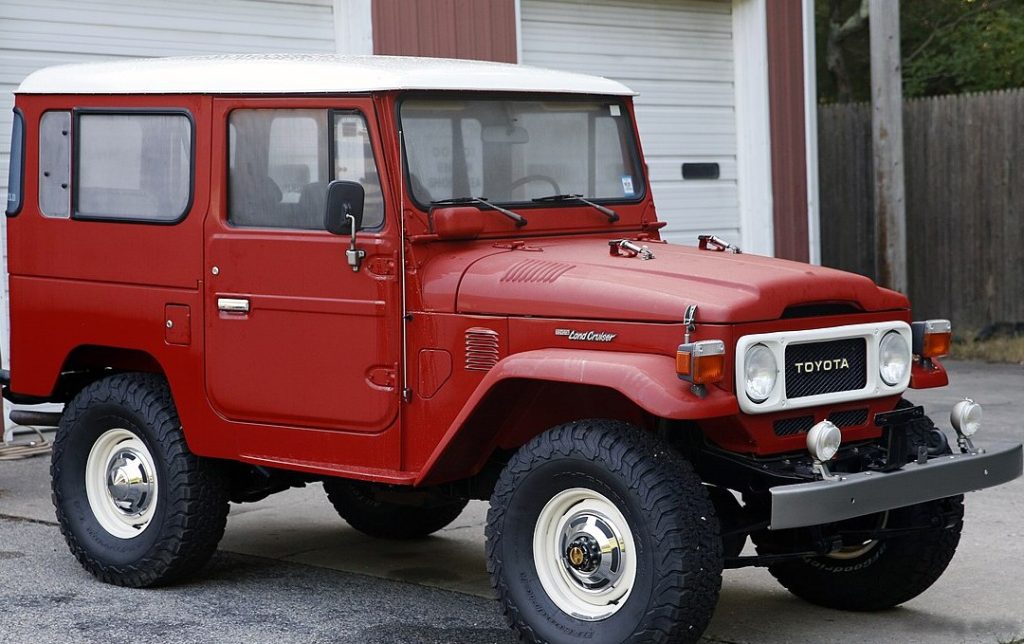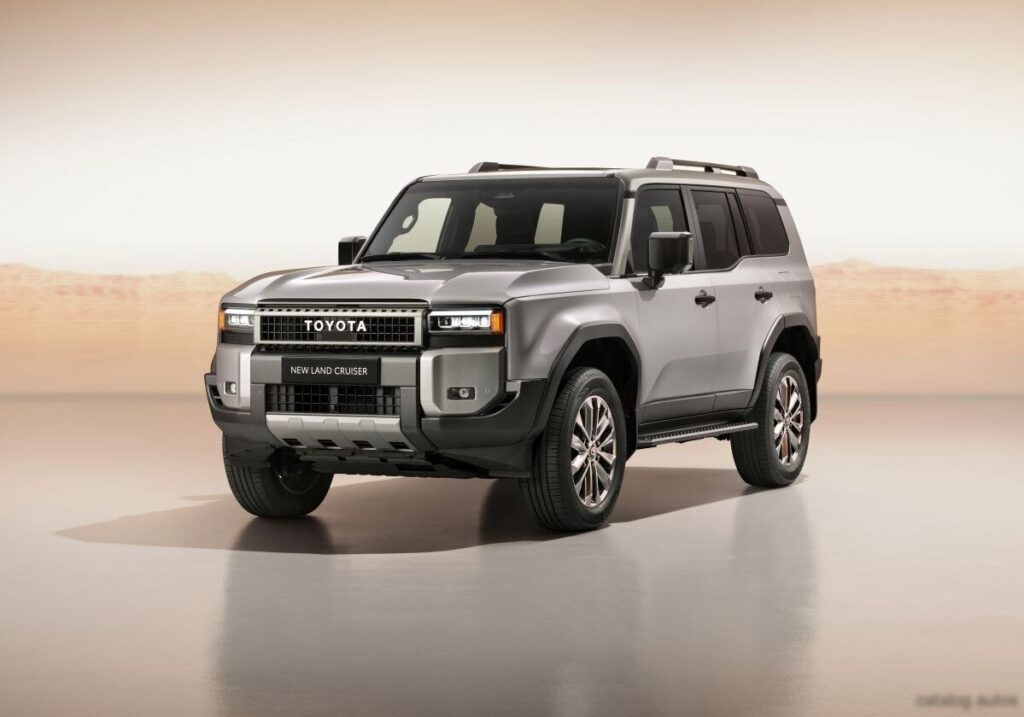
The Toyota Land Cruiser J250, specifically the 2.7L (163 hp) 4WD ECT variant, represents a significant evolution in Toyota’s iconic off-road SUV lineage. Introduced in April 2024, this model is positioned as the entry point to the J250 series, offering a blend of traditional Land Cruiser capability with modern comfort and technology. It’s primarily aimed at markets where a smaller displacement engine is preferred, offering a balance between affordability and the renowned Land Cruiser durability. The J250 platform represents a departure from the previous 200-series, adopting a more modern, body-on-frame construction and updated features while retaining the core off-road prowess expected of the Land Cruiser nameplate.
Technical Specifications
| Brand | Toyota |
| Model | Land Cruiser |
| Generation | Land Cruiser (J250) |
| Type (Engine) | 2.7L (163 Hp) 4WD ECT |
| Start of production | April, 2024 |
| Powertrain Architecture | Internal Combustion engine |
| Body type | SUV |
| Seats | 7 |
| Doors | 5 |
| Fuel consumption (economy) – urban (WLTC) | 17.5 l/100 km (13.4 US mpg, 16.1 UK mpg, 5.7 km/l) |
| Fuel consumption (economy) – extra urban (WLTC) | 11.6 l/100 km (20.3 US mpg, 24.4 UK mpg, 8.6 km/l) |
| Fuel consumption (economy) – combined (WLTC) | 13.3 l/100 km (17.7 US mpg, 21.2 UK mpg, 7.5 km/l) |
| Fuel Type | Petrol (Gasoline) |
| Weight-to-power ratio | 13.7 kg/Hp, 72.8 Hp/tonne |
| Weight-to-torque ratio | 9.1 kg/Nm, 109.8 Nm/tonne |
| Power | 163 Hp @ 5200 rpm |
| Power per litre | 60.5 Hp/l |
| Torque | 246 Nm @ 3900 rpm (181.44 lb.-ft. @ 3900 rpm) |
| Engine layout | Front, Longitudinal |
| Engine Model/Code | 2TR-FE |
| Engine displacement | 2693 cm3 (164.34 cu. in.) |
| Number of cylinders | 4 |
| Engine configuration | Inline |
| Cylinder Bore | 95 mm (3.74 in.) |
| Piston Stroke | 95 mm (3.74 in.) |
| Number of valves per cylinder | 4 |
| Fuel injection system | Multi-port manifold injection |
| Engine aspiration | Naturally aspirated engine |
| Valvetrain | DOHC, VVT |
| Engine systems | Start & Stop System |
| Kerb Weight | 2240 kg (4938.35 lbs.) |
| Max. weight | 2625 kg (5787.13 lbs.) |
| Max load | 385 kg (848.78 lbs.) |
| Fuel tank capacity | 80 l (21.13 US gal | 17.6 UK gal) |
| Length | 4925 mm (193.9 in.) |
| Width | 1980 mm (77.95 in.) |
| Height | 1925 mm (75.79 in.) |
| Wheelbase | 2850 mm (112.2 in.) |
| Front track | 1665 mm (65.55 in.) |
| Rear (Back) track | 1665 mm (65.55 in.) |
| Ride height (ground clearance) | 215 mm (8.46 in.) |
| Minimum turning circle (turning diameter) | 12 m (39.37 ft.) |
| Drivetrain Architecture | The Internal combustion engine (ICE) drives permanently the four wheels of the vehicle. |
| Drive wheel | All wheel drive (4×4) |
| Number of gears and type of gearbox | 6 gears, automatic transmission ECT |
| Front suspension | Double wishbone |
| Rear suspension | Rigid axle suspension |
| Front brakes | Ventilated discs |
| Rear brakes | Ventilated discs |
| Assisting systems | ABS (Anti-lock braking system) |
| Steering type | Steering rack and pinion |
| Power steering | Electric Steering |
| Tires size | 245/70 R18; 265/65 R18 |
| Wheel rims size | 7J x 18; 7.5J x 18 |
Powertrain & Engine Architecture
The heart of this Land Cruiser variant is the 2TR-FE engine, a 2.7-liter inline-four cylinder gasoline engine. This engine has been a mainstay in Toyota’s lineup for many years, known for its reliability and durability rather than outright performance. It utilizes a multi-port fuel injection system and a Double Overhead Camshaft (DOHC) valvetrain with Variable Valve Timing (VVT) to optimize efficiency and power delivery. The 2TR-FE produces 163 horsepower at 5200 rpm and 246 Nm (181.44 lb-ft) of torque at 3900 rpm. Paired with this engine is a 6-speed automatic transmission, designated as ECT (Electronically Controlled Transmission). This transmission is designed for smooth shifting and efficient operation, prioritizing comfort over sporty responsiveness. The engine is longitudinally mounted, contributing to a balanced weight distribution.
Driving Characteristics
The 2.7L automatic Land Cruiser J250 delivers a comfortable and capable driving experience, albeit not a particularly quick one. The 163 hp output and the automatic transmission prioritize smooth cruising and off-road capability over rapid acceleration. The ECT transmission is tuned for relaxed driving, with gear changes designed to minimize jerkiness. Compared to potential higher-output engine options (which may be available in other J250 markets), this variant feels less eager to accelerate, especially when fully loaded or tackling steep inclines. However, the ample low-end torque of the 2TR-FE engine provides sufficient power for most everyday driving situations and moderate off-road challenges. The automatic transmission’s gear ratios are optimized for fuel efficiency and towing capacity, rather than maximizing performance.
Equipment & Trim Levels
The 2.7L 4WD ECT Land Cruiser J250 typically comes with a solid base level of equipment. Standard features generally include air conditioning, power windows and locks, a touchscreen infotainment system with Bluetooth connectivity, and a rearview camera. Interior upholstery is typically cloth, with durable and easy-to-clean materials. Higher trim levels, available as optional upgrades, may add features such as leather seats, a sunroof, upgraded audio systems, and advanced driver-assistance systems (ADAS) like adaptive cruise control and lane departure warning. The dashboard layout is functional and straightforward, prioritizing usability over flashy design.
Chassis & Braking
The J250 Land Cruiser utilizes a robust body-on-frame construction, providing excellent durability and off-road capability. The front suspension features a double wishbone setup, while the rear employs a rigid axle suspension, optimized for handling rough terrain. Braking duties are handled by ventilated discs on all four wheels, providing adequate stopping power for the vehicle’s weight. An Anti-lock Braking System (ABS) is standard, enhancing safety during emergency braking situations. The steering system is a rack and pinion setup with electric power steering, offering a balance between precision and ease of use.
Market Reception & Comparison
The reception of the 2.7L Land Cruiser J250 has been generally positive, particularly in markets where fuel efficiency and affordability are key considerations. Critics have praised its comfortable ride, spacious interior, and legendary Land Cruiser durability. However, some reviewers have noted that the 2.7L engine feels underpowered compared to larger displacement options. Compared to other trims in the J250 lineup, the 2.7L variant offers the most accessible price point, making it an attractive option for buyers seeking a capable and reliable SUV without the premium cost of higher-performance models. Fuel economy, while not exceptional, is reasonable for a vehicle of this size and capability, averaging around 17.7 US mpg in combined driving conditions.
Legacy
The 2TR-FE engine has a long-standing reputation for reliability and longevity, and its inclusion in the J250 Land Cruiser is expected to continue this trend. While the J250 represents a modernization of the Land Cruiser formula, the core principles of durability and off-road capability remain intact. In the used car market, the 2.7L J250 is likely to hold its value well due to the Land Cruiser’s strong brand reputation and the engine’s proven reliability. It represents a practical and dependable choice for buyers seeking a capable SUV that can handle both daily commutes and adventurous off-road excursions.