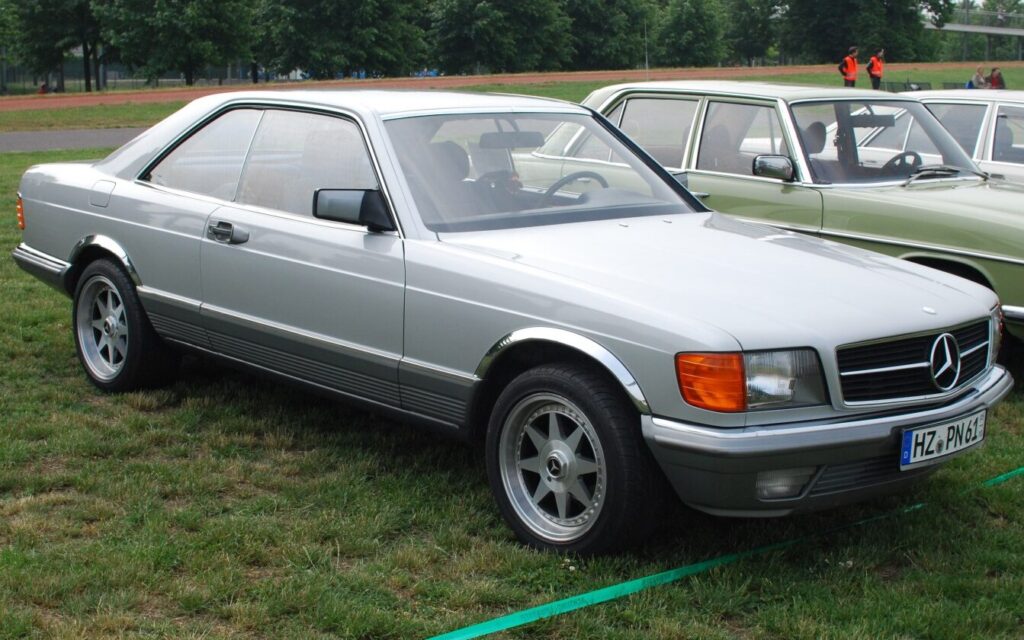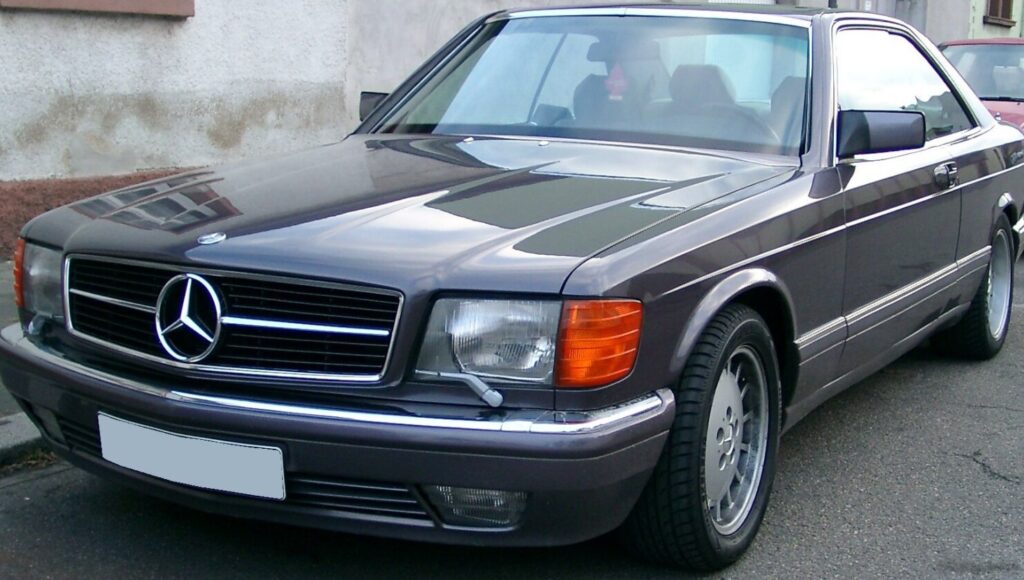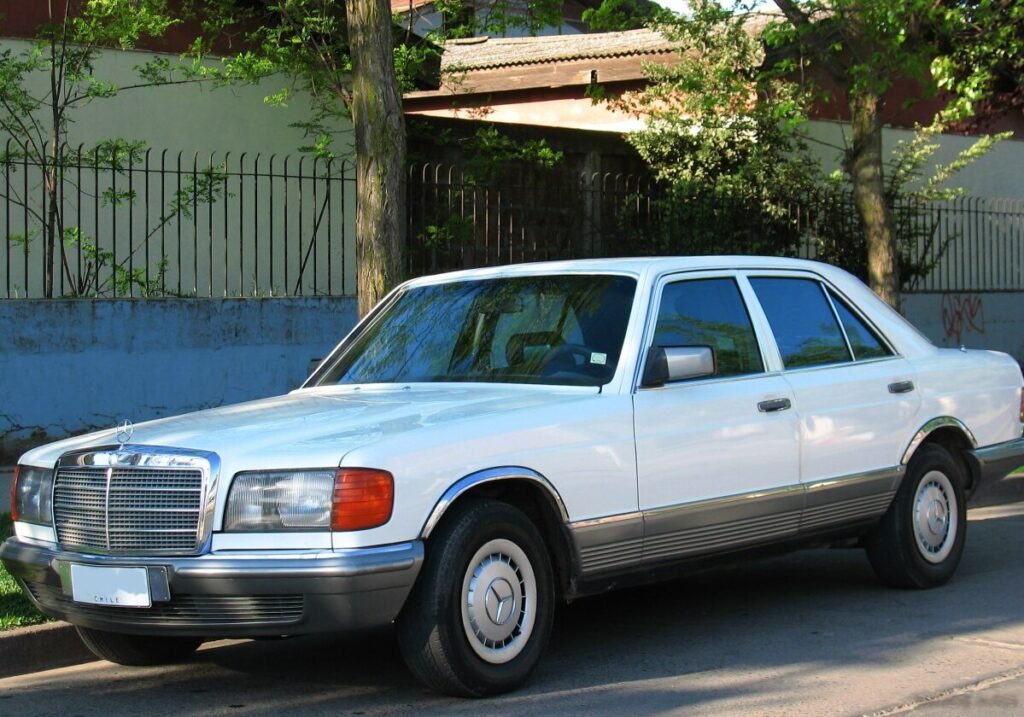
The Mercedes-Benz S-Class SE (W126) 500 SE, produced from September 1979 to October 1981, represented a significant leap forward in luxury and engineering for the German automaker. Positioned as the flagship of the W126 generation, which replaced the W116, the 500 SE was distinguished by its powerful 5.0-liter V8 engine and sophisticated automatic transmission. This variant aimed to deliver a blend of effortless performance and supreme comfort, catering to buyers who demanded the best Mercedes-Benz had to offer. It established many of the safety and technology features that would become hallmarks of the S-Class line for decades to come.
Technical Specifications
| Brand | Mercedes-Benz |
| Model | S-class |
| Generation | S-class SE (W126) |
| Type (Engine) | 500 SE V8 (240 Hp) Automatic |
| Start of production | September, 1979 |
| End of production | October, 1981 |
| Powertrain Architecture | Internal Combustion engine |
| Body type | Sedan |
| Seats | 5 |
| Doors | 4 |
| Fuel consumption (economy) – urban | 21.2 l/100 km (11.1 US mpg, 13.3 UK mpg, 4.7 km/l) |
| Fuel consumption (economy) – extra urban | 11.3 l/100 km (20.8 US mpg, 25 UK mpg, 8.8 km/l) |
| Fuel Type | Petrol (Gasoline) |
| Acceleration 0 – 100 km/h | 8.1 sec |
| Acceleration 0 – 62 mph | 8.1 sec |
| Acceleration 0 – 60 mph | 7.7 sec |
| Maximum speed | 225 km/h (139.81 mph) |
| Weight-to-power ratio | 6.8 kg/Hp, 148.1 Hp/tonne |
| Weight-to-torque ratio | 4 kg/Nm, 249.4 Nm/tonne |
| Power | 240 Hp @ 4750 rpm |
| Power per litre | 48.3 Hp/l |
| Torque | 404 Nm @ 3200 rpm (297.98 lb.-ft. @ 3200 rpm) |
| Engine layout | Front, Longitudinal |
| Engine Model/Code | M 117 E 50 / 117.961 |
| Engine displacement | 4973 cm3 (303.47 cu. in.) |
| Number of cylinders | 8 |
| Engine configuration | V-engine |
| Cylinder Bore | 96.5 mm (3.8 in.) |
| Piston Stroke | 85 mm (3.35 in.) |
| Compression ratio | 8.8:1 |
| Number of valves per cylinder | 2 |
| Fuel injection system | Multi-port manifold injection |
| Engine aspiration | Naturally aspirated engine |
| Valvetrain | SOHC |
| Engine oil capacity | 9 l (9.51 US qt | 7.92 UK qt) |
| Coolant | 13.5 l (14.27 US qt | 11.88 UK qt) |
| Kerb Weight | 1620 kg (3571.49 lbs.) |
| Max. weight | 2140 kg (4717.89 lbs.) |
| Max load | 520 kg (1146.4 lbs.) |
| Trunk (boot) space – minimum | 505 l (17.83 cu. ft.) |
| Fuel tank capacity | 90 l (23.78 US gal | 19.8 UK gal) |
| Length | 4995 mm (196.65 in.) |
| Width | 1820 mm (71.65 in.) |
| Height | 1436 mm (56.54 in.) |
| Wheelbase | 2930 mm (115.35 in.) |
| Front track | 1545 mm (60.83 in.) |
| Rear (Back) track | 1517 mm (59.72 in.) |
| Drivetrain Architecture | The Internal combustion engine (ICE) drives the rear wheels of the vehicle. |
| Drive wheel | Rear wheel drive |
| Number of gears and type of gearbox | 4 gears, automatic transmission |
| Front suspension | Double wishbone |
| Rear suspension | Threaded twist beam |
| Front brakes | Ventilated discs |
| Rear brakes | Disc |
| Assisting systems | ABS (Anti-lock braking system) |
| Steering type | Cone worm with recirculation balls |
| Power steering | Hydraulic Steering |
| Tires size | Front wheel tires: 205/70 R14 Rear wheel tires: 205/70 R14 |
| Wheel rims size | Front wheel rims: 6.5J x 14 Rear wheel rims: 6.5J x 14 |
Powertrain & Engine Architecture
The heart of the 500 SE was the M117 E 50 engine, a 4.97-liter (303.47 cubic inches) naturally aspirated V8. This engine featured a single overhead camshaft (SOHC) design with two valves per cylinder and Bosch K-Jetronic multi-port fuel injection. The K-Jetronic system, while complex, was known for its reliability and ability to deliver smooth power. The engine produced 240 horsepower at 4750 rpm and 298 lb-ft of torque at 3200 rpm. The engine’s robust construction and oversquare design (96.5mm bore and 85mm stroke) contributed to its longevity and relatively high specific output for the era. Paired with the engine was a four-speed automatic transmission, designed to provide seamless gear changes and enhance the luxurious driving experience. This transmission was a torque converter type, offering smooth acceleration and comfortable cruising.
Driving Characteristics
The 500 SE offered a distinctly different driving experience compared to the smaller-engined W126 models. The V8 provided ample power for effortless acceleration and high-speed cruising. While not a sports car, the 500 SE could reach 60 mph in around 7.7 seconds and had a top speed of 139.81 mph. The automatic transmission, while smooth, did result in some power loss compared to the available manual transmissions in other S-Class variants. The gear ratios were tuned for comfort and refinement rather than outright performance. The car felt substantial and planted on the road, thanks to its relatively heavy weight and well-tuned suspension.
Equipment & Trim Levels
The 500 SE was generously equipped as standard. Interior features included luxurious leather upholstery, power-adjustable front seats, climate control, and a high-quality sound system. Wood trim adorned the dashboard and door panels, adding to the sense of opulence. Optional extras included a sunroof, upgraded sound systems, and rear seat climate control. The 500 SE was positioned as the premium offering within the initial W126 lineup, surpassing the 280 SE and 380 SE in terms of standard features and performance.
Chassis & Braking
The W126 S-Class featured a robust chassis with independent suspension all around. The front suspension utilized double wishbones, while the rear employed a threaded twist beam. This setup provided a comfortable ride and good handling characteristics. The 500 SE was equipped with ventilated disc brakes at the front and solid discs at the rear. An Anti-lock Braking System (ABS) was standard, a groundbreaking feature for the time, significantly improving braking performance and safety. The steering was a recirculating ball system with hydraulic power assistance, providing a comfortable and precise driving experience.
Market Reception & Comparison
The 500 SE was well-received by critics and buyers alike. It was praised for its luxurious interior, powerful engine, and refined driving experience. Compared to the 280 SE and 380 SE, the 500 SE offered a significant performance advantage, but at a higher price point. Fuel economy was understandably lower than the six-cylinder models, averaging around 11.1 US mpg in the city and 20.8 US mpg on the highway. Reliability was generally good, although the complexity of the K-Jetronic fuel injection system could lead to occasional maintenance issues.
Legacy
The W126 S-Class, and particularly the 500 SE, set a new standard for luxury sedans. Its advanced engineering, safety features, and refined driving experience influenced the design and development of subsequent S-Class generations. Today, the W126 500 SE is a sought-after classic car, appreciated by collectors and enthusiasts for its timeless design and robust construction. While maintenance can be costly due to the age of the vehicle and the complexity of its systems, a well-maintained 500 SE remains a rewarding and luxurious driving experience, representing a high point in Mercedes-Benz engineering.