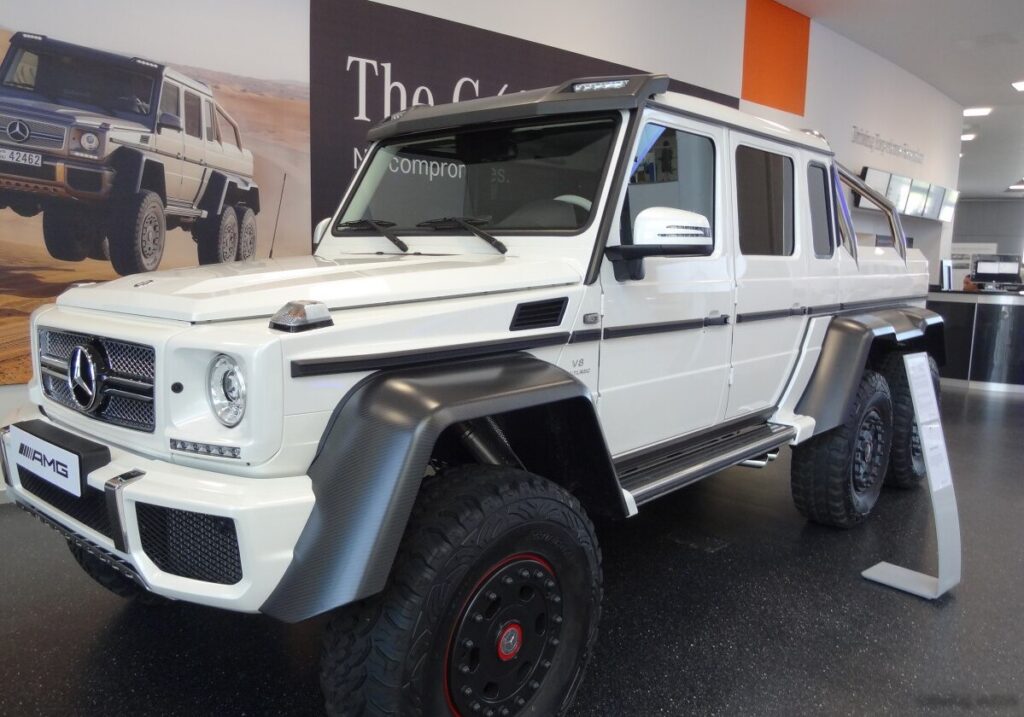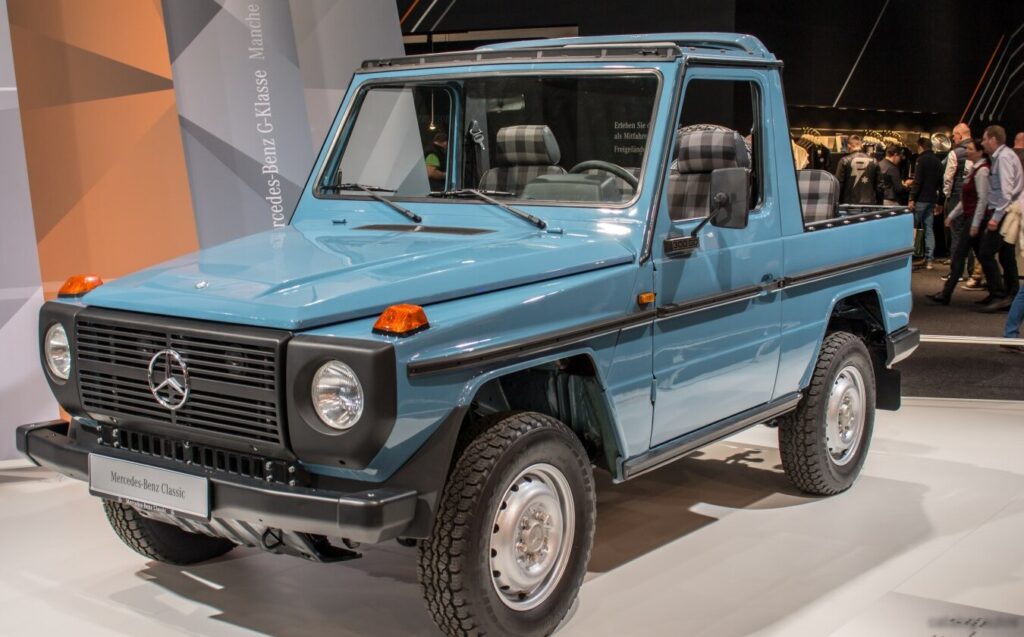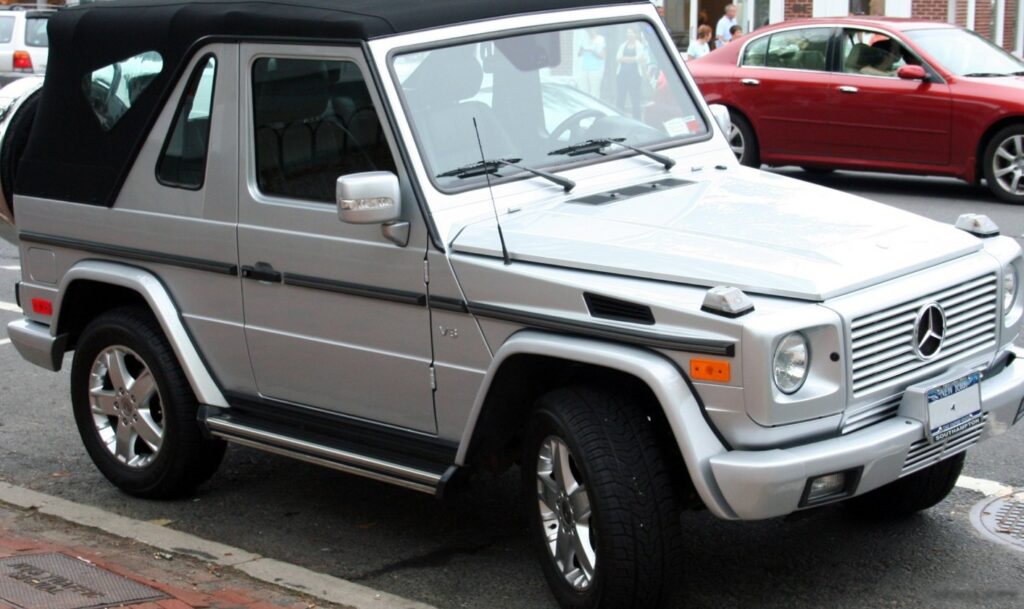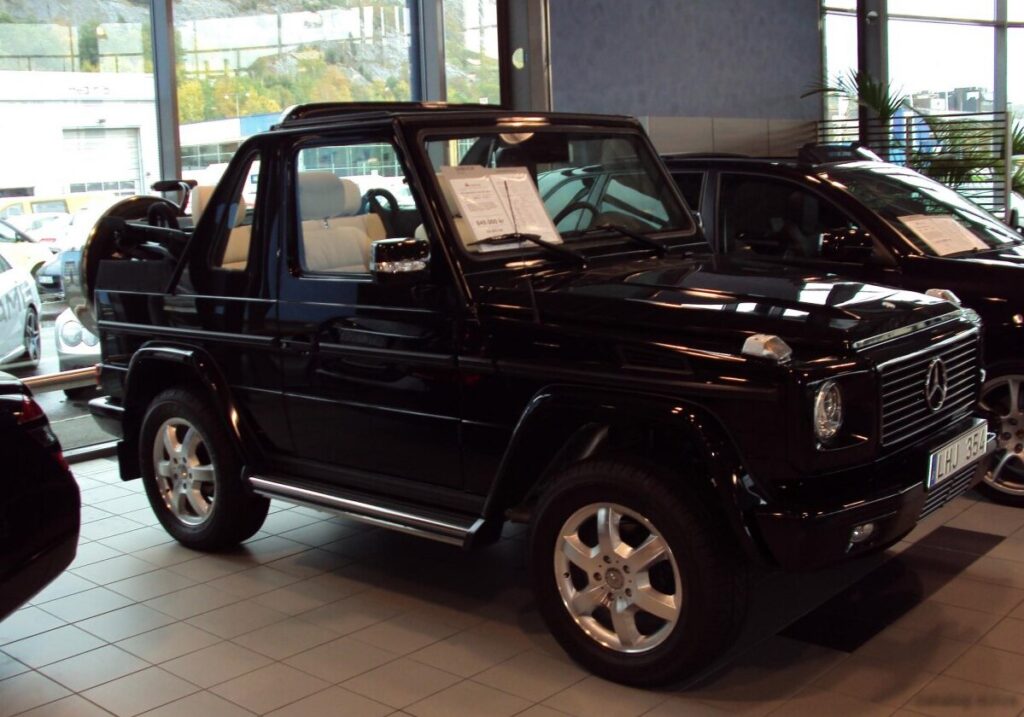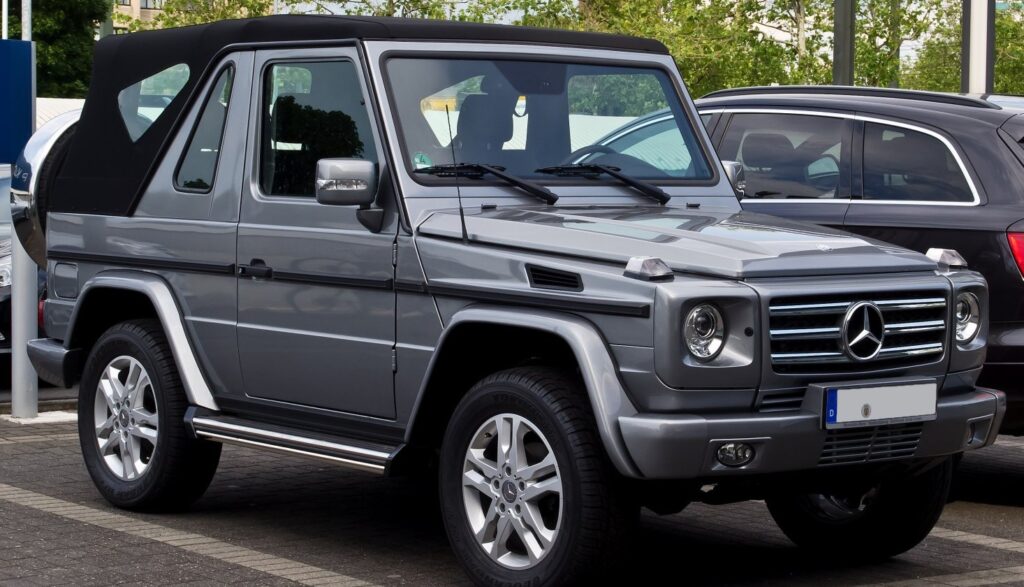
The Mercedes-Benz G 300 D Long (W463) represents a specific iteration of the iconic G-Class, produced between September 1993 and August 1994. This variant, powered by a 3.0-liter diesel engine producing 113 horsepower, occupied a unique position within the G-Class lineup, offering a balance between capability and relative affordability. The “Long” designation refers to the extended wheelbase version of the W463, providing increased interior space and stability. It was primarily aimed at markets desiring a robust, utilitarian vehicle with a degree of luxury, and was sold in Europe and select international markets. This model is notable for its pre-combustion chamber diesel injection system and its robust, body-on-frame construction, hallmarks of the early G-Class vehicles.
Technical Specifications
| Brand | Mercedes-Benz |
| Model | G-class |
| Generation | G-class Long (W463) |
| Type | G 300 D (113 Hp) 4MATIC Automatic |
| Start of production | September, 1993 |
| End of production | August, 1994 |
| Powertrain Architecture | Internal Combustion engine |
| Body type | Off-road vehicle |
| Seats | 5 |
| Doors | 5 |
| Fuel consumption (urban) | 12.5 l/100 km (18.8 US mpg, 22.6 UK mpg, 8 km/l) |
| Fuel consumption (extra urban) | 10.8 l/100 km (21.8 US mpg, 26.2 UK mpg, 9.3 km/l) |
| Fuel Type | Diesel |
| Maximum speed | 141 km/h (87.61 mph) |
| Weight-to-power ratio | 19.7 kg/Hp, 50.8 Hp/tonne |
| Weight-to-torque ratio | 11.6 kg/Nm, 85.8 Nm/tonne |
| Power | 113 Hp @ 4600 rpm |
| Power per litre | 37.7 Hp/l |
| Torque | 191 Nm @ 2700-2900 rpm (140.87 lb.-ft. @ 2700-2900 rpm) |
| Engine layout | Front, Longitudinal |
| Engine Model/Code | OM 603.931 |
| Engine displacement | 2996 cm3 (182.83 cu. in.) |
| Number of cylinders | 6 |
| Engine configuration | Inline |
| Cylinder Bore | 87 mm (3.43 in.) |
| Piston Stroke | 84 mm (3.31 in.) |
| Compression ratio | 22:1 |
| Number of valves per cylinder | 2 |
| Fuel injection system | Precombustion chamber injection |
| Engine aspiration | Naturally aspirated engine |
| Valvetrain | SOHC |
| Engine oil capacity | 8 l (8.45 US qt | 7.04 UK qt) |
| Coolant capacity | 7.5 l (7.93 US qt | 6.6 UK qt) |
| Kerb Weight | 2225 kg (4905.29 lbs.) |
| Max. weight | 2950 kg (6503.64 lbs.) |
| Max load | 725 kg (1598.35 lbs.) |
| Fuel tank capacity | 96 l (25.36 US gal | 21.12 UK gal) |
| Length | 4635 mm (182.48 in.) |
| Width | 1690 mm (66.54 in.) |
| Height | 1936 mm (76.22 in.) |
| Wheelbase | 2850 mm (112.2 in.) |
| Front track | 1425 mm (56.1 in.) |
| Rear track | 1425 mm (56.1 in.) |
| Drivetrain Architecture | All wheel drive (4×4). ICE drives all four wheels permanently. |
| Number of gears | 4 |
| Gearbox type | Automatic transmission |
| Front suspension | Coil spring, Rigid axle, Trailing arm |
| Rear suspension | Rigid axle, Trailing arm, Coil spring |
| Front brakes | Disc |
| Rear brakes | Drum |
| Assisting systems | ABS (Anti-lock braking system) |
| Steering type | Cone worm with recirculation balls |
| Power steering | Hydraulic |
| Tires size | 205/80 R 16 |
| Wheel rims size | 6 J x 16 |
INTRODUCTION
The Mercedes-Benz G 300 D Long (W463) was produced during a pivotal period for the G-Class. The W463 series, introduced in 1979, had initially been developed as a military vehicle before being offered to the civilian market. By the early 1990s, the G-Class was gaining recognition as a luxurious and capable off-road vehicle, but still retained its rugged roots. The G 300 D Long, with its extended wheelbase, aimed to provide more passenger space and comfort without sacrificing the G-Class’s legendary off-road prowess. It sat below the more powerful G 360 CDI in the lineup, offering a more economical entry point into G-Class ownership.
Powertrain & Engine Architecture
The heart of the G 300 D Long is the OM 603.931, a 3.0-liter inline-six cylinder diesel engine. This engine utilizes a precombustion chamber injection system, a common feature in Mercedes-Benz diesels of the era. This system involves injecting fuel into a small precombustion chamber connected to the main cylinder, where it is partially ignited before entering the main combustion chamber. This design promotes more complete combustion and reduces engine noise. The engine produces 113 horsepower at 4600 rpm and 191 Nm (140.87 lb.-ft.) of torque between 2700 and 2900 rpm. The engine is longitudinally mounted in the front of the vehicle. The 4-speed automatic transmission, a common unit for Mercedes-Benz vehicles of the time, was the only transmission option available for this variant. This transmission, while providing convenience, was not known for its particularly quick shifts or fuel efficiency compared to the available manual transmissions in other G-Class models.
Driving Characteristics
The G 300 D Long Automatic offered a unique driving experience. While the 113 horsepower output wasn’t particularly high, the engine’s torque characteristics made it well-suited for off-road driving and towing. The automatic transmission, however, dulled the engine’s responsiveness. Acceleration was leisurely, and the transmission often hunted for the right gear, especially under load. Compared to the manual transmission versions of the G 300 D, the automatic felt noticeably slower. The extended wheelbase of the “Long” version contributed to a more stable ride on paved roads, but also slightly reduced maneuverability in tight off-road situations. The gear ratios were optimized for low-speed torque and off-road capability rather than outright speed.
Equipment & Trim Levels
The G 300 D Long, even in its base form, offered a reasonable level of equipment. Standard features typically included power windows, central locking, and a basic audio system. The interior was typically upholstered in cloth, although leather upholstery was available as an option. Optional extras included air conditioning, a sunroof, and upgraded audio systems. The dashboard layout was functional and utilitarian, reflecting the G-Class’s origins as a military vehicle. Trim levels were relatively limited, with most customization occurring through the selection of optional extras.
Chassis & Braking
The G 300 D Long retained the traditional body-on-frame construction of the G-Class, providing exceptional durability and off-road capability. The suspension consisted of coil springs and rigid axles with trailing arms, offering substantial wheel articulation. Front brakes were discs, while rear brakes were drums – a cost-saving measure common in this era. An ABS (Anti-lock braking system) was standard, enhancing safety on paved roads. The steering system was a cone worm with recirculation balls, providing a direct but somewhat heavy steering feel. Stabilizer bars were fitted to both the front and rear axles to reduce body roll.
Market Reception & Comparison
The G 300 D Long Automatic received mixed reviews. Critics praised its off-road capability and durability, but often criticized its sluggish performance and the somewhat dated automatic transmission. Compared to the more powerful G 360 CDI, the G 300 D felt underpowered. However, it offered a more affordable entry point into G-Class ownership and appealed to buyers who prioritized fuel economy and reliability over outright performance. The fuel economy, while not exceptional, was reasonable for a vehicle of its size and capability. Reliability was generally good, although the precombustion chamber diesel injection system required regular maintenance.
Legacy
The G 300 D Long (W463) has become a sought-after vehicle among G-Class enthusiasts. Its relative rarity, combined with its robust construction and classic styling, has contributed to its increasing value in the used car market. The OM 603 engine is known for its longevity and relatively simple maintenance requirements, making it a popular choice for those seeking a durable and reliable off-road vehicle. While not the fastest or most luxurious G-Class variant, the G 300 D Long represents a unique chapter in the history of this iconic vehicle, embodying the blend of ruggedness and refinement that has defined the G-Class for decades. Well-maintained examples continue to command high prices, reflecting their enduring appeal and the growing demand for classic off-road vehicles.