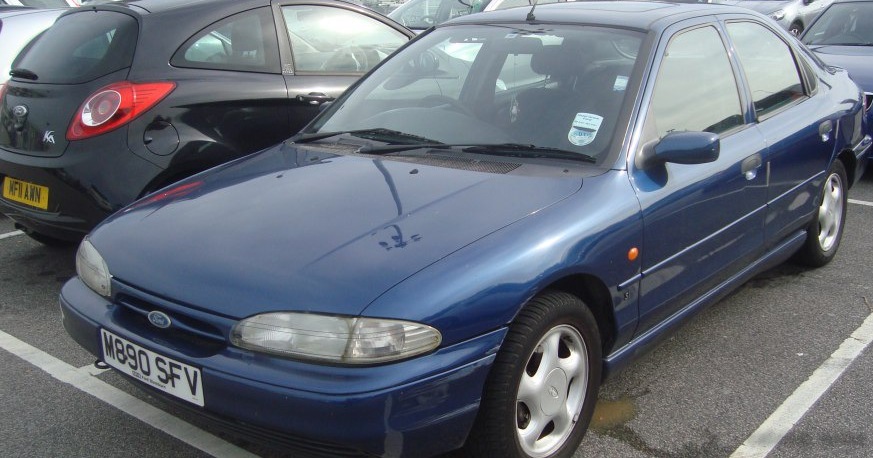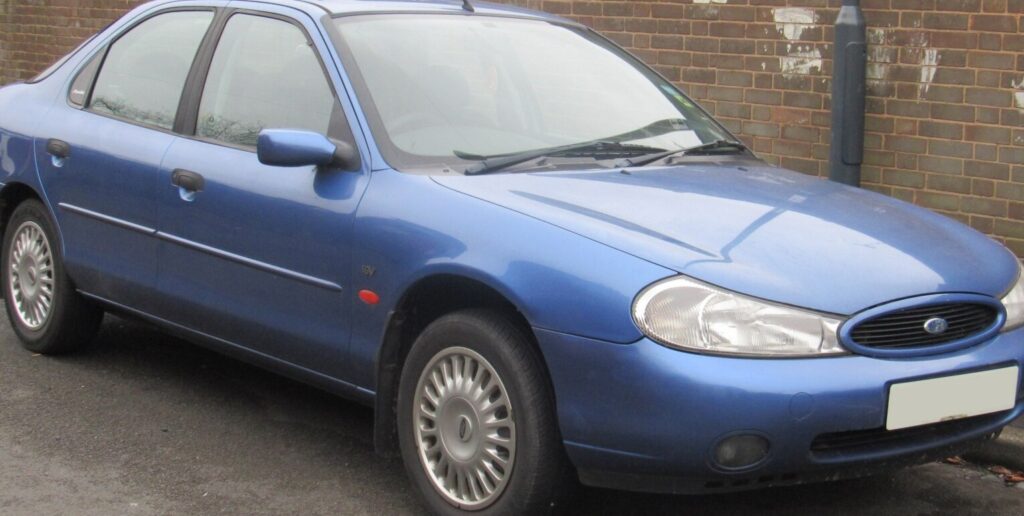
The Ford Mondeo I Wagon, specifically the 2.0i variant produced from 1996 to 2001, represented a significant step forward for Ford’s presence in the European and, to a lesser extent, North American mid-size family car market. Introduced as a replacement for the Ford Sierra and Escort estates, the Mondeo aimed to offer a more modern, refined, and spacious alternative. The facelifted version from 1996 brought subtle styling updates and improvements to the interior. This 2.0i engine and five-speed manual transmission combination occupied a middle ground in the Mondeo Wagon lineup, offering a balance between performance and fuel economy, appealing to families and drivers seeking a practical yet reasonably engaging driving experience.
Technical Specifications
| Brand | Ford |
| Model | Mondeo |
| Generation | Mondeo I Wagon (facelift 1996) |
| Type (Engine) | 2.0i (130 Hp) |
| Start of production | 1996 |
| End of production | 2001 |
| Powertrain Architecture | Internal Combustion engine |
| Body type | Station wagon (estate) |
| Seats | 5 |
| Doors | 5 |
| Fuel consumption (urban) | 11.9 l/100 km (19.8 US mpg, 23.7 UK mpg, 8.4 km/l) |
| Fuel consumption (extra urban) | 6.2 l/100 km (37.9 US mpg, 45.6 UK mpg, 16.1 km/l) |
| Fuel Type | Petrol (Gasoline) |
| Acceleration 0 – 100 km/h | 10.3 sec |
| Acceleration 0 – 62 mph | 10.3 sec |
| Acceleration 0 – 60 mph | 9.8 sec |
| Maximum speed | 199 km/h (123.65 mph) |
| Weight-to-power ratio | 10.6 kg/Hp, 94.7 Hp/tonne |
| Weight-to-torque ratio | 7.8 kg/Nm, 128.2 Nm/tonne |
| Power | 130 Hp @ 5700 rpm |
| Power per litre | 65.4 Hp/l |
| Torque | 176 Nm @ 3700 rpm (129.81 lb.-ft. @ 3700 rpm) |
| Engine layout | Front, Transverse |
| Engine Model/Code | Zetec / NGA, NGB, NGC, NGD |
| Engine displacement | 1988 cm3 (121.32 cu. in.) |
| Number of cylinders | 4 |
| Engine configuration | Inline |
| Cylinder Bore | 84.8 mm (3.34 in.) |
| Piston Stroke | 88 mm (3.46 in.) |
| Compression ratio | 10:1 |
| Number of valves per cylinder | 4 |
| Fuel injection system | Multi-port manifold injection |
| Engine aspiration | Naturally aspirated engine |
| Valvetrain | DOHC |
| Engine oil capacity | 4.25 l (4.49 US qt | 3.74 UK qt) |
| Coolant | 6.6 l (6.97 US qt | 5.81 UK qt) |
| Kerb Weight | 1373 kg (3026.95 lbs.) |
| Max. weight | 1955 kg (4310.04 lbs.) |
| Max load | 582 kg (1283.09 lbs.) |
| Trunk (boot) space – minimum | 540 l (19.07 cu. ft.) |
| Trunk (boot) space – maximum | 1610 l (56.86 cu. ft.) |
| Fuel tank capacity | 61 l (16.11 US gal | 13.42 UK gal) |
| Length | 4671 mm (183.9 in.) |
| Width | 1751 mm (68.94 in.) |
| Height | 1510 mm (59.45 in.) |
| Wheelbase | 2704 mm (106.46 in.) |
| Front track | 1503 mm (59.17 in.) |
| Rear (Back) track | 1504 mm (59.21 in.) |
| Drivetrain Architecture | The Internal combustion engine (ICE) drives the front wheels of the vehicle. |
| Drive wheel | Front wheel drive |
| Number of gears and type of gearbox | 5 gears, manual transmission |
| Front suspension | Wishbone |
| Rear suspension | Coil spring |
| Front brakes | Ventilated discs |
| Rear brakes | Drum |
| Assisting systems | ABS (Anti-lock braking system) |
| Steering type | Steering rack and pinion |
| Power steering | Hydraulic Steering |
| Tires size | 195/60 R15 |
| Wheel rims size | 15 x 6J |
INTRODUCTION
The Ford Mondeo I Wagon 2.0i, produced between 1996 and 2001, was a key variant within the first generation of the Mondeo range. The Mondeo was a globally significant vehicle for Ford, representing a move towards a unified platform strategy – the CDW27 platform, also known as the 1HX0/A3 platform. This platform underpinned not only the Mondeo but also the Ford Contour and Mercury Mystique in North America. The wagon body style, or estate as it was commonly known in Europe, provided increased practicality and cargo space, making it a popular choice for families. The 2.0i engine, paired with a five-speed manual transmission, was positioned as a mainstream offering, balancing performance, fuel efficiency, and cost. It sat below the more powerful 2.5 V6 and above the lower-spec 1.6 and 1.8 liter models.
Powertrain & Engine Architecture
The heart of the Mondeo I Wagon 2.0i is the Zetec engine, specifically the Zetec-E variant. Engine codes such as NGA, NGB, NGC, and NGD were used depending on the specific year and market. This 1988cc inline-four cylinder engine featured a dual overhead camshaft (DOHC) valvetrain with four valves per cylinder, contributing to its relatively high power output for its displacement. The engine utilized multi-port fuel injection, delivering fuel directly to each intake port for improved combustion efficiency. The Zetec engine was known for its robust construction and relatively simple design, making it reasonably reliable. The five-speed manual transmission provided a good spread of gears, allowing for efficient cruising and responsive acceleration. Gear ratios were tuned to prioritize fuel economy while still offering adequate performance for everyday driving. The transmission was a conventional design, known for its durability and relatively low maintenance requirements.
Driving Characteristics
The 2.0i Mondeo Wagon offered a competent and comfortable driving experience. While not a sports car, the 130 horsepower engine provided sufficient power for overtaking and maintaining highway speeds. Acceleration from 0-60 mph took around 9.8 seconds, which was respectable for a family wagon of its era. The five-speed manual transmission allowed drivers to keep the engine in its optimal power band, providing a more engaging driving experience than the available automatic transmission. Compared to the higher-output 2.5 V6, the 2.0i felt less powerful, particularly when fully loaded with passengers and luggage. However, it offered better fuel economy and was generally considered more affordable to maintain. The suspension provided a good balance between comfort and handling, absorbing bumps and imperfections in the road while still offering reasonable body control. Steering was precise and well-weighted, contributing to a confident feel behind the wheel.
Equipment & Trim Levels
The Mondeo I Wagon 2.0i typically came equipped with a reasonable level of standard features. These included central locking, power windows, power steering, and an adjustable steering column. Interior upholstery was typically cloth, with options for upgraded materials available. Dashboard configuration was functional and straightforward, with clear instrumentation. Optional extras included air conditioning, an upgraded audio system, alloy wheels, and a sunroof. Trim levels varied depending on the market, but generally, the 2.0i model was positioned as a mid-range offering, providing a good balance of features and value. Higher trim levels added more luxurious appointments and additional convenience features.
Chassis & Braking
The Mondeo I Wagon featured an independent front suspension with MacPherson struts and a multi-link rear suspension, providing a comfortable ride and good handling characteristics. Front brakes were ventilated discs, offering good stopping power, while rear brakes were typically drum brakes, a cost-saving measure for this trim level. Anti-lock Braking System (ABS) was standard, enhancing safety by preventing wheel lockup during hard braking. Stabilizer bars were fitted to both the front and rear axles, reducing body roll during cornering. The chassis was designed to provide a good balance between rigidity and weight, contributing to the car’s overall stability and handling.
Market Reception & Comparison
The Ford Mondeo I Wagon 2.0i was generally well-received by automotive critics. It was praised for its spacious interior, comfortable ride, and good handling. The 2.0i engine was considered a good compromise between performance and fuel economy. However, some critics noted that the interior styling was somewhat bland and that the rear drum brakes were not as effective as disc brakes. Compared to rivals such as the Vauxhall/Opel Vectra Estate and the Volkswagen Passat Variant, the Mondeo offered a more modern design and a more engaging driving experience. Fuel economy was competitive, and reliability was generally good, although some owners reported minor issues with electrical components.
Legacy
The Ford Mondeo I Wagon 2.0i has proven to be a relatively reliable and durable vehicle. Many examples are still on the road today, testament to the quality of its engineering and construction. The Zetec engine is known for its longevity, and the five-speed manual transmission is also generally robust. In the used car market, the Mondeo I Wagon 2.0i represents a good value proposition, offering a spacious and practical family car at an affordable price. While it may not have the prestige of some of its rivals, it remains a popular choice for those seeking a dependable and well-rounded estate car.