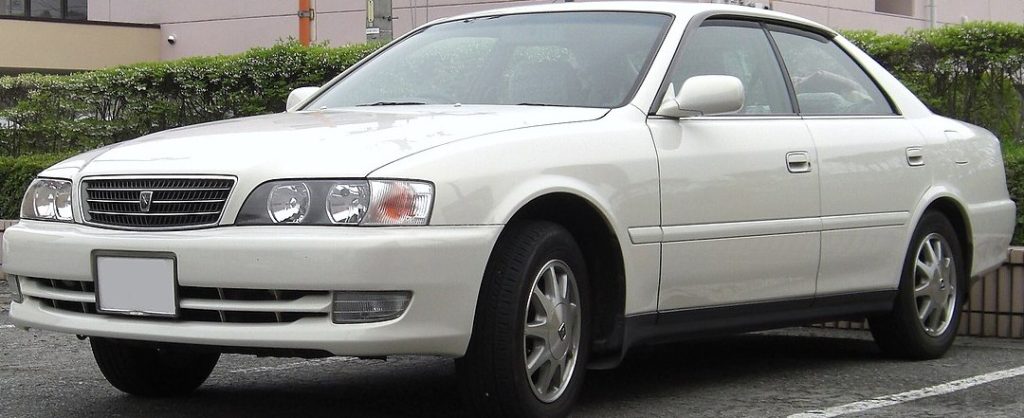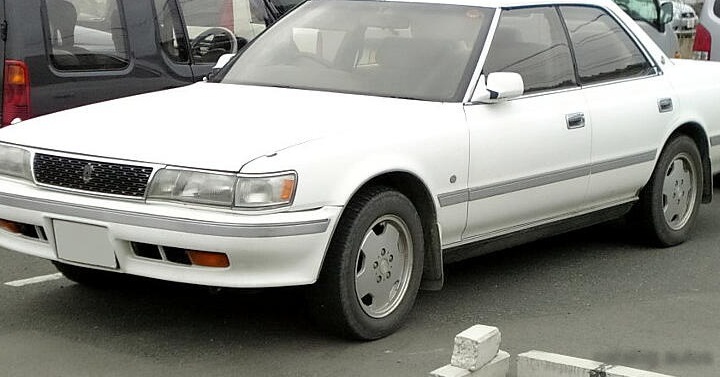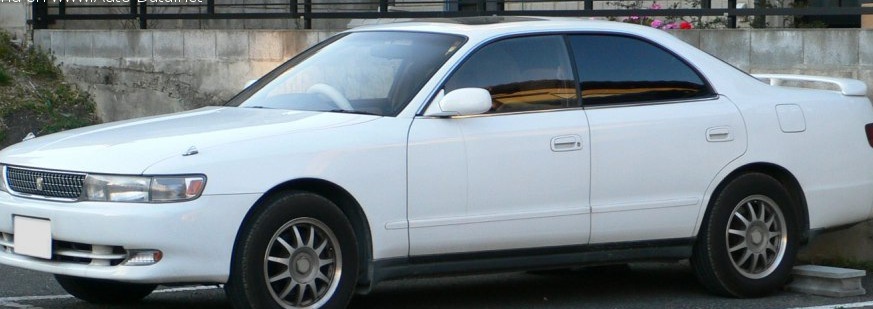
The Toyota Chaser (ZX90) 2.0i 24V Automatic, produced between 1992 and 1996, represents a significant iteration of Toyota’s popular mid-size sedan. Falling within the third generation (JZX90) of the Chaser lineage, this variant occupied a middle ground in the lineup, offering a balance between performance and affordability. The ZX90 series, exclusive to Japanese domestic market (JDM), was designed to appeal to drivers seeking a stylish, comfortable, and relatively powerful sedan. This particular 2.0-liter, 135 horsepower configuration, paired with an automatic transmission, was aimed at buyers prioritizing ease of use and fuel efficiency over outright performance, though it still delivered a respectable driving experience for its time.
Technical Specifications
| Brand | Toyota |
| Model | Chaser |
| Generation | Chaser (ZX 90) |
| Type | 2.0i 24V (135 Hp) Automatic |
| Start of production | 1992 |
| End of production | 1996 |
| Powertrain Architecture | Internal Combustion engine |
| Body type | Sedan |
| Seats | 5 |
| Doors | 4 |
| Fuel consumption (combined) | 7.1 l/100 km (33.1 US mpg, 39.8 UK mpg, 14.1 km/l) |
| Fuel Type | Petrol (Gasoline) |
| Weight-to-power ratio | 9.5 kg/Hp, 105.5 Hp/tonne |
| Weight-to-torque ratio | 7.2 kg/Nm, 138.3 Nm/tonne |
| Power | 135 Hp @ 5600 rpm |
| Power per litre | 67.9 Hp/l |
| Torque | 177 Nm @ 4400 rpm (130.55 lb.-ft. @ 4400 rpm) |
| Engine layout | Front, Longitudinal |
| Engine Model/Code | 1G-FE |
| Engine displacement | 1988 cm3 (121.32 cu. in.) |
| Number of cylinders | 6 |
| Engine configuration | Inline |
| Cylinder Bore | 75 mm (2.95 in.) |
| Piston Stroke | 75 mm (2.95 in.) |
| Compression ratio | 9.6:1 |
| Number of valves per cylinder | 4 |
| Fuel injection system | Multi-port manifold injection |
| Engine aspiration | Naturally aspirated engine |
| Valvetrain | DOHC |
| Engine oil capacity | 4 l (4.23 US qt | 3.52 UK qt) |
| Coolant capacity | 6.5 l (6.87 US qt | 5.72 UK qt) |
| Kerb Weight | 1280 kg (2821.92 lbs.) |
| Max. weight | 1555 kg (3428.19 lbs.) |
| Max load | 275 kg (606.27 lbs.) |
| Fuel tank capacity | 70 l (18.49 US gal | 15.4 UK gal) |
| Length | 4750 mm (187.01 in.) |
| Width | 1750 mm (68.9 in.) |
| Height | 1390 mm (54.72 in.) |
| Wheelbase | 2730 mm (107.48 in.) |
| Front track | 1485 mm (58.46 in.) |
| Rear track | 1495 mm (58.86 in.) |
| Drivetrain Architecture | Rear wheel drive |
| Number of gears | 4 |
| Gearbox type | Automatic transmission |
| Front suspension | Several levers and rods |
| Rear suspension | Several levers and rods |
| Front brakes | Ventilated discs |
| Rear brakes | Disc |
| Assisting systems | ABS (Anti-lock braking system) |
| Steering type | Steering rack and pinion |
| Power steering | Hydraulic Steering |
| Tires size | 185/70 R14 |
| Wheel rims size | 14 |
Powertrain & Engine Architecture
The heart of the ZX90 2.0i Automatic is the 1G-FE engine, a 2.0-liter inline-six cylinder powerplant. This engine is a naturally aspirated design, utilizing multi-port fuel injection for precise fuel delivery. The 1G-FE features a double overhead camshaft (DOHC) valvetrain, contributing to its relatively high output for its displacement. The engine’s 9.6:1 compression ratio strikes a balance between efficiency and performance. The automatic transmission employed is a conventional four-speed unit, designed for smooth and comfortable shifting. While not offering the sporty responsiveness of a manual gearbox, it catered to the preferences of a broader audience. The engine is longitudinally mounted, driving the rear wheels, a configuration common in Japanese sedans of this era.
Driving Characteristics
The 135 horsepower and 177 Nm (130.55 lb-ft) of torque delivered by the 1G-FE engine, when coupled with the four-speed automatic transmission, resulted in a driving experience that prioritized comfort and ease of use. Acceleration was adequate for everyday driving, but not particularly brisk. The automatic transmission’s gear ratios were tuned for fuel efficiency and smooth cruising, rather than aggressive acceleration. Compared to the more powerful JZX90 variants, such as those equipped with the 1JZ-GE or 1JZ-GTE turbocharged engines, the 2.0i Automatic felt noticeably less responsive. However, it offered a more relaxed and refined driving experience, particularly in urban environments. The rear-wheel-drive layout provided a balanced feel, though it lacked the dynamic handling characteristics of some contemporary front-wheel-drive competitors.
Equipment & Trim Levels
The ZX90 2.0i Automatic typically came equipped with a reasonable level of standard features. Interior appointments generally included cloth upholstery, power windows, power locks, and a basic audio system. Air conditioning was standard. Higher trim levels, often denoted by suffixes like “Super Extra” or “Touring,” added features such as alloy wheels, upgraded audio systems, and more luxurious interior trim. Optional extras could include a sunroof, leather upholstery, and advanced audio systems. The dashboard layout was functional and straightforward, typical of Japanese cars of the early 1990s.
Chassis & Braking
The Chaser ZX90 featured a conventional chassis design, with independent suspension at all four wheels utilizing a multi-link setup. This suspension configuration provided a comfortable ride quality, absorbing bumps and irregularities in the road surface effectively. The braking system consisted of ventilated discs at the front and solid discs at the rear. Anti-lock braking system (ABS) was standard, enhancing safety by preventing wheel lockup during hard braking. Steering was via a rack-and-pinion system with hydraulic power assistance, providing light and precise steering feel. The standard tire size was 185/70 R14, mounted on 14-inch steel or alloy wheels.
Market Reception & Comparison
The Toyota Chaser ZX90 2.0i Automatic was generally well-received in the Japanese market. Critics praised its comfortable ride, spacious interior, and reliable powertrain. However, some noted that its performance was not as exciting as that of its more powerful siblings. Compared to the 1JZ-GE powered Chasers, the 2.0i Automatic offered significantly lower running costs and a more accessible price point. It also provided better fuel economy than the turbocharged 1JZ-GTE models. In terms of reliability, the 1G-FE engine proved to be exceptionally durable, contributing to the Chaser’s reputation as a dependable and long-lasting vehicle.
Legacy
Today, the Toyota Chaser ZX90 2.0i Automatic holds a modest but respectable position in the used car market, particularly among enthusiasts of JDM vehicles. While not as sought-after as the more powerful variants, it remains a viable option for those seeking a classic Japanese sedan that is both reliable and affordable. The 1G-FE engine is known for its longevity and relatively simple maintenance requirements. Parts availability can be a challenge outside of Japan, but a dedicated aftermarket exists to support these vehicles. The ZX90 2.0i Automatic represents a compelling blend of comfort, practicality, and Japanese engineering, making it a worthwhile consideration for collectors and enthusiasts alike.