
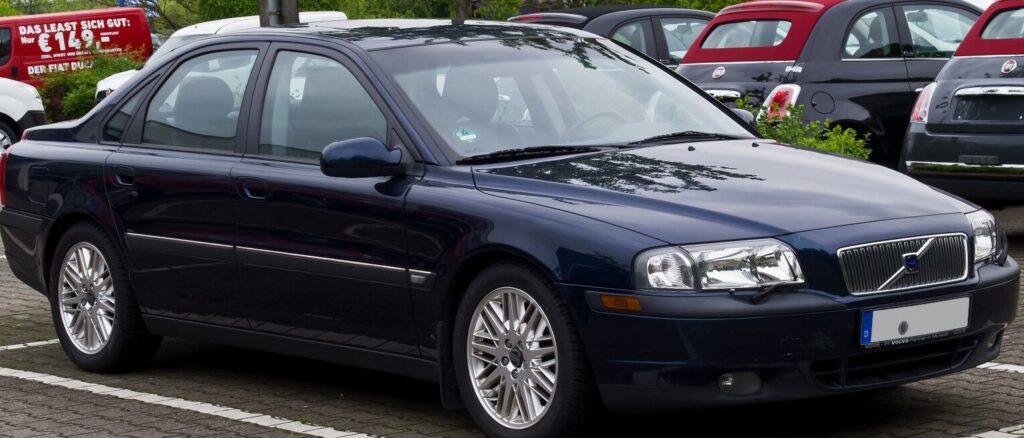
The Volvo S80 2.9 24V, produced between 1999 and 2001, represented a significant step forward for Volvo’s flagship sedan. Positioned as a mid-range offering within the second-generation S80 (P2 platform), it aimed to balance performance and refinement with a more accessible price point than the range-topping models. This variant featured a naturally aspirated 2.9-liter inline-six engine producing 200 horsepower, paired with a five-speed manual transmission. It was designed to appeal to buyers seeking a comfortable, safe, and relatively powerful executive sedan without the premium associated with the higher-specification engines.
Technical Specifications
| Brand | Volvo |
| Model | S80 |
| Generation | S80 (P2) |
| Type (Engine) | 2.9 24V (200 Hp) |
| Start of production | 1999 |
| End of production | 2001 |
| Powertrain Architecture | Internal Combustion Engine |
| Body type | Sedan |
| Seats | 5 |
| Doors | 4 |
| Fuel consumption (urban) | 14.7 l/100 km (16 US mpg, 19.2 UK mpg) |
| Fuel consumption (extra urban) | 7.6 l/100 km (30.9 US mpg, 37.2 UK mpg) |
| Fuel consumption (combined) | 8 l/100 km (29.4 US mpg, 35.3 UK mpg) |
| Fuel Type | Petrol (Gasoline) |
| Acceleration 0 – 100 km/h | 8.2 sec |
| Acceleration 0 – 62 mph | 8.2 sec |
| Acceleration 0 – 60 mph | 7.8 sec |
| Maximum speed | 235 km/h (146.02 mph) |
| Weight-to-power ratio | 7.7 kg/Hp |
| Weight-to-torque ratio | 5.5 kg/Nm |
| Power | 200 Hp @ 6000 rpm |
| Torque | 280 Nm @ 4200 rpm (206.52 lb.-ft. @ 4200 rpm) |
| Engine layout | Front, Transverse |
| Engine Model/Code | B6294S |
| Engine displacement | 2922 cm3 (178.31 cu. in.) |
| Number of cylinders | 6 |
| Engine configuration | Inline |
| Cylinder Bore | 83 mm (3.27 in.) |
| Piston Stroke | 90 mm (3.54 in.) |
| Compression ratio | 10.5:1 |
| Number of valves per cylinder | 4 |
| Fuel injection system | Multi-port manifold injection |
| Engine aspiration | Naturally aspirated |
| Valvetrain | DOHC |
| Engine oil capacity | 6.9 l (7.29 US qt | 6.07 UK qt) |
| Coolant capacity | 8.8 l (9.3 US qt | 7.74 UK qt) |
| Kerb Weight | 1530 kg (3373.07 lbs.) |
| Max. weight | 2200 kg (4850.17 lbs.) |
| Max load | 670 kg (1477.1 lbs.) |
| Trunk (boot) space – minimum | 440 l (15.54 cu. ft.) |
| Trunk (boot) space – maximum | 1106 l (39.06 cu. ft.) |
| Fuel tank capacity | 80 l (21.13 US gal | 17.6 UK gal) |
| Length | 4822 mm (189.84 in.) |
| Width | 1832 mm (72.13 in.) |
| Height | 1434 mm (56.46 in.) |
| Wheelbase | 2791 mm (109.88 in.) |
| Front track | 1562 mm (61.5 in.) |
| Rear track | 1560 mm (61.42 in.) |
| Drivetrain | Front wheel drive |
| Number of gears | 5 |
| Gearbox type | Manual transmission |
| Front suspension | Wishbone |
| Rear suspension | Coil spring |
| Front brakes | Ventilated discs |
| Rear brakes | Disc |
| Assisting systems | ABS (Anti-lock braking system) |
| Steering type | Steering rack and pinion |
| Power steering | Hydraulic |
| Tires size | 215/55R16 |
| Wheel rims size | 16 |
INTRODUCTION
The Volvo S80 2.9 24V, launched in 1999 as part of the second-generation S80 range, was a key model for Volvo in the late 1990s and early 2000s. Built on Volvo’s P2 platform, which it shared with the S70 and V70, the S80 aimed to provide a more luxurious and refined experience than its siblings. The 2.9-liter engine and five-speed manual transmission combination offered a balance between performance and fuel economy, making it a popular choice for drivers who wanted a comfortable and capable sedan for both daily commuting and longer journeys. It served as a stepping stone into the S80 range, offering a more affordable entry point than the turbocharged or higher-displacement options.
Powertrain & Engine Architecture
The heart of the S80 2.9 24V is the B6294S engine, a 2.9-liter (2922 cc) inline-six cylinder powerplant. This engine is naturally aspirated and features a double overhead camshaft (DOHC) valvetrain with four valves per cylinder, contributing to its smooth power delivery. It utilizes a multi-port fuel injection system, delivering fuel directly into the intake ports. The engine’s design prioritized refinement and durability over outright performance. The 24-valve configuration, combined with the relatively large displacement, allowed for a broad torque curve, making the engine responsive in a variety of driving situations. The five-speed manual transmission provided precise gear changes and allowed drivers to fully utilize the engine’s power. This transmission was a robust unit, known for its durability and relatively smooth operation.
Driving Characteristics
The S80 2.9 with the manual transmission offered a reasonably engaging driving experience. While not a sports sedan, the 200 horsepower and 280 Nm (206.52 lb-ft) of torque provided adequate acceleration, with a 0-60 mph time of around 7.8 seconds. The inline-six engine delivered power smoothly and linearly, making it easy to modulate throttle response. The five-speed manual gearbox allowed for precise control, and the gear ratios were well-matched to the engine’s characteristics. Compared to the automatic transmission versions, the manual offered a more direct connection to the engine and a more involved driving experience. Compared to the higher-output turbocharged engines available in the S80 range, the 2.9-liter felt less urgent, but it offered a more relaxed and refined driving experience, particularly on longer journeys.
Equipment & Trim Levels
The S80 2.9 24V typically came equipped with a respectable level of standard features. Interior upholstery was generally cloth, although leather was available as an option. Standard equipment included power windows, power locks, and a basic audio system. Air conditioning was also a standard feature. Optional extras included a premium audio system, sunroof, leather upholstery, and heated front seats. The dashboard layout was typical of Volvo at the time, prioritizing functionality and ergonomics. Safety features were a key selling point for Volvo, and the S80 2.9 included standard ABS brakes and side impact protection systems.
Chassis & Braking
The S80 2.9 utilized a front-wheel-drive layout with an independent wishbone front suspension and a coil spring rear suspension. This suspension setup provided a comfortable ride, absorbing bumps and imperfections in the road surface effectively. The front brakes were ventilated discs, providing ample stopping power, while the rear brakes were solid discs. The steering was a hydraulic rack and pinion system, offering precise and responsive steering feel. The car rode on 215/55R16 tires, which provided a good balance between grip and ride comfort. Stabilizer bars were fitted to both the front and rear axles to reduce body roll during cornering.
Market Reception & Comparison
The Volvo S80 2.9 24V was generally well-received by automotive critics. It was praised for its comfortable ride, spacious interior, and strong safety credentials. However, some critics noted that the 2.9-liter engine lacked the outright performance of the turbocharged options. Fuel economy was considered reasonable for a car of its size and class, averaging around 29.4 US mpg in combined driving. Compared to other trims in the S80 lineup, the 2.9 offered a more affordable entry point, making it attractive to buyers who prioritized value and comfort over outright performance. It was often seen as a sensible and practical choice for families and commuters.
Legacy
The Volvo S80 2.9 24V has proven to be a relatively reliable car over the long term. The inline-six engine is known for its durability, and the five-speed manual transmission is also a robust unit. However, like any older vehicle, it is prone to age-related issues such as corrosion and wear and tear on suspension components. Today, the S80 2.9 can be found on the used car market at relatively affordable prices. It remains a popular choice for buyers seeking a comfortable, safe, and reliable sedan with a classic Volvo character. Its simplicity and relatively low maintenance costs make it an appealing option for those looking for a dependable and practical vehicle.
