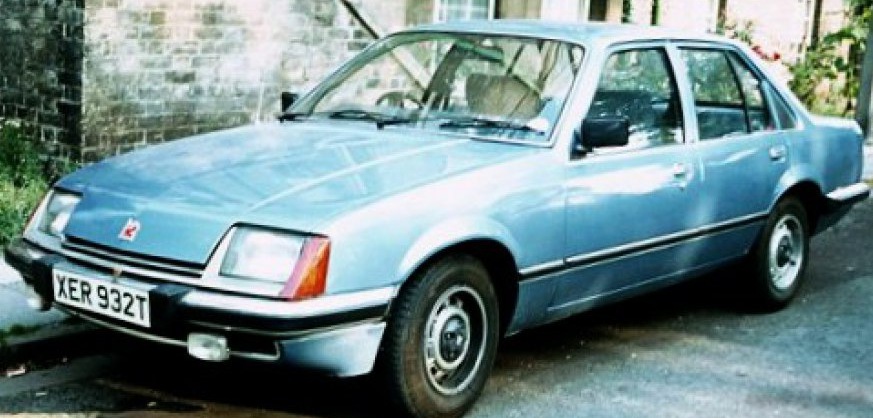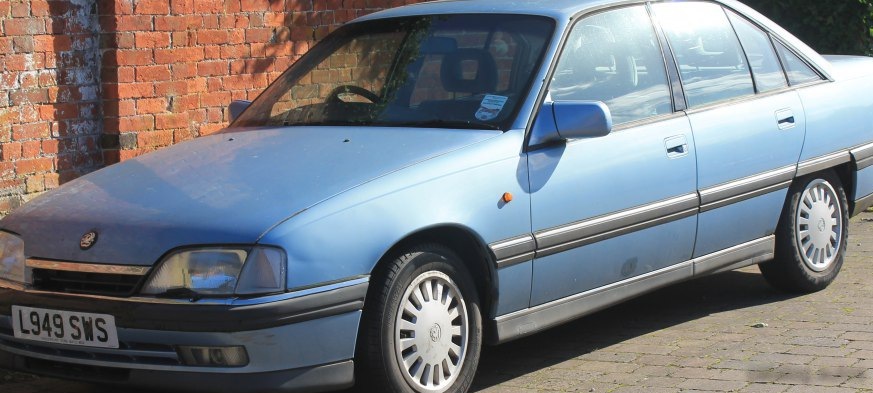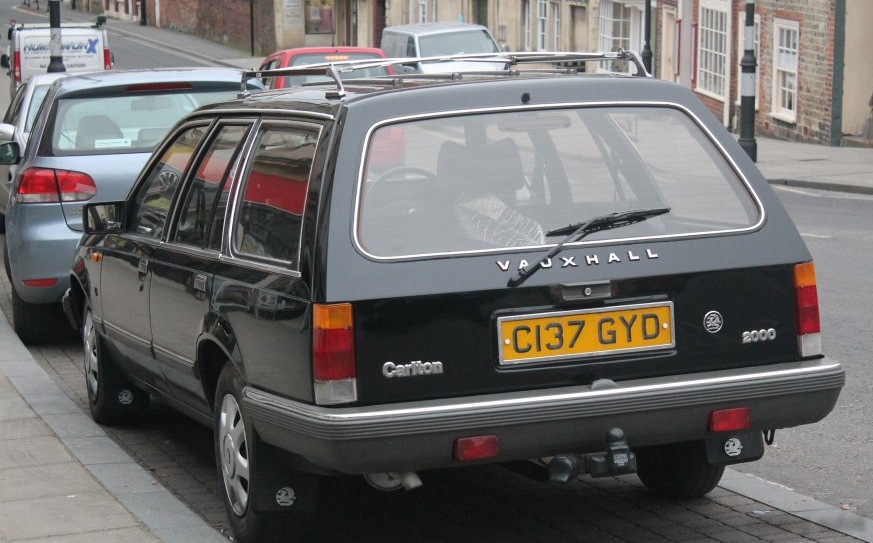
The Vauxhall Carlton Mk II Estate (facelift 1982) 1.8 S, producing 90 horsepower, represented an entry-level offering within the Carlton Mk II range. Introduced in 1982 and continuing through 1986, this variant catered to buyers seeking a spacious, practical estate car with reasonable running costs. The facelifted Mk II Carlton, launched in 1982, brought updated styling and minor mechanical refinements to the original Mk II, which debuted in 1978. This particular 1.8 S model occupied the lower end of the Carlton estate lineup, positioned below the more powerful 2.0L and 2.8L variants, and aimed at a different segment of the family car market.
Technical Specifications
| Brand | Vauxhall |
| Model | Carlton Mk II Estate (facelift 1982) |
| Type (Engine) | 1.8 S (90 Hp) |
| Start of production | 1982 |
| End of production | 1986 |
| Powertrain Architecture | Internal Combustion engine |
| Body type | Station wagon (estate) |
| Seats | 5 |
| Doors | 5 |
| Fuel Type | Petrol (Gasoline) |
| Power | 90 Hp |
| Engine Model/Code | 18S |
| Engine aspiration | Naturally aspirated engine |
| Engine oil capacity | 3.8 l (4.02 US qt | 3.34 UK qt) |
| Coolant capacity | 6 l (6.34 US qt | 5.28 UK qt) |
| Drivetrain Architecture | Rear wheel drive |
Powertrain & Engine Architecture
The 1.8 S variant was powered by Vauxhall’s 18S engine, a 1799cc inline-four cylinder petrol engine. This engine was a relatively simple design, featuring a single overhead camshaft (SOHC) and a two-barrel carburetor. While not a particularly sophisticated unit, it proved to be reasonably durable and easy to maintain. The engine’s 90 horsepower output was achieved at 5200 rpm, with peak torque of approximately 109 lb-ft at 3200 rpm. The engine utilized a conventional wet sump lubrication system and a distributor ignition system. The automatic transmission paired with this engine was typically a three-speed unit, offering smooth but not particularly rapid gear changes. This transmission was chosen to provide ease of use for family drivers, prioritizing comfort over performance.
Driving Characteristics
The Carlton 1.8 S Automatic offered a comfortable, if uninspiring, driving experience. Acceleration was modest, with a 0-60 mph time estimated around 13-14 seconds. The three-speed automatic transmission, while providing convenience, did detract from the engine’s available power, resulting in noticeable gear changes and a lack of urgency when overtaking. The rear-wheel drive configuration provided balanced handling, but the relatively soft suspension setup prioritized ride comfort over sporty handling. Compared to the manual transmission versions of the 1.8, the automatic suffered a slight performance penalty, but offered a more relaxed driving experience. The higher-output 2.0L and 2.8L models provided significantly more performance, but at the cost of increased fuel consumption and purchase price.
Equipment & Trim Levels
The 1.8 S trim level was considered the base model for the Carlton Estate. Standard equipment typically included cloth upholstery, basic instrumentation, and a four-speaker stereo system. Power steering was often included, but air conditioning and electric windows were usually optional extras. The interior was functional and durable, but lacked the luxury appointments found in the higher-spec models. Exterior features included steel wheels with hubcaps, black plastic trim, and relatively simple lighting arrangements. Optional extras included upgraded stereo systems, sunroofs, and metallic paint finishes. The overall focus of the 1.8 S trim was on providing a practical and affordable family estate car.
Chassis & Braking
The Carlton Mk II Estate utilized a traditional body-on-frame construction, providing a robust and durable chassis. The front suspension consisted of independent wishbones and coil springs, while the rear suspension employed a live axle with leaf springs. This setup prioritized ride comfort and load-carrying capacity over handling precision. Braking was initially provided by disc brakes on the front wheels and drum brakes on the rear wheels. Later models may have featured disc brakes all around. The braking system was generally adequate for the car’s weight and performance, but lacked the sophistication of more modern systems. Stabilizer bars were fitted to both the front and rear axles to reduce body roll during cornering.
Market Reception & Comparison
The Vauxhall Carlton 1.8 S Automatic was generally well-received as a practical and affordable family estate car. Critics praised its spacious interior, comfortable ride, and reasonable running costs. However, the engine’s performance was often criticized as being underwhelming, particularly when paired with the automatic transmission. Compared to rivals such as the Ford Sierra Estate and the Austin Rover Estate, the Carlton offered a good balance of practicality, comfort, and value. The 2.0L and 2.8L Carlton Estate models offered more performance, but at a higher price point. Fuel economy for the 1.8 S Automatic was typically in the range of 22-28 mpg, depending on driving conditions.
Legacy
The Vauxhall Carlton Mk II Estate 1.8 S, while not a particularly exciting vehicle, proved to be a reliable and durable workhorse for many families. The 18S engine, while simple, was generally robust and relatively easy to maintain. The automatic transmission, although not known for its performance, was generally reliable. Today, these cars are relatively rare, and well-maintained examples are sought after by classic car enthusiasts. The 1.8 S variant represents an affordable entry point into Carlton ownership, offering a taste of 1980s British motoring. Parts availability can be a challenge, but many components are still available through specialist suppliers. The Carlton’s reputation for practicality and durability has ensured its place as a fondly remembered family car of its era.