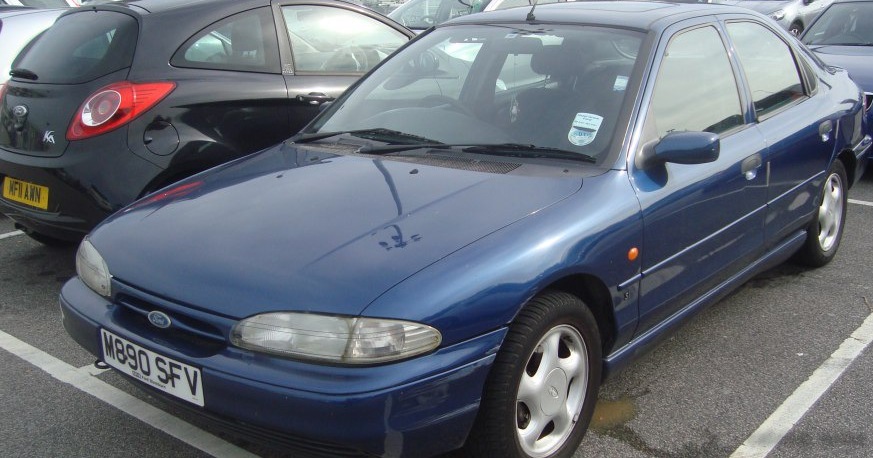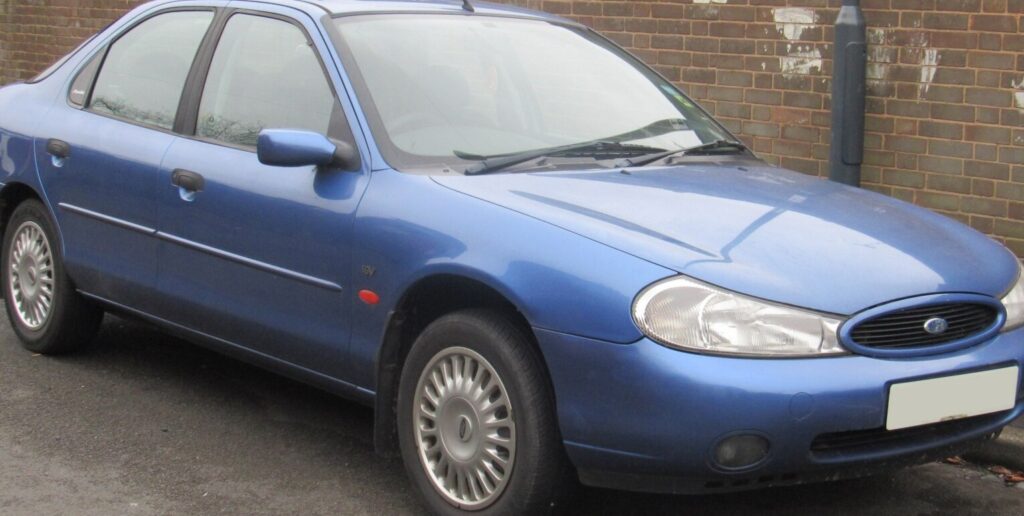
The Ford Mondeo I Wagon 2.5 ST 200, produced from 1999 to 2001, represented the performance pinnacle of the first-generation Mondeo estate car. Positioned as the flagship trim level, it offered a significant upgrade over the standard Mondeo models, appealing to drivers seeking a blend of practicality and spirited driving. This variant was part of the facelifted Mondeo I range (introduced in 1996), which brought revised styling and mechanical improvements to the original platform, known internally as the 1HX0/A3. The ST 200 aimed to provide a more engaging driving experience than its competitors, offering a V6 engine and sporty styling cues within the family wagon segment.
Technical Specifications
| Brand | Ford |
| Model | Mondeo |
| Generation | Mondeo I Wagon (facelift 1996) |
| Type (Engine) | 2.5 ST 200 (205 Hp) |
| Start of production | 1999 |
| End of production | 2001 |
| Powertrain Architecture | Internal Combustion engine |
| Body type | Station wagon (estate) |
| Seats | 5 |
| Doors | 5 |
| Fuel consumption (urban) | 14.6 l/100 km (16.1 US mpg, 19.3 UK mpg, 6.8 km/l) |
| Fuel consumption (extra urban) | 7.5 l/100 km (31.4 US mpg, 37.7 UK mpg, 13.3 km/l) |
| Fuel Type | Petrol (Gasoline) |
| Acceleration 0 – 100 km/h | 7.8 sec |
| Acceleration 0 – 62 mph | 7.8 sec |
| Acceleration 0 – 60 mph | 7.4 sec |
| Maximum speed | 227 km/h (141.05 mph) |
| Weight-to-power ratio | 6.8 kg/Hp, 147.5 Hp/tonne |
| Weight-to-torque ratio | 5.9 kg/Nm, 168.3 Nm/tonne |
| Power | 205 Hp @ 6500 rpm |
| Power per litre | 82.2 Hp/l |
| Torque | 234 Nm @ 5500 rpm (172.59 lb.-ft. @ 5500 rpm) |
| Engine layout | Front, Transverse |
| Engine Model/Code | Duratec / SGA |
| Engine displacement | 2495 cm3 (152.25 cu. in.) |
| Number of cylinders | 6 |
| Engine configuration | V-engine |
| Cylinder Bore | 81.6 mm (3.21 in.) |
| Piston Stroke | 79.5 mm (3.13 in.) |
| Compression ratio | 10.3:1 |
| Number of valves per cylinder | 4 |
| Fuel injection system | Multi-port manifold injection |
| Engine aspiration | Naturally aspirated engine |
| Valvetrain | DOHC |
| Engine oil capacity | 5.5 l (5.81 US qt | 4.84 UK qt) |
| Coolant | 9.5 l (10.04 US qt | 8.36 UK qt) |
| Kerb Weight | 1390 kg (3064.43 lbs.) |
| Max. weight | 2000 kg (4409.25 lbs.) |
| Max load | 610 kg (1344.82 lbs.) |
| Trunk (boot) space – minimum | 540 l (19.07 cu. ft.) |
| Trunk (boot) space – maximum | 1610 l (56.86 cu. ft.) |
| Fuel tank capacity | 61 l (16.11 US gal | 13.42 UK gal) |
| Length | 4671 mm (183.9 in.) |
| Width | 1751 mm (68.94 in.) |
| Height | 1480 mm (58.27 in.) |
| Wheelbase | 2704 mm (106.46 in.) |
| Front track | 1503 mm (59.17 in.) |
| Rear (Back) track | 1504 mm (59.21 in.) |
| Drivetrain Architecture | The Internal combustion engine (ICE) drives the front wheels of the vehicle. |
| Drive wheel | Front wheel drive |
| Number of gears and type of gearbox | 5 gears, manual transmission |
| Front suspension | Wishbone |
| Rear suspension | Coil spring |
| Front brakes | Ventilated discs |
| Rear brakes | Ventilated discs |
| Assisting systems | ABS (Anti-lock braking system) |
| Steering type | Steering rack and pinion |
| Power steering | Hydraulic Steering |
| Tires size | 215/45 R17 |
Powertrain & Engine Architecture
The heart of the Mondeo ST 200 was the Duratec 2.5-liter V6 engine, internally designated as the SGA code. This engine was a naturally aspirated, 60-degree V6, featuring a cast iron block and aluminum cylinder heads. It utilized multi-port fuel injection and a double overhead camshaft (DOHC) valvetrain with four valves per cylinder. The engine produced 205 horsepower at 6500 rpm and 234 Nm (172.59 lb-ft) of torque at 5500 rpm. The engine’s design prioritized smooth power delivery and refinement over outright peak performance. The engine was paired exclusively with a five-speed manual transmission, chosen for its ability to handle the engine’s output and provide a more engaging driving experience. The transmission featured relatively short gear ratios, contributing to the car’s brisk acceleration.
Driving Characteristics
The Mondeo ST 200 offered a noticeable step up in performance compared to the four-cylinder Mondeo variants. Acceleration from 0 to 60 mph was achieved in approximately 7.4 to 7.8 seconds, and it could reach a top speed of 141 mph. While not a sports car in the purest sense, the ST 200 provided a responsive and enjoyable driving experience. The V6 engine delivered a broad torque curve, making it flexible in various driving situations. The manual transmission allowed for precise gear changes, and the suspension, while comfort-oriented, offered reasonable body control. Compared to the later 1.8L and 2.0L models, the ST 200 felt significantly more powerful and capable, though it did come with a slight penalty in fuel economy.
Equipment & Trim Levels
The ST 200 trim came generously equipped, reflecting its position as the range-topping model. Standard features included alloy wheels (typically 17-inch), sports suspension, ABS anti-lock brakes, air conditioning, power windows, and a driver’s airbag. The interior featured unique upholstery with sportier detailing. Optional extras included a sunroof, leather seats, and a premium sound system. The dashboard layout was consistent with other Mondeo models, but the ST 200 often featured additional trim accents and a sport steering wheel.
Chassis & Braking
The Mondeo ST 200 utilized a front-wheel-drive layout with independent wishbone suspension at the front and a coil spring rear suspension. The brakes consisted of ventilated discs on all four wheels, providing ample stopping power. The suspension was tuned to offer a balance between comfort and handling, with slightly stiffer springs and dampers compared to the standard Mondeo. The steering was a hydraulic power-assisted rack and pinion system, providing precise and responsive control.
Market Reception & Comparison
The Mondeo ST 200 was generally well-received by automotive critics. It was praised for its powerful engine, comfortable ride, and spacious interior. However, some reviewers noted that the front-wheel-drive layout could lead to torque steer under hard acceleration. Compared to other performance estates of the time, such as the Ford Focus ST170 or the Vauxhall Vectra V6 SRi, the Mondeo ST 200 offered a more refined and practical package. Fuel economy was reasonable for a V6 engine, but it was still lower than the four-cylinder Mondeo models. Reliability was generally good, although preventative maintenance was crucial to ensure the longevity of the engine.
Legacy
The Ford Mondeo I ST 200 has become a sought-after model among enthusiasts. Its combination of performance, practicality, and relative rarity has made it a classic in the eyes of many Ford fans. The Duratec V6 engine is known for its durability, but regular maintenance, including oil changes and timing belt replacements, is essential. Today, well-maintained examples command a premium in the used car market. The ST 200 represents a significant chapter in the Mondeo’s history, demonstrating Ford’s ability to create a genuinely engaging and versatile family car.