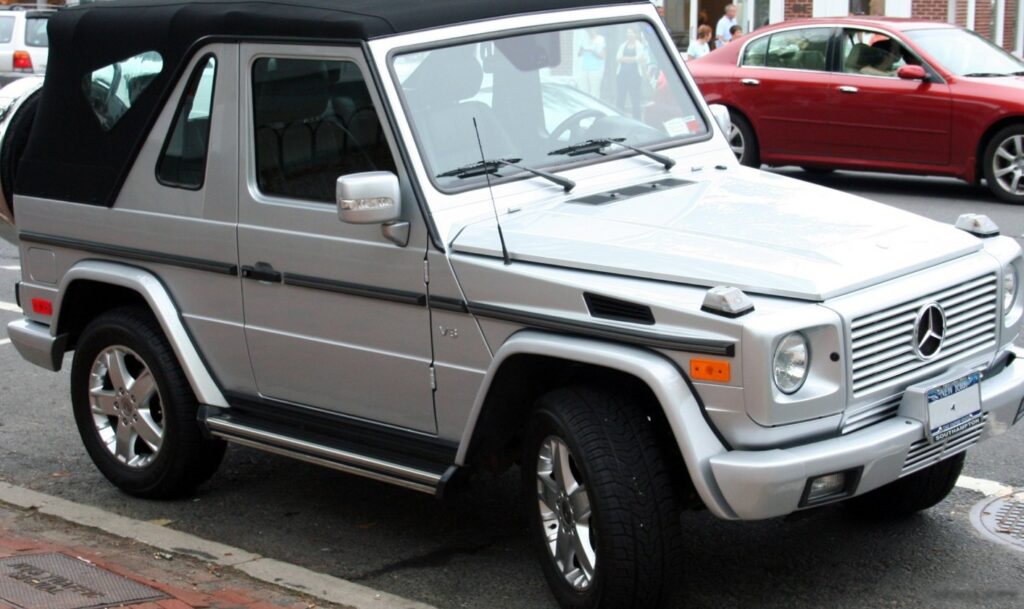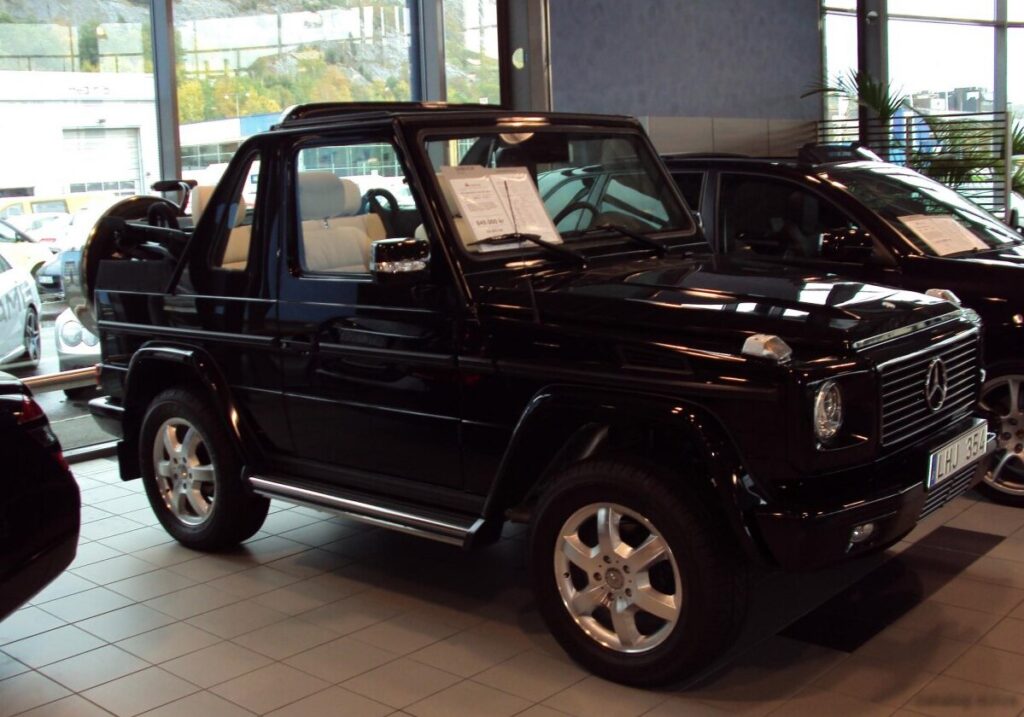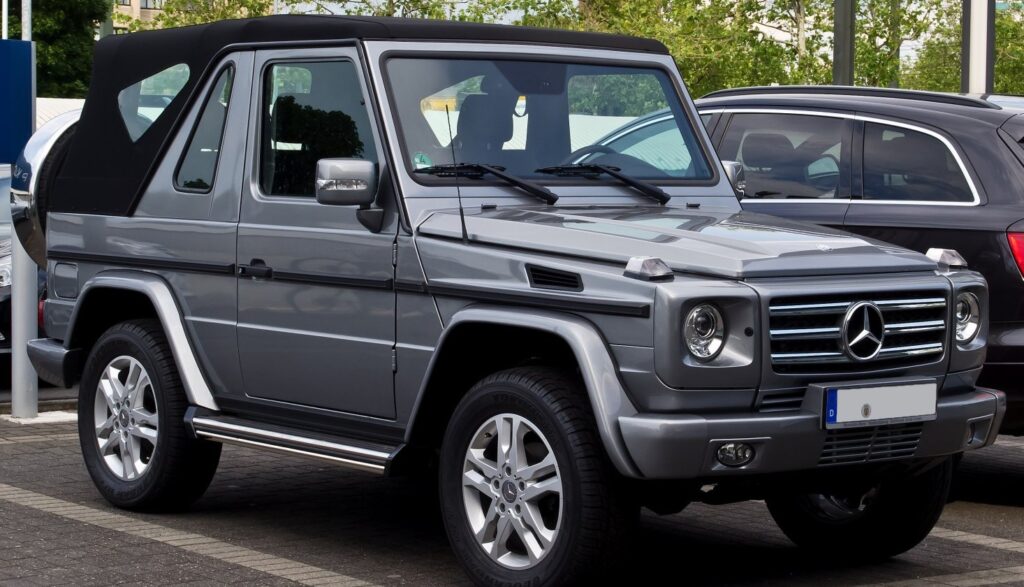
The Mercedes-Benz G-Class Long (W463) G 320 V6 4MATIC Automatic, produced from October 1997 to October 2000, represents a significant iteration of the iconic G-Wagen. Positioned as a mid-range offering within the extended wheelbase W463 series, this variant combined a naturally aspirated 3.2-liter V6 engine with a five-speed automatic transmission and the renowned Mercedes-Benz 4MATIC all-wheel-drive system. The “Long” designation indicates an extended wheelbase, providing increased rear passenger space compared to the standard G-Class, making it a popular choice for those seeking both off-road capability and passenger comfort. This model aimed to broaden the G-Class appeal beyond its traditional military and enthusiast base.
Technical Specifications
| Brand | Mercedes-Benz |
| Model | G-class |
| Generation | G-class Long (W463) |
| Type (Engine) | G 320 V6 (215 Hp) 4MATIC Automatic |
| Start of production | October, 1997 |
| End of production | October, 2000 |
| Powertrain Architecture | Internal Combustion engine |
| Body type | Off-road vehicle |
| Seats | 5 |
| Doors | 5 |
| Fuel consumption (economy) – urban (NEDC) | 19.1 l/100 km (12.3 US mpg, 14.8 UK mpg, 5.2 km/l) |
| Fuel consumption (economy) – extra urban (NEDC) | 13.1 l/100 km (18 US mpg, 21.6 UK mpg, 7.6 km/l) |
| Fuel consumption (economy) – combined (NEDC) | 15.3 l/100 km (15.4 US mpg, 18.5 UK mpg, 6.5 km/l) |
| CO2 emissions (NEDC) | 370 g/km |
| Fuel Type | Petrol (Gasoline) |
| Acceleration 0 – 100 km/h | 11.3 sec |
| Acceleration 0 – 62 mph | 11.3 sec |
| Acceleration 0 – 60 mph | 10.7 sec |
| Maximum speed | 173 km/h (107.5 mph) |
| Emission standard | Euro 2 |
| Weight-to-power ratio | 10.8 kg/Hp, 92.7 Hp/tonne |
| Weight-to-torque ratio | 7.7 kg/Nm, 129.3 Nm/tonne |
| Power | 215 Hp @ 5500 rpm |
| Power per litre | 67.2 Hp/l |
| Torque | 300 Nm @ 2800-4800 rpm (221.27 lb.-ft. @ 2800-4800 rpm) |
| Engine layout | Front, Longitudinal |
| Engine Model/Code | M 112.945 |
| Engine displacement | 3199 cm3 (195.21 cu. in.) |
| Number of cylinders | 6 |
| Engine configuration | V-engine |
| Cylinder Bore | 89.9 mm (3.54 in.) |
| Piston Stroke | 84 mm (3.31 in.) |
| Compression ratio | 10:1 |
| Number of valves per cylinder | 3 |
| Fuel injection system | Multi-port manifold injection |
| Engine aspiration | Naturally aspirated engine |
| Valvetrain | SOHC |
| Engine oil capacity | 8 l (8.45 US qt | 7.04 UK qt) |
| Coolant | 11.5 l (12.15 US qt | 10.12 UK qt) |
| Kerb Weight | 2320 kg (5114.72 lbs.) |
| Max. weight | 3050-3100 kg (6724.1 – 6834.33 lbs.) |
| Max load | 730-780 kg (1609.37 – 1719.61 lbs.) |
| Trunk (boot) space – minimum | 480 l (16.95 cu. ft.) |
| Trunk (boot) space – maximum | 2250 l (79.46 cu. ft.) |
| Fuel tank capacity | 96 l (25.36 US gal | 21.12 UK gal) |
| Max. roof load | 200 kg (440.92 lbs.) |
| Permitted trailer load with brakes (12%) | 3500 kg (7716.18 lbs.) |
| Permitted trailer load without brakes | 750 kg (1653.47 lbs.) |
| Length | 4680 mm (184.25 in.) |
| Width | 1760 mm (69.29 in.) |
| Width including mirrors | 2007 mm (79.02 in.) |
| Height | 1936 mm (76.22 in.) |
| Wheelbase | 2850 mm (112.2 in.) |
| Front track | 1475 mm (58.07 in.) |
| Rear (Back) track | 1475 mm (58.07 in.) |
| Ride height (ground clearance) | 210 mm (8.27 in.) |
| Minimum turning circle (turning diameter) | 13.3 m (43.64 ft.) |
| Approach angle | 36° |
| Departure angle | 27° |
| Climb angle | 38.7° |
| Drivetrain Architecture | The Internal combustion engine (ICE) drives permanently the four wheels of the vehicle. |
| Drive wheel | All wheel drive (4×4) |
| Number of gears and type of gearbox | 5 gears, automatic transmission |
| Front suspension | Coil spring, Rigid axle suspension, Trailing arm |
| Rear suspension | Rigid axle suspension, Trailing arm, Coil spring |
| Front brakes | Disc |
| Rear brakes | Disc |
| Assisting systems | ABS (Anti-lock braking system) |
| Steering type | Cone worm with recirculation balls |
| Power steering | Hydraulic Steering |
| Tires size | 255/65 R 16 |
| Wheel rims size | 7.5 J x 16 |
Powertrain & Engine Architecture
The G 320 V6 was powered by the M112.945 3.2-liter V6 engine. This engine featured a 60-degree V-angle, three valves per cylinder (two intake, one exhaust), and a single overhead camshaft (SOHC) design. The M112 engine family was known for its relatively smooth operation and decent power output for its displacement. Fuel delivery was handled by a multi-port fuel injection system, optimizing combustion efficiency. The engine produced 215 horsepower at 5500 rpm and 300 Nm (221 lb-ft) of torque between 2800 and 4800 rpm. Paired with this engine was a five-speed automatic transmission (typically the 5G-Tronic), providing relatively smooth shifts but not the responsiveness of a manual gearbox. The 4MATIC system was a permanent all-wheel-drive system, distributing power to all four wheels for enhanced traction in various conditions.
Driving Characteristics
The G 320 V6 Automatic offered a comfortable, albeit not particularly sporty, driving experience. The automatic transmission, while convenient, resulted in slightly slower acceleration compared to the available manual transmission options. The 0-60 mph time was around 10.7 seconds, and the top speed was limited to 107.5 mph. The engine’s torque delivery was adequate for everyday driving and moderate off-road excursions, but it lacked the outright punch of the larger displacement engines offered in the G-Class lineup. The long wheelbase contributed to a more stable ride on paved roads, but it also slightly reduced maneuverability in tight spaces. The 4MATIC system provided excellent traction on loose surfaces, making it a capable off-road vehicle.
Equipment & Trim Levels
The G 320 V6 Automatic typically came standard with features such as air conditioning, power windows, power locks, and a basic audio system. Interior upholstery was usually cloth or leatherette, with leather being an optional upgrade. The dashboard layout was functional and utilitarian, reflecting the G-Class’s origins as a military vehicle. Optional extras included a sunroof, upgraded audio systems, heated seats, and various exterior enhancements. The “Long” variant specifically offered increased rear legroom, making it more suitable for carrying passengers.
Chassis & Braking
The G-Class chassis was a robust ladder-frame construction, providing exceptional strength and durability. Suspension consisted of coil springs and rigid axles with trailing arms, offering a comfortable ride and excellent off-road articulation. Braking duties were handled by disc brakes on all four wheels, assisted by an Anti-lock Braking System (ABS). The steering system was a recirculating ball type, providing a direct but somewhat heavy feel. The G 320 V6’s curb weight of 2320 kg (5114.72 lbs) contributed to its stable handling but also limited its acceleration and fuel efficiency.
Market Reception & Comparison
The G 320 V6 Automatic was generally well-received as a versatile and capable SUV. Critics praised its off-road prowess, comfortable ride (especially in the Long variant), and relatively refined interior. However, some criticized its fuel economy (around 15.3 l/100 km combined) and somewhat sluggish acceleration compared to other vehicles in its class. Compared to the G 360 AMG, the G 320 offered a more affordable entry point into the G-Class range, sacrificing some performance for practicality. Compared to diesel variants like the G 300 TDI, the G 320 offered a smoother and quieter driving experience, but with lower fuel economy.
Legacy
The M112 engine, while not known for being exceptionally long-lived, proved to be reasonably reliable with proper maintenance. Common issues included oil leaks and occasional sensor failures. The five-speed automatic transmission was generally durable, but required regular fluid changes. Today, the G 320 V6 (W463) is a sought-after classic SUV, particularly the Long variant. Well-maintained examples command a premium in the used car market, appealing to collectors and enthusiasts who appreciate the G-Class’s unique blend of luxury, capability, and iconic design. Its enduring popularity is a testament to the G-Class’s timeless appeal and rugged construction.