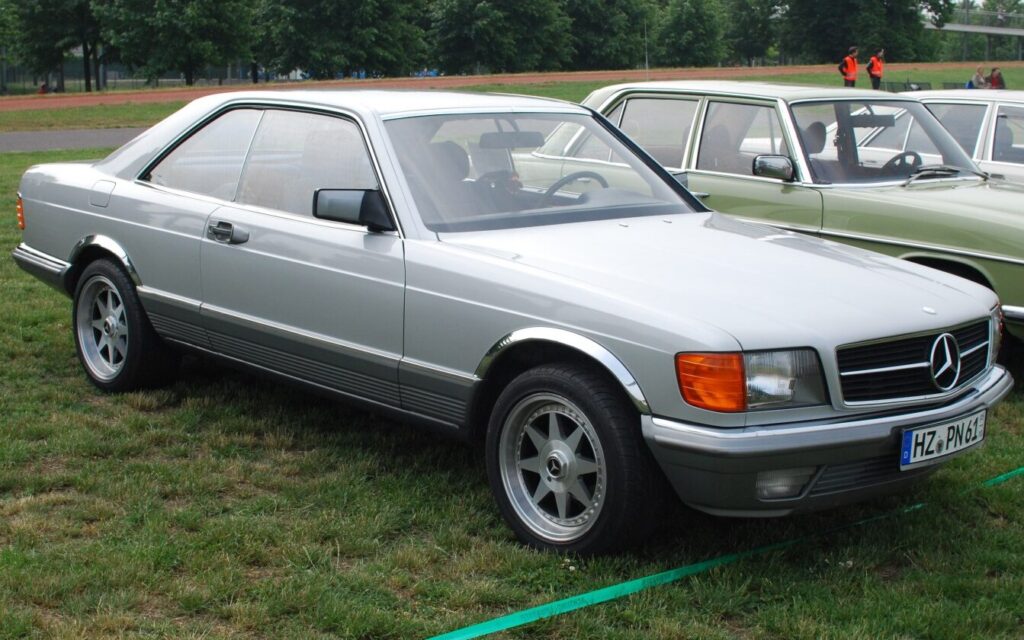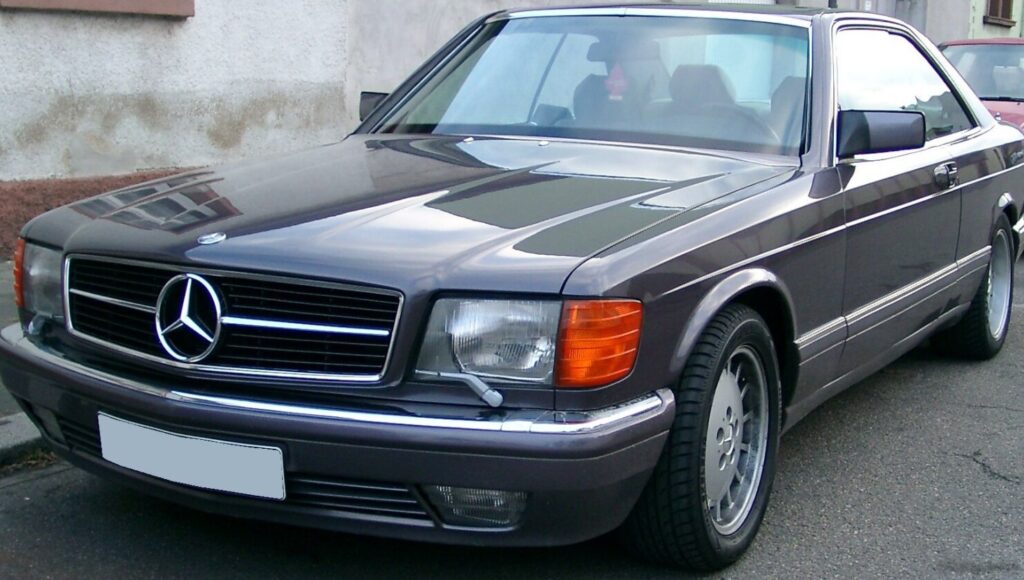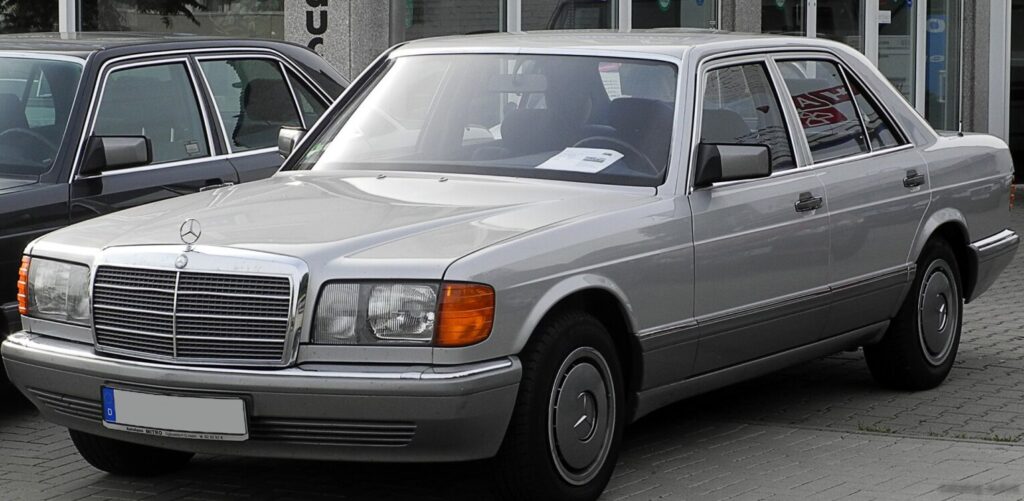
The Mercedes-Benz 300 SE, part of the W126 S-Class range produced from August 1985 to October 1991, represented a significant evolution of the flagship sedan. This facelifted version of the W126, introduced in 1985, brought subtle but important refinements to the already highly regarded S-Class. The 300 SE, positioned as a mid-range offering within the lineup, provided a balance of performance, luxury, and fuel efficiency, appealing to buyers who desired the prestige of an S-Class without the higher price tag of the 560 SE. It served as a crucial model in maintaining Mercedes-Benz’s dominance in the luxury car segment, particularly in Europe and North America.
Technical Specifications
| Brand | Mercedes-Benz |
| Model | S-class |
| Generation | S-class SE (W126, facelift 1985) |
| Type (Engine) | 300 SE (188 Hp) |
| Start of production | August, 1985 |
| End of production | October, 1991 |
| Powertrain Architecture | Internal Combustion engine |
| Body type | Sedan |
| Seats | 5 |
| Doors | 4 |
| Fuel consumption (urban) | 13.5 l/100 km (17.4 US mpg, 20.9 UK mpg, 7.4 km/l) |
| Fuel consumption (extra urban) | 9.1 l/100 km (25.8 US mpg, 31 UK mpg, 11 km/l) |
| Fuel Type | Petrol (Gasoline) |
| Acceleration 0 – 100 km/h | 9.1 sec |
| Acceleration 0 – 62 mph | 9.1 sec |
| Acceleration 0 – 60 mph | 8.6 sec |
| Maximum speed | 205 km/h (127.38 mph) |
| Weight-to-power ratio | 8.1 kg/Hp, 123.7 Hp/tonne |
| Weight-to-torque ratio | 5.8 kg/Nm, 171.1 Nm/tonne |
| Power | 188 Hp @ 5700 rpm |
| Power per litre | 63.5 Hp/l |
| Torque | 260 Nm @ 4400 rpm (191.77 lb.-ft. @ 4400 rpm) |
| Engine layout | Front, Longitudinal |
| Engine Model/Code | M 103 E 30 / 103.981 |
| Engine displacement | 2962 cm3 (180.75 cu. in.) |
| Number of cylinders | 6 |
| Engine configuration | Inline |
| Cylinder Bore | 88.5 mm (3.48 in.) |
| Piston Stroke | 80.25 mm (3.16 in.) |
| Compression ratio | 9.2:1 |
| Number of valves per cylinder | 2 |
| Fuel injection system | Multi-port manifold injection |
| Engine aspiration | Naturally aspirated engine |
| Valvetrain | SOHC |
| Engine oil capacity | 6 l (6.34 US qt | 5.28 UK qt) |
| Coolant | 8 l (8.45 US qt | 7.04 UK qt) |
| Kerb Weight | 1520 kg (3351.03 lbs.) |
| Max. weight | 2040 kg (4497.43 lbs.) |
| Max load | 520 kg (1146.4 lbs.) |
| Fuel tank capacity | 90 l (23.78 US gal | 19.8 UK gal) |
| Length | 5020 mm (197.64 in.) |
| Width | 1820 mm (71.65 in.) |
| Height | 1437 mm (56.57 in.) |
| Wheelbase | 2930 mm (115.35 in.) |
| Front track | 1555 mm (61.22 in.) |
| Rear (Back) track | 1527 mm (60.12 in.) |
| Drivetrain Architecture | The Internal combustion engine (ICE) drives the rear wheels of the vehicle. |
| Drive wheel | Rear wheel drive |
| Number of gears and type of gearbox | 5 gears, manual transmission |
| Front suspension | Double wishbone |
| Rear suspension | Trailing arm |
| Front brakes | Ventilated discs |
| Rear brakes | Disc |
| Steering type | Cone worm with recirculation balls |
| Power steering | Hydraulic Steering |
| Tires size | Front wheel tires: 205/65 R15Rear wheel tires: 205/65 R15 |
| Wheel rims size | Front wheel rims: 7J x 15Rear wheel rims: 7J x 15 |
Powertrain & Engine Architecture
The 300 SE was powered by the M103 E 30 engine, a 2.962-liter (180.75 cubic inches) inline-six cylinder engine. This engine was a hallmark of Mercedes-Benz engineering, known for its smoothness and durability. The M103 featured a single overhead camshaft (SOHC) valvetrain operating two valves per cylinder. Fuel delivery was handled by a Bosch K-Jetronic multi-port fuel injection system, a sophisticated system for its time that contributed to both performance and relatively good fuel economy. The engine produced 188 horsepower at 5700 rpm and 260 Nm (191.77 lb-ft) of torque at 4400 rpm. The engine’s longitudinal mounting and rear-wheel drive configuration were standard for Mercedes-Benz sedans of this era. The 300 SE was equipped with a 5-speed manual transmission as standard, offering precise control and a more engaging driving experience.
Driving Characteristics
The 300 SE with the manual transmission provided a refined yet capable driving experience. While not overtly sporty, the engine delivered adequate power for comfortable cruising and confident overtaking. The 0-60 mph time of around 8.6 seconds was respectable for the period. The manual gearbox allowed drivers to fully utilize the engine’s torque, providing good acceleration in everyday driving situations. Compared to the higher-output 560 SE, the 300 SE felt less stressed and more balanced, particularly during longer journeys. The suspension, featuring double wishbones at the front and a trailing arm setup at the rear, provided a comfortable ride, absorbing bumps and imperfections in the road effectively.
Equipment & Trim Levels
The 300 SE came standard with a generous array of features befitting a luxury sedan. These included power windows, central locking, a sunroof, and air conditioning. The interior was typically upholstered in high-quality cloth, with leather upholstery available as an option. The dashboard featured wood trim and analog gauges, reflecting the classic Mercedes-Benz aesthetic. Optional extras included automatic climate control, a premium sound system, and heated seats. The 300 SE’s trim level sat comfortably in the middle of the W126 range, offering a significant step up in luxury and features compared to the base 260 SE, but without the added expense of the top-of-the-line 560 SE.
Chassis & Braking
The W126 S-Class chassis was renowned for its robust construction and excellent crash safety. The 300 SE featured ventilated disc brakes at the front and solid discs at the rear, providing ample stopping power. Hydraulic power steering was standard, making maneuvering easy and precise. The suspension was tuned for comfort, prioritizing a smooth ride over outright handling prowess. Stabilizer bars were fitted to both the front and rear axles to reduce body roll during cornering. The car’s relatively moderate weight, at 1520 kg (3351.03 lbs), contributed to its balanced handling characteristics.
Market Reception & Comparison
The 300 SE was well-received by automotive critics and buyers alike. It was praised for its comfortable ride, refined engine, and luxurious interior. Compared to the 560 SE, the 300 SE offered a better balance of performance and fuel economy, making it a more practical choice for many buyers. The 300 SE also proved to be more reliable than the 560 SE, which was known for its complex fuel injection system and potential maintenance issues. Fuel economy, while not exceptional by modern standards, was reasonable for a luxury sedan of its size and weight, averaging around 20 mpg in combined driving.
Legacy
The W126 S-Class, including the 300 SE, is now considered a classic Mercedes-Benz. The M103 engine is known for its longevity and relatively simple maintenance requirements. Well-maintained examples of the 300 SE are highly sought after by collectors and enthusiasts. While parts availability can be a challenge, the M103 engine is generally considered to be robust and reliable. Today, the 300 SE represents a bygone era of automotive engineering, offering a unique blend of luxury, performance, and durability. Its enduring appeal lies in its timeless design, comfortable ride, and the prestige associated with the Mercedes-Benz brand.