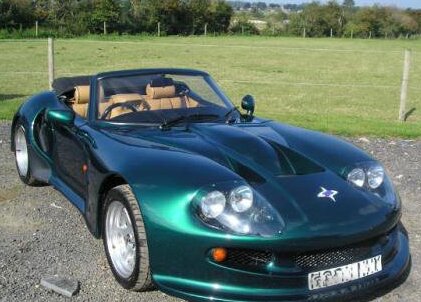
The Marcos LM400, produced between 1997 and 2000, represents a relatively short but significant chapter in the history of the British sports car manufacturer, Marcos Leisure Limited. Positioned as a high-performance, hand-built grand tourer, the LM400 aimed to revive the Marcos brand with a modern take on its classic lightweight sports car philosophy. The “LM” designation stood for “Le Mans,” referencing the company’s racing heritage, while the “400” indicated the approximate horsepower figure. Built on a bespoke chassis, the LM400 was exclusively offered as a two-seater cabriolet, catering to a niche market seeking a unique and exhilarating driving experience. It was the flagship model during its production run, embodying Marcos’s commitment to performance and exclusivity.
Technical Specifications
| Brand | Marcos |
| Model | LM 400 |
| Generation | LM 400 |
| Type (Engine) | 4.6 V8 (250 Hp) |
| Start of production | 1997 |
| End of production | 2000 |
| Powertrain Architecture | Internal Combustion engine |
| Body type | Cabriolet |
| Fuel Type | Petrol (Gasoline) |
| Power | 250 Hp |
| Engine aspiration | Naturally aspirated engine |
Powertrain & Engine Architecture
The heart of the Marcos LM400 is a 4.6-liter V8 engine, sourced from Ford. Specifically, it utilized the Ford Modular engine family, known for its robust construction and potential for high performance. While the engine block and basic architecture were Ford’s, Marcos made several modifications to optimize it for their application. These included a revised intake manifold, exhaust system, and engine management calibration to enhance power delivery and responsiveness. The engine is naturally aspirated, meaning it doesn’t rely on forced induction like turbocharging or supercharging. This contributes to a more linear power curve and a distinctive exhaust note. The engine produced 250 horsepower and approximately 300 lb-ft of torque.
The LM400 employed a five-speed manual transmission as standard, providing drivers with full control over the engine’s power. An optional four-speed automatic transmission was also available, though it was less common due to the performance-oriented nature of the car. The transmission sent power to the rear wheels, maintaining a classic sports car layout. The rear differential was a limited-slip unit, improving traction during cornering and acceleration. The engine management system was a sophisticated unit for its time, controlling fuel injection, ignition timing, and other critical parameters to optimize performance and emissions.
Driving Characteristics
The Marcos LM400 delivers a distinctly engaging driving experience. The combination of a lightweight chassis and a potent V8 engine results in brisk acceleration and responsive handling. The car is known for its direct steering and well-balanced chassis, providing a confident feel on both winding roads and open highways. The 0 to 60 mph sprint was typically achieved in around 5.5 seconds, making it a competitive performer against other sports cars of the era. The manual transmission allows for precise gear changes and maximizes driver involvement, while the automatic, though less engaging, offers convenience for everyday driving. The suspension, consisting of independent double wishbones all around, provides a firm but compliant ride, effectively absorbing bumps and maintaining stability. The relatively short wheelbase contributes to the car’s agility, but it can also make it feel slightly twitchy at the limit.
Equipment & Trim Levels
The Marcos LM400 was offered with a relatively high level of standard equipment, reflecting its positioning as a premium sports car. The interior featured leather upholstery, power windows, central locking, and a high-quality sound system. Air conditioning was also standard. The dashboard layout was functional and driver-focused, with clearly marked gauges and intuitive controls. Optional extras included upgraded audio systems, bespoke interior trim options, and various cosmetic enhancements. The hood was manually operated, in keeping with the car’s lightweight philosophy. Interior space was limited, as is typical of a small sports car, but the cabin was comfortable and well-appointed for two occupants.
Chassis & Braking
The LM400’s chassis is a multi-tubular space frame constructed from steel, providing a high degree of rigidity and strength while minimizing weight. This lightweight construction is a key element of the car’s dynamic performance. The body panels are made from fiberglass, further contributing to weight reduction. The suspension utilizes independent double wishbones at all four corners, with coil springs and adjustable dampers. This setup provides excellent handling and ride quality.
Braking duties are handled by ventilated disc brakes on all four wheels, providing ample stopping power. Anti-lock braking system (ABS) was standard, enhancing safety and control. The braking system was well-matched to the car’s performance, offering consistent and reliable stopping performance even under demanding conditions. The steering is a rack-and-pinion system, providing precise and responsive control.
Market Reception & Comparison
The Marcos LM400 received generally positive reviews from automotive journalists. Critics praised its performance, handling, and distinctive styling. However, some noted the relatively high price tag and limited practicality. Compared to rivals such as the Porsche 968 and the Lotus Elise, the LM400 offered a unique blend of performance and exclusivity. The Porsche offered a more refined driving experience and a broader range of features, while the Lotus prioritized lightweight agility above all else. The LM400 carved out its own niche as a hand-built, British sports car with a powerful V8 engine. Fuel economy was not a strong point, averaging around 18 mpg in mixed driving. Reliability was generally good, although the car’s bespoke construction and limited production run meant that parts availability could be an issue.
Legacy
The Marcos LM400 represents a final flourish for the original Marcos company before its eventual demise. While production numbers were relatively low – around 37 examples were built – the LM400 has gained a cult following among enthusiasts. Today, the LM400 is a sought-after classic car, prized for its rarity, performance, and distinctive character. The powertrain, while based on Ford components, has proven to be reasonably reliable, although regular maintenance is essential. Parts availability can be challenging, requiring owners to rely on specialist suppliers and Marcos enthusiasts’ networks. The LM400 stands as a testament to Marcos’s commitment to building exciting and unconventional sports cars, and it remains a unique and desirable machine for collectors and driving enthusiasts alike. The car’s value has steadily increased in recent years, reflecting its growing popularity and historical significance.